
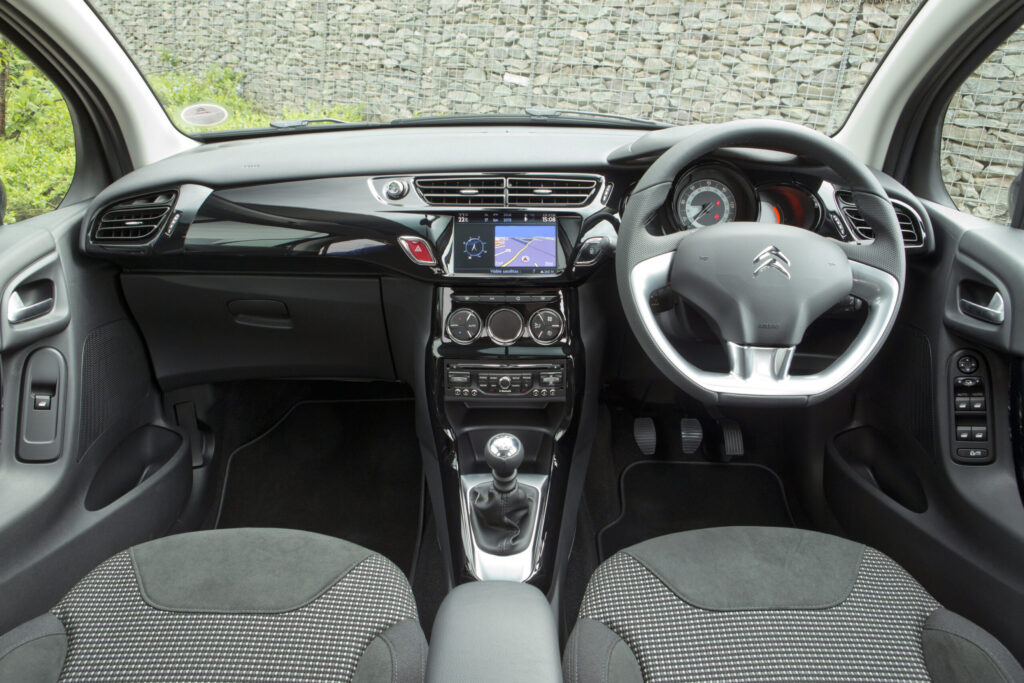
Warning lights on your dashboard due to tyre pressure errors, faulty sensors or problems with the braking system are not uncommon in the Citroën C3 Aircross. ABS (the anti-lock braking system that prevents the wheels from locking under hard braking) and traction control (the system that prevents wheel slip when accelerating) work together using the same sensors. Diagnosis with a suitable tool, clearing codes after repair and recognising intermittent faults make the difference between a quick fix and prolonged hassle. Find out what causes these warnings and how to tackle them.
Why is the ABS light on in the C3 Aircross?
The ABS warning light appears when the braking system detects a fault in the wheel speed sensors, wiring or the ABS control unit itself. In the C3 Aircross, ABS, traction control and stability control all work together via the same sensors. If one system fails, the others often drop out as well.
The most common cause is a faulty wheel sensor. This sensor measures the rotational speed of each wheel and sends that information to the ABS control unit. A broken sensor, damaged cable, contaminated connector or worn sensor ring leads to unreliable signals. The car then switches off the ABS and traction control system as a precaution.
Other possible causes are low battery voltage, a faulty brake light switch or an issue with the wheel hub. Sometimes it is down to corrosion on connectors or a bad earth in the electrical wiring. In some cars the sensor ring is integrated into the wheel bearing. A worn bearing then damages the ring, causing the same symptoms as a faulty sensor.
How do I reset the traction control warning?
Resetting the traction control warning takes more than just switching off the ignition. You must first fix the cause of the fault before you can clear the error code. You need an OBD scanner (a diagnostic tool that you connect to the OBD port under the dashboard) that can read ABS and ESP codes (ESP is the electronic stability programme that prevents skidding in bends). Standard engine code readers are often not sufficient, because they only detect faults in the engine management.
After reading the fault code, you will see which wheel or which system is causing the fault. Then check:
- The wheel sensors for contamination, damage or loose cables
- The plugs and connectors for corrosion or moisture
- The brake fluid level and any leaks
- The battery voltage, especially after standing for a longer period
Once you have solved the problem, you can use the scanner to clear the fault code. Then take a short test drive and read the codes again to check whether the fault has gone. Pay attention to the live data for the four wheel speeds while driving. If one wheel shows a deviating value, the cause can usually be traced quickly.
Tyre pressure fault and ABS warnings in the C3 Aircross
Incorrect tyre pressure can indirectly cause ABS warnings. When one tyre has significantly less pressure, that wheel rotates faster than the other three. The ABS control unit interprets this difference as a possible fault in the wheel sensor and switches the system off.
First check the tyre pressure of all four wheels according to the specifications in the owner’s manual or on the sticker in the door opening. Correct any deviations and take a short drive. In many cars the warning disappears automatically after a few kilometres of driving.
If the light stays on, the cause may lie deeper:
- Wheel sensor contaminated by mud or metal filings
- Sensor ring damaged or worn
- Electrical fault in the sensor or wiring
- Worn wheel bearing affecting the sensor ring
A thorough inspection of the sensors and wiring is then necessary. Carefully clean contaminated sensors and check that the cables have not been chafed or pulled loose. If in doubt, it is wise to have the car read at a garage.
What to check when you get ABS warnings
You do not need any special tools for a few basic checks. Start with a visual inspection of the wheel sensors at each wheel. Look for dirt, stone impact damage or visible defects. Check the cables for damage and inspect the plugs for corrosion or moisture.
Measure the battery voltage, especially if the car has been standing still for a longer time. A weak battery can cause fault messages that disappear after charging or replacing the battery. Also check the brake fluid level and pay attention to any warnings that appear at the same time as the ABS message.
Pay attention to the behaviour of the fault message. Does it appear immediately when starting, or only while driving? Does it only occur in bends, on wet roads or at low speed? This helps you distinguish between a sensor problem, an electrical contact problem or a mechanical cause such as a worn bearing.
‘ Do not keep driving unnecessarily with this combination of warnings. ’
Can you keep driving with an ABS warning?
Short trips are usually possible, but with limitations. In most cases normal braking still works, but under hard braking you no longer have protection against the wheels locking. On wet, slippery or unpaved surfaces, the risk clearly increases. Stability systems are often switched off as well, so the car reacts less predictably in emergency situations.
If, in addition to the ABS warning, a brake warning, STOP message or abnormal braking behaviour occurs, you must stop immediately and have the car checked. Do not keep driving unnecessarily with this combination of warnings. If only the ABS light is on, arrange a prompt inspection and adapt your driving style by keeping a greater distance and braking more gently.
Tackling intermittent faults
Some ABS warnings come and go without a clear pattern. This often points to a contact problem in the wiring or a sensor that fails under certain conditions. Typical situations are driving over bumps, wet weather, cold starts, or after manoeuvring and reversing.
Intermittent faults are harder to diagnose than constant errors. The fault code often remains stored in memory. When you read it out, the fault may already have disappeared. Therefore check extra carefully:
- Cables and plugs for movement, cracks or wear
- Sensors for play or being loose
- Earth points and electrical connections for corrosion
- Wheel bearings for play, which can affect the sensor ring
With intermittent faults it is sensible to read fault codes several times, including during a test drive. This way you can recognise patterns that point to a specific wheel or component.
What does real-world experience say about ABS problems?
Owners regularly report that the ABS warning stays on after an emergency stop. The fault code then remains stored until it is actively cleared with a scanner. Sometimes the message only appears after a longer drive or after several manoeuvres, which points to a sensor that only fails after warming up or due to vibration.
Faulty sensors are more common than a defective ABS control unit. Broken wiring or connector problems are sometimes hard to find because they depend on conditions such as moisture or temperature. Most cars continue to brake normally, but without ABS or traction assistance.
In some C3 Aircross models, problems with the wheel hub or bearing are related to the ABS fault. A worn bearing can damage or deform the integrated sensor ring, causing the ABS unit to receive illogical values. Replacing the complete bearing then solves the problem.
‘ Discover practical diagnostic tools and step-by-step guides for ABS problems in other makes. ’
Guides for other car problems on Carnews
Read more about electrical faults, brake fault codes or wheel bearing replacements in Citroën models. Discover practical diagnostic tools and step-by-step guides for ABS problems in other makes.
Frequently asked questions
The most common causes are defective or contaminated ABS wheel sensors (or their cables/plugs) and problems with the sensor ring or wheel bearing, causing the wheel speed to be measured incorrectly. In addition, low battery voltage or other power/earth issues regularly occur as the source of such messages. Less frequently, it is due to a fault in the ABS control unit itself. Brake system-related factors, such as a faulty brake light switch or low brake fluid level, can also trigger ABS and traction control warnings.
You can usually keep driving carefully if only the ABS or traction control lights are on, but you will then lack assistance during emergency stops and when there is a risk of skidding. In principle, the car still brakes normally, but under heavy braking the wheels can lock and the car can break away more easily on wet or slippery roads. Have the system read out and repaired as soon as possible and adapt your driving style (greater distance, smoother driving). If a brake warning or STOP light also appears, or if the brake pedal feels different, stop as soon as possible in a safe place and have the car checked immediately.
You can first check the battery and voltage (a weak battery often triggers ABS/traction faults) and see whether the problem keeps returning after a longer drive or restart. Then visually inspect each wheel to check that the ABS sensors, cables and plugs are not clearly damaged, loose or heavily contaminated. In the engine bay, check whether the brake fluid level is between the min and max markings and whether any other brake or STOP warning appears in the display. Finally, with a suitable OBD scanner you can specifically read the ABS/ESP fault codes and wheel speed values to see at which wheel or component the fault originates.
In the Citroën C3 Aircross, the most common weak points of the ABS and traction control system are defective or contaminated wheel speed sensors and problems with their wiring or plugs. Wear or defects in wheel bearings/hub rings, from which the sensor reads its signal, also occur regularly. In addition, low battery voltage or earth problems can cause fault messages, while faults in the ABS control unit itself are less common.
For common ABS and traction control problems in a Citroën C3 Aircross (such as a defective wheel sensor or wiring issue), the repair costs at an independent garage are generally roughly between €150 and €350 per wheel, including diagnosis, labour and a new sensor. If the wheel bearing or signal ring also needs to be replaced, this can rise to around €300–€500 per side. For rarer faults in the ABS control unit or modulator, you should expect amounts from about €600 to well over €1,000, depending on whether the part is new, remanufactured or used. The exact costs vary per workshop, hourly rate and whether, besides the sensor, wiring or other components also need to be repaired.
When the ABS and traction control lights are on in a Citroën C3 Aircross, ABS, traction control and often also ESP/ESC (stability control) no longer (fully) work. The car will still brake normally, but during an emergency stop the wheels can lock and it becomes more difficult to keep the car stable, especially on wet or slippery roads. The system also no longer intervenes automatically when a wheel spins, meaning you must accelerate more carefully and take bends more gently. Driving safety is therefore reduced and the car’s behaviour requires more anticipation and caution from the driver.