
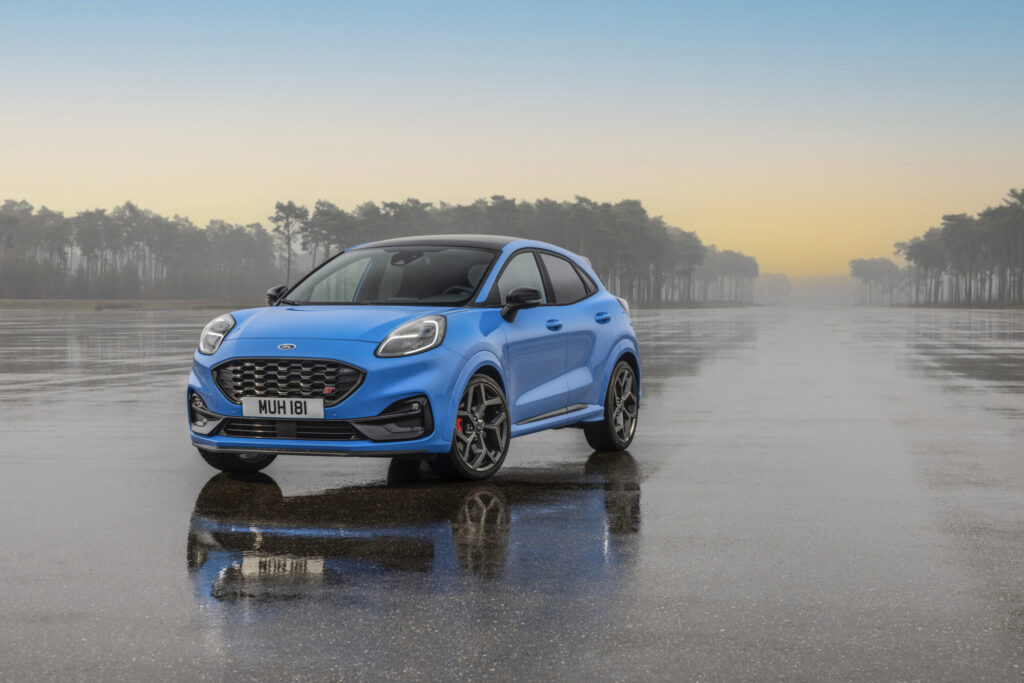
Air conditioning system and battery problems with the Ford Puma occur regularly, especially with mild hybrid models between 20,000 and 50,000 kilometres. Leaks, faulty compressors and batteries that wear out quickly due to start-stop load cause warm air from the vents and starting problems. In this article you can read why these problems arise and what you can do about them.
Why doesn’t the Ford Puma air conditioning blow cold air?
If the air conditioning in your Ford Puma blows warm air, there are several possible causes. The most common are a faulty compressor, refrigerant loss due to leaks, or clogged filters. With mild hybrid models there is an extra factor. The air conditioning puts a heavy load on the electrical system. At low battery voltage this leads to shutdown.
The symptoms are clearly recognisable:
- Warm air from the vents, even at high outside temperatures
- Unusual noises such as rattling or humming when you switch on the air conditioning
- The air conditioning switches off at low battery voltage, sometimes together with keyless entry on the passenger side
- Reduced cooling performance after 30,000 to 50,000 kilometres
Owners report on forums that the air conditioning fails mainly on short journeys. Often a message appears at the same time: the battery power is decreasing. Garages often blame this on driving too little. In reality the air conditioning itself often has a fault. In winter the complaints get worse because of the extra load from the heater.
Common causes of air conditioning failures
Refrigerant loss is a frequently mentioned cause. Leaks in the system are responsible, often at the hoses or the condenser. A garage can trace this with leak detection and then refill the system. This costs between 23 and 110 euros for a standard air conditioning service.
A faulty compressor is more expensive to replace and costs from 500 euros. Sensor faults are another cause. The air conditioning then thinks the system is already cold enough. This leads to irregular switching and uncomfortable temperatures in the car.
Battery problems with the Ford Puma with start-stop
The 12-volt battery of the Ford Puma wears out quickly due to the intensive use of the start-stop system (automatically switching the engine off and on again when stationary) and accessories such as the air conditioning. Its service life is on average 3 to 6 years, but with a lot of city driving and short trips this is considerably shorter. The battery management system (electronic control of the battery) issues warnings such as “Charge level of 12V battery too low – start engine or charge externally.”
This is what many owners run into. The symptoms are familiar:
- Difficulty starting the car, especially after standing still for 14 days or longer
- Dashboard warnings about low battery capacity
- Lights that dim when you use the air conditioning, radio and headlights at the same time
- With mild hybrids: the petrol engine does not start because of a flat 12-volt battery, not because of the hybrid battery
On Reddit and Dutch car forums, stories from Puma owners regularly appear. These owners have battery problems. “Too few long journeys – battery empty after 3 minutes of city driving,” one user writes. Dealers often put it down to driving style, but owners report failed batteries after only 2 years of use.
Why does the battery fail faster with mild hybrids?
The start-stop system (automatically switching the engine off and on) and the air conditioning put a heavy load on the 12-volt battery. Short trips are a problem. The alternator then does not get enough time to fully charge the battery. As a result, the battery slowly becomes exhausted. Air conditioning, heating and other electrical consumers speed up this process. In winter this process accelerates further due to low temperatures and extra use of the heater.
After 14 days of standing still, the battery runs down because of the alarm system and keyless entry. This applies especially to cars that do a lot of short journeys and few long trips during which the alternator can charge the battery.
Tips for replacing the battery in the Ford Puma
When you need to replace the battery in your Ford Puma, it is important to choose the right specifications. The costs are between 110 and 200 euros for a new battery. The type and capacity determine the price. With mild hybrid models, always have both the 12-volt battery and the alternator tested. Do not test the main hybrid battery.
Self-check tips before you buy a new battery:
- Measure the battery voltage with a multimeter. The car is switched off. The voltage should be above 12.6 volts. The voltage while driving should be above 13.7 volts.
- Charge the battery externally with a trickle charger when warnings appear
- Switch on all consumers: lights, air conditioning and radio. See whether the lights dim. This indicates whether the battery is still in good condition.
A simple testing method that owners share: switch on all electrical equipment while the engine is running. If the lights dim, the battery is due for replacement. Use a battery monitor app via an OBD2 scanner (diagnostic tool for the car) for precise readings. This shows the voltage in real time.
Preventive maintenance for battery and air conditioning
Regular maintenance of the battery and air conditioning system extends their service life. Have the air conditioning checked at a garage every 12 to 24 months. Have the air conditioning topped up where necessary. This costs between 50 and 150 euros for a complete service. Have the battery tested annually by the ANWB or a garage. This prevents you from ending up with a flat battery.
Do you make a lot of short journeys? Then adjust your driving habits. Alternate them with longer journeys of at least 20 minutes. The alternator will then fully charge the battery. Is the car going to stand still for more than 14 days? Avoid this without a trickle charger. A trickle charger (slow charger that keeps the battery topped up) prevents discharge. In wintry conditions this is even more important, because the battery drains faster due to the cold and extra consumers such as the heater.
When should you go to the garage with air conditioning or battery problems?
Do you suspect leaks in the air conditioning system? Then go to a garage. Are the cooling performances clearly deteriorating? Then also go to a garage. Leak detection and topping up cost between 23 and 110 euros. Do you have a mild hybrid model? Then have the 12-volt battery and the alternator tested separately. Problems are often misinterpreted. They seem to be a fault in the hybrid battery, but they are not.
Important signs that professional help is needed:
- The air conditioning only blows warm air, even after briefly switching it on
- Strange noises can be heard from the air conditioning system
- The car is hard to start or displays messages about low battery voltage
- Dashboard lighting and headlights dim while driving with several consumers switched on
According to owners, battery failure accounts for 33 per cent of all car breakdowns. Monitor the battery and air conditioning proactively. This prevents many of these problems. Install a battery monitor via an OBD2 scanner (diagnostic tool for the car). This tracks battery voltage in real time. Otherwise, have the garage check the voltage at every service.
‘ After 14 days this leads to a flat battery. ’
Risk factors that make the air conditioning system and battery wear out faster
The air conditioning system and battery of the Ford Puma wear out more quickly under certain usage conditions. Short journeys, intensive city traffic and little maintenance all play a role. Short journeys mean that the alternator does not charge the battery sufficiently. The air conditioning draws a lot of current. With mild hybrid models, the start-stop system puts an extra heavy load on the 12-volt battery.
Winter use accelerates wear even further. Low temperatures and the use of the heater speed up battery wear. Maintenance arrears lead to refrigerant loss or dirty filters. This causes the system to be overloaded. Cars that stand still for long periods lose charge due to the alarm system and keyless entry (contactless unlocking of the car). After 14 days this leads to a flat battery.
Do you mainly drive in town? Then you run a higher risk. Do you regularly not use the car for a long time? Then you run the highest risk of problems. A trickle charger helps in those situations. Regularly make longer journeys of at least 20 minutes.
More information about the Ford Puma
On the Carnews website you will find many more articles about common problems with the Ford Puma. There are also articles about other Ford cars. Looking for maintenance tips? You will find them here. Want to read about the experiences of other owners? Those are here too. Looking for repair advice? That is also available. Check the website regularly for new updates about your Ford Puma and preventive measures to avoid costly repairs.
Frequently asked questions
The most common air conditioning problems with the Ford Puma are air conditioning that cuts out or cools poorly due to a faulty compressor, refrigerant loss, clogged filters and sensor faults, often noticeable as warm air, rattling noises and air conditioning that switches off at low battery voltage. For the battery, the main issues are rapid wear and too low a charge level of the 12V battery due to start-stop, short journeys and high electrical load, with symptoms such as poor starting, warnings on the dashboard and dimming lights. With mild hybrid Pumas, a weak 12V battery can also mean the petrol engine will no longer start even though the main hybrid battery is still fine.
For air conditioning problems, first check whether the fan is actually blowing, listen to hear whether the compressor switches on (click/hum under the bonnet), and see whether there is any extreme condensation, ice build-up or leakage under the car; if the air conditioning sometimes works and sometimes does not, low battery voltage may be playing a part. For the battery you can use a multimeter: with the car switched off it should read roughly above 12.4–12.6 V, with the engine running around 13.7–14.7 V; if the values are lower, the battery or charging system may be worn. Also watch for symptoms such as slow starting, dimming lights when switching on the air conditioning/heater, and warning messages on the dashboard. Note down your findings (voltage, air conditioning behaviour, messages) and take them with you to the garage to speed up the diagnosis.
Have the air conditioning checked preventively every 12–24 months (refrigerant, leaks, filters) and also use it now and then in winter to keep the system lubricated. Have the 12V battery tested annually and consider a trickle charger if the car often stands still or mainly does short journeys. Regularly combine short journeys with longer ones of at least 20 minutes so the battery can be properly charged. Limit unnecessary electrical consumers (air conditioning on max, lights, accessories all at once) if the battery is already weakened.
A poorly functioning air conditioning system in a Ford Puma can be caused by too low a voltage from the 12V battery, as a result of which the system is switched off for safety reasons. Accelerated wear or defects in the battery due to start-stop, short journeys and high electrical load (air conditioning, lighting, infotainment) can make this worse. Problems in the charging system, such as insufficient charging capacity from the alternator or battery management system, can also mean the air conditioning does not work properly. In hybrid/mild hybrid versions, the extra load on the electrical network from the hybrid functions and air conditioning plays a role, causing the air conditioning to be scaled back or to cut out sooner.
Common air conditioning problems on the Ford Puma (such as refrigerant loss or a faulty compressor) are usually resolved with an air conditioning service or leak detection and topping up, which roughly costs €50–€150; replacing a compressor often comes in at around or above €500. For the 12V battery, replacement costs are generally between €110 and €200, including fitting. In cases of repeated voltage problems, the battery is often tested first and possibly charged externally or replaced preventively. Because of short-trip use and start-stop systems, garages regularly advise having the battery checked periodically and having the air conditioning serviced preventively every 1–2 years.