
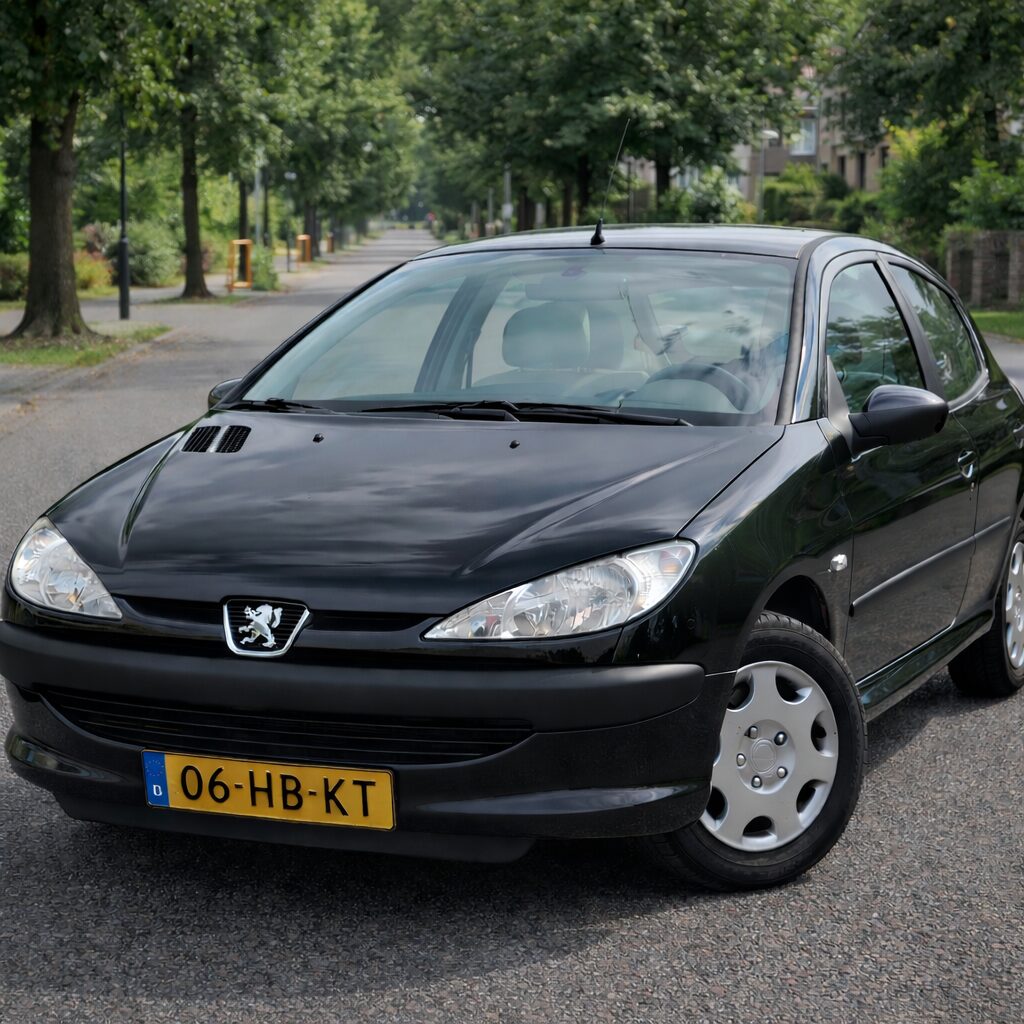
The automatic transmission of the Peugeot 206 regularly suffers from faults. These show up as jerky gearchanges, slipping and warning lights. The 1.4 petrol engine with automatic gearbox in particular is prone to transmission problems. An overhaul is often expensive. The costs are usually higher than the residual value of the car. Owners also regularly report faults with the gear lever. Do you recognise these issues with your own 206?
The Peugeot 206 with automatic transmission is fitted with an automatic gearbox of the AL4 type, also known as the 4HP20. This automatic gearbox with torque converter – a component that connects the engine power to the gearbox – and electrohydraulic control is known to be a weak point in the otherwise reliable hatchback. In particular, models from the period 2000–2006 develop problems from 80,000 kilometres. Some cars even suffer problems up to 160,000 kilometres.
The complaints range from slight hesitation to complete failure of the transmission. What makes this automatic so sensitive and what can you do about it?
Recognisable symptoms of transmission problems
The AL4 automatic shows various symptoms when problems arise. These complaints mainly occur with a warm engine and after short trips in town.
The most common signs are:
- The gearbox gets stuck in third or fourth gear and does not shift up to the highest gear
- Vibrations and jerky gear changes, often with a banging noise
- Slipping during upshifts, where the engine revs without the car accelerating
- The transmission or engine warning light is illuminated on the dashboard
- The car switches to limp mode and stays stuck in second or third gear
- Increased fuel consumption due to inefficient shifting
These problems are typical for automatics from the PSA group, the company behind Peugeot and Citroën. They occur with both the 1.4 and 1.6 petrol and diesel versions, with the 1.4 petrol engine being particularly sensitive.
‘ Many owners forget to change the transmission oil regularly, which accelerates the problems. ’
What causes these faults?
The causes of transmission problems in the Peugeot 206 can in most cases be traced back to a limited number of technical defects. Understanding these causes helps you make the right choice for repair.
Defective solenoid valves in the hydraulic system
The main cause of shifting problems lies with the solenoid valves. These are electrical valves that control the oil pressure in the gearbox. Due to contaminated oil, the pressure control valves in the valve body – the part of the gearbox where the oil channels and valves are located – wear out. This is the most common problem with the AL4 transmission and can lead to all of the above symptoms.
Aged or contaminated transmission oil
Short trips in town cause contamination to build up in the oil. This build-up clogs the valves and leads to jerky gearchanges. Many owners forget to change the transmission oil regularly, which speeds up the problems.
Sensor and computer faults
Defective speed sensors, temperature sensors or outdated software in the transmission control unit can send incorrect signals. The automatic responds with untidy gear shifts or goes into limp mode.
Mechanical wear at high mileage
From 150,000 kilometres onwards, gears, the torque converter or friction plates can become worn. Leaking seals make this problem worse due to oil loss. This type of damage usually requires a complete overhaul of the transmission.
Diagnosis and possible solutions
At the first signs of transmission problems, prompt diagnosis is important. This helps prevent more serious damage and higher costs.
Step 1: reading fault codes
Have the car scanned with an OBD2 scanner at a dealer or specialist. Typical fault codes are P0715 for a speed sensor fault, P0750 for a shift solenoid problem (an electrical valve that controls the gear) or pressure control faults. These codes point you towards the cause.
Step 2: checking the transmission oil
Check the level and colour of the oil. Black or burnt oil points to problems. A flush service with filter change resolves the complaints in around 50 per cent of mild cases. The costs for this are between €150 and €300.
Step 3: replacing solenoid valves
When the fault codes point to valve problems, the two pressure control valves need to be replaced. The parts cost between €200 and €400, plus labour. Combine this repair with a software update of the transmission and engine control unit for the best result. The total costs are between €500 and €800.
Step 4: complete overhaul in case of severe damage
Have the solenoid valves of the automatic transmission been replaced? Does the automatic still slip afterwards? Then there is probably mechanical wear. The transmission will then have to be opened to replace plates or the torque converter. A full overhaul costs between €2,000 and €4,000.
Overhaul costs versus residual value
This is an important dilemma for owners of a Peugeot 206 with transmission problems. The costs of a full overhaul often exceed the value of the car. A 206 from 2005 with 150,000 kilometres has a value of around €1,500 to €2,500. An overhaul costing €3,000 then makes no economic sense.
For minor complaints it is worthwhile investing in a flush service and valve replacement. These interventions costing €500 to €800 can keep the car reliable for years to come. In the case of more serious damage, selling or scrapping is often the wisest choice.
Gear lever faults and causes
In addition to internal transmission problems, owners also report faults with the gear lever itself. The lever feels notchy or does not respond properly to movement.
Possible causes are:
- Worn cables between the lever and the transmission
- Defective sensors in the lever housing that do not correctly transmit the position
- Contamination or corrosion in the shift mechanism
- Broken lock of the lever in park position
These problems are generally easier and cheaper to solve than internal transmission faults. Replacing cables or sensors costs between €150 and €400. Have this repaired in good time, as a poorly functioning lever can lead to unsafe situations.
Is the Peugeot 206 automatic reliable when buying used?
Are you considering a used Peugeot 206 with automatic gearbox? Then it is wise to take a critical look at the transmission. The AL4 automatic has a known weakness and requires extra attention during the pre-purchase inspection.
Pay attention to the following points:
- Mileage under 100,000 kilometres means a lower risk of problems
- Above 150,000 kilometres, inspection of the transmission by a specialist is recommended
- Ask about the service history of the transmission oil
- Check during the test drive whether all gears shift smoothly
- Pay attention to vibrations or strange noises during shifting
- Check whether there is any oil leaking under the car
Park the car on level ground and apply the handbrake. While the engine is cold, shift from D to R and back to D. A harsh transition indicates valve problems.
Preventive maintenance extends service life
With the right maintenance you will get more kilometres out of the AL4 transmission. Prevention is cheaper than repair.
Important maintenance tips:
- Change the transmission oil every 60,000 kilometres using PSA-specification ATF oil
- Regularly drive longer distances on the motorway instead of only short city trips
- Have the car scanned immediately if in doubt, even if the warning light is not yet on
- Never ignore slipping or hesitation during shifting
- Check annually for oil leaks at the transmission
Owners who follow this advice report that the AL4 transmission can reach 250,000 kilometres. Neglect, on the other hand, often leads to complete failure between 120,000 and 160,000 kilometres.
‘ An incorrect diagnosis or repair can make the problem worse. ’
Dealer or specialist for repairs?
With transmission problems you can choose between a Peugeot dealer and an independent automatic transmission specialist. Both options have pros and cons.
Dealers correctly carry out software updates and have direct access to original parts. Labour costs are higher though. Independent specialists with AL4 experience are cheaper for valve replacement and overhauls. Avoid general garages without brand or transmission specialisation that lack specific knowledge of this transmission.
Always ask about experience with the AL4 transmission and ask for references. An incorrect diagnosis or repair can make the problem worse.
On the Carnews website you will find more information about common problems with various Peugeot models and practical tips for maintenance and repairs. Discover what other car enthusiasts share about their experiences and get more out of your car.
Frequently asked questions
Early symptoms are jerky or delayed shifting (especially between 2nd and 3rd gear) and the feeling that the car briefly “slips” or revs without immediately going faster. If you notice vibrations, a bang or harsh engagement when selecting D or R, especially when the gearbox is warm, that is suspicious. A transmission or engine warning light in combination with being stuck in a certain gear (limp mode) also points to emerging problems. In addition, watch out for dark or burnt automatic transmission fluid and noticeably higher fuel consumption due to unsettled shifting.
The most common causes are worn or contaminated solenoid valves in the AL4 automatic, aged or dirty automatic transmission fluid and overheating due to poor cooling or lots of short journeys. Wear of friction plates and leaks (causing oil pressure to be too low) also often play a role. You can mainly prevent this by changing the automatic transmission fluid preventively every roughly 60,000 km (using the correct PSA-spec ATF), having leaks repaired quickly and not continuously overloading the gearbox (minimal towing of trailers, not driving flat out when cold). If shifting problems start to appear, have the gearbox scanned immediately and, if necessary, have the solenoids and software renewed so that serious internal damage is prevented.
For a defective automatic gearbox on a Peugeot 206 there are roughly four repair options: simply changing/flushing the automatic transmission fluid (relatively straightforward, around €150–€300), where the main costs are labour and oil. A step further is replacing the solenoids/valve body and performing a software update (technically more complex, specialist required, around €500–€800). In the case of serious internal wear you can have the gearbox fully overhauled (highly complex, gearbox removed and opened, around €2,000–€4,000). Finally, you can replace the entire transmission with a reconditioned or new unit (most invasive and most expensive, often from around €3,000 in total).
For a Peugeot 206 with an AL4 automatic, a targeted repair (changing/flushing the oil and possibly replacing the solenoids) is usually financially more attractive than immediately replacing the car, especially if the rest of the car is in good condition. These repairs typically cost a few hundred euros and can significantly extend the life of the gearbox. Only when a complete overhaul or replacement of the automatic is required (costs around €2,000–€4,000 or more) and the car is otherwise quite old or has other major defects does it become reasonable to consider another car. Therefore, first have a specialist assess the condition of the gearbox and the car as a whole and compare those costs with the market value of the 206.
There are no real performance upgrades for the automatic transmission of the Peugeot 206; the known interventions mainly focus on reliability. Common measures include preventive (and more frequent) changing or flushing of the ATF fluid and replacing the solenoids in the valve body. This is often combined with a software update of the transmission ECU, which refines the shift points and reduces complaints. A full overhaul with new friction plates and torque converter counts as the ultimate upgrade for durability, but it hardly changes performance.