
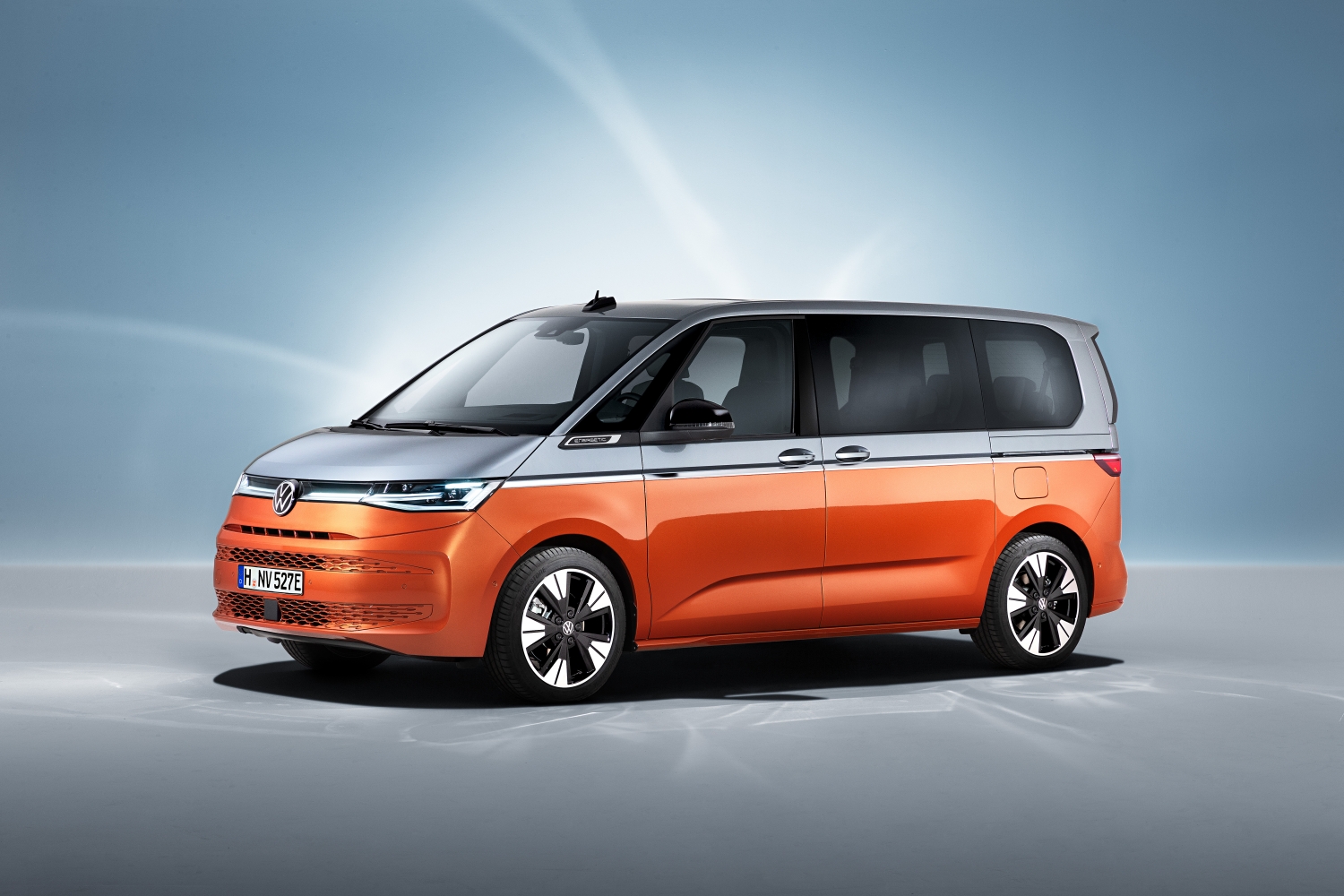
The VW Multivan, especially the T7 eHybrid, regularly suffers from battery problems that lead to slow charging, limited driving range and irritating beeps caused by a weak battery. The range remains limited to 14–22 kilometres instead of the promised 50, and the start-stop function often cuts out. These shortcomings arise from wear, charging errors and software issues that undermine reliability. Want to know what’s going on and how to solve these problems?
Why the battery charges slowly in the T7 eHybrid
With the T7 Multivan eHybrid, owners report that the battery charges slowly, even after a whole night on the charger. The system indicates that the battery is full, but the range remains stuck at around 20 kilometres. This problem is linked to several factors that limit charging performance.
The hybrid battery does not charge fully because of software problems in the energy management system (the system that controls power distribution in the vehicle). The weight of the electric motor and the battery itself places a heavy demand on the charging infrastructure. In addition, door and lighting sensors sometimes interfere with charging sessions. Owners report that random interior lights come on while charging, which can interrupt the charging cycle.
Regularly install the available OTA updates (over‑the‑air software updates that are installed via the internet) via the infotainment system. These updates improve stability and address charging problems. Charge the Multivan for at least 24 hours via the household socket to give the system a chance to regenerate fully. Check that all doors are properly closed and switch off non‑essential functions such as air conditioning and lights while charging.
‘ The system then switches this off as a signal that replacement is needed. ’
Start-stop function shows a fault
In the Multivan, the start-stop function regularly switches itself off, recognisable by the A symbol with a line through it on the dashboard. This happens even when all conditions seem to be met: in neutral, brake pressed and air conditioning off. The system displays the message “not available” as soon as you stop at a traffic light.
The main cause is a battery that is nearing the end of its service life. After five to seven years, the battery no longer supplies enough voltage to support the start-stop function. The system then switches this off as a signal that replacement is needed. In addition, a faulty LIN wire (communication cable in the LIN‑bus system) between the battery monitor and the alternator can block communication, which results in fault code 02252.
First measure the battery voltage. With the engine switched off it should be at least 12.6 volts, and while driving around 14.4 volts. If the voltage is lower, replacement is necessary. Make sure the new battery is programmed correctly, otherwise the start-stop function will still not work. In the case of fault code 02252, you should have the LIN wire inspected and, if necessary, replaced.
Solving battery warnings and beeps
Common warnings in the Multivan include messages about low battery voltage, combinations of flashing warning lights and beeps when starting. Sometimes the engine does start but immediately cuts out again with a flashing immobiliser warning light. This points to an acute voltage drop that confuses the starting system.
A weakened battery does not provide enough power to run all electrical systems at the same time. This causes malfunctions in CAN‑bus communication (the network that allows the electronic modules in the vehicle to communicate with each other) between various modules in the vehicle. In the T7, programming errors after a battery change can also disrupt key recognition, leading to immobiliser problems (start blocking).
Fully charge the battery with an external charger and then test several starts in succession. This often restores communication on the CAN‑bus. If the warnings continue to appear, check whether the battery has been correctly registered in the system. Use an OBD scanner (diagnostic device that reads fault codes from the vehicle) to read and clear fault codes. For persistent problems, you should have the alternator tested, as low charging voltage causes the same symptoms.
Common symptoms of battery problems
If you recognise one or more of these signals, there is a good chance that the battery or the charging system needs attention:
- Engine jumps to 1000 revs with a “stop-start error” after warming up
- Vehicle suddenly stalls while manoeuvring, especially on full steering lock
- Dashboard lighting behaves unpredictably while driving
- Slow or laboured starting, even after a short stop
- eHybrid range remains below 25 kilometres after fully charging
‘ You can prevent many battery problems with targeted maintenance and conscious use. ’
Preventive measures for a longer service life
You can prevent many battery problems with targeted maintenance and conscious use. Regularly drive above 2000 revs so the alternator can recharge properly. This is especially helpful when using the vehicle as a camper or for frequent short trips, where the battery gets little chance to recharge.
Use a trickle charger when the Multivan is parked up for longer periods. This prevents deep discharge, which shortens the service life. Always check before setting off that all doors are properly closed and that the engine temperature is not too high. High power demand from the air conditioning or other consumers during start-stop moments puts extra strain on the battery.
With the T7 eHybrid, it is advisable to charge via the household socket rather than only while driving. Avoid full steering lock when the battery charge is low, as this can cause abrupt stalls. With camper use, have the battery replaced proactively after about five years, even if the symptoms are still limited.
When professional help is needed
Some problems require specialist diagnostics. If you see fault codes or the immobiliser light keeps flashing after several attempts, contact a VW dealer. They can use VCDS (diagnostic software for VW models) or professional OBD tools (professional diagnostic equipment that works via the OBD port) to check communication between modules and carry out software updates that are not available via OTA.
Dealer support is also needed in the case of persistent charging problems in the T7 eHybrid. There have been cases where specific components had to be replaced because they were disrupting charging sessions. Waiting times for these parts can be long, so report problems in good time.
Do not ignore the A symbol with a line through it, as it may indicate underlying problems such as oil leaks at the crankshaft or noises from the flywheel. These mechanical issues get worse if you leave them and lead to more expensive repairs.
On the Carnews website, you can find more information about maintenance schedules, electrical systems and common problems with VW models. Discover which preventive steps you can take to keep your Multivan reliable.
Frequently asked questions
A Multivan with a start-stop system requires a heavier battery specifically designed for start-stop operation (usually AGM or EFB), with the correct capacity and proper registration/coding in the charging system. The system repeatedly demands high starting currents and stable voltage for all electronics, which means a standard or worn battery will quickly cause problems. In addition, the vehicle is highly dependent on battery communication (including via the LIN wire) for charge control and fault detection, so even small voltage or communication disturbances can immediately cause the start-stop system to shut down. As a result, even minor wear or small electrical defects are more quickly noticeable as faults.
You can often recognise a weak battery from a start-stop system that switches itself off spontaneously or shows “not available” even though all the conditions (warm engine, doors closed, limited air conditioning load) are met. Other signs include slow or hesitant starting and the engine sometimes cutting out again immediately, often with a flashing immobiliser light due to low voltage. You may also notice the on-board voltage dropping (lights dimming, electronic systems behaving oddly) or fault messages such as “stop-start error” appearing once the engine is warm. In practice, a start-stop system that is structurally disabled in a Multivan is often an early warning that the main battery is at the end of its service life.
Yes: avoid driving almost exclusively short journeys and regularly make longer trips where the engine runs at around 2000 rpm or higher, so the battery can fully recharge. Limit unnecessary power consumers (air conditioning, seat heating, powerful audio) in city traffic and when stationary. When the vehicle is parked up for longer periods or laid up for a season, use a good trickle charger to prevent deep discharge. Have the charging voltage and condition of the battery checked regularly and replace the battery in good time if the start-stop function drops out more often.
For a Multivan with start-stop technology, an AGM or EFB battery is the most suitable, depending on what was originally fitted (usually AGM for heavier/start-stop systems). Always replace it with the same type and with at least the same capacity (Ah) and cold cranking current (CCA). Make sure the new battery is correctly registered/coded in the vehicle so that the charging and start-stop systems work properly. After installation, check that there are no fault codes present and that the start-stop function is active again.
First check your battery: measure the voltage (at least about 12.6 V with the engine off, about 14.4 V with the engine running) and, if in doubt, have a load test carried out or replace the battery as a precaution. Make sure the conditions for start-stop are satisfied: doors closed, no maximum air conditioning load, engine at operating temperature and as few electrical consumers as possible switched on. If necessary, read any fault codes with an OBD tool (such as VCDS) to see whether there are any messages relating to the battery, charging voltage or LIN communication. Regularly drive longer distances at around 2000 revs or more and use a trickle charger when the vehicle is parked up for long periods to keep the battery in good condition.