
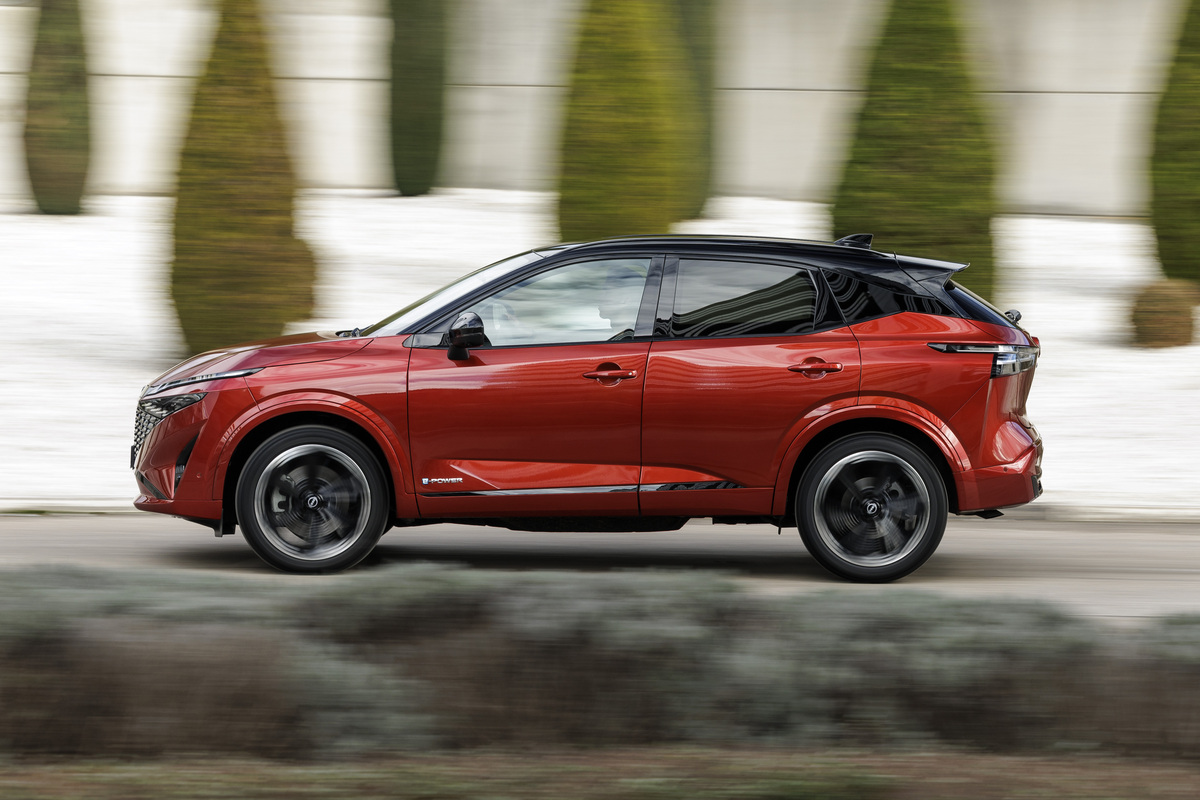
The Nissan Qashqai, especially older models, suffers from persistent battery problems that regularly cause starting issues. Models built before 2016 are notorious for their weak FIAMM batteries, which often fail after just two to three years, while later versions with VARTA batteries are an improvement but still prone to rapid discharge if mainly used for short trips and intensive electrical use. Why does this popular family car run flat so often, and how can you avoid expensive breakdowns?
Weak batteries in early Qashqai models
Many owners of Nissan Qashqai models from the 2007–2016 period recognise the problem: the car will not start after standing still for a few days, or you see the dashboard lighting dim significantly when starting. The cause is often the fitted FIAMM batteries, which simply were not designed for the electrical load of modern cars. These batteries last on average three to four years, whereas you would normally expect five to six years.
After 2016 Nissan switched to VARTA batteries, which improved service life and reliability. However, newer Qashqais also remain vulnerable to battery problems, especially when they are mainly used for short trips. The Nissan Qashqai car problems reported by owners often relate to these battery issues.
‘ At temperatures below zero a battery quickly loses 30 to 40 per cent of its capacity. ’
Why does the battery run flat so quickly
Short trips are the main enemy of any car battery, and the Qashqai is no exception. During a drive of only five to ten minutes, the battery does not charge enough to compensate for the power lost during starting. Add to that the fact that modern cars constantly use small amounts of power for the alarm, central locking and memory functions, and you can see why the battery gradually runs down.
Winter conditions significantly worsen the problem. At temperatures below zero a battery quickly loses 30 to 40 per cent of its capacity. The cold oil in the engine also requires more starting power, placing extra load on the battery. In addition, using seat heating, rear window heating and ventilation increases electrical demand considerably.
Another common cause is consumers that are accidentally left on. If you forget to switch off the parking lights or interior lights, the battery can be completely drained within a few hours. The infotainment systems in the Qashqai also use relatively high amounts of power, even when the engine is switched off.
Recognise the symptoms in time
A battery often announces its impending failure with clear signals. Watch out for the following warning signs:
- The engine starts slowly or with audible difficulty, especially in the morning
- The headlights dim while starting
- The dashboard shows strange error messages that disappear after starting
- Electrical components such as windows and seat adjustment respond more slowly than normal
- You hear a clicking sound when turning the ignition key
If you measure the battery voltage with a multimeter, it should be between 12.4 and 12.8 volts at rest. Anything below 12 volts indicates a flat or defective battery. When starting, the voltage should not drop below 9.6 volts.
Which battery fits your Qashqai
The correct battery for your Qashqai depends on the model year and engine version. Most models need a 12V battery with a capacity between 60 and 70 Ah (ampere-hours). Dimensions vary, but the standard size for the Qashqai is approximately 242 x 175 x 190 millimetres.
When replacing the battery, pay attention to three important specifications. First, the capacity in Ah, which indicates how much current the battery can supply over a certain period. Second, the cold cranking amps (CCA), which determines how much power the battery delivers at low temperatures. For the Qashqai a value of at least 540 CCA is recommended. Third, the mounting configuration: check whether the terminals are on the right or left.
If you frequently make short trips, it is best to choose an EFB (Enhanced Flooded Battery) or AGM (Absorbent Glass Mat) battery. These types are more resistant to frequent charge and discharge cycles. Brands such as VARTA, Bosch and Exide offer reliable options that last on average five to six years.
‘ Preventive replacement helps avoid annoying breakdowns. ’
Test the battery yourself or have it checked
You can easily test the battery yourself with a multimeter. Set the device to DC mode and measure the voltage across the battery terminals. First measure with a cold engine, then immediately after starting, and again after ten minutes of driving. A healthy battery shows respectively 12.6 volts, 9.8 volts and 14.2 volts.
You can have a more thorough test carried out at a garage or Kwik-Fit. They have professional battery testers that not only measure the voltage, but also the internal resistance and CCA value. This test takes a few minutes and immediately gives a clear picture of your battery’s condition. Many garages offer this test free of charge.
Test the battery at least once a year, preferably before winter. If the battery is older than four years, check it twice a year. Preventive replacement helps avoid annoying breakdowns.
The car will not start because of a flat battery
If your Qashqai is stranded with a flat battery, there are three immediate solutions. The fastest method is to ask another car for a jump start. Connect the red jump lead to the positive terminal of both batteries, and the black cable to the negative terminal of the charged battery and to a metal earth point under the bonnet of your Qashqai. First start the donor car, let it run for a few minutes, and then try to start your own car.
A second option is a portable jump starter, a handy device you can keep in the boot. This compact battery provides enough power to start the engine without help from another car. Charge the booster regularly to keep it ready for use.
The third option is to connect a trickle charger and charge the battery for a few hours before starting. This is the least stressful method for the battery, but it does require patience.
Once the car has started, drive for at least thirty minutes without using many electrical consumers. This gives the alternator time to recharge the battery. Ideally, take a longer motorway drive, because urban stop-start traffic hardly charges the battery.
Prevent battery problems with good maintenance
A few simple habits greatly extend your battery’s service life. Make at least one trip of thirty minutes or longer every week so the battery can fully charge. During short trips, use as few electrical features as possible, such as air conditioning, seat heating or the audio system.
If your car will be standing still for more than a week, consider connecting a trickle charger or battery maintainer. This device supplies a constant, low current that keeps the battery charged without overcharging it. This is especially useful in winter periods or during holidays to prevent unpleasant surprises.
Regularly check the battery terminals for corrosion. White or green deposits restrict the flow of current and can cause starting problems. Clean the terminals with a wire brush and coat them with battery grease or petroleum jelly.
Also pay attention to how firmly the battery is secured. A loose battery will shake while driving, which can cause internal damage and shorten its service life. Check the clamp and tighten it if necessary.
‘ Note that the e-Power version cannot be charged from a plug. ’
Specific points of attention for e-Power versions
If you drive a Nissan Qashqai e-Power, a few extra considerations apply. This hybrid version has both a conventional starter battery and a small traction battery (drive battery for the electric motor). The petrol engine charges the battery while driving, but regenerative braking plays an important role in charging efficiently.
Activate B mode or the e-Pedal function to make maximum use of brake energy. This charges the battery while slowing down, saving fuel and improving battery condition. Without sufficient regenerative braking, the battery state of charge can drop, causing the petrol engine to switch on more often and fuel consumption to rise.
Note that the e-Power version cannot be charged from a plug. The petrol engine acts as a generator for the electric motor. Under intensive use or on the motorway, the engine will run regularly to supply enough energy.
The starter battery of e-Power models lasts on average four to six years, provided you adapt your driving style to the hybrid system. Short trips are less problematic than with conventional Qashqais, because the system handles start-stop situations more efficiently.
When should you replace the battery
Replace the battery preventively after four to five years, especially if you mainly make short trips. Do not wait until the battery fails completely, as sudden failure usually happens at the most inconvenient moment. A new battery costs between 80 and 150 euros, depending on the type and brand.
When replacing, you must take into account resetting the start-stop system. Many garages have the correct equipment to register the new battery in the on-board computer. This ensures that the charging system treats the battery correctly and maximises its service life.
Do not choose a cheap battery of dubious quality. The saving is minimal, while the risk of early failure increases significantly. Invest in a reliable brand with a warranty.
Find out more about the Nissan Qashqai
Battery problems are just one aspect of maintaining your Nissan Qashqai. On the Carnews website you will find extensive information on other common issues, maintenance tips and owners’ experiences. Explore the different model years, engine variants and practical advice to get the most out of your car. Stay informed and discover everything you need to know about the Qashqai.
Frequently asked questions
The most common causes of battery problems with the Nissan Qashqai are short journeys that prevent the battery from charging properly and therefore make it wear out faster. In addition, winter cold plays a major role, as low temperatures reduce battery capacity and starting power. Leaving consumers such as lights, infotainment and accessories on for a long time with the engine switched off can also drain the battery quickly. In e-Power models, driving and braking behaviour (insufficient regenerative braking) and normal wear of the smaller traction battery also play a role.
You can recognise a weak or defective battery in your Nissan Qashqai by slow starting or not starting at all, often with dimming headlights and interior lighting. A battery voltage that consistently remains below 12 volts (measurable with a voltmeter) also indicates problems. While driving, you may notice that the battery charges poorly, or, in e-Power models, that the engine cuts in more often than normal. In hybrid versions, less available EV driving mode and clearly higher fuel consumption are also strong indications of a worn battery.
The estimated costs for replacing the starter battery in a Nissan Qashqai are generally around €150–€300, depending on brand, capacity and labour charges. In most cases, a maintenance-free 12V lead–acid battery (AGM or EFB, depending on the start–stop system and equipment) is recommended. Ideally, have a battery fitted that is specifically specified by the manufacturer or an approved supplier for your Qashqai type (petrol, diesel or e‑Power). Always check the required capacity (Ah) and cold cranking current (A) in the service book or with the dealer.
Make sure you take a longer drive of at least 30 minutes every week and avoid making only short trips wherever possible, so that the battery can charge properly. Switch off unnecessary electrical consumers when the engine is off, and use a trickle charger if the car is stationary for longer periods in order to prevent deep discharge. Have the battery tested annually (especially before winter) and consider replacement after 4 to 5 years. With an e-Power Qashqai, it also helps to use B mode or e‑Pedal frequently, so regenerative braking charges the battery more effectively.
It is sensible to go to a professional garage with battery problems in a Nissan Qashqai if the car starts slowly or not at all, or if the lights clearly dim. Professional diagnosis is also needed if the battery voltage repeatedly drops below 12V or if the battery still does not appear to charge properly after a longer drive. For e-Power models, a visit to the garage is recommended if EV mode is clearly less available, the petrol engine cuts in unusually often or fuel consumption noticeably increases. In addition, have the battery checked preventively if it is older than 4 to 5 years or if you regularly experience problems during cold periods.