
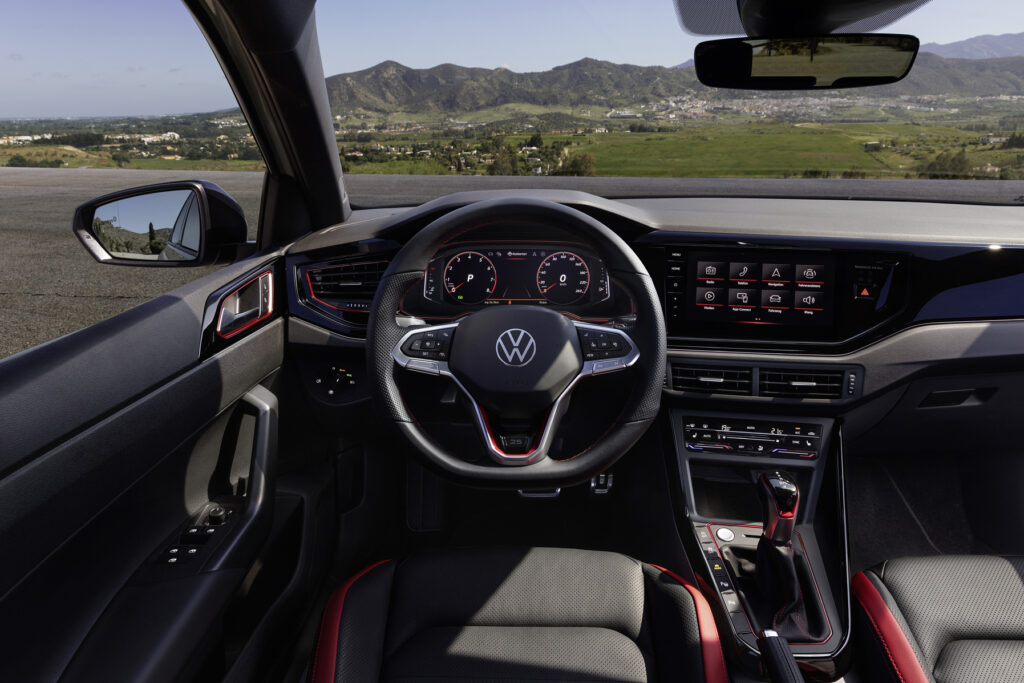
The Volkswagen Polo combines strong resale value with timeless styling, but specific engine issues and electronic failures make a thorough generation-by-generation inspection essential. Knowing about timing chains, oil consumption and recalls prevents expensive surprises after purchase. This article helps you make targeted choices for the fifth and sixth generation, with concrete checks for TSI engines and bodywork.
Why you should check timing chain and oil consumption for every Polo generation
The Volkswagen Polo has generation-specific weak spots that have a direct impact on maintenance costs. Timing chains on 1.2 and 1.4 engines stretch over time and cause rattling noises on cold starts. This problem occurs regularly on the fourth generation (2002–2009) and early fifth generation (2009–2017). Oil loss on TSI engines is another common issue, especially on examples built before 2015. Always inspect the engine bay for oil stains and ask for the service book with proof of regular oil level checks.
Rust appears mainly in wheel arches, sills and the underbody on older generations. From the third generation (1994–2002) rust protection improved, but cars imported from abroad (import cars) from salt-rich regions sometimes show hidden damage. Measure paint thickness on unusually pristine bodywork to detect repair work. During the test drive, test stability at higher speeds and listen for strange noises from the suspension.
Polo V 2009–2017: known problems and reliability
The fifth generation offers excellent build quality and resale value, but early 1.4 TSI engines suffer from cylinder failure and high oil consumption. Ignition coils fail regularly before 100,000 kilometres, which can lead to complete engine replacement. This problem occurs mainly on the GTI version with the 1.4 TSI. Prefer examples with the 1.8 TSI from 2015 onwards or the three-cylinder 1.0 TSI after the 2014 facelift. These engines show significantly fewer complaints about oil use and cylinder failure.
Other points to look out for on the fifth generation:
- Inlet fouling on TSI engines due to direct injection
- Timing chain that stretches after 120,000 kilometres
- Awkwardly positioned fuse box in the footwell
- Crash damage on cheap import cars
Always ask for the full service history and check whether recalls for the TSI engine have been carried out. Dealer-approved used cars with BOVAG warranty offer extra peace of mind for this generation. Budget between €5,000 and €16,500 for well-maintained examples, with GTI versions at the upper end of this range.
Polo VI from 2017: modern tech with specific pitfalls
The sixth generation introduces modern infotainment and driver-assistance systems, but also brings new problem areas. Oil consumption on TSI engines remains a concern, especially on the three-cylinder 1.0 TSI. DSG automatics require extra checks for slipping clutches and jerky gear changes. Software updates resolve many electronic problems, but not all dealers apply these as standard during services.
The 1.5 TSI offers better reliability than the 1.0 variant, but uses more fuel. Always check on used cars that all software updates have been carried out and test the infotainment system thoroughly for unstable connections. Facelift models from 2021 onwards feature more driver-assistance systems and resolve some of the early teething troubles.
For the sixth generation, pay particular attention to:
- Full service history with proof of oil level checks
- DSG operation during a test drive in town and on motorway
- Completed recalls checked via the RDW registration check
- Electronic issues with parking sensors and camera
Prices start at around €15,000 for low-mileage examples. If in doubt, choose a younger used car with manufacturer’s warranty over a cheaper one without verifiable service history.
Checklist for used Volkswagen Polo TSI
TSI engines require specific inspections because of their direct injection and turbocharger. Start with a cold engine and listen for rattling noises that point to chain stretch. Check the oil level and inspect the engine bay for leaks around the rocker cover and turbo connections. Ask for proof of interim oil level checks, as TSI engines often use oil between services.
Test turbo boost during acceleration. Weak performance or smoke suggests turbo problems. Check whether the ignition coils have been replaced recently, especially on examples over 80,000 kilometres. An engine warning light can point to coil failures or lambda sensors (sensors in the exhaust that measure the fuel-air mixture). If in doubt, have a compression test carried out to rule out cylinder wear.
Additional TSI checks:
- Check recalls via registration on the RDW website (website of the Dutch vehicle authority Rijksdienst voor het Wegverkeer)
- Ask for a dealer stamp for every service
- Check whether the timing chain has been replaced before 120,000 km
- Test the DSG automatic for jerks at low speed
‘ The Polo VI suffers less from engine problems but more from software and electronic niggles that require regular updates. ’
Polo V versus VI: comparing reliability and pitfalls
The fifth generation scores better for mechanical simplicity and maintenance costs, while the sixth generation offers more comfort and safety. Early Polo V examples with the 1.4 TSI remain riskier than later versions with 1.0 or 1.8 TSI. The Polo VI suffers less from engine problems but more from software and electronic niggles that require regular updates.
Maintenance costs are lower on the fifth generation thanks to simpler electronics and greater parts availability. The sixth generation demands more budget for software updates and more complex repairs to assistance systems. Both generations are prone to oil consumption on TSI engines, but the Polo VI has fewer extreme cases.
Choose the fifth generation if you prioritise low running costs and mechanical reliability. The sixth generation is a better fit if you want modern technology and active safety. Both require thorough checks of service history and recalls.
Preventing problems on 2017–present Polo when choosing a used car
Early examples of the sixth generation from 2017 and 2018 more often require software updates for infotainment and engine management. Check that all updates have been applied via a dealer check or VCDS diagnostic read-out. Missing updates can lead to starting problems, failure of parking sensors and irregular engine behaviour.
DSG automatics demand extra attention on this generation. Slipping clutches are caused by wear of the dual-clutch pack, especially on cars used mainly in town. During the test drive, check that the gearbox shifts smoothly at low speeds and does not shudder when pulling away from a standstill. Ask for proof of DSG services to avoid expensive repairs.
Avoid these pitfalls with Polo VI used cars:
- Examples without a complete dealer history
- Cars with unexplained low mileage
- Cars imported from abroad (import cars) without BPM check (check of the Dutch private motor vehicle and motorcycle tax)
- Used cars without proof that recalls have been carried out
Prioritise facelift models from 2021 where budget allows. These versions resolve many electronic teething troubles and offer better warranty conditions on younger used cars.
General buying tips for every Polo generation
Regardless of generation, a few checks are always standard. Inspect wheel arches, sills and the underbody for rust or repair work. Measure paint thickness on body panels to detect hidden damage. Test brakes, suspension and steering during an extended test drive over different road surfaces.
Always ask for the service book with dealer stamps. Used cars without verifiable history are a bigger risk with TSI engines, which require regular oil level checks. Use the registration number to check whether recalls have been carried out and whether the mileage matches previous MOT/TÜV inspections.
Dealer-approved used cars with BOVAG warranty offer extra reassurance, especially for TSI examples with known engine problems. Budget for timing chain replacement at higher mileages and coils on TSI engines over 80,000 kilometres. These investments prevent engine damage and maintain reliability.
On the Carnews website you will find extensive information on common problems for each Volkswagen model, maintenance schedules and comparisons between generations. Discover more tips for smart used-car choices and avoid expensive surprises after purchase.
Frequently asked questions
On the first and second generation Polo, rust (wheel arches, sills, underbody) and worn carburettors/timing belts are the best-known weak spots. On the third and fourth generation you mainly need to look out for timing chain problems (rattling on cold start), coil and ignition issues and possible oil consumption. The fifth generation, especially the early 1.4 TSI (GTI), carries a risk of cylinder failure, high oil consumption, chain problems and expensive engine overhauls. The sixth generation mainly has issues around TSI oil consumption, possible DSG wear and the need for up-to-date software.
The early generations (1 to 3) have simple, less powerful engines with a more mechanical driving feel, more suited to enthusiasts and basic use than to genuinely sporty driving. From generation 4 and 5 the engines become quieter and more refined, with TSI turbo engines that deliver clearly better performance but are more sensitive to maintenance. The GTI variants (especially the 1.8 TSI GTI from 2015 onwards) offer the sportiest driving characteristics and strong engine performance, matching a sporty driving style. For everyday comfort and reliability, the more modest 1.2/1.0 TSI engines in generations 4 to 6 are the most suitable.
Early Polo generations (1 to 3) have hardly any infotainment or driver-assistance systems; at most a basic radio and possibly ABS, so comfort and active safety depend mainly on the chassis and basic equipment. From the fourth and especially the fifth generation, modern infotainment systems with display, Bluetooth and navigation become available (often as options), which clearly improves ease of use and travel comfort. In the sixth generation, extensive infotainment, connectivity options and driver-assistance systems (such as emergency braking assist, adaptive cruise control and lane keeping assist, partly standard, partly optional) have become more important and lift both comfort and safety to a much higher level. The availability and sophistication of these systems therefore increase with each generation, with the biggest step on the latest generation Polo.
Average maintenance costs are lowest on the fourth and fifth generation, with good parts availability thanks to the large number of cars sold; on the first and second generation some specific parts can become harder to find and sometimes more expensive, although there is still a reasonable supply via enthusiasts and specialist suppliers. The third generation still has good parts availability but needs more frequent attention to ignition and timing components. The latest, sixth generation scores best on fuel efficiency thanks to modern TSI engines, followed by the fifth generation. In practice, the fifth generation offers the best combination of resale value, maintenance costs, parts availability and still very good efficiency.