
The Volkswagen Golf is among the best-selling used cars in the Netherlands, but its popularity goes hand in hand with well-known technical issues that can really come back to bite you. TSI engines with excessive oil consumption, DSG gearboxes with wear-prone clutches and timing chains that rattle before they fail: these are risks you are better off being aware of before you sign on the dotted line. With the right checklist you buy smartly and avoid expensive surprises.
What makes the Golf still attractive despite these issues? The driving characteristics are pleasant, parts are widely available and, with proper maintenance, the model gives many years of reliable service. So the question is not whether you should buy a used Golf, but how to pick the right one. In this buying guide you can read exactly what to look out for, from generation-specific problems to concrete test points during the test drive. You can find many of these issues on the page about Volkswagen Golf problems.
what to look for when checking the engine
The engine largely determines the lifespan and maintenance costs of your future Golf. Different generations have their own recurring weak points. Always start with a visual inspection and a thorough test drive of at least twenty kilometres. That way you can pick up on symptoms that remain hidden on a short drive.
On petrol engines, check the oil level before and after the test drive. The 1.4 TSI engine from the Mk6 and Mk7 generations is known for excessive oil consumption due to wear on the piston rings. Some owners top up half a litre to a full litre every thousand kilometres. This problem gets worse at higher mileages and eventually leads to soot build-up in the combustion chamber. Ask the seller about the oil consumption and check whether it needs topping up regularly. A healthy TSI uses at most a quarter of a litre between two services.
During a cold start, listen for rattling noises from the engine bay. This often points to a worn timing chain, a common problem on the Mk4 and Mk5 generations. A failed chain can cause engine damage, with repair costs quickly heading towards three thousand euros. Always ask whether the chain has been replaced preventively around the hundred-thousand-kilometre mark. If in doubt, have it checked by a specialist before you buy.
‘ Many owners ignore this maintenance interval, which accelerates wear. ’
DSG gearbox under the microscope
The DSG automatic delivers smooth shifting, but is also a source of expensive problems. In particular, the seven-speed DSG from the Mk6 and Mk7 generations suffers from worn clutches and failures in the mechatronics unit. Repairs quickly add up to more than two thousand euros and in some cases the entire gearbox has to be replaced.
During the test drive, check whether the gearbox changes gear smoothly, without jolts or hesitation. Pay particular attention at low speeds and when pulling away from a standstill. Ask whether the DSG oil and filter have been changed regularly. Ideally this happens every sixty thousand kilometres. Many owners ignore this maintenance interval, which speeds up wear. Also check whether there is any warranty or maintenance documentation available for previous DSG repairs.
On manual Golfs the risk is lower, but you still need to test the clutch. Especially on GTI versions, clutch plates wear faster due to sporty driving. A sticking or slipping clutch indicates that replacement is imminent, which costs around eight hundred euros at a garage.
checking the cooling system and water pump
Cooling system problems occur regularly on petrol engines from the Mk6 and Mk7 generations. The water pump and thermostat can start to leak, leading to coolant loss and engine overheating. Inspect the ground under the car for traces of coolant and check the expansion tank for the correct level.
During the test drive, keep an eye on the temperature gauge. After ten to fifteen minutes of driving it should remain stable at around ninety degrees. Fluctuations point to a faulty thermostat. Ask whether the water pump has been replaced preventively; on many models this is done around the one hundred and fifty thousand kilometre mark. Expect to pay between four hundred and six hundred euros for replacement.
diesel engines and exhaust system
Diesel versions of the Golf are economical, but come with their own problems. The diesel particulate filter (a filter that removes soot particles from the exhaust gases) gets clogged after lots of short trips, leading to loss of power and a warning light on the dashboard. Regeneration of the filter requires a long drive at operating temperature, but if that is postponed for too long the filter has to be replaced. This quickly costs a thousand euros or more.
On Mk7 and Mk8 models, check the AdBlue system, which reduces harmful nitrogen emissions. Crystallisation in the injectors occurs when maintenance has been neglected. Flushing the system will usually solve this, but does require a substantial investment. During the test drive, check that the turbo builds boost smoothly without the exhaust smoking under hard acceleration. Smoke points to turbo problems or leaking gaskets.
symptoms you must not ignore
- Blue or black smoke from the exhaust under acceleration
- Whistling noise when accelerating, which indicates turbo wear
- Unstable idle or the engine regularly stalling
- Warning light for the DPF or AdBlue system
‘ Owners regularly report software glitches, slow-responding screens and functions dropping out. ’
checking electronics and infotainment
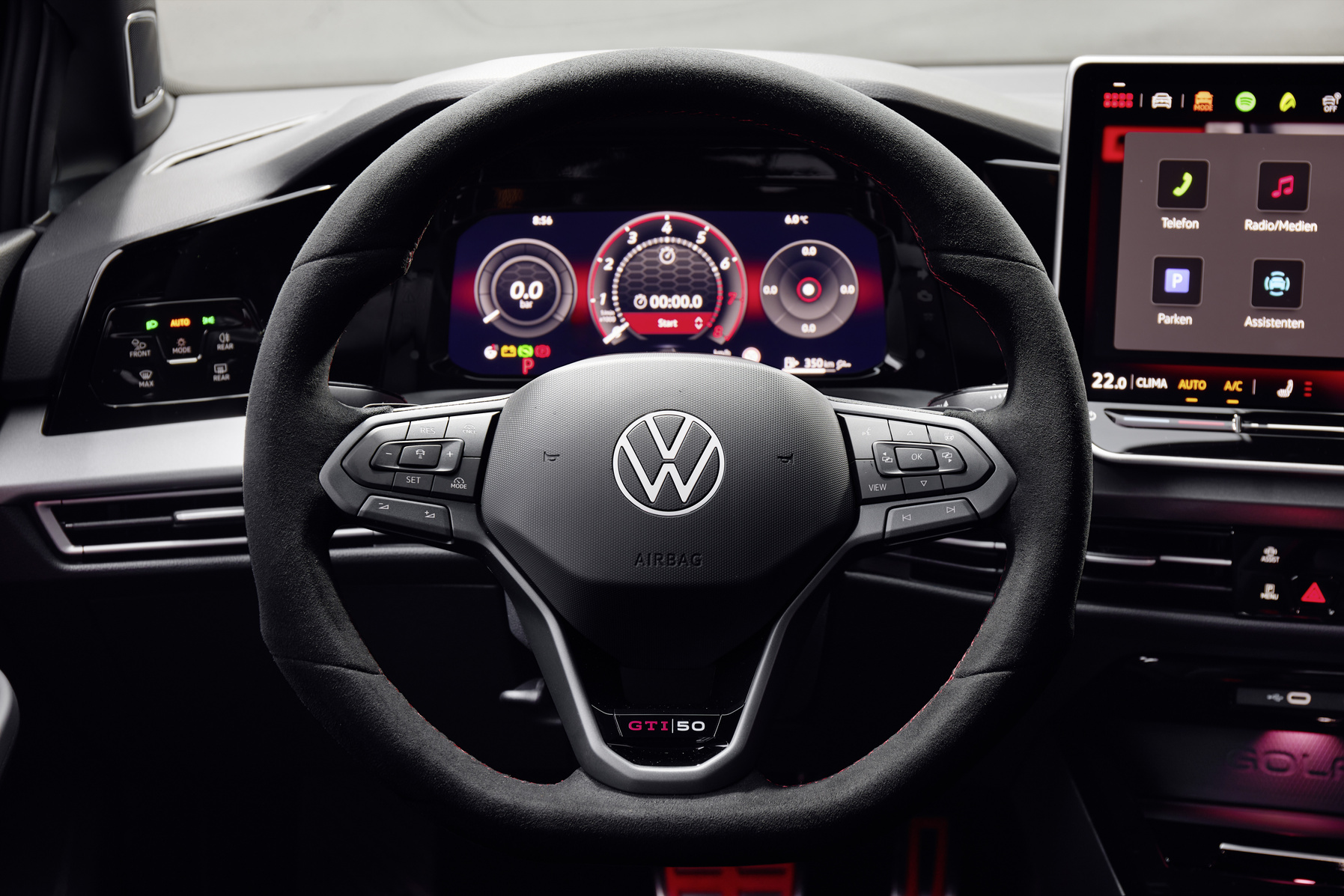
From the Mk8 generation onwards, the Golf is equipped with extensive touchscreen controls, which brings new problems. Owners regularly report software glitches, slow-responding screens and functions cutting out. A software update at the dealer can help, but hardware faults are expensive to replace.
During your visit, test all functions: navigation, climate control, reversing camera and smartphone connectivity. Check whether the air conditioning blows cold; a faulty system will cost four hundred euros or more to repair. On older models from the Mk5 and Mk6 generations, ignition coil and ignition issues also occur, leading to misfires and loss of power. Have any fault codes read with an OBD scanner to bring hidden problems to light.

service history and mileage
A complete service history is worth its weight in gold when buying a used Golf. Always ask for the service booklet or dealer documentation, especially on diesels with strikingly low mileage. Odometer tampering does occur, so compare the reading with previous MOT reports and service history.
Check whether the car has been serviced at the correct intervals. Longer intervals of thirty thousand kilometres are only suitable if the car is used mainly on motorways. With lots of short trips or city driving, wear increases and shorter intervals are necessary. Also pay attention to preventive replacements such as the timing chain, water pump and DSG oil. If these are missing, you will have to set aside a budget for them yourself.
On cars with more than two hundred thousand kilometres, you should expect a major service or overhaul somewhere in the history. If that is missing, allow for unexpected costs between one and three thousand euros for necessary repairs. A Car-Pass (a document with recorded mileage readings) or RDW report helps you to rule out mileage fraud.
pre-purchase inspection for peace of mind
If you are unsure about the condition of a potential Golf, have a pre-purchase inspection carried out by an independent garage or inspection body. For around one hundred and fifty euros you get a thorough check of the engine, transmission, suspension and electronics. You earn this amount back as soon as one major issue is found that you can negotiate on, or that makes you walk away from the purchase.
Also check tyre wear. Uneven wear indicates suspension issues or incorrect wheel alignment. Test the brakes for vibrations when braking; warped discs are a common problem on the Golf. Replacing discs and pads all round costs around five hundred euros.
‘ Ideally, choose a Golf with full dealer history and avoid examples without clear documentation. ’
are used golfs still reliable
Despite the known issues, the Golf remains a solid choice as a used car, provided you carry out the right checks. Parts availability is excellent and garages have extensive knowledge of the model. With a well-maintained example and a realistic view of possible repair costs, you can enjoy many years of carefree motoring.
Allow an extra budget of five hundred to a thousand euros a year for unexpected maintenance, especially on models with higher mileage or a less complete service history. Ideally, choose a Golf with full dealer history and avoid examples without clear documentation. This way you minimise the chance of nasty surprises and maximise driving pleasure.

more information about your next car
On the Carnews website you will find extensive information about common problems with various car brands and models. Whether you are unsure about a specific Golf generation or are considering other used cars, there is plenty more to discover. Dive into the tips, experiences and buying guides to make sure you are well prepared for your next purchase.
frequently asked questions
On older VW Golfs, problems often occur with the timing chain (rattling noise on cold start), oil consumption on certain TSI engines (blue smoke, frequent top-ups) and DSG automatics that change gear jerkily or slip during the test drive. Also watch for rust on wheel arches, sills and the bottoms of the doors, and check under the car for coolant or oil leaks (stains or drips). Test all electrics and the infotainment, listen for unusual noises from the engine and suspension (knocking or creaking in corners or over speed bumps) and check for vibrations when braking and steering during the drive. Finally, always ask for the service history and proof of major work carried out, such as timing, DSG and water pump replacement.
It is worthwhile buying a VW Golf with problems if the asking price is clearly below market value and the basics – engine, bodywork (no severe rust or accident damage) and gearbox – are sound. Major and expensive items such as a DSG overhaul, timing chain with engine damage, severe oil consumption or a worn turbo usually make it uneconomical. Maintenance and wear parts such as brakes, filters and fluids, coils/spark plugs, simple suspension components and minor electronic faults (sensors, switches) are generally DIY-friendly, provided you have basic tools and an OBD scanner. If in doubt, get a pre-purchase inspection so you can estimate the total repair costs as accurately as possible in advance.
On a used VW Golf with defects, particular attention should be paid to the timing chain (or belt), the DPF/AdBlue system on diesels and the turbo. In addition, check the DSG automatic (or clutch on manuals), the oil consumption of TSI engines in particular and the condition of the water pump/thermostat. Also look carefully for rust on the bodywork and underside, and for electrical/infotainment issues on newer generations. During the test drive, check the brakes and suspension for vibrations and uneven tyre wear.
The hidden ‘costs’ are often in wear parts that only cause issues later on, such as the timing chain/belt, clutch or DSG mechatronics, turbo, DPF/AdBlue system and electronic faults. Excessive oil consumption, rust and worn suspension can also only become apparent over time. Together, these problems can easily add up to thousands of euros in future repairs, especially at higher mileages or with an unclear service history. As a result, there is a real risk that total running costs will be much higher than the initial repair of the visible defects might suggest.