
A used electric car looks attractive, but without a thorough inspection you risk costly repairs shortly after purchase. The latest software must be installed and the control arms deserve extra attention. Also listen out for clicking noises from the rear. These can indicate defective components. Tyre condition, dashboard warnings and battery health ultimately determine whether you are buying a reliable used car or a money pit. Discover exactly what you need to look out for.
Preparatory checks before the viewing
Start your search by checking the model year and specifications. Models after 2023 often have an improved interior with less hard plastic that is prone to scratching. Look for equipment such as heated seats, a heat pump for better efficiency, a reversing camera and cruise control. Versions with steel wheels and basic trim levels are less attractive when it comes to resale.
The mileage gives an initial indication of the price and condition. Entry-level models with a 58 kilowatt hour (kWh) battery and less than 100,000 kilometres generally cost between 16,000 and 20,000 euros. High mileages of around 200,000 kilometres call for extra investigation of the battery. Always ask for the service book, a repair overview and documentation of software updates carried out.
Battery warranty usually runs up to 8 years or 160,000 kilometres, with manufacturers guaranteeing at least 70% remaining capacity. Do not buy a car without remaining warranty, because replacing a battery costs several thousand euros. Also check whether there are known issues with the specific model, such as with the Volkswagen ID.3.
‘ Both can lead to repair costs ranging from several hundred to several thousand euros. ’
Examining exterior and running gear
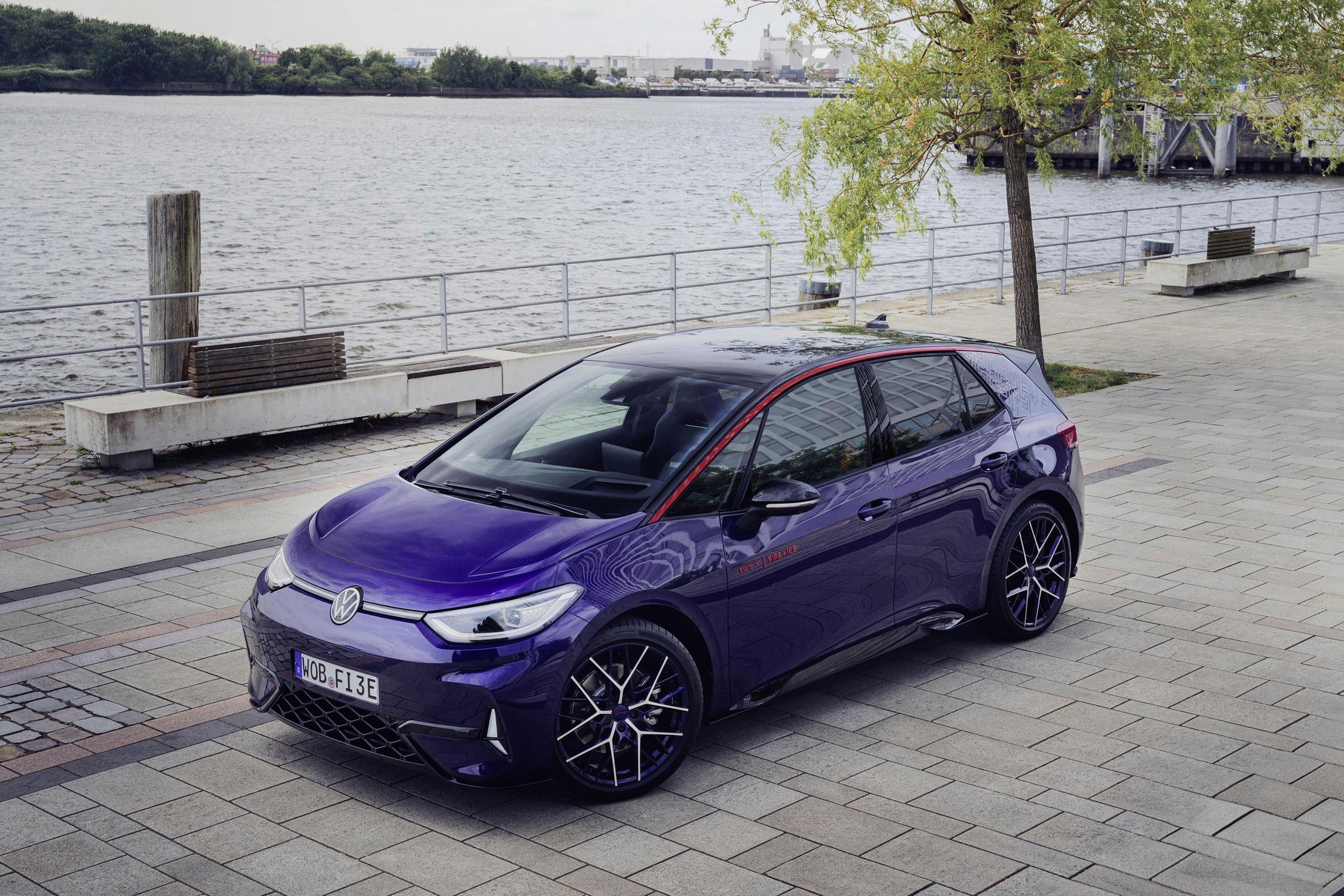
Check the plastic panels for scratches and damage. Early models are prone to this. Inspect the tyres carefully, because electric cars are often hard on tyres due to the higher weight and direct power delivery. The rear tyres wear out faster than the front ones.
During a short test drive, listen for clicking sounds from the rear. This may indicate defective drive shafts or worn control arms. Both can lead to repair costs ranging from several hundred to several thousand euros. Also check the underbody for rust, damage and oil leaks.
Checking interior and technology
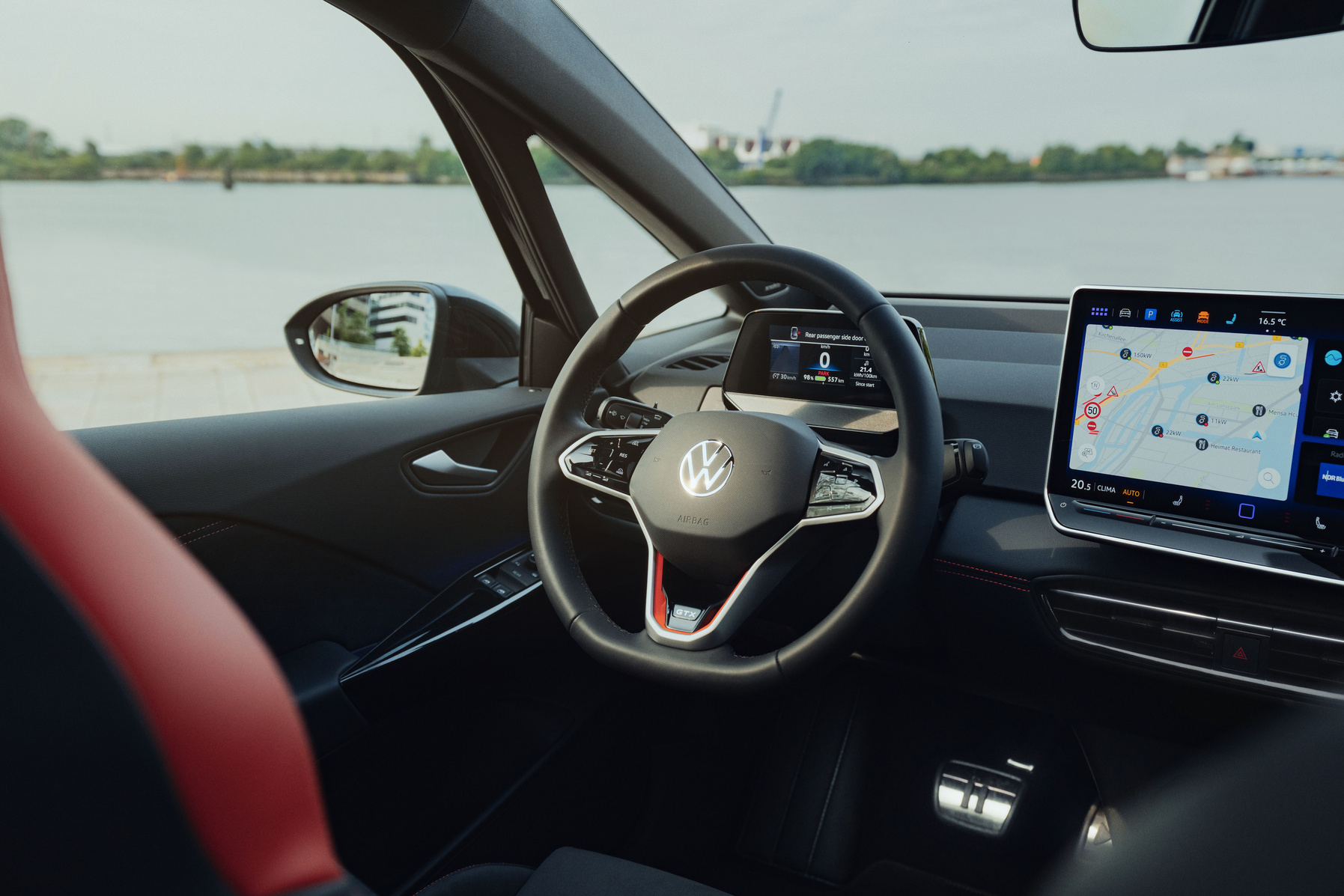
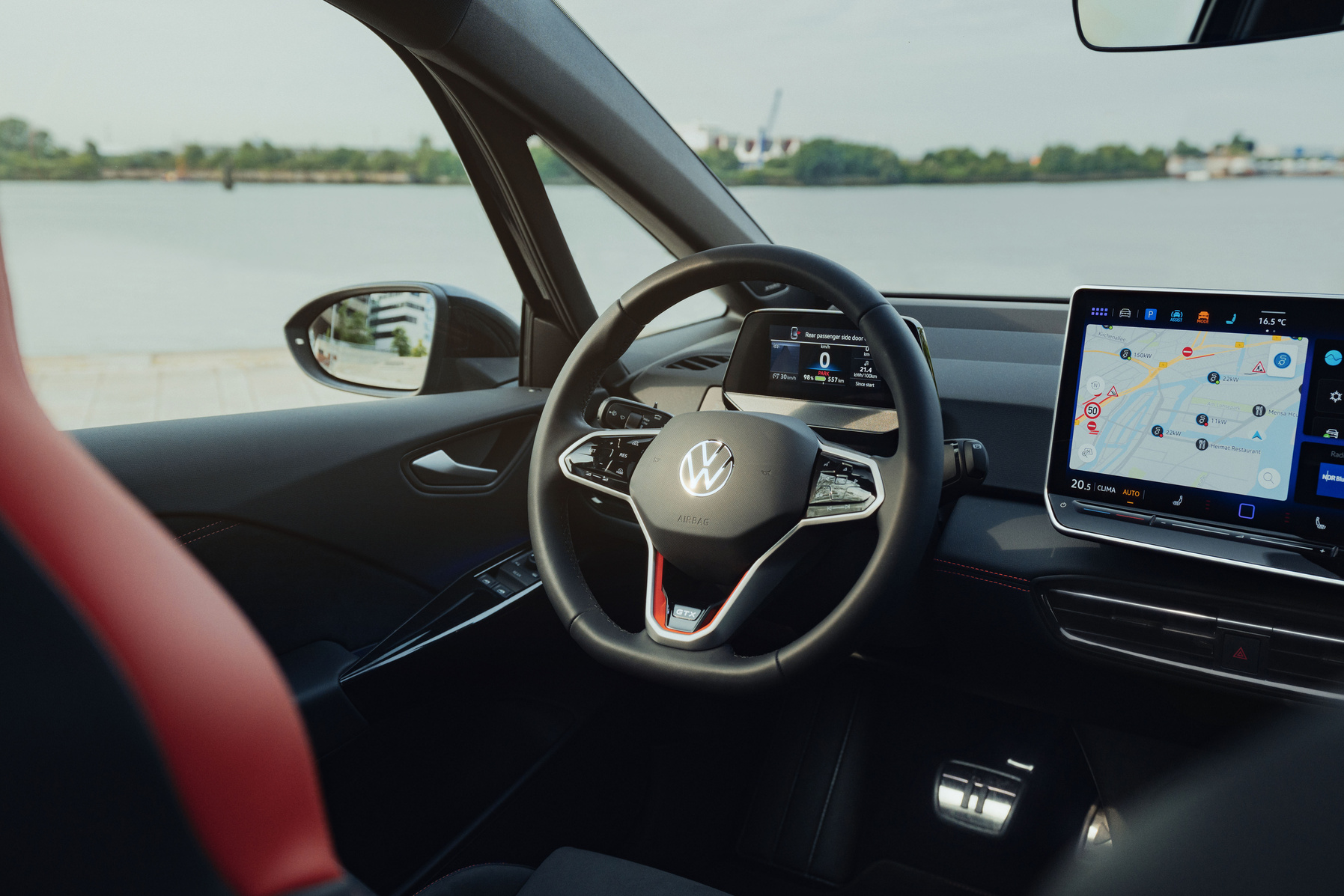
In the interior, look for scratches on the dashboard and hard plastic surfaces. Pre-facelift models suffer from this. Test all functions of the automatic gearbox, seat heating, steering wheel heating and the infotainment system. Check whether Apple CarPlay and Android Auto work properly.
Pay particular attention to the following points:
- Braking performance: some electric models suffer from premature brake wear
- 12V battery: failures are known and can cause the entire system to malfunction
- Dashboard warnings: note all warning lights and have them read out
- Software updates: ask about the most recent version to prevent glitches
Test drive with attention to detail
Plan an extensive test drive of at least 30 minutes. Test acceleration, braking and suspension behaviour on different road surfaces. Drive with several passengers, because a fully loaded electric car can quickly weigh more than 2 tonnes. Watch out for strange noises, vibrations and irregular steering behaviour.
Check the range indicated by the on-board computer. Compare this with the specifications of a new model. A significant difference may indicate battery degradation. Also test the charging system at a fast-charging station to see whether the car reaches the promised charging speed.
‘ A value below 90% indicates accelerated ageing. ’
Having battery health tested professionally
The battery is the heart of an electric car and determines its value and usability. Always have a professional degradation test carried out via the diagnostic connection in the car (OBD port). A simple flash test is not enough. The specialist measures the health status of the battery (State of Health), voltage, the number of fast-charging cycles and cell balance.
After 100,000 kilometres you can expect degradation of 5 to 7%, which equates to about 1% per year. For a 5-year-old car, the State of Health should be above 93%. A value below 90% indicates accelerated ageing. Ask the seller about charging habits: frequent fast charging to 100% accelerates degradation.
Also test the heat pump, because it significantly improves efficiency in winter. Cars without a heat pump can lose up to 30% of their range in cold months. Check whether CCS fast charging (a type of fast-charging connector) works correctly and whether the charger in the car (onboard charger) achieves the promised charging speed.
Recognising common problems
Control arms and brakes are weak points on many electric models. During the test drive, listen for clicking noises when shifting between drive and reverse. This indicates play in the suspension. Check whether the brakes provide sufficient stopping power, because regenerative braking can cause the discs to rust if they are used little.
Software updates are important for a stable system. Ask the seller about the update history and have the dealer check whether the latest version has been installed. Glitches in the infotainment system, charging problems or faults in the climate control are often solved with an update.
Watch out for signs of 12V battery problems. A slow response when unlocking, error messages on the dashboard or a car that refuses to start can indicate a weak 12V battery. Replacement costs several hundred euros but prevents annoying breakdowns.
Fair pricing and residual value
Used electric cars are price-sensitive due to rapid technological developments and government subsidies on new models. Entry-level versions with limited range can be found from around 13,000 euros at high mileages. Models with a heat pump, larger battery and more luxurious equipment hold their value better.
Always compare several adverts to get a realistic picture. Pay attention to the trim level, maintenance condition, remaining warranty and documented repairs. A well-maintained car with full history is worth more than a cheaper example without documentation.
‘ The cost of an inspection, 100 to 200 euros, does not compare to potential repair bills without warranty. ’
Final inspection by a specialist
Always have the car inspected by a specialist before you buy. A dealer or specialised EV workshop can detect hidden defects that you may miss yourself. The cost of an inspection, 100 to 200 euros, does not compare to potential repair bills without warranty.
The specialist checks the high-voltage cables, the battery cooling system, the electric motor and the electronics. The car’s memory is also read out for old fault codes that have since been cleared. This provides insight into previous problems. Use the inspection report as part of your price negotiation.
Taking action immediately after purchase
Immediately after purchase, arrange a service at an authorised dealer. Have the software updated, the brakes checked and the tyres inspected. Ask for a detailed battery report for your own records. This helps prevent disputes in the event of a warranty claim.
Register the car in your name and take out insurance with breakdown cover. This is important because electric cars sometimes need specific assistance, such as help with a flat battery on the road. Some insurers offer special cover for electric cars. Keep all invoices and maintenance records carefully for value retention when selling.
On the Carnews website you will find much more information about electric cars, common problems by make and model, and maintenance tips. Discover which used cars are reliable and what to look out for with different brands.
Frequently asked questions
Inspect the bodywork under different lighting conditions (ideally both outside and in a well-lit garage) for differences in colour and gloss, orange peel effect, trapped dust and unusual panel gaps, which may point to resprayed or replaced sections. Look along the sides of the car at a shallow angle to spot slight ripples or irregularities, and check windows, lights and badges for mismatched production years or non-original parts. Examine the chassis and underside for rust, fresh tectyl/underbody coating, creases or welds near longitudinal members, strut towers and subframe, and watch for crookedly mounted or new suspension parts on just one side. Finally, have a pre-purchase inspection carried out with alignment and frame check; incorrect tracking or a skewed stance can reveal hidden chassis damage.
For the powertrain components, the high-voltage and 12V batteries, the electric drive shaft(s) and the onboard charger deserve particular attention because of their direct impact on performance and susceptibility to faults. On the suspension side, the control arms, suspension and brakes are crucial to inspect, as premature wear here affects roadholding and braking performance. The tyres also require extra scrutiny, since the ID.3 is relatively heavy and is known as a “tyre eater”, especially at the rear. It is also sensible to listen for clicking noises from the rear during the test drive, as these may indicate problems with the drivetrain or suspension.
Essential items include the service book (with stamps), invoices for services and repairs, and any reports from inspections or diagnostic/battery tests. Also check official mileage registrations (for example via RDW/NAP or a similar service), inspection reports (MOT/TÜV), and workshop job sheets for logical date–mileage progression. Look for consistency between the odometer reading, service intervals and wear items (tyres, brakes). Finally, ask for documentation of software updates and any warranty or damage history.
During an extensive test drive, watch for irregularities in the drivetrain and suspension: feel whether the car remains stable in a straight line, does not pull to one side, and listen for clicking or grinding noises over speed bumps, in corners and under braking. Test the brakes several times, including at higher speeds, and note any vibration in the steering wheel or pedal and a longer stopping distance than expected. Check the drivetrain for jolts or hesitation when accelerating and decelerating, and listen for humming, whistling or ticking noises that vary with speed. Mix motorway, urban and twisty roads, also drive with passengers, and continually pay attention to unusual vibrations, steering behaviour and sounds.
Ask about fault codes (OBD diagnostics) and check the maintenance and repair history, with emphasis on replaced inverters, charging modules and 12V batteries. During the pre-purchase inspection, have the high-voltage system, wiring and connectors visually checked for damage, moisture and DIY repairs. Check whether all software and recall actions have been carried out, and test all electronic functions (AC/DC charging, driving modes, driver assistance systems, infotainment) thoroughly. Avoid cars with undocumented tuning, charging modifications or home-made accessories on the high-voltage side.