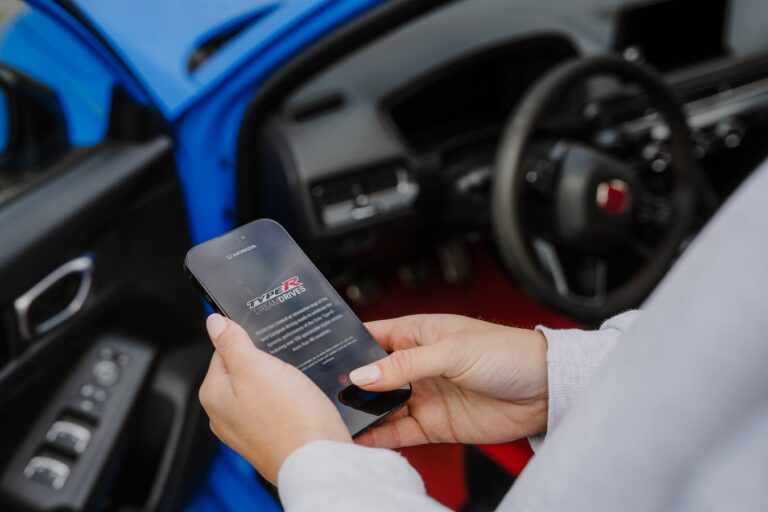
A flat or wear-prone battery is the most common cause of starting problems in the Honda Civic. Especially in extreme temperatures or after a period of little driving, the battery often lets you down. However, the battery is not always to blame. Read on to find out exactly what is going on and how to tackle it.
Honda Civic won’t start: what are the causes?
Starting problems show themselves in different ways. The engine turns slowly or not at all. You hear clicking sounds when you turn the key. Or the lights dim sharply as soon as you try to start the engine. These are recognisable signs of a weak 12V battery, but they can also point to other problems.
Common reasons why a Honda Civic won’t start are:
- A flat or worn-out battery
- Corrosion or a poor connection at the battery terminals
- A faulty starter relay or a problem in the starting circuit
- An alternator that is not charging the battery sufficiently
- Loose or damaged earth connections (the grounding cables from the battery to the bodywork)
It is sensible to work through these causes systematically before drawing conclusions. A battery that can still power accessories but not the starter motor points more to wear in the starting circuit than to a completely flat battery.
‘ That is often an early sign of battery weakness. ’
Battery problems caused by heat or wear
Heat speeds up the chemical processes inside a battery. As a result, its service life becomes shorter. In a battery that has already been in use for several years, one hot summer can be enough to significantly reduce the remaining capacity. Cold reduces starting performance. In freezing temperatures, a battery delivers considerably less power than at room temperature.
Doing lots of short trips increases the risk of battery problems. Short trips last less than ten minutes. The alternator then barely has time to recharge the battery. The battery gradually becomes more and more discharged and eventually too weak for reliable starting. Some Civic owners recognise this pattern. After a longer drive, the car starts perfectly. After standing overnight, starting becomes difficult.
Also pay attention to the Civic’s start-stop system, the system that automatically switches off the engine when stationary to save fuel. If this system suddenly says it is not available, that is often an early sign of battery weakness. The system switches itself off to keep enough reserve for starting.
Diagnosis: testing the battery yourself
Carry out an initial diagnosis yourself with a multimeter. This is a measuring device for checking electrical voltage. Check the following:
- Measure the voltage with the car stationary. A healthy battery is around or above 12 volts.
- Start the engine and measure again. With the engine running, the voltage should be roughly around 14 volts. That is the alternator’s charging voltage.
- Switch on the dipped headlights and start the engine again. Do the lights dim sharply? If so, that points to a flat battery or poor battery connection.
- Check the battery terminals for corrosion. A whitish deposit on the connections hinders current flow.
- Check the earth points: the cables connecting the battery to the bodywork and the engine. A poor earth causes the same symptoms as a flat battery.
Unsure about the result? Have the battery professionally tested. A battery test at a garage or specialist auto shop shows how much capacity is left. At first glance, the voltage may seem normal, while the remaining capacity has already dropped significantly.
Starting problems in winter: tips for Civic drivers
Winter places extra demands on the battery. At temperatures below freezing, a battery delivers less power. A cold engine, meanwhile, needs more current to start. Winter is therefore the most critical period for a battery at the end of its life.
Practical tips to avoid starting problems in winter:
- If the car is standing still for a long time, start it regularly or connect the battery to a trickle charger. This is a charger that keeps the battery topped up. It will not overcharge it.
- Avoid unnecessary power users such as heated seats or the rear window heater immediately when starting.
- Have the battery tested before winter, especially if it is already three years old or more.
- Keep jump leads handy. When jump-starting, follow this order: 1. Red lead to the flat battery. 2. Red lead to the donor battery. 3. Black lead to the donor battery. 4. Black lead to an earth point on your own car.
‘ A standard battery wears out much faster when used with start-stop. ’
Choosing the best battery for the Honda Civic
When replacing the battery, it is important to choose one that matches the technical requirements of your Civic, such as the required voltage and the correct capacity. The required capacity is listed in ampere-hours (Ah) in the car’s handbook. The cold cranking current is shown as CCA (Cold Cranking Amps), which is the starting power at low temperatures. A higher CCA value means more starting power in cold conditions.
For a standard petrol Civic with a start-stop system, an EFB or AGM battery is recommended. EFB (an improved type of wet battery) stands for Enhanced Flooded Battery. AGM (a battery with glass-fibre mats that absorb the acid) stands for Absorbent Glass Mat. Both types are better able to withstand the frequent charge and discharge cycles brought about by the start-stop system. A standard battery wears out much faster when used with start-stop.
In hybrid versions of the Civic, the 12V battery, the ordinary lead-acid battery alongside the high-voltage pack, plays an additional role. Low voltage there can lead to faults in the hybrid system, the interaction of electric motor and combustion engine, and to warning lights on the dashboard. Do the messages persist? Then have both the battery and the hybrid pack checked by a specialist.
Have the battery checked during servicing
A battery test does not require a separate appointment. Ask for the battery to be checked at every regular service. Many garages do this as standard during a major service. It is still worth asking explicitly. That way you avoid unpleasant surprises on the first cold morning of the season.
The average lifespan of a car battery is between four and six years, depending on use and driving conditions. A Civic that mainly does short trips in an urban environment will need a new battery sooner. A Civic that covers long distances every day will usually last longer. Keep that timespan in mind when estimating the age of your battery.
On the Carnews website you will find much more information about common car problems, maintenance tips and technical background on different models. Discover everything you need to be well prepared as a car owner.
Frequently asked questions
Honda Civic owners can first measure the battery voltage (around 12 V when stationary, about 14 V when running) and see whether the lights and headlights dim heavily when starting, which points to a weak battery or poor connections. They should then check the battery terminals, earth points and relevant fuses/relays for corrosion or looseness. If the car will start with jump leads but then struggles again afterwards, the cause is usually the battery or the charging system (alternator). If problems persist despite a healthy battery and charging voltage, the starter motor, starter relay or gear selector sensor (P/N) are the next likely components.
Having the 12V battery tested regularly and replacing it in good time where necessary helps prevent starting problems. Keep the battery terminals and earth points clean and free from corrosion, and make sure all clamps are properly tightened. Drive long enough for the alternator to fully recharge the battery, especially if the car otherwise does lots of short trips or stands still often. If problems continue, it is sensible to have the charging and starting system (alternator, relays, starter motor) checked preventively.
In the Honda Civic, starting problems are usually caused by a weakened or flat 12V battery, poor battery connections or a fault in the starting or charging circuit; this is often reported across various generations, including hybrid variants. Hybrid Civic models are extra sensitive: low 12V voltage can cause hybrid fault lights and fault codes as well as starting problems. User reports also frequently mention earth faults, relays and charging strategy (alternator/charge control) as common points to watch. If the battery seems fine but the engine does not turn over or only clicks, the starter motor or starter relay is a well-known next suspect.
If your Honda Civic won’t start because of a flat battery, first check the battery terminals for corrosion, measure the battery voltage and, if necessary, try starting with jump leads or charge the battery fully; if the problem keeps returning, replace the battery. If you suspect a faulty starter motor, check the fuses and starter relay, listen to see whether you only hear a click when starting, and have the starter motor and starting circuit tested specifically. If the battery proves to be in order but the engine still will not turn over, replacement or overhaul of the starter motor is usually needed. If problems persist, include the charging system (alternator and charging voltage) in the diagnosis to prevent a recurring battery problem.
Yes, there are several worthwhile upgrades and alternatives that can improve reliability. A better-quality or heavier-duty 12V battery (with higher cold cranking current) and properly maintained, corrosion-free battery terminals reduce the risk of starting problems. For cars that stand still a lot, a battery maintainer or trickle charger helps keep the battery in good condition. In addition, having the charging system checked or optimised (alternator, earth connections, charging voltage) can further improve starting reliability.
The average cost of replacing the battery in a Honda Civic is usually around €150–€250, depending on type (capacity/AGM) and labour. Replacing a starter motor will usually cost around €400–€800 in total (part plus fitting), depending on year and brand (OEM versus aftermarket). When buying, pay attention to the correct battery type and size according to the factory specification, sufficient cold cranking amps (CCA), the warranty period and whether the workshop carries out the on-board computer/battery registration correctly. For a starter motor, quality (OEM or a reputable brand), the warranty included, labour hours and accessibility of the starter in the engine bay are the main points to consider.