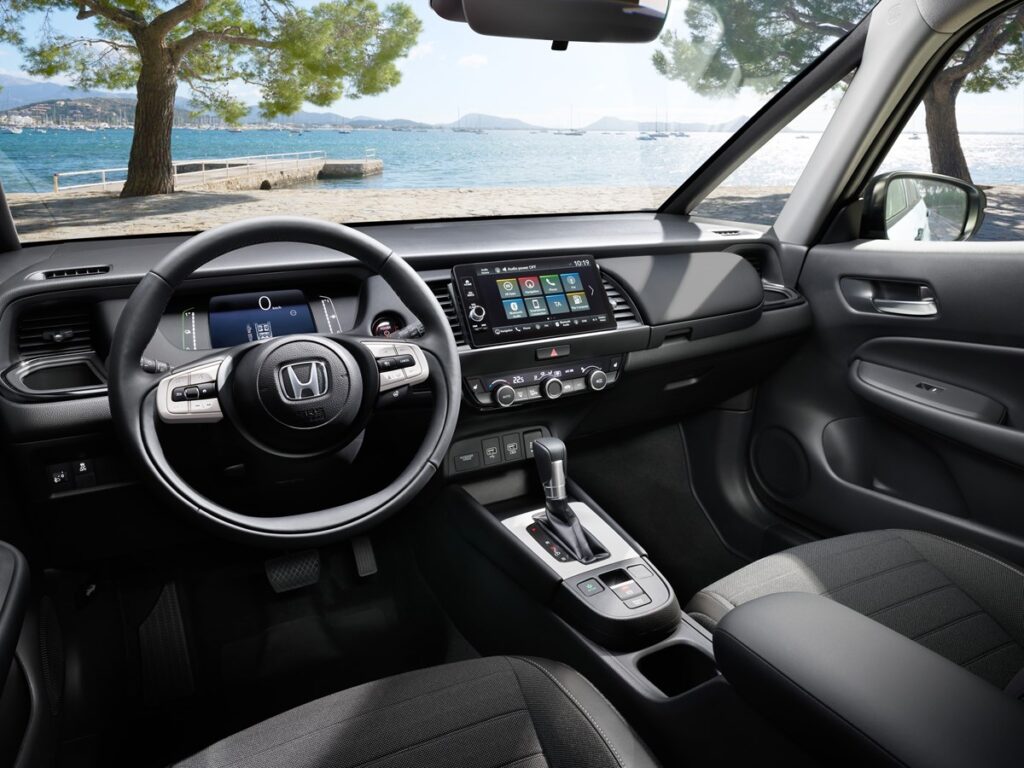
Hybrid battery faults in the Honda Jazz are not always caused by a defective high-voltage pack: a weak 12V battery, a software fault, a poor connection or a problem with the DC-DC converter can trigger the same warning. A proper diagnosis prevents unnecessary repairs, while careful maintenance also limits risks relating to the engine and drivetrain. Recognise the signs before a small fault turns into a Jazz that will not move.
Honda Jazz hybrid problems often start with confusing messages
A message such as ‘Check Hybrid System’, an IMA light or several amber warning lights at once calls for investigation, but does not yet prove that the hybrid battery is worn out. In a Honda Jazz, you must always distinguish between the high-voltage battery and the ordinary 12V battery. Both systems affect the start-up procedure and communication between control units.
The older Jazz Hybrid from around 2011 to 2015 uses the IMA system. IMA stands for Integrated Motor Assist: an electric motor supports the petrol engine and works together with a high-voltage battery at the rear of the car. The Jazz e:HEV from 2020 onwards has a two-motor hybrid system with a different layout. As a result, the familiar points of attention differ by generation.
According to technical diagnostic procedures for hybrids, a warning must always be linked to stored fault codes and live readings during use. Relying on a generic OBD reader is therefore not enough. It often does not read all Honda-specific codes from the battery management system, the power control unit or the DC-DC converter.
Signs of a Honda Jazz hybrid battery fault
The high-voltage battery does not lose all its capacity overnight. Often, the driving behaviour changes gradually. In an older IMA Jazz, the charge indicator may noticeably jump from nearly empty to full very quickly. That does not automatically point to one defective module, but it may indicate differences between battery segments.
While driving, pay particular attention to these signs:
- The charge indicator rises and falls sharply within a short time.
- Electric assistance during acceleration is noticeably reduced.
- Fuel consumption increases without any clear other cause.
- The car reports an IMA fault or ‘Check Hybrid System’.
- The Jazz enters a limited driving mode with reduced power.
- The EV function of an e:HEV is available less often.
- The fault returns after the codes have been cleared.
A sudden reduction in power can also occur when the battery becomes too hot. Checking ventilation and temperature readings should therefore be part of the diagnosis. A dirty air intake or fan can restrict cooling, especially when hair, dust or other objects block the airflow.
Several warning lights at once often point to the 12V battery
A weak 12V battery can cause warnings in the Honda Jazz. ABS, VSA, electric power steering, tyre pressure monitoring, the braking system and hybrid drive can then all warn at the same time. This happens because modules can no longer communicate reliably with one another when the on-board voltage is low.
These complaints are more often linked to a 12V problem than to a defective high-voltage pack:
- The dashboard flashes or the infotainment system restarts.
- After pressing the start button, the car does not go to READY.
- After standing for a long time, various warnings appear.
- A jump start makes the messages disappear temporarily.
- Battery terminals are corroded or earth connections are loose.
Also have the 12V battery checked for open-circuit voltage. A battery can show a normal voltage after charging and still collapse under load. A capacity test under load, a check of the terminals and a measurement of charging voltage give a more useful picture.
Honda Jazz hybrid battery life varies with use
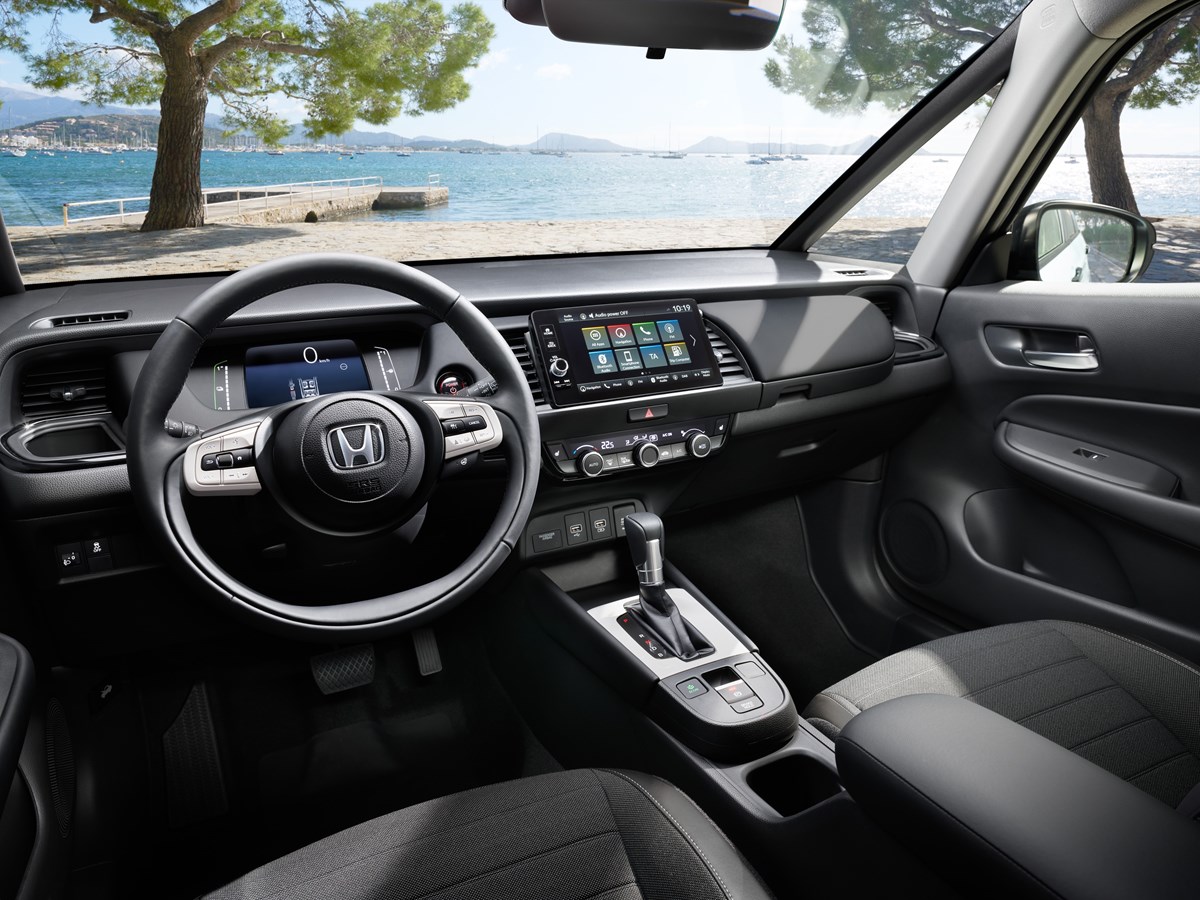
There is no fixed mileage at which the hybrid battery in a Honda Jazz must be replaced. Age, temperature, periods of standing and charging behaviour are at least as important as the mileage. A Jazz with low mileage can still develop battery problems if it has stood unused for a long time or if the 12V battery has been repeatedly deeply discharged.
In the IMA Jazz there are several segments in the battery pack. The voltages, temperature and internal resistance of these segments must remain close to one another under load. If the differences become too great, the battery management intervenes. The state of charge can then become erratic and electric assistance decreases.
In the Jazz e:HEV from 2020 onwards, the cause is often outside the high-voltage pack. Think of a sensor, cable connection, power control unit software or the DC-DC converter. This converter converts high voltage to 12 volts and thereby keeps the ordinary battery and on-board electronics supplied. A problem in this circuit can therefore wrongly appear to be a battery defect.
Check early Jazz e:HEV models for software and standing losses
For early examples of the Jazz e:HEV, it is advisable to review the service history carefully. According to information from technical cases in the field, electrical systems could remain active after parking, causing the 12V battery to discharge within one to two weeks. Repeated deep discharge can permanently weaken a 12V battery, even if the software is updated later.
When buying a used car, ask about software updates carried out, as well as servicing. Also have the 12V battery tested for capacity. A recent replacement is useful information, but it does not automatically explain why the old battery went flat.
This is how to have a Honda Jazz hybrid properly diagnosed
A reliable diagnosis follows a fixed sequence. This prevents a garage from immediately recommending an expensive battery pack when the cause lies in the 12V supply, cooling or software. Ask for a report with fault codes and live readings, not just a statement about battery status.
The correct steps are:
- Test the 12V battery under load and inspect terminals, earth points and wiring.
- Read out all control units with Honda HDS or professional hybrid diagnostic equipment.
- Save fault codes and freeze-frame data before clearing codes.
- Take a test drive with acceleration, coasting and regenerative braking.
- Check live data for battery temperature, state of charge and segment differences.
- Inspect battery ventilation, air intake and fan operation.
- Only then assess whether repair, refurbishment or replacement makes sense.
Freeze-frame data records the circumstances under which a fault code occurred, such as temperature, speed and battery voltage. Those data can make it clear whether the warning appeared during a cold start, prolonged standing or heavy load. So do not clear the fault codes before the information has been saved.
Maintenance tips for a hybrid Honda Jazz battery and drivetrain
Maintenance will not prevent every battery-related issue, but it does help limit avoidable faults. Keep the 12V battery healthy when the car is driven infrequently and make sure the battery ventilation remains clear. In a Jazz that often does short journeys, a longer drive can sometimes help the system to reach full operating temperature.
Also pay attention to engine and drivetrain maintenance. In the older Jazz Hybrid, the petrol engine works together with a CVT transmission. In the e:HEV, the hybrid drive system provides the power transfer, but the specified fluids and checks remain important there too. Use only the fluid specification Honda prescribes for the relevant model year.
These maintenance points deserve attention:
- Change the engine oil and filter according to the service schedule.
- Have transmission oil or drive oil checked and changed in good time, in line with Honda’s instructions.
- Check coolant level and the condition of hoses and connections.
- Keep the 12V battery charged during long periods of standing.
- Inspect battery terminals for corrosion and check earth connections.
- Have outstanding software updates checked by a Honda specialist.
Missing a fluid change does not directly cause a hybrid battery fault, but it can lead to wear or problems in the engine and drivetrain. A fault in those systems also makes diagnosis more difficult, because power loss or warning lights can then have several causes.

Repairing or replacing a Jazz hybrid battery fault
On an older IMA Jazz, a specialist can sometimes replace individual battery segments and rebalance the pack. That only makes sense if the rest of the pack is demonstrably in good condition. A new segment alongside several ageing segments can create imbalance again.
A refurbished battery pack can be an alternative to full replacement, but always ask about the test method and warranty. Have it recorded which modules were replaced, whether the pack was tested under load and whether balance values were checked. A low price without a measurement report says little about the remaining lifespan.
Never work on orange high-voltage cables, battery casings or service disconnects yourself. The high-voltage battery operates at dangerous voltage. Leave the Jazz outdoors if there is a smell of burning, smoke, visible damage or damage after an accident until a specialist assessment is possible.
On Carnews you will find much more about Honda problems, hybrid technology, maintenance and points to watch on used cars. Discover more on the Carnews website before you have a diagnosis or repair carried out.
Frequently asked questions
In older Honda Jazz generations with IMA, faults are mainly caused by ageing battery modules or modules that have become unbalanced with one another, causing segment voltages and internal resistance to differ too much. Heat, dirty or blocked battery ventilation and long periods of standing accelerate this degradation. A weak 12V battery, corroded connections or earth points, faulty sensors and faults in the DC-DC converter can also trigger an IMA warning. Less often, the cause lies in wiring, communication between control modules or the IMA software.
In the Jazz Hybrid from around 2011–2015, the rear-mounted IMA high-voltage pack consists of several battery modules or segments; the Jazz e:HEV from 2020 onwards uses a more compact high-voltage pack alongside a separate 12V battery. There are no specific cells that demonstrably fail most often: usually one or more segments weaken due to age, heat and imbalance. Which segments are defective must be determined under load using individual voltage and resistance measurements.
Preventive balancing is cheaper and can extend the life of a battery that is still healthy by reducing voltage differences between cells. However, it does not restore worn cells or lost capacity, so problems can return. Full replacement is more expensive, but provides a more reliable and predictable solution when several cells have aged. Balancing is therefore mainly sensible when measurements show that the cells are still sufficiently healthy and similar.
Regenerative braking is not harmful in itself, because the battery management system limits charging current and state of charge. However, when driven sportily, repeated hard acceleration and strong regenerative braking create more charge cycles and heat, which can speed up battery ageing. Prolonged heat, poor battery ventilation and frequent near-empty or full charging shorten the lifespan in particular.