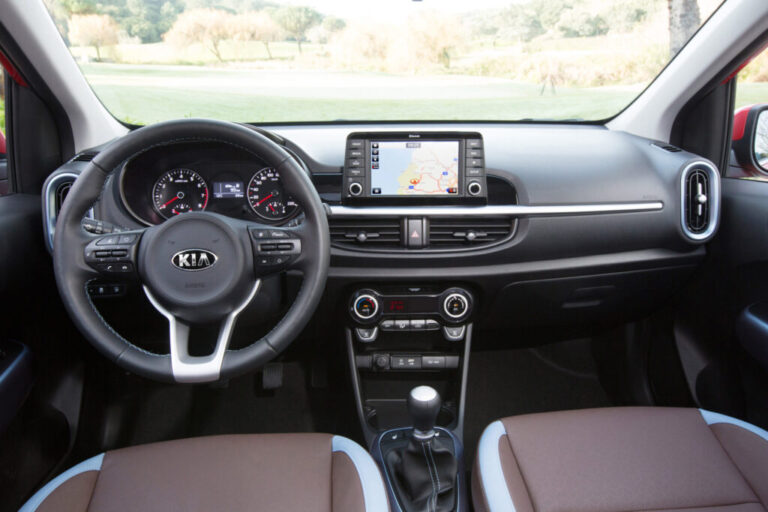
A break in the cable between the battery and the ignition coils prevents the Kia Picanto from starting. This problem occurs regularly, especially on models from 2017 onwards. What often presents itself as a flat battery or coil fault turns out in practice to be an ignition problem. The cause is internal cable damage, poor contact or cracked insulation material. Recognise the signs in good time and save yourself a day without a car.
Car will not start due to cable break in Kia Picanto
The Kia Picanto no longer wants to start. Many owners quickly point the finger at a flat battery. Checks, however, show that the battery is supplying enough voltage. Even so, the engine refuses to turn. The cause lies in the cable connection between the battery and the ignition coils. This ignition system converts the 12 volts from the battery. This voltage is stepped up to the high voltage needed for the spark plug ignition. A break or poor connection disrupts this process and the engine simply cannot ignite.
In the Kia Picanto of the first generation, this problem is mainly caused by dried-out spark plug leads or a defective coil pack. Over time the insulation material tears. Heat, vibration and age are the main causes. This leads to a short to ground. It can also mean that there is a loss of electrical conduction. The result is immediately noticeable: the car does not start or runs very unevenly.
The complaints are often intermittent. One day the engine starts without any issues. The next day it does not respond. This fluctuating pattern makes diagnosis difficult. Mechanical causes are not always immediately visible during an inspection. If in doubt, a visual inspection helps. Look carefully at the spark plug leads and coil connections. Cracks or discolouration are direct indications of a problem. Oxidation on connectors is also a sign of a defect.
Recognising coil problems in the Kia Picanto
Coil problems in the Kia Picanto often occur before complete failure. Owners report symptoms that point to reduced ignition quality. After that the car refuses to start at all. Recognisable signs are:
- Rough idling with jerky engine behaviour
- Loss of power or juddering under load
- Hard starting, especially with a cold engine
- Spark issues that disappear for a while and then come back
- Engine running on fewer cylinders, noticeable as roughness and vibration
A faulty coil is not always immediately identifiable. On the first-generation 1.0 and 1.1 Picanto engines, access to the coil and spark plug leads is tricky. The complete air filter housing has to be removed. A simple visual inspection therefore becomes a time-consuming job. Mechanics advise replacing the entire coil pack straight away if coil problems are suspected. Testing individual components takes too much time and is less reliable.
A practical diagnostic tip is to check the connectors and terminals. Some owners report improvement after one simple action. They repeatedly unplug and reconnect the coil connectors. This temporarily gives better contact. Oxidation causes poor contact. Deteriorated terminals can also be the culprit. A temporary fix is cleaning the contacts. Recurring complaints call for replacement of the cable or the coil itself.
What happens when the ignition system suffers a short to ground
A short to ground means there is an electrical leak in the insulation. As a result, the electrical charge does not fully reach the spark plug. The voltage leaks away through damaged insulation material. The voltage can also find an alternative path via oxidation. This results in a weak or absent spark in the cylinder. The fuel is not ignited and that cylinder no longer produces power.
In the Kia Picanto this is often only noticeable under specific conditions. Vibrations while driving, heat from the engine or moisture in the surroundings can trigger a break or short to ground. These problems do not occur when the car is stationary. Sometimes the car appears to work perfectly during a workshop check. The owner, however, definitely experiences issues during normal use.
Cost of Kia Picanto battery cable repair
The costs of repairing a cable break or coil problems on the Kia Picanto vary. The nature and extent of the defect determine the total price. For the spark plug leads alone you should allow for:
- Parts: between 40 and 80 euros for a set of leads
- Labour: around 60 to 100 euros, depending on accessibility and engine type
For a complete coil pack replacement the costs are higher. A complete coil costs between 80 and 150 euros. Fitting it requires more work and time. The air filter housing has to be removed. Other components have to be moved out of the way to reach the coil. On top of that you can add another 80 to 120 euros in labour. In total you end up at around 160 to 270 euros for a coil replacement including fitting.
If you opt for a DIY repair, you save the labour costs. Bear in mind that installation has to be carried out carefully. The quality of the installation is important. Spark plug leads must be connected in the correct order. They must click firmly into place. Incorrect routing means the leads are run along the wrong path. This can immediately lead to new ignition problems. Therefore follow the leads one by one from the coil to the spark plug and check that all connections are properly seated.
Prevent recurring problems with preventive maintenance
Preventive maintenance helps avoid expensive repairs. On older Picantos, regularly check the spark plug leads. Look for cracks or drying-out of the insulation. Also check the connections on the coil. You can remove oxidation with contact cleaner, but permanent corrosion calls for replacement.
Replace spark plug leads preventively after six to eight years. Do this even if there are no obvious complaints yet. The insulation material gradually deteriorates and a break does not always give advance warning. By replacing in good time you prevent the car from suddenly breaking down. You also prevent the engine from being hard to start. This not only saves money, but also the frustration of a car that lets you down.
Also check other parts of the ignition system
Spark plug leads and coils, together with the spark plugs themselves, form the chain. This chain ensures that the engine can ignite. A problem in any one of these components can cause symptoms. Those symptoms may resemble a fault in another component. It is therefore sensible, in the event of starting problems or rough running, to check the entire ignition system. Include all components in the inspection.
Check the spark plugs for wear or discolouration. Also watch for deposits on the spark plugs. A dirty or worn spark plug can cause issues. These issues resemble those of a bad lead. Replace spark plugs according to the manufacturer’s service schedule. This is usually after 30,000 to 60,000 kilometres. Always use the correct spark plug specification for your engine. Incorrect spark plugs can cause ignition problems.
Also pay attention to the routing and securing of the leads. Routing means the way the leads run along the engine. During installation the leads must be clipped firmly in place. They must not rub against other engine components. Heat and movement can make leads wear faster. This happens if they have not been routed correctly. After every service, check that all leads are neatly in place. Also check that they are properly secured.
Practical steps for starting problems
Your Kia Picanto will not start. Then go through the following steps for an effective diagnosis:
- First check the battery with a multimeter. A healthy battery delivers at least 12.4 volts at rest.
- Visually inspect the spark plug leads for cracks, discolouration and damage.
- Check the coil connections for oxidation and make sure the connectors are firmly in place.
- Unplug and reconnect all connectors to temporarily restore contact and test whether this brings improvement.
- If problems persist, have the coil and leads professionally tested or replace the coil pack as a preventive measure.
For intermittent complaints, a test drive can help. Drive with a cold engine and later with a warm engine. This way you can reproduce the problem. Note under which conditions the car starts. Also note when it does not start. This information helps the mechanic to search for the cause in a targeted way. Also mention any vibrations or noises while driving. Also mention any loss of power.
Discover more about the Kia Picanto and other automotive technology
On the Carnews website you will find much more information about common problems, maintenance tips and technical background information on the Kia Picanto and other models. Perhaps you want to carry out maintenance yourself. Or you want to be better prepared for a workshop visit. There is always an article that will help you further. Discover more and stay up to date with the latest tips and experiences from other car enthusiasts.
Frequently asked questions
Typical symptoms include hard or no starting, irregular or jerky idling and noticeable loss of power or juddering while driving. The engine may sometimes run on fewer cylinders, which shows up as vibrations and misfire-like complaints. Complaints can be intermittent: sometimes the car starts and drives normally, only to cause problems again later. These symptoms can resemble a purely battery-related issue, but are in fact caused by damaged cables or a defective coil.
With the Kia Picanto (especially the first generation), there are no structural, factory-recognised weak points known specifically in the main wiring near the battery or coils, but in practice ageing spark plug leads and connections around the coil stand out as common sources of faults. Cable breaks there often show up as internal cable or insulation damage, causing intermittent poor contact under heat or vibration. This can be mistaken for a battery problem, while the cause actually lies in the ignition leads or coil. Regular visual inspection of spark plug leads, coil connectors and any oxidation on the terminals is therefore recommended.
A car enthusiast can first check all visible cables around the battery, coils and spark plug leads for cracks, drying-out, damaged insulation and loose or oxidised connectors. Next, they can remove the air filter housing (where applicable) to trace the spark plug leads one by one from the coil to the spark plug and check whether they click firmly into place and have not been swapped. They can also unplug and reconnect the connectors a few times to temporarily remove light oxidation on the contact surfaces and see whether this changes the starting or running issues. If the problem persists or there are clear spark/misfire complaints, this points more to an internal cable break or defective coil and further (professional) testing or replacement is advisable.
For a cable break around the battery/coils on a Kia Picanto, DIY costs are usually around €10–€60, depending on whether you only replace a cable/connector or also fit a used/aftermarket coil. If you have the work carried out by a garage, you should generally expect to pay about €100–€250 including labour. For a simple cable repair or connector replacement this will be at the lower end, while replacement of the complete coil will be at the higher end. These amounts are indicative and can vary depending on the garage, the type of Picanto and the quality of the parts.