
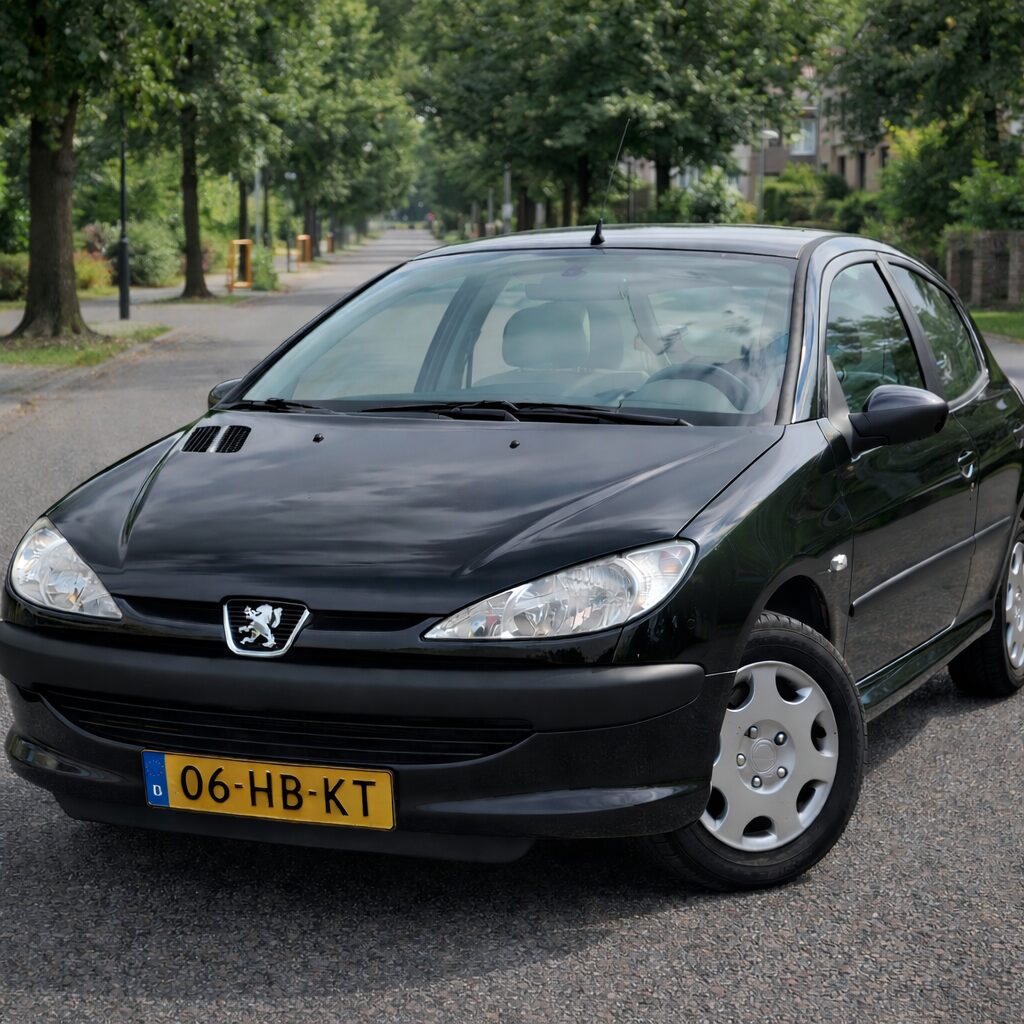
The starter motor turns, but the engine does not start. Or the car stalls and runs roughly on three cylinders. Starting problems with the Peugeot 206 are often caused by electrical faults. A defective crankshaft position sensor can also be the cause. In addition, problems with the central relay box occur regularly. Read on to discover which causes are behind this and how you can identify them yourself.
Engine turns but does not start
You turn the ignition key and the starter motor does its job. The engine turns over, but there is no spark. This symptom almost always points to a problem with the crankshaft position sensor. This sensor sends a signal to the engine management computer (ECU) at every engine revolution. Without that signal, the ECU does not know when to activate the ignition coils and injectors.
The crankshaft position sensor is an inexpensive part that can be replaced for around 15 to 20 euros. Swapping it often takes no more than ten minutes. In many cases, the sensor is located at the front of the engine, near the flywheel. Owners of models from 2003 onwards, including the 1.4L and Sport versions, report this problem regularly.
If you suspect that the sensor is defective, you can test it with a diagnostic tool for the car (OBD scanner). Connect the scanner while the engine will not start and check whether the ECU reports that the signal is missing. Some owners also do not hear any clicking from the ignition coils when the sensor fails. If in doubt, it is sensible to replace the sensor as a precaution, because old sensors often do not generate a clear fault code until they have completely failed.
‘ Cold starting problems are often related to wiring issues or dirty earth connections. ’
Hard starting in cold temperatures
In winter, the 206 only starts after several attempts. The engine stutters, uses more fuel than normal and throttle response remains sluggish until the engine is fully warmed up. This can take ten minutes. Cold starting problems are often related to wiring issues or dirty earth connections. A defective coolant temperature sensor can also be the cause.
First check the earth connections (ground connections) at the oxygen and lambda sensors. Corrosion on these contact points disrupts the signal to the ECU. Clean the connections with contact spray and check that the wiring is not damaged. The idle control valve, also called the idle stepper motor (English term for the idle control valve), can also become dirty. These components ensure that the engine idles correctly and receives the right amount of fuel.
If cleaning does not help, it is possible that the coolant temperature sensor is sending an incorrect signal. This sensor measures the engine temperature and sends that information to the ECU. With a defective sensor, the ECU thinks the engine is warm while it is still cold. As a result, the engine gets too little fuel when starting.
Starter motor fails after parking
You park the car after a drive. An hour later you want to drive off, but the starter motor does not respond. This problem occurs mainly in summer or after longer journeys. The cause lies in heat stress on the starter motor itself. The starter is located in a tight space under the bonnet, often close to the exhaust. Heat causes internal components to expand and lose contact.
A simple test is to touch the starter motor after a hot drive. If you feel that it is extremely hot, this is probably where the problem lies. Replacing the starter motor solves this. Bear in mind that the space under the bonnet is limited. You may have to jack up the car to access the starter motor properly. Some owners choose to fit a longer starter cable so that the starter is easier to reach for future repairs.
Runs on three cylinders after starting
The engine starts, but runs roughly. It feels as if only three of the four cylinders are working. This symptom points to a problem with the ignition coils, spark plugs or a defective injector. Scan the car with a diagnostic tool (OBD scanner) to see which cylinder is not firing. You will often find a fault code indicating which ignition coil or injector is not responding.
First check the spark plug connectors. Loose or damaged connectors can cause a cylinder to receive no spark. Then replace the spark plugs if they are worn. Spark plugs are wear parts and must be replaced every 30,000 to 60,000 kilometres according to the manufacturer.
If the problem persists, test the ignition coils. Swap the coil from the non-working cylinder with another cylinder. If the problem moves to the other cylinder, you know that the coil is defective. Injectors are rarely the cause, but they can become clogged due to contaminated fuel. Professional cleaning can then help.
‘ These faults are harder to diagnose and often require help from a workshop with specialised equipment. ’
Immobiliser and ECU faults
Sometimes the immobiliser blocks the engine from starting. This security system prevents the car from being started without the correct key. If the ECU thinks the key is not recognised, the immobiliser is activated and the engine is not allowed to start. This happens more often with models from 2003 and later.
You can check this by connecting an OBD scanner while the car will not start. The scanner indicates whether the ECU is locked by the immobiliser. Sometimes the problem solves itself by taking the key out of the ignition, waiting thirty seconds and trying again. If this does not work, it may be necessary to have the immobiliser reprogrammed at a Peugeot dealer or specialist.
In some cases, several fault codes are visible, such as sensors in short circuit or problems in the car’s communication network (CAN bus). These faults are harder to diagnose and often require help from a workshop with specialised equipment.
Battery and central relay box
A weak battery means the starter motor receives too little power to crank the engine. Test the battery voltage with a multimeter. A healthy battery has a voltage of at least 12.4 volts with the engine switched off. While starting, the voltage should not drop below 10 volts. If it does, the battery needs replacing.
The central relay box can also cause problems. This box contains various relays and fuses that supply power to the starter motor, fuel pump and other components. If a relay is defective, the starter motor may not activate or the fuel pump may not receive any power. Check the relays by swapping them with an identical one in the box. If the car then starts, you know which relay needs to be replaced.
Diagnosis for persistent faults
If simple checks do not help, a thorough diagnosis is needed. Many garages find nothing during a first inspection because the problem is temporary or intermittent. Owners of the 206 report that they themselves find hidden fault codes with an OBD scanner that a garage has missed. It is therefore wise to buy or borrow a scanner yourself.
For persistent starting problems, make an overview of the symptoms. Note when the problem occurs, at what temperature and after how long the car has been parked. This information helps to identify the cause more quickly. Also systematically check the following components:
- Earth connections at sensors and starter motor
- All fuses and relays in the central relay box
- Wiring diagrams for short circuits or broken wires
- Fan motors that may unexpectedly cause short circuits
‘ Replace damaged cables immediately to prevent bigger problems. ’
Prevention and maintenance
Regular maintenance prevents many starting problems. Clean the earth connections annually, especially before winter. Check the battery. Charge it if the voltage drops below 12.4 volts. Replace spark plugs and ignition coils according to Peugeot’s maintenance schedule. Use an OBD scanner to read fault codes preventively before they lead to problems.
Older 206 models benefit from extra attention to the wiring. Rubber protective sleeves can become porous, allowing moisture to reach the connectors. This causes corrosion and poor contacts. Check the wiring around the starter motor, sensors and ECU for damage. Replace damaged cables immediately to prevent bigger problems.
Discover more about car problems
Starting problems with the Peugeot 206 are annoying, but are often solved with simple checks and repairs. The crankshaft position sensor, starter motor and electrical connections are the most common causes. By diagnosing systematically and carrying out preventive maintenance, you keep your 206 reliable. On the Carnews website you will find more information about common car problems with different car brands, practical maintenance tips and concrete diagnostic guides you can put to use straight away.
Frequently asked questions
A defective starter motor on a Peugeot 206 is often recognisable by a clicking sound when you turn the key, while the engine does not turn over. Sometimes you hear nothing at all (no click, no cranking noise), while the lights and other electrics still work. It can also work unpredictably – sometimes it does, then again it does not – especially when the engine has been hot (after a short drive and brief parking). If the engine does not crank at all but the battery is fine, the starter motor itself or its control (relay/cables) is the main suspect.
Common starting problems that are not caused by the starter motor include a defective crankshaft position sensor, faults in the immobiliser/ECU, poor earth or wiring connections and sensors such as the idle control valve or coolant temperature sensor. You can rule out the crankshaft sensor and immobiliser with OBD diagnostics while the engine will not start (checking whether there is an rpm signal and whether the ECU is not locked). You rule out earth and wiring issues by cleaning/checking all earth points and briefly unplugging and reconnecting the plugs of suspect sensors. If the engine has good spark and fuel injection (spark test/fuel pressure), but still starts poorly, the starter motor itself is less likely to be the cause.
If you are handy, have the right tools and can work safely with a jacked-up car, you can in principle replace the starter motor on a Peugeot 206 yourself. Do bear in mind that space is very tight and the job can therefore be physically awkward and time-consuming. If you are unsure about your technical knowledge or do not have a good jack and axle stands, professional help is advisable. If there are also wider electrical or immobiliser issues, a workshop is the safest option.
The costs for replacing the starter motor on a Peugeot 206 are usually around €250–€500, including labour, depending on hourly rate and the part chosen. A loose starter motor costs roughly €80–€250, with aftermarket versions being cheaper than original (OEM) parts. There are clear quality differences: cheap aftermarket starter motors can wear out more quickly or be more sensitive to heat, while OEM or premium brand remanufactured/new starter motors are generally more durable and reliable. Always have it checked whether a remanufactured premium-brand starter motor with warranty is available, as this often offers the best price-to-quality ratio.
Prevent starting problems by checking the battery, earth and power cables (especially at the engine block and starter motor) at least once a year and keeping the connections clean and free of corrosion. Have the crankshaft position sensor and the wiring around sensors and earth points checked or replaced in good time as a preventive measure, especially on older 206s. Use OBD diagnostics periodically to detect fault codes at an early stage, particularly around the ECU, immobiliser and engine management. Also ensure timely maintenance of spark plugs, filters and a properly functioning starter motor, so that it is not overloaded when hot.