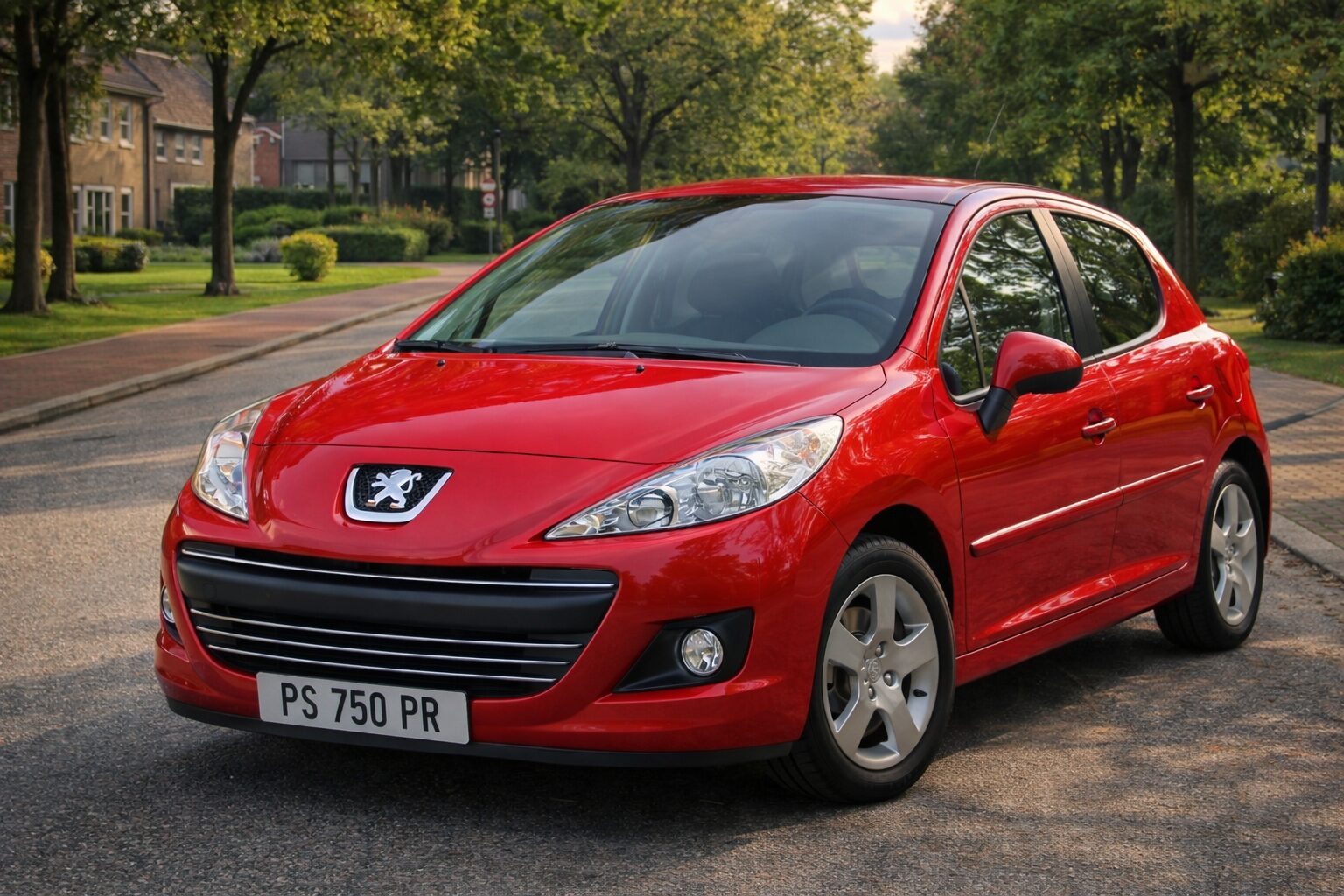
The Peugeot 207 offers affordable driving fun with sporty design and a huge supply of used cars. But without a thorough inspection you can easily end up buying a car with hidden defects. Timing chains, oil problems and the roof mechanism of the CC (coupé-cabriolet) can quickly become very expensive. This is how you avoid costly surprises.
Why the Peugeot 207 is still popular
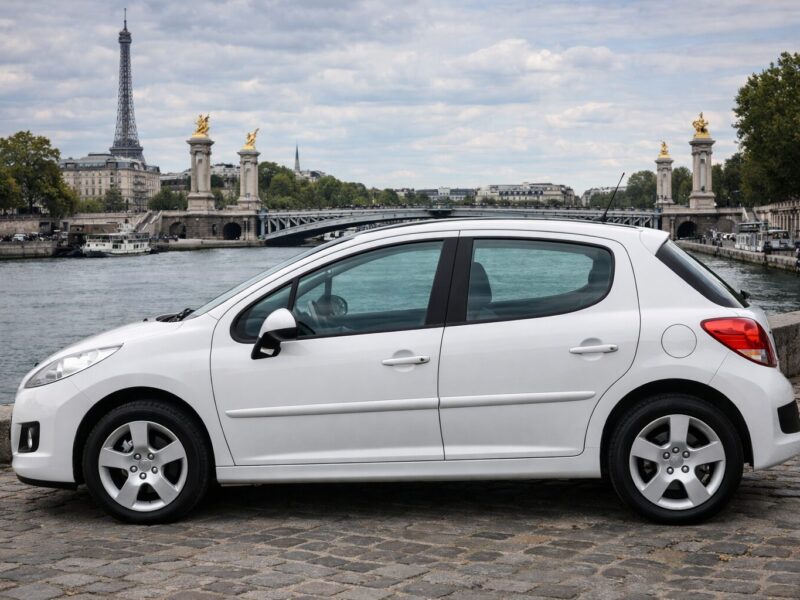
The Peugeot 207 was produced from 2006 to 2012 and is available as a three-door, five-door, estate and coupé-cabriolet. Its sporty design still looks fresh even after years. Prices start at around €1,000 for early models with higher mileages. Cars with 100,000 to 150,000 kilometres cost between €2,000 and €4,000.
The supply is large, which means you can be selective. The hatchback in particular is the most common. The estate accounts for 25 percent of the supply, the CC around 14 percent. Diesel models are scarce with only 13 percent of used cars. Automatics are rare.
‘ A broken timing chain causes engine damage that can easily exceed the purchase price. ’
Check the timing chain before buying
The petrol models with VTi and THP engines are prone to timing chain problems. This applies mainly to pre-facelift models built before 2009. The chain can suffer excessive wear due to insufficient lubrication or extended service intervals.
Symptoms of a worn timing chain include:
- Rattling noise when starting
- Irregular engine speed
- Engine warning light that comes on
Always ask for the service history. Check whether the chain has been replaced. A broken timing chain causes engine damage that can easily exceed the purchase price. If in doubt, let the engine run and listen for any unusual noises. Ask whether a mechanic can inspect the chain before you buy.
Oil level and oil consumption need extra attention
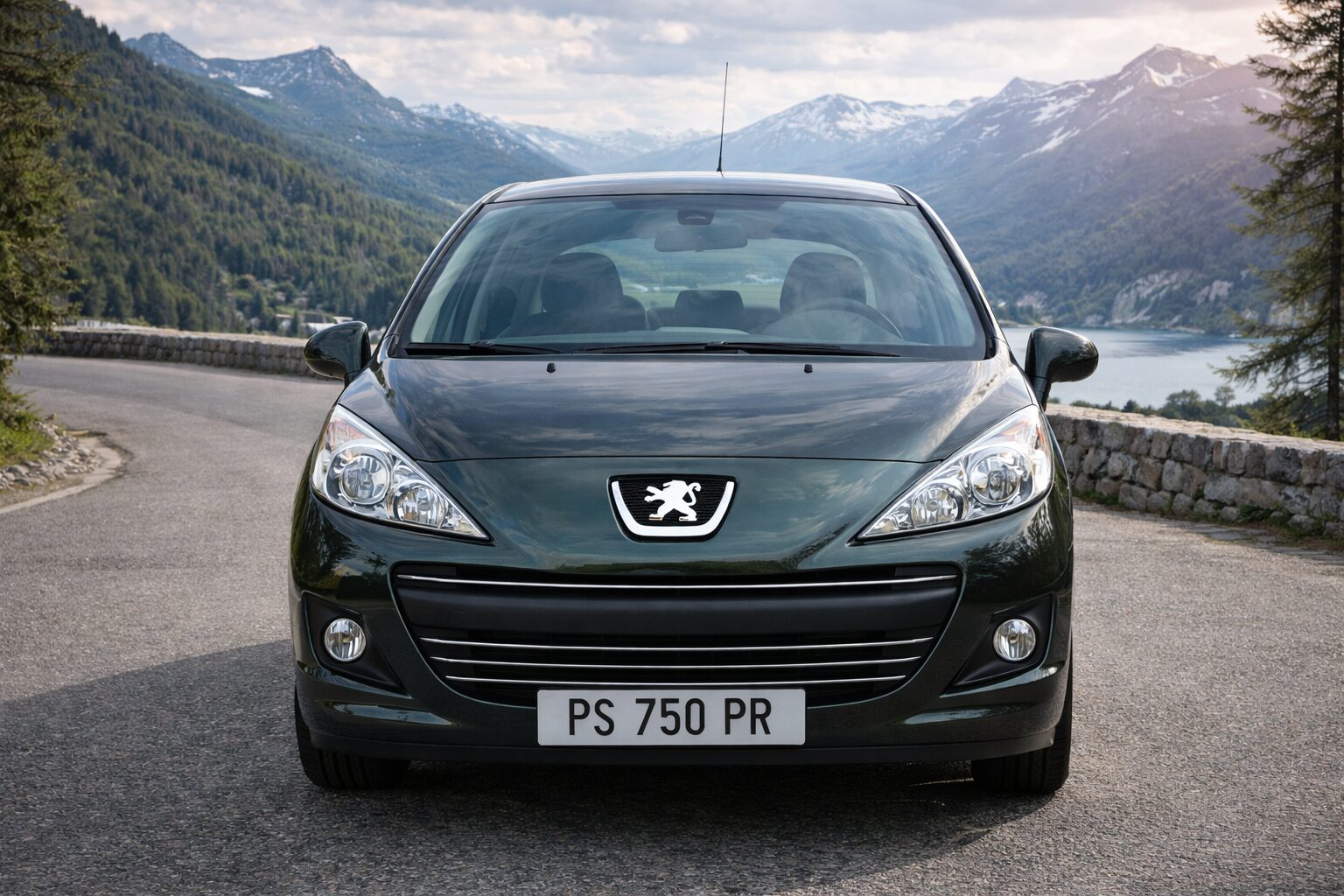
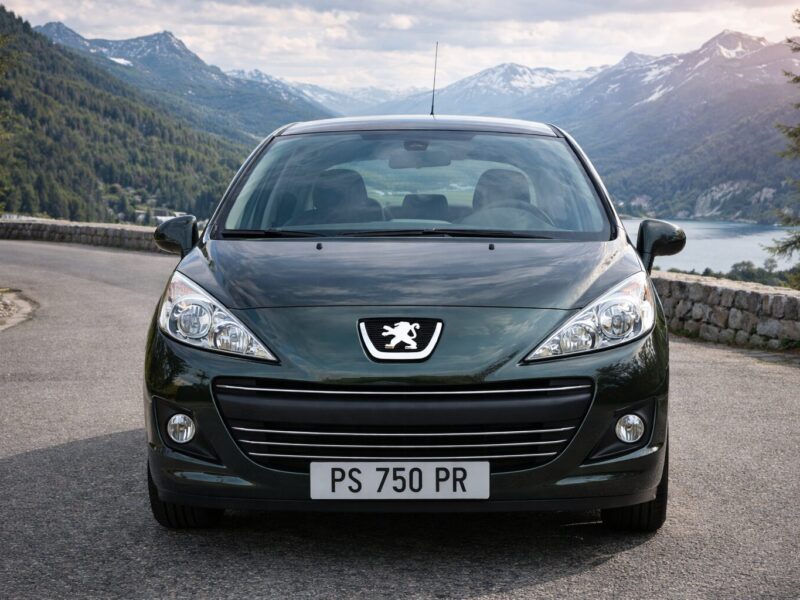
The 1.6 HDiF diesel engine (HDi with particulate filter) is known for being economical and reliable, but it has one major weak spot. The plastic dipstick can break, with part of it ending up in the sump. This can lead to blockages in the oil system and ultimately to engine damage.
When viewing the car, check the following:
- Pull out the dipstick and check that it is intact
- Check that the oil level is correct
- Ask when the oil was last changed
On petrol engines, especially the THP versions, increased oil consumption is common. Some cars use a litre or more between services. This often indicates wear to pistons or valves. During a test drive, check whether blue smoke comes from the exhaust, especially under acceleration. This indicates oil burning.
CC roof mechanism needs careful inspection
The Peugeot 207 CC with its folding hardtop is attractive, but the roof mechanism is a vulnerable component. Repairs are expensive, often over €1,000. Many owners report faults in the electric controls or mechanical parts that seize up.
Always test the roof several times when viewing the car. Open and close it fully. Watch out for the following signs:
- Strange noises or stuttering movement while operating
- Warning messages on the dashboard
- The roof not opening or closing fully
- Leaks after rain, check the upholstery and floor mats
Avoid cars where the owner says that the roof “has the odd problem”. This will not sort itself out and usually only gets worse. Make sure the roof mechanism works perfectly before you go ahead with the purchase.
‘ Even if the engine warning light is not on, there can still be fault codes stored. ’
Engine faults and electronics require a digital check
The Peugeot 207 regularly suffers from electrical faults. Problems with the onboard computer system, sensors and lighting are common. A gong sound when starting usually points to a flat battery that needs replacing.
Before buying, always have the fault code memory read out at a garage. This reveals hidden problems that are not immediately visible. Even if the engine warning light is not on, there can still be fault codes stored.
When viewing the car, also test all electrical functions:
- Front and rear lights
- Windscreen wipers and washers
- Electric windows and mirrors
- Climate control and ventilation
- Infotainment system and radio
Faults in the electrical system are often difficult and expensive to resolve. If in doubt, you are better off looking for another example.
High mileage without history is a risk
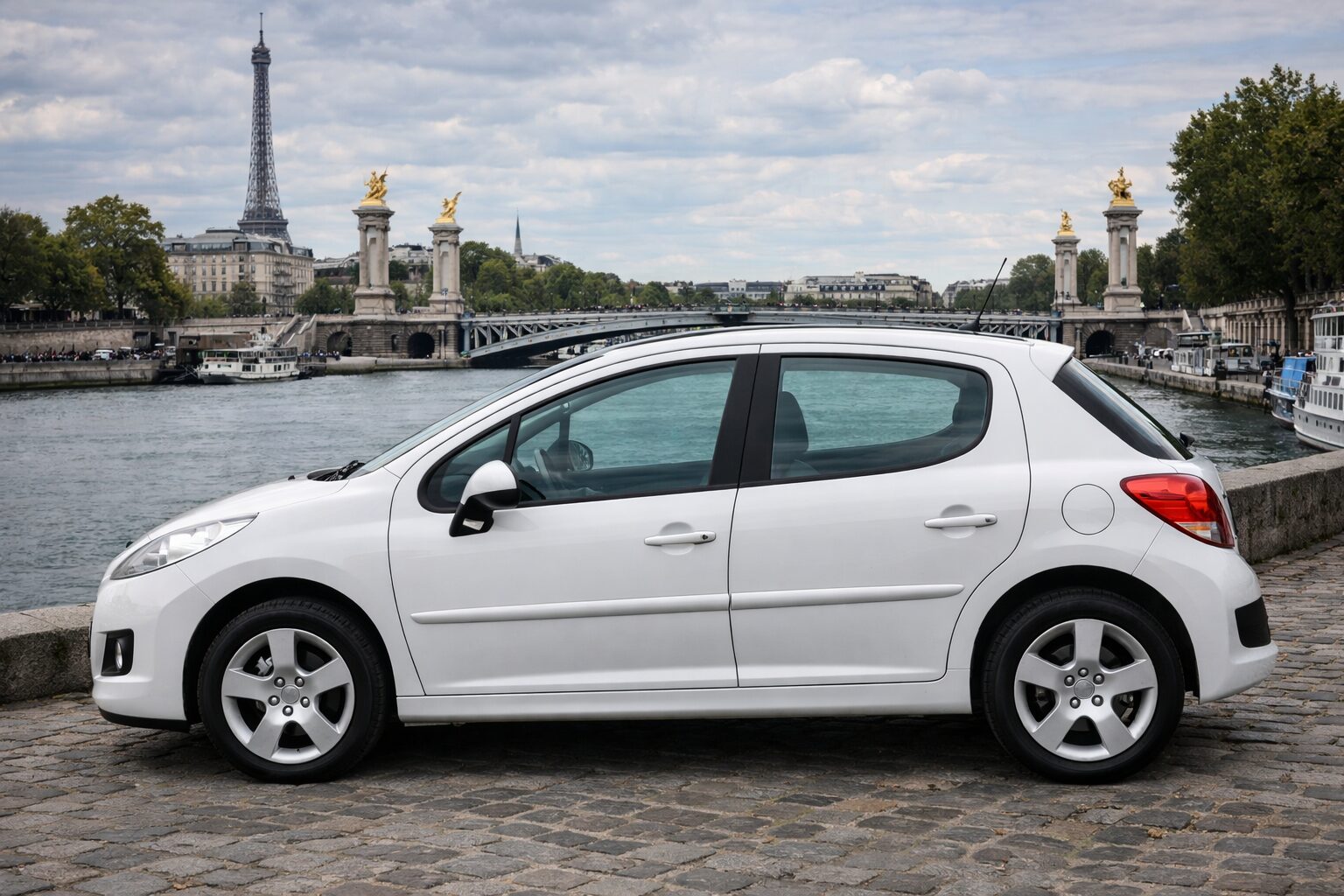
Many used Peugeot 207s have more than 150,000 kilometres on the clock. That does not have to be a problem if the car has been properly maintained. Without a service history, however, you are taking a gamble. Always ask for a complete overview of servicing and repairs carried out.
Check the car via an NAP check (control by Nationale Auto Pas to rule out mileage fraud). Also look for signs of heavy use:
- Wear on the steering wheel, gear lever and pedals
- Rust on wheel arches and sills
- Worn upholstery and dashboard
Cars with lower mileage and a full history are worth more than their purchase price suggests. The 207’s chassis is solidly built, but neglected maintenance quickly takes its toll. Avoid examples where the seller can provide little or no information about the maintenance history.
Which version is the best choice
The most reliable choice is a 207 from after the 2009 facelift. These models have better materials, more refined engines and fewer teething troubles. The 1.6 HDiF diesel with 90 or 112 hp offers economy and solid performance. For petrol, the 1.4 VTi with 95 hp is a safe option without the issues of the THP engine.
Avoid the early 1.6 THP models unless you can prove that the known problems have been fixed. The sporty RC version lacks the true GTI feel and comes with higher maintenance costs. The CC is attractive but requires extra checks of the roof mechanism.
Ideally, look for a five-door hatchback or estate with a full equipment level. Features such as climate control, cruise control and parking sensors are often standard from the XS trims upwards. These are comfortable and practical for daily use.
‘ The 207 is not an expensive car to maintain, but neglected servicing soon takes its toll. ’
What does it cost to maintain a Peugeot 207
Maintaining a Peugeot 207 is affordable. A minor service costs around €150, a major service about €195. Service intervals are every 30,000 kilometres or two years. These prices cover standard work such as changing the oil, replacing filters and carrying out checks.
Repairs can of course be more expensive. Replacing a timing chain quickly costs between €800 and €1,200. Repairing the CC roof mechanism can exceed €1,000. Electrical faults often take time to diagnose, which increases labour costs.
So allow for a buffer for unexpected costs. The 207 is not an expensive car to maintain, but neglected servicing soon takes its toll. Ideally, buy a well-maintained example to avoid high repair bills.
Is the Peugeot 207 reliable as a used car
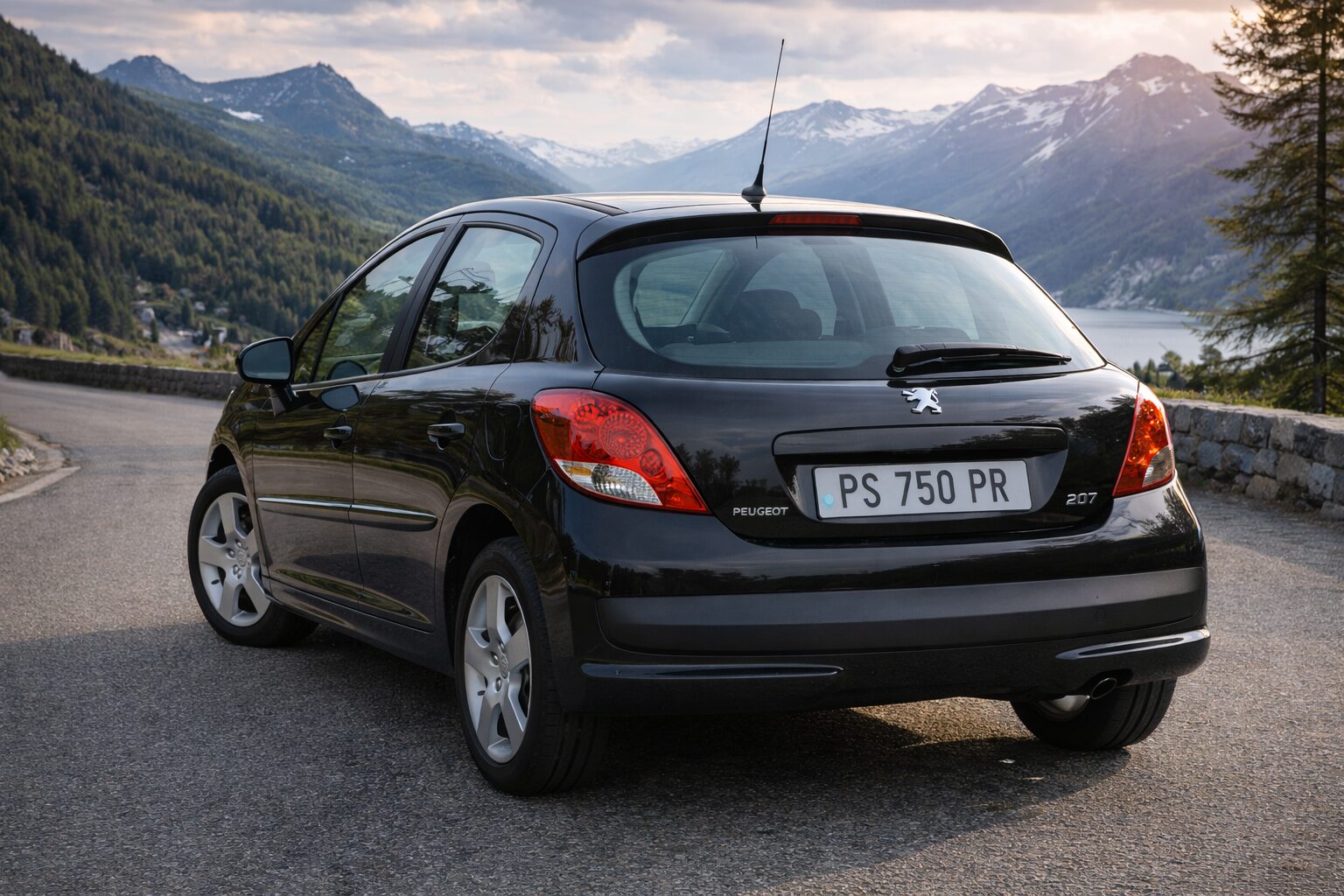
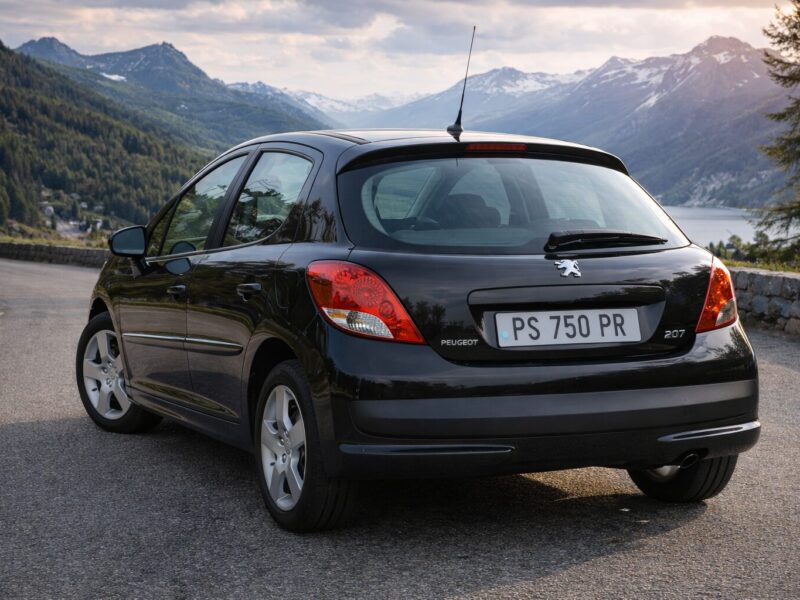
The reliability of a used Peugeot 207 depends heavily on maintenance and specification. Post-facelift models with diesel engines and a full history offer years of enjoyment at low cost. Early petrol cars with THP engines and cars without a maintenance history are risky.
Owners praise the space, the fuel economy and the fresh design. Those who keep up with servicing and tackle problems in good time experience few issues. Neglected maintenance, however, leads to electrical faults, engine problems and high repair costs.
Take your time for a thorough inspection. Test all functions, have the fault code memory read out and check the service history. A good 207 is out there, but buying selectively prevents disappointment.
On the Carnews website you will find more buying guides, maintenance tips and comparisons of popular used models. Discover which car best suits your needs and what to look out for to make a smart purchase.
Frequently asked questions
The 1.6 HDiF diesel engines (90–112 hp) are generally known as economical and relatively reliable, apart from the occasional breaking plastic dipstick. The 1.4 VTi petrol engine (95 hp) is also regarded as one of the safer, smooth-running choices if maintenance is in order. The early 1.6 THP petrol engines, on the other hand, have a reputation for problems, such as timing chain and oil consumption issues, and are often discouraged in pre-facelift versions. The basic 1.4 petrol is not notorious technically, but underpowered and therefore less pleasant in daily use.
On a used Peugeot 207, pay particular attention to electrical faults (dashboard lighting, sensors, central controls) and always have the fault memory read out. On VTi and especially THP engines, check the condition of the timing chain and any excessive oil consumption, and avoid early THPs if in doubt. On diesels (1.6 HDiF), check whether the particulate filter and EGR valve are in good condition and whether the plastic dipstick has not broken off into the sump. Also look for rust around the wheel arches, wear to the suspension, and on the CC for a properly working roof mechanism.
The maintenance costs of a Peugeot 207 are relatively low; allow about €150 for a minor service and around €195 for a major service, with intervals of 30,000 km or every two years. In general, parts are readily available thanks to the large number of cars produced and still on the road. Many wear parts and used parts are widely available and sharply priced. On specific versions such as the CC, some parts (such as the roof mechanism) can be more expensive.
For car enthusiasts, the 207 RC, the special editions (such as Le Mans) and well-equipped XS versions are especially interesting, because of their sporty character and extra options. In general, the facelifted models from 2009 onwards are the better choice, with improved materials, more reliable technology and more modern equipment. Within that range, the 1.4 VTi and the revised 1.6 THP (from around 2010) and 1.6 HDiF are preferable to the early THP engines. Cabrio fans should look for a 207 CC with a well-maintained roof mechanism and a complete service history.
During the test drive, pay attention to a smooth, even idle, sufficient pulling power and the absence of rattling or ticking noises (especially on a cold start, due to VTi/THP chain wear). Check that the gearbox shifts smoothly, the clutch does not slip (biting point not too high) and that there are no vibrations or noises when accelerating and coasting. Test the suspension and chassis over bumps: no thumping, wobbling or pulling to one side under braking, and look for uneven tyre wear. Finally, check all electrics (lights, wipers, windows, climate control, infotainment, sensors) and watch for warning lights or error messages on the dashboard.