
A used Peugeot 5008 offers space, seven seats and modern equipment, but the purchase depends on a thorough inspection of the engine, maintenance history and electronics for each specific model variant. For petrol versions, the maintenance history is decisive; for diesels, the AdBlue system requires extra attention; and for hybrid models, battery condition is paramount. Those who follow the correct checklist can enjoy a reliable Peugeot 5008 as a dependable family car for years to come.
What to look for when buying a used Peugeot 5008?
The first step with a second-hand 5008 is to check the service booklet and associated invoices. A complete history provides insight into preventive maintenance, oil changes and any repairs. This is especially important for cars where the warranty depends on maintenance within the manufacturer’s network. If these records are missing, you run the risk of hidden defects and higher maintenance costs in the short term.
The powertrain makes a significant difference. The 5008 is available with PureTech petrol, BlueHDi diesel, hybrid and plug-in hybrid engines. Fully electric variants were also introduced later. Each powertrain has its own specific points of attention that you should check during the viewing and test drive. Assess each engine type thoroughly to avoid expensive surprises later on.
‘ For hybrid and plug-in hybrid variants, battery health is the deciding factor. ’
Which Peugeot 5008 model years should you avoid?
For the 1.2 PureTech petrol engine, a good maintenance history is even more important than the year of manufacture itself. Units with incomplete or sloppy service are more likely to show issues with oil consumption and engine running. Preferably choose a car with recent maintenance and documented timing belt replacement. Check if the belt has been replaced according to the prescribed schedule. A test drive will help you detect any jerking, vibrations or irregular running.
For BlueHDi diesel versions, the AdBlue system is known for failures involving the tank, pump and control unit. These problems occur across various model years and lead to warning lights, reduced engine performance or even an engine lockout. Inquire if the system has already been replaced or repaired and have the car scanned for fault codes before making an offer.
For hybrid and plug-in hybrid variants, battery health is the deciding factor. Check if the battery is still covered by the manufacturer’s warranty and ask about the previous owner’s charging habits. Peugeot advises charging the battery between 20% and 80% for optimal capacity retention. Careless charging patterns significantly reduce its lifespan.
Peugeot 5008 used car problems checklist
A comprehensive test drive provides immediate insight into the condition of the engine, transmission and chassis. While driving, pay attention to gear changes, vibrations and brake feel. The 5008 should feel quiet and smooth. Jerking when upshifting or strange noises from the front wheels point to wear. Warning lights on the dashboard indicate issues with sensors, emission systems or electronics.
Engine running and transmission
Start the engine preferably cold and listen to see if it runs evenly without irregularities. For diesel versions, a ticking noise indicates wear on the high-pressure pump or injectors. With automatics, it is important that the transition between gears runs smoothly, especially in combination with hybrid technology, where the electric motor and internal combustion engine work together.
Infotainment and i-Cockpit
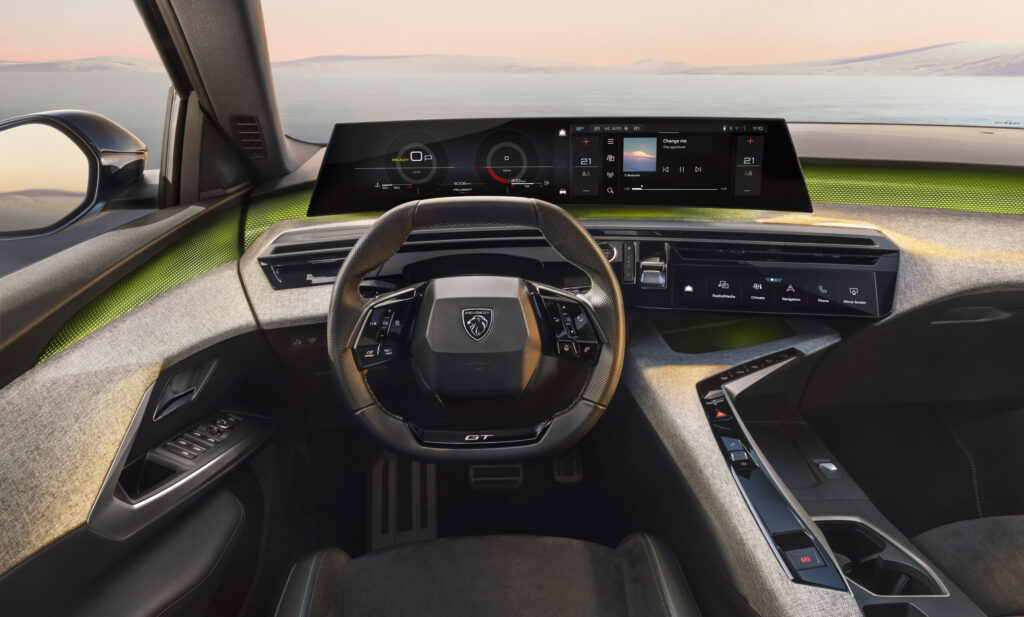
The Panoramic i-Cockpit is a striking feature of the 5008, but older units may suffer from software problems. Check if the touchscreen reacts smoothly, whether navigation and phone pairing work, and if all menus are accessible. A frozen system or missing updates lead to frustration and extra costs.
Tailgate and seven seats
Fold the third row of seats in and out to check if the mechanism functions without hitching. In a family SUV, this is a feature that is used regularly. Also check the electric tailgate if present. Failures in sensors or motors cost thousands of pounds to repair.
Air conditioning and climate control
Test the climate control by setting it to various temperatures and modes. With automatic climate systems, the temperature should be reached quickly and accurately. A weak air conditioner points to a leak in the cooling circuit or a faulty compressor. Also check if the heating works properly on all settings.
Parking sensors and camera
Most used 5008 units feature parking sensors and a reversing camera. Test these functions thoroughly during the test drive. A faulty sensor or camera is not only inconvenient but also affects resale value. Check if the image is sharp and if the sensors measure distance accurately.
Seat adjustment and signs of use
The adjustable seats, especially in higher trim levels, must react smoothly to electric operation. Check if all seating positions are accessible and if memory storage works. Also pay attention to wear on the steering wheel, pedals and upholstery. This gives an indication of actual use. Wear sometimes deviates from the mileage on the odometer.
Practical buying tips per powertrain
For the 1.2 PureTech petrol engine, you should focus primarily on maintenance history, oil consumption and the condition of the timing belt. A recent service and documentation of work performed are essential. During the test drive, ask if the engine runs smoothly when cold and warm.
For the BlueHDi diesel, the AdBlue check is critical. Inspect warning lights, emission systems and whether any replacements have already been carried out. Have the car scanned for fault codes and ask about the state of the diesel particulate filter (DPF). Many short trips cause this filter to become clogged, leading to reduced performance and extra costs.
For hybrid and plug-in hybrid models, charging history is more important than the year of manufacture. Ask about the frequency of charging, actual range and whether software updates have been performed. Check the operation of the automatic transmission and the electric assistance during acceleration. A stuttering transition between electric and internal combustion engine indicates wear in the hybrid system, which also points to a potential fault.
For fully electric E-5008 variants, look at battery warranty, charging speed and the charge port. Test the real-world range and ask about the state of the battery. Maintenance must have been performed according to the schedule to keep the warranty valid. A worn or damaged charge port indicates careless use.
‘ A strikingly low price demands extra attention. ’
Pre-purchase inspection and fault codes
Always have the car scanned for fault codes before purchase, especially for hybrids, diesels and units with extensive electronics. The dashboard sometimes shows no warning lights, yet underlying faults are often stored in the system. This data provides insight into the problem history and possible short-term repairs.
Check if all safety and driver assistance systems work properly. This includes adaptive cruise control, lane keeping assist, emergency brake assist and blind-spot detection. In modern SUVs, these functions add a lot of value and are expensive to repair afterwards. A missing or defective feature is a good bargaining chip.
Compare units with the same model year and trim to interpret price differences. A strikingly low price demands extra attention. This often points to hidden defects, deferred maintenance or past damage. Do not look only at mileage, but especially at the type of use. Many short trips are harder on diesel, AdBlue (an additive for exhaust gas treatment) and battery systems than longer journeys.

Quick viewing checklist for buyers
Work systematically during the viewing. Begin by checking the service booklet, then verify the associated invoices. Start the engine cold and listen to how it runs. Check the dashboard for warning lights and then test all comfort features: infotainment, camera, sensors, air conditioning and seat adjustment.
Fold the seven seats in and out, open the electric tailgate, and check the boot for wear. Pay attention to the condition of the floor carpeting, seat rails and load area. In family cars, damage often occurs here which can worsen over time. Finally, check tyre wear and ask about the state of the brakes and shock absorbers.
Go for a test drive that includes both city traffic and motorways. This allows you to test gear changes, acceleration, brake feel and steering behaviour. Check these points under various conditions. Watch for vibrations at higher speeds and verify that all assistance systems activate. A test drive of at least twenty minutes provides enough insight into the overall condition of the car.
Discover more on Carnews
When making the final decision, always check if the seller provides full transparency regarding maintenance history and if the car has a recent MOT without any remarks. Do you have doubts about the state of the battery, AdBlue system or timing belt? Have an independent specialist re-inspect the car before purchase. This prevents you from being confronted with high repair costs after the purchase that negate the savings of a second-hand deal.
Frequently asked questions
For the 1.2 PureTech engine, excessive oil consumption and wear/clogging of the wet timing belt are common; during inspection, listen for ticking noises, rough idling, oil deposits in the engine bay, and check the service booklet to see if the belt has been replaced in time. BlueHDi diesels more often have problems with the AdBlue system (tank, pump, control unit); recognisable by engine warning lights, messages about emissions/AdBlue on the dashboard, and limp mode during the test drive. During a test drive, the engine should pull smoothly in all rev ranges without stuttering, smoke or vibrations. Finally, always check for fault codes (scan), leaks around the engine block and a complete maintenance history, as this prevents most engine and gearbox issues.
For the Peugeot 5008 with the 1.2 PureTech petrol engine, maintenance status, oil consumption and the timing belt are well-known points of attention. With the BlueHDi diesels, problems with the AdBlue system (tank, pump, control unit) occur relatively often, so check if anything has been replaced or repaired here. Furthermore, electronic faults, infotainment issues and driver assistance system problems are areas to watch. For hybrid/plug-in variants, the condition of the high-voltage battery pack and a clean charging history are important.
During the test drive, notice if the suspension feels quiet and comfortable without knocking, clunking or unsettled bouncing over speed bumps and uneven surfaces. Test the brakes by applying them firmly and gradually a few times: the car should remain straight without vibrations in the steering wheel or pedal, and without squealing or grinding noises. Assess the steering for direct, predictable response and whether the car drives straight without constant correction. Look out for any warning lights or messages that could point to problems with ABS, ESP or other assistance systems.
Regarding the electronics, look for error messages or warning lights in the dashboard and preferably have the car scanned for fault codes. Check if all driver assistance systems (such as parking sensors, cameras, blind-spot and emergency braking systems) work reliably. Test the infotainment system extensively: touchscreen response, navigation, Bluetooth, smartphone pairing (Apple CarPlay/Android Auto), radio and sound. Also look out for stuttering, freezes or system reboots, as repairs or software updates can be costly.
Check the service booklet and all invoices to see if maintenance has been carried out on time and according to the manufacturer’s schedule. Look at whether major maintenance (timing belt/chain, brakes, fluids, filters) has demonstrably been done and if regular oil and spark plug changes have occurred. Documentation of repairs to known weak points (e.g., AdBlue system for diesel, timing belt for certain petrol engines, battery and software updates for hybrid/EV) is also important. A complete and logical maintenance history without large gaps or unexplainable interventions significantly increases reliability.