
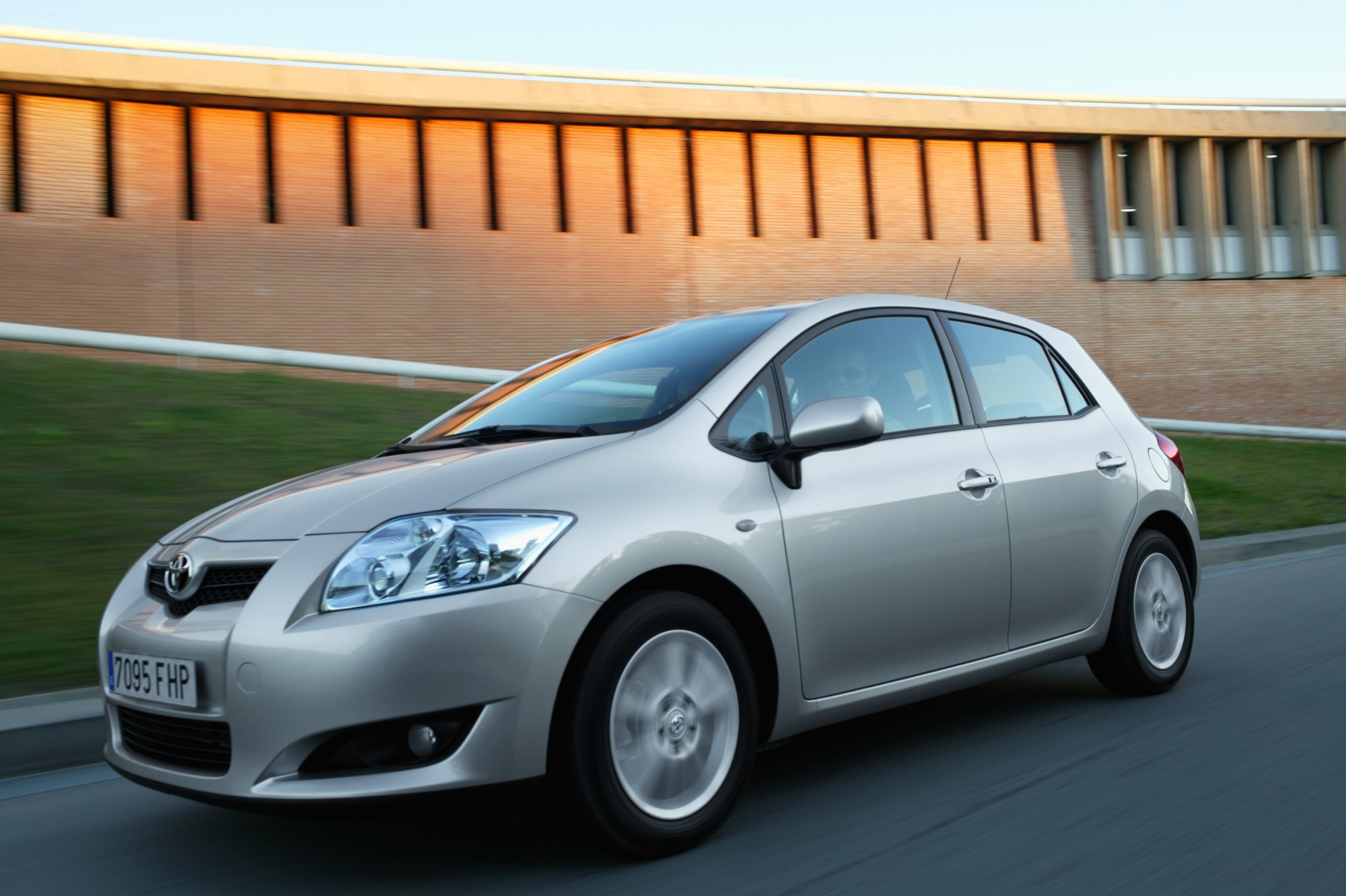
Toyota Auris: a reliable family car with a few points of attention
Between 2007 and 2019, the Toyota Auris proved to be a reliable choice in the C-segment, particularly in its hybrid version. However, anyone considering or already owning a model would be wise to take into account a few specific issues. These mainly occur regularly with older models.
Excessive oil consumption in certain petrol engines deserves extra attention. Battery discharge also occurs in models from 2012-2014. Additionally, corrosion on the underbody is a factor in cars ten years old and older. However, with the right knowledge and preventative maintenance, the Auris remains a solid partner for daily use.
Why the Toyota Auris remains a popular choice
The Auris occupies a practical position in the Toyota range. As the successor to the Corolla, Toyota targeted European buyers with this model who were looking for a spacious family car with low maintenance costs. The hatchback body offers ample space for daily use.
The hybrid version with the HSD powertrain, Toyota’s hybrid system, stands out for its fuel efficiency and smooth urban driving qualities.
The appeal of the Auris primarily lies in the brand’s reputation for durability. Users regularly report that their cars reach mileages of 200,000 and higher without issues. The hybrid versions are the most praised in this regard, while petrol engines with Valvematic technology also perform well. However, this is not the case for larger diesel engines, as will be shown later.
An overview of Toyota car problems shows that the Auris distinguishes itself positively within the model range. However, there are specific points of attention.
Reliability surveys consistently place Toyota in the top three manufacturers. The Auris itself achieved sixth place among family cars aged zero to three years. These figures provide a realistic picture: the car performs above average, but it is not flawless.
‘Diesel engines pose the greatest risk.’
General reliability: facts versus expectations
The Auris’s reputation as a reliable car is largely accurate. However, this requires nuance depending on the type of powertrain.
In practice, hybrid models prove to be the most robust. These cars experience few major malfunctions and achieve high mileages with minimal maintenance. The combination of a petrol engine and electric motor reduces the load on individual components, which benefits their lifespan.
Petrol engines without hybrid technology perform inconsistently. Valvematic variants are considered reliable, but older non-Valvematic petrol engines suffer from excessive oil consumption. This problem can lead to engine damage if the oil level is not checked regularly.
Diesel engines pose the greatest risk. The 1.4 D-4D performs adequately. However, the larger 2.0 and 2.2 D-4D models have serious issues affecting cylinder head gaskets, engine blocks, and injection systems.
The CVT transmission in hybrid models elicits mixed reactions. The technology is reliable. However, it feels sluggish during hard acceleration. For those seeking sporty driving behaviour, this is a limitation. For comfortable daily use, it presents no problems.

Battery discharge: software issue with a simple solution
One of the most frequently reported complaints for models from 2012-2014 concerns a flat battery after a few days of standstill. The cause lies in a faulty hazard light switch that can be accidentally pressed. This happens, for example, when someone brushes against the button while getting in. The system then continues to draw power until the battery is flat.
Toyota has made a software update available for this issue. Dealers perform this free of charge. Owners can also replace the switch themselves. This requires no specialised knowledge and costs little.
A preventative measure is to switch off the vanity lights by the mirrors, as passengers sometimes forget them after use.
When purchasing a low-mileage model, it is advisable to leave the car for a few days. Then test the start. This way, you will quickly discover any potential problem before buying the car.
Excessive oil consumption in petrol engines
Petrol engines without Valvematic technology often consume more oil than normal. This higher consumption leads to problems if the level is not topped up in time. Engine damage due to oil shortage regularly occurs in owners who do not check the oil level weekly.
The cause usually lies in worn or defective piston rings, the seals that prevent oil from entering the combustion chamber. Toyota can fix this problem, but the costs are considerable. Many owners choose to manage the issue by regularly topping up the oil instead of carrying out an expensive repair.
Practical measures help limit this risk. Check the oil level with the dipstick every week and ensure the level remains between the minimum and maximum marks. Keep a bottle of spare oil in the boot for emergencies. In the event of persistently high consumption, it is advisable to have a dealer investigate the problem.
‘Maintenance costs quickly escalate, making these engines less suitable for those who want to keep maintenance costs low.’
Risks with larger diesel engines
The 2.0 and 2.2 D-4D diesel engines carry significant risks. These larger variants experience issues with cylinder head gaskets. Pitting in the engine block also occurs. The transmission undergoes high stress. Injection systems and clutches require expensive maintenance.
Maintenance costs quickly escalate, making these engines less suitable for those who want to keep maintenance costs low.
The smaller 1.4 D-4D proves to be considerably more reliable and is a better choice within the diesel range. In all diesel variants, the particulate filter plays a role. With predominantly urban use, the Diesel Particulate Filter, or DPF, becomes clogged, leading to malfunctions.
Prevention involves regular motorway drives of at least twenty minutes, during which the exhaust system reaches the temperature required for the filter’s self-cleaning. Owners who primarily make short journeys may be better off choosing a petrol or hybrid variant.
Brake and handling issues
Complaints about the rear brakes are common, especially in E150 models. The handbrake performs weakly. The rear brakes sometimes make noise. This does not pose an immediate safety risk but can be bothersome and requires maintenance.
Hybrid models experienced a software fault in the Power Management ECU, the control unit for the powertrain. This fault led to jerky driving behaviour and loss of power. Toyota issued a recall for this, offering free reprogramming. Anyone considering a used hybrid would be wise to check if this update has been performed.
The CVT transmission feels sluggish during hard acceleration. This is inherent to the system and not a defect. For those who drive smoothly, it poses no problem, but enthusiasts of sporty driving behaviour will find it annoying. Test this during a test drive to assess if it fits your expectations.
Rust and corrosion on the underbody
Models ten years old and older are at risk of rust formation. The most vulnerable areas are suspension components, the rear subframe, and the underside of the bodywork. MOT histories regularly show corrosion as a point of concern in older cars.
Damage to wheel rims from hitting kerbs can occur. These may indicate problems with the suspension or steering.
When purchasing a used model, a thorough inspection of the underside should be a priority. Check wheel arches, subframe, and suspension points for rust formation.
An HPI check, a vehicle history check, and the MOT history provide insight into previous repairs and reported corrosion. If visible rust is present, assessment by a specialist is necessary to determine its severity.
Surface rust can be treated, but severe degradation of structural components makes the car unsafe.
‘Electrical maintenance costs generally remain limited, especially compared to larger mechanical repairs.’
Electrical and electronic malfunctions
Hybrid models are known for their robustness, but occasionally experience minor issues with electrical components. Defective ignition coils occur, as do minor malfunctions in the gearbox mechanism.
The engine warning light can sometimes illuminate due to a software error. There isn’t always an actual mechanical problem in such cases.
Infotainment systems sometimes show minor glitches. Updates from the dealer usually fix these problems. Electrical maintenance costs generally remain limited, especially compared to larger mechanical repairs.
Sensors for various systems can become defective over time. Faulty sensors manifest as warning lights on the dashboard. Diagnosis at a specialised garage reveals the cause. Many of these problems can be resolved with limited costs.

Recall campaigns and official recalls
Toyota has carried out several recalls for the Auris. The most significant concerns the software update for the Power Management ECU in hybrid models. This update resolves issues with driving behaviour and loss of power.
The hazard light switch also had an official campaign. Dealers check during servicing whether this update has been performed. Use your chassis number to check with Toyota for any outstanding recalls.
It is wise to have these actions carried out, even if the car appears to be functioning without problems. Software updates prevent issues that may arise later and are free at official dealerships.
Preventative maintenance extends lifespan
Regular checking of the oil level is the most important preventative measure, especially for petrol engines without Valvematic. Weekly checks prevent engine damage due to oil shortage. Keep the level between the marks and top up in good time.
Diesel owners should plan a motorway drive of at least twenty minutes every few weeks. Such a drive keeps the particulate filter clean and prevents blockages. Combine this with other journey planning to save fuel.
Have software updates performed as soon as they become available. Dealers carry out recalls free of charge. Small updates cost little. This prevents larger problems and keeps systems functioning optimally.
Regularly inspect the underside for rust formation, especially on cars older than five years. Early detection makes treatment simpler and cheaper.
Buying a used Auris: what to look out for?
Start by checking the maintenance history. A complete dealer service history inspires confidence, although maintenance elsewhere does not automatically mean problems. Pay attention to regular intervals and major services performed.
Request an HPI check to rule out manipulated mileages. Many Auris models have been used as taxis, which is reflected in high mileages and intensive use. The interior condition often provides clues here. Extremely worn seats and upholstery indicate heavy use.
During the test drive, check the following:
- Start the car after a few days of inactivity to rule out battery problems
- Test the brakes on an incline and listen for noises
- For diesels, watch out for misfires or irregular engine behaviour
- Check the oil level with the dipstick
- Test acceleration to assess the CVT’s behaviour
- Inspect rims for damage from kerbs
Thoroughly inspect the underside for rust. If in doubt, bring a specialist. Have the car inspected. An investment of one hundred euros in an inspection can prevent thousands of euros in surprises later on.
Costs for repairs and regular maintenance
Hybrid models have the lowest maintenance costs. The regenerative braking system saves brake pads and discs, extending the lifespan of these components. Regular services cost between 150 and 300 euros, depending on their scope.
Petrol engines require similar amounts for maintenance, but in cases of excessive oil consumption, there are additional costs for oil. Expect five to ten litres extra per year for models with this problem. Diesel engines have higher maintenance costs due to more expensive components and more complex injection systems.
Repairs to the hybrid battery are rare before 200,000 kilometres. Should replacement be necessary, it costs between 1500 and 3000 euros. However, many owners reach this mileage without battery issues.
Transmission repairs for CVT systems are costly. They are rare in well-maintained models.
Underbody repairs vary widely in price. Simple replacement of shock absorbers costs a few hundred euros, but welding work for rust damage quickly escalates to a thousand euros or more. Preventative maintenance and early detection keep these costs limited.
The Auris as a practical choice with realistic expectations
The Toyota Auris earns its reputation as a reliable family car, especially in its hybrid version. The car achieves high mileages without major problems, provided known points of attention are taken into account.
Regular oil checks for petrol engines, motorway drives for diesels, and attention to software updates keep the car in good condition.
Anyone looking for a used model should check the maintenance history, inspect the underbody for rust, and test all systems during a test drive.
The 1.4 D-4D diesel and all hybrid variants offer the best balance between reliability and maintenance costs. Larger diesel engines are best avoided unless their history is fully documented.
For daily use, the Auris offers ample space, low running costs, and limited maintenance expenses. Enthusiasts will miss the sluggish CVT and limited sportiness, but for those seeking a practical car that will last for years, the Auris is a sensible choice. With the right checks at purchase and consistent preventative maintenance, the car remains a reliable partner.