
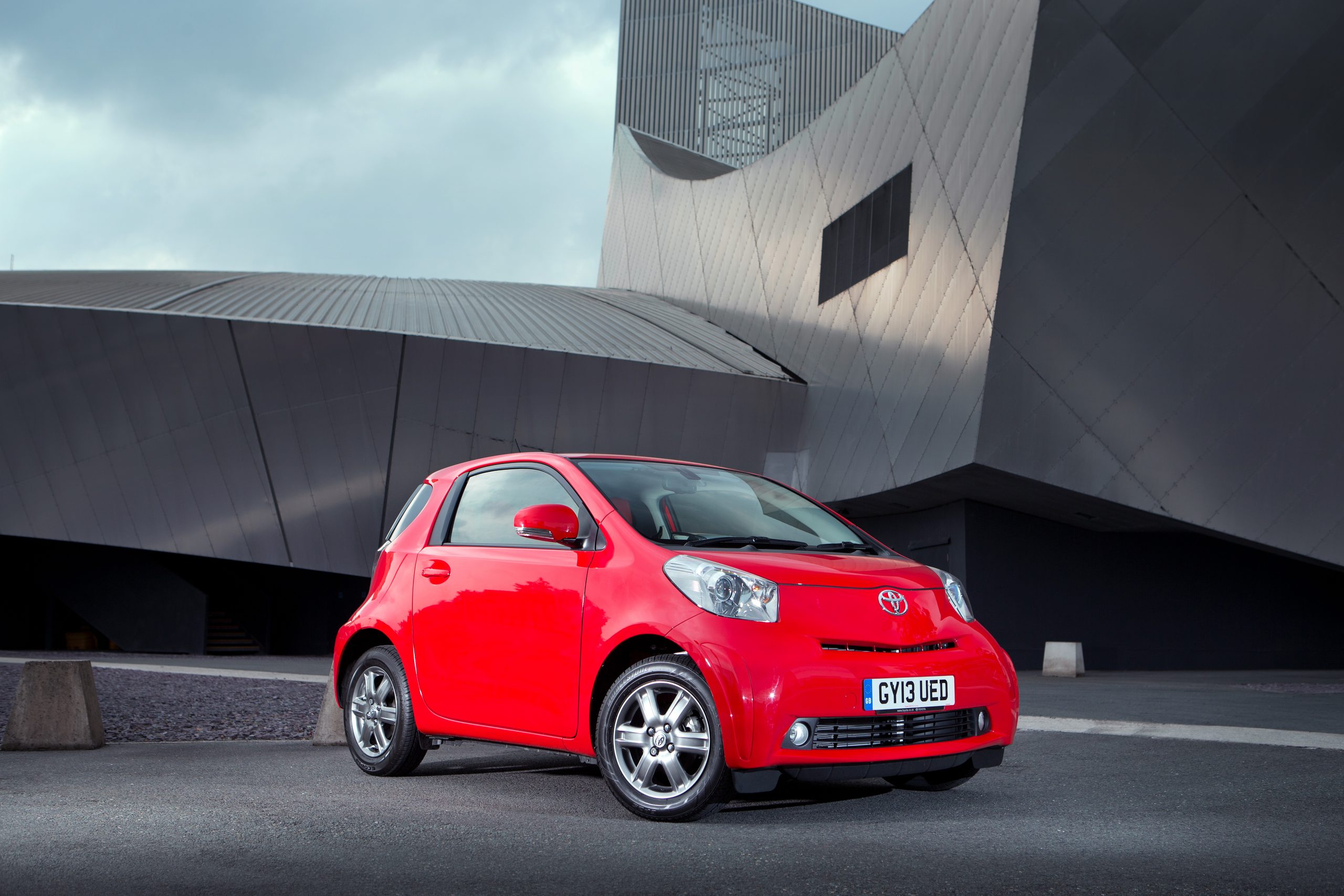
Toyota iQ: compact city car with Toyota reliability and specific weaknesses
The Toyota iQ is a particularly compact city car that stands out for its manoeuvrability and Toyota reliability, but it suffers from specific technical issues that you need to know about as an owner or buyer. The CVT transmission, catalytic converter and starting problems in cold temperatures are the most common weaknesses of this model. That said, many owners clock up high mileages without major failures, provided the maintenance is carried out carefully. So is this little Japanese car still a sensible choice?
The iQ was produced between 2008 and 2015 as Toyota’s answer to the growing demand for very compact city cars. With a length of just 2.99 metres, the iQ fits almost anywhere, but beneath the compact bodywork lie a few technical points to watch. Toyota car problems are generally less frequent than with other brands, but the iQ is partly an exception to this.
The model seats up to four people and was supplied with various engines. The 1.0 VVT-i three-cylinder petrol engine is the most common version, while the 1.3 VVT-i four-cylinder offers more power. Some markets also received the 1.4 D-4D diesel engine, although this was hardly sold in the Netherlands. Transmission options consist of a five-speed manual gearbox or the MultiDrive S automatic, a CVT design that will play an important role later.
Why do owners choose the Toyota iQ?
The iQ attracts buyers thanks to its exceptional compactness and manoeuvrability. The turning circle is minimal, which makes parking in tight city spaces child’s play. Owners regularly report that they can park in spots where other cars do not stand a chance. The low road tax and favourable insurance premiums also make the iQ financially attractive.
In addition, maintenance costs are limited. Tyre changes are cheap because of the small sizes, and many parts remain affordable due to the simple construction. Fuel costs are low, especially with the 1.0 VVT-i engine, which in real-world driving achieves roughly 45–50 mpg (about 1 in 18 to 1 in 20). Toyota’s image of durability and reliability also plays an important role in the purchase decision.
‘ Toyota originally advised against changing the oil, but real-world experience shows that regular changes significantly extend the lifespan. ’
CVT transmission: the biggest weak point
The MultiDrive S automatic is the most frequently reported problem on the Toyota iQ. This CVT transmission can start to show weaknesses from 60,000 to 80,000 kilometres. Symptoms include slipping during acceleration, jerky shifting or a loss of drive. In severe cases the transmission fails completely and has to be replaced.
The cause often lies in insufficient or ageing transmission oil. Toyota originally advised against changing the oil, but real-world experience shows that regular changes significantly extend the lifespan. An interval of 40,000 kilometres is recommended by mechanics and experienced owners. If you do not replace the oil, the metal belts and pumps in the CVT wear out more quickly.
You can recognise a transmission problem by increased revs without corresponding acceleration, strange noises while changing gear or warning lights on the dashboard. Repairs are expensive and often not worthwhile on older examples with high mileage. When buying a used iQ, always check the transmission maintenance and ask for proof of oil changes.
Catalytic converter and exhaust system: costly surprises
Catalytic converter problems are common on the iQ, especially on models from 2010 onwards. The catalytic converter can become clogged due to soot build-up or fail internally due to wear. This leads to loss of power, rough running and smoke from the exhaust. During the MOT, a defective catalytic converter can lead to failure due to excessive emissions.
Replacing the catalytic converter is expensive, often between €500 and €800 including labour. For some owners the catalytic converter failed as early as around 80,000 kilometres, which is early given the usual lifespan of this component. During the test drive, check that the engine runs smoothly and does not produce abnormal smoke from the exhaust.
The entire exhaust system can rust after a few years, especially on cars that mostly do short journeys. Condensation in the exhaust accelerates corrosion. Check under the car for rust spots and holes in the exhaust system. Some owners report that a complete exhaust replacement cost around £500.
Starting problems at low temperatures
The iQ struggles to start in frost or very low temperatures. This problem occurs mainly on the 1.4 D-4D diesel, but some petrol engines also show this complaint. Possible causes include a weak battery, problems with the fuel supply or defective glow plugs on diesel engines.
Owners living in cold regions report that the engine sometimes needs several attempts before it fires up. In extreme cases the engine refuses to start at all. Use winter fuel additives on diesel engines to prevent waxing (fuel gelling). If possible, park the car in a garage during freezing periods.
Check the battery regularly, especially before winter. A weakened battery has less starting capacity in cold weather. Replace the battery in good time, usually after four to five years. When buying a used iQ, test whether the car starts without issue, even after a cold night outside.
‘ Even minor damage can lead to persistent electronic faults or mechanical imperfections. ’
ESP system and power steering: electronic quirks
ESP system error messages are fairly common. The warning light on the dashboard may illuminate without an obvious cause. Sometimes this is a false alarm due to a temporary sensor error, but in other cases it indicates actual problems with the stability control system. Have the fault codes read at a specialist garage.
The power steering can become unreliable. Owners sometimes report a sudden loss of power assistance while driving, which makes the steering feel heavier. This issue was part of a recall on certain model years. Check whether the car in question has been inspected under this campaign.
Avoid examples with an accident history, because the tight fit of components in the compact body is sensitive to alignment inaccuracies after repairs. Even minor damage can lead to persistent electronic faults or mechanical imperfections.
Problems with the brakes and brake feel
Many owners describe the brake feel as weak or spongy. The brakes sometimes respond slowly or require more pedal pressure than expected. This is partly a characteristic of the model, but it can also point to air in the brake system or worn brake fluid. Have the brake system bled and replace the brake fluid every two years.
Brake discs and pads wear at a normal rate, but when buying, check the thickness of the discs and the condition of the pads. Replacement is relatively cheap due to the small sizes. Juddering brakes indicate uneven discs, which usually means they need to be replaced.
Diesel injection on the 1.4 D-4D: expensive repairs
The 1.4 D-4D diesel engine uses a piezoelectric injection system. This system is sensitive to contaminated fuel and can cause costly faults. Defective injectors lead to rough running, smoke and loss of power. Replacing injectors is expensive, often more than €1,000.
Only fill up with fuel from well-known, reliable filling stations. Contaminated diesel can cause permanent damage to the injection system. When buying a diesel version, carefully check that the engine runs smoothly and does not make abnormal noises. If in doubt, have a compression test carried out.
Chassis and suspension: wear and noises
The iQ’s suspension is firmly set up for sporty urban use. However, this also means that components wear out relatively quickly. Control arms, bushes and shock absorbers may need replacing after 80,000 to 100,000 kilometres. Symptoms include rattling over bumps, the car sagging or uneven tyre wear.
Check the steering for play. Loose or worn track-rod ends and steering joints lead to vague steering and uneven tyre wear. During the test drive, see whether the car tracks straight without constant correction. Listen for knocking or tapping noises when turning the steering wheel.
The shock absorbers can start leaking prematurely, especially with intensive use on poor roads. You can recognise leaking dampers by oil traces on the damper leg or a soft, bouncy ride. Replacement is not particularly expensive, but it does add to the total maintenance package.
‘ The materials feel cheap and are less in keeping with the Toyota image. ’
Interior and bodywork: cosmetic annoyances
The dashboard is made of hard plastic that scratches easily. The materials feel cheap and are less in keeping with the Toyota image. Rattles and squeaks occur, especially after a few years of use. These are difficult to eliminate and are mainly a source of irritation.
Rust is rare on well-maintained examples. However, you do need to be careful with paint or panel damage, as moisture can then penetrate more easily. Check the bottoms of the doors, the bonnet and the rear for rust spots or paint damage.
The rear headrests restrict rearward visibility. This is a design choice in the interests of safety, but in practice it makes parking more difficult. Many owners get used to it, but some continue to find it annoying. Getting in and out can be tight for taller people due to the limited interior space.
Maintenance tips to minimise problems
Replace the transmission oil in the CVT automatic every 40,000 kilometres. This is the most important preventive measure to avoid expensive transmission damage. Only use the oil specified by Toyota. Have this done by a garage with experience of CVT systems.
Follow Toyota’s regular maintenance schedule closely. Change the engine oil every 15,000 kilometres or annually. Use high-quality oil that meets Toyota specifications. Regularly check the coolant level and the condition of the coolant hoses.
Regularly take longer trips to allow the engine and exhaust to reach full operating temperature. This prevents rust in the exhaust system and keeps the engine clean. Short city journeys alone lead to a build-up of dirt and condensation.
Have sensors and electronics checked at an approved garage when warning lights appear. Do not ignore these signals, as small problems can grow into expensive faults. Ask whether the vehicle in question has been inspected under any recall campaigns.
Checklist when buying a used Toyota iQ
Thoroughly test the transmission during the test drive. Accelerate hard and watch out for slipping or jerking. The CVT should work smoothly and quietly. Ask about the transmission service history and check whether the oil has been changed regularly.
Check how the engine behaves on a cold start. Ideally, leave the car outside overnight before the test drive. A healthy engine starts immediately without hesitation. Watch for smoke from the exhaust, which may indicate catalytic converter problems.
Inspect the chassis for rust, leaks and damage. Check the condition of the shock absorbers, bushes and control arms. Test the steering system for play and strange noises. Ask for the full service history and check whether all scheduled services have been carried out.
Pay attention to warning lights on the dashboard during the test drive. ESP messages and transmission warnings are serious signs. If in doubt, have the fault codes read before purchase. Check whether the vehicle has been inspected under recalls for the power steering and other systems.
Ideally choose an example with fewer than 100,000 kilometres and a full service history from an approved garage. Avoid vehicles with an accident history because of the complex fit of components. Test whether all electronic functions work, including wipers, lights and radio controls.
‘ The quality of the maintenance largely determines the lifespan. ’
Is the Toyota iQ a sensible choice?
The Toyota iQ offers excellent manoeuvrability and low running costs for those who mainly drive in town. Its compactness and ease of parking are unmatched in this segment. For anyone looking for a second car or only covering short distances, the iQ can be a practical solution.
However, the technical weaknesses require attention. The CVT transmission is the biggest risk and can lead to costly repairs. Without careful maintenance and regular transmission oil changes, the likelihood of problems increases. Catalytic converter issues and cold-start problems are additional concerns.
Many owners report high mileages without major failures, which shows that the iQ can be reliable with proper maintenance. The quality of the maintenance largely determines its lifespan. Only buy an example with a complete history and, if in doubt, have a pre-purchase inspection carried out.
The iQ is suitable for those who consciously choose compactness and are willing to invest in preventive maintenance. For drivers who regularly cover long distances or need a more spacious car, there are better alternatives. When making your purchase decision, take into account the potential maintenance costs and the limited interior space.