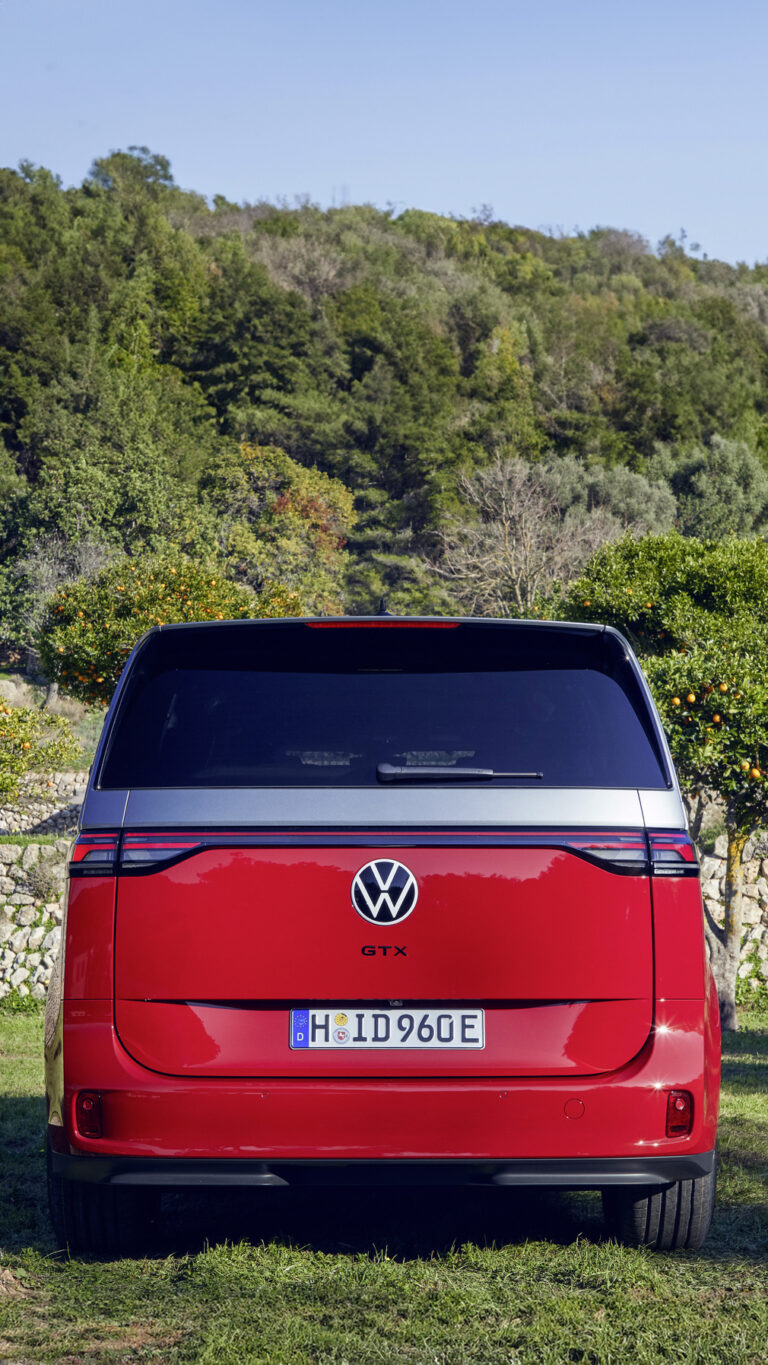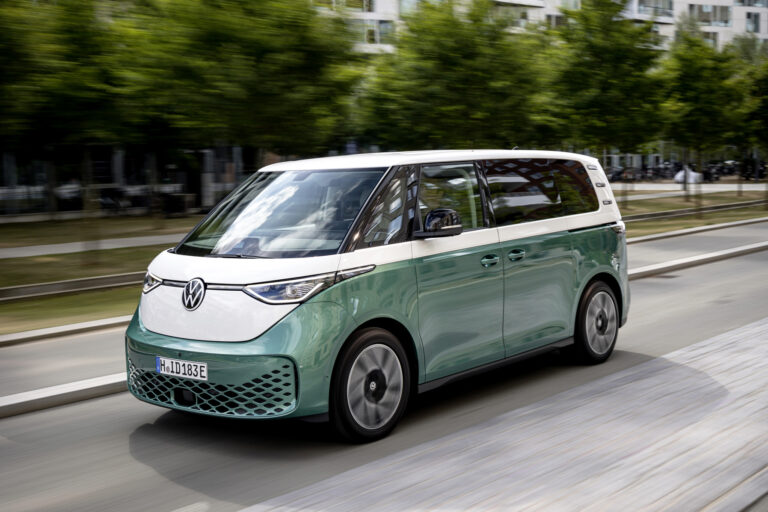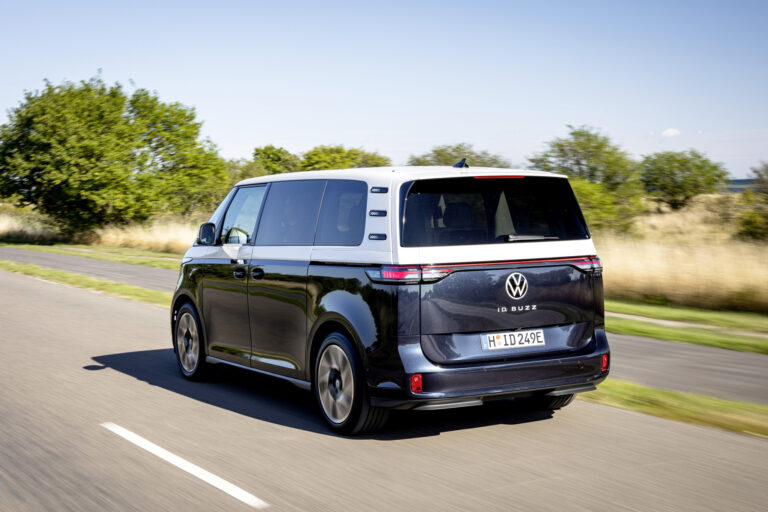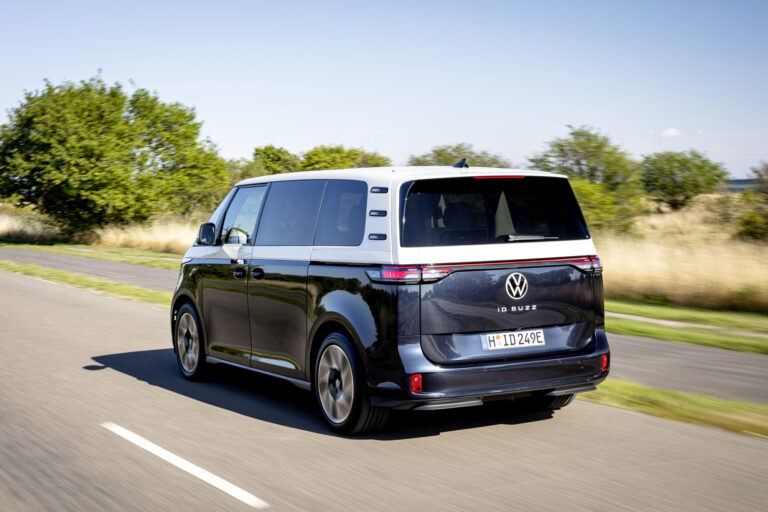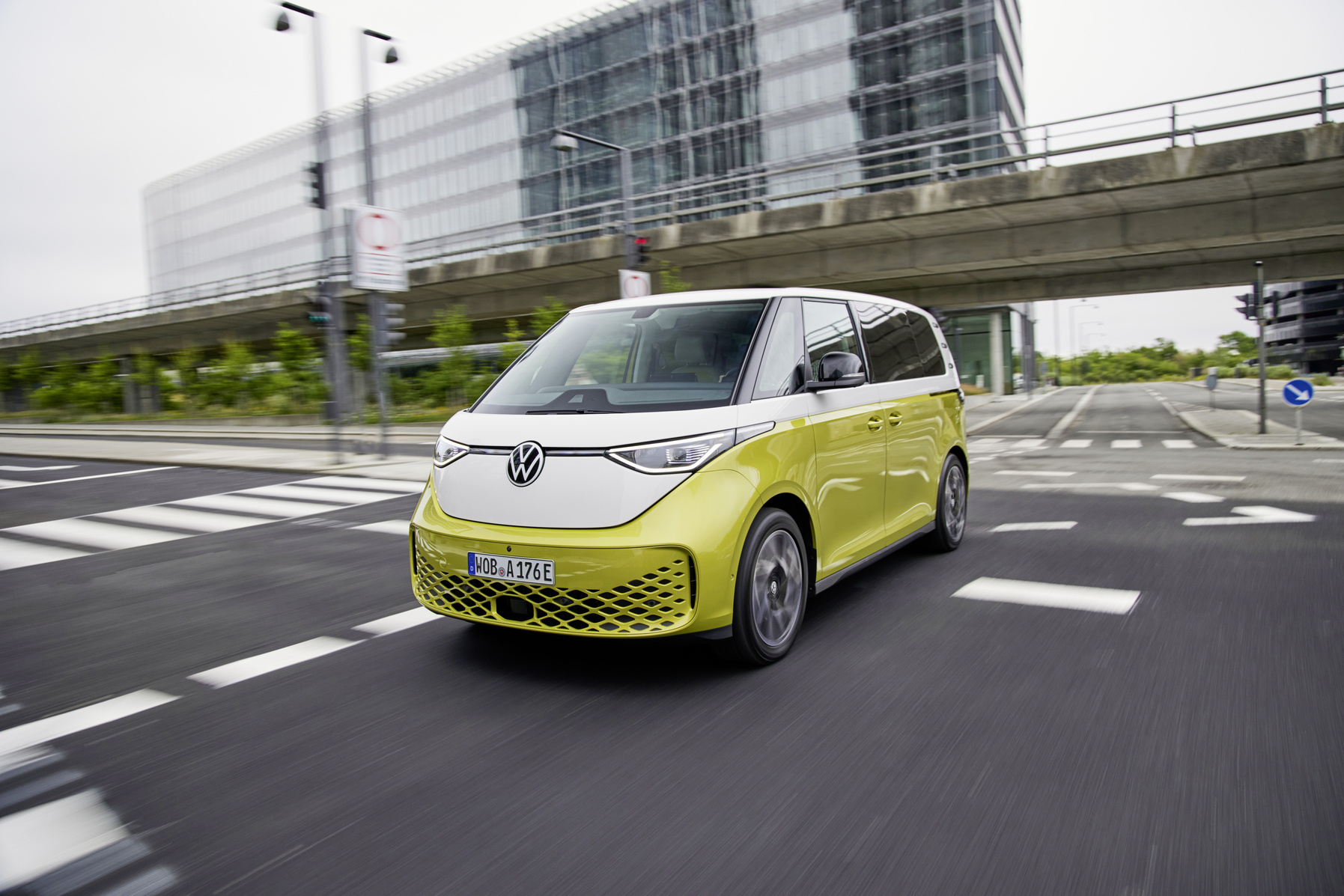
The Volkswagen ID. Buzz offers a 111 kWh battery. At a fast-charging station the battery charges from 10% to 80% in 26 minutes. That sounds ideal. Reality is more stubborn. The basic model will struggle with limited route planning options until 2026. The powerful GTX version uses a lot of energy. That forces you to make frequent charging stops. So it is time to list the charging options and realistic times.
Fast charging on the road: 26 minutes for 70% range
With DC fast charging you get the quickest results. The ID. Buzz accepts a maximum charging power of 200 kW via a public fast-charging station. You can charge the battery from 10% to 80% in 26 minutes. That is enough for an additional range of roughly 300 to 380 kilometres, depending on your driving style and the model year.
The charging port is on the right at the rear of the vehicle and has a locking mechanism. The charging speed decreases. This happens as the battery fills up. Between 80% and 100% it takes longer, because the battery system then reduces the charging current to protect the cells.
‘ Charging via a normal socket is not recommended for regular use. ’
Home charging with a wallbox: from 9 to 15 hours
For everyday use, AC charging at home is the most practical option. The charging time depends on the power of your charging station. With an 11 kW charge point, you need around 9 hours for a full charge from 0% to 100%. If you have a 7.2 kW installation, you should count on around 15 hours.
An overview of the different home charging options:
- Standard socket (1.2 kW): 94 hours for a full charge
- AC charge point 7.2 kW: 15 hours for a full charge
- AC charge point 9.6 kW: 11 hours for a full charge
- AC charge point 11 kW: 9 hours for a full charge
Charging via a normal socket is not recommended for regular use. The charging time is far too long and the load on your home’s electrical system can cause problems. That is why you should invest in a proper wallbox. You can then regularly charge the ID. Buzz at home. You will find more information about the Volkswagen ID. Buzz and Volkswagen car problems elsewhere on our website.
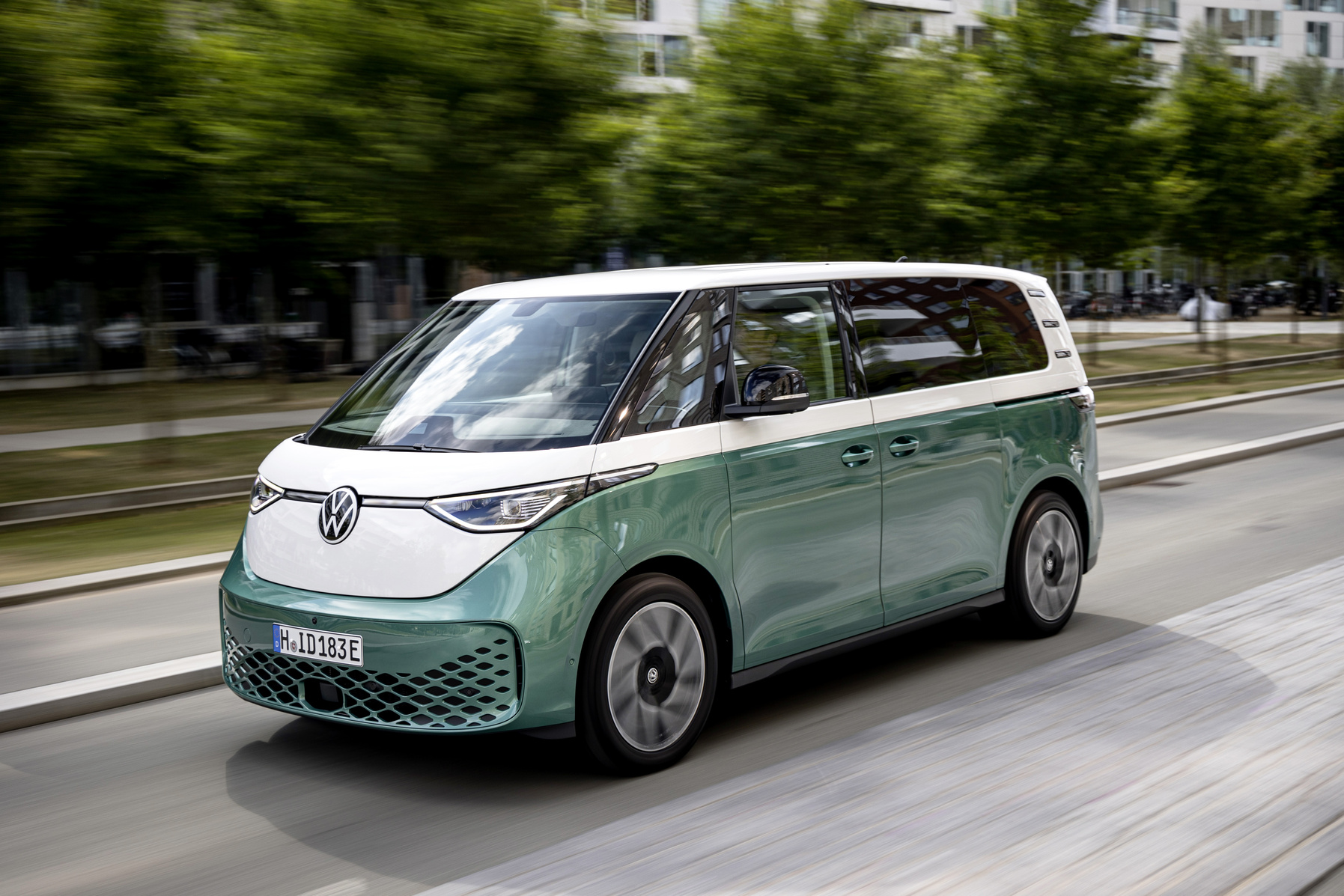
Range of the ID. Buzz: up to 480 kilometres per charge
The range of the ID. Buzz differs by model year. The 2024 models achieve an estimated range of around 480 kilometres on a full battery. For the 2025 models that is lower: roughly 376 kilometres. Volkswagen has adjusted the software. Newer systems use energy differently. That explains the difference.
The actual range depends heavily on external factors. If you drive a lot on the motorway, the range drops significantly. The GTX version uses more energy because of its more powerful drivetrain, meaning you have to charge more often on long journeys. For motorway use, assume a range of around 300 kilometres.
Route planning will improve from 2026
The basic model of the ID. Buzz will struggle with limited route planning functionality until 2026. The system calculates charging stops less accurately than competing models. You have to estimate carefully yourself when you need to charge. You also have to search for suitable fast-charging stations yourself.
Volkswagen has announced that an improved route planner will be available from 2026. This update should integrate charging stations in real time and enable better range calculations. Until then, you will have to rely on external apps such as PlugShare or A Better Route Planner. Use these to map out your charging strategy.
‘ After that, the charging speed drops sharply. ’
Fast charging tips for long trips with the ID. Buzz
You are driving long distances. These tips help you to limit charging time:
- Only charge up to 80% at fast-charging stations. After that, the charging speed drops sharply.
- Plan your route in advance and check the availability of fast chargers with at least 150 kW power.
- Avoid completely empty batteries. For the fastest charging curve, preferably charge between 10% and 80%.
- Take temperature into account. In cold weather the battery charges more slowly. Preheat the car before departure if it is plugged in.
- Use navigation to precondition the battery. Some systems heat the battery before arrival at a charging station.
The GTX version uses more energy. That makes more frequent charging necessary. Count on a charging stop every 250 to 300 kilometres of motorway driving. That requires more planning. With the right preparation, your total travel time remains manageable.
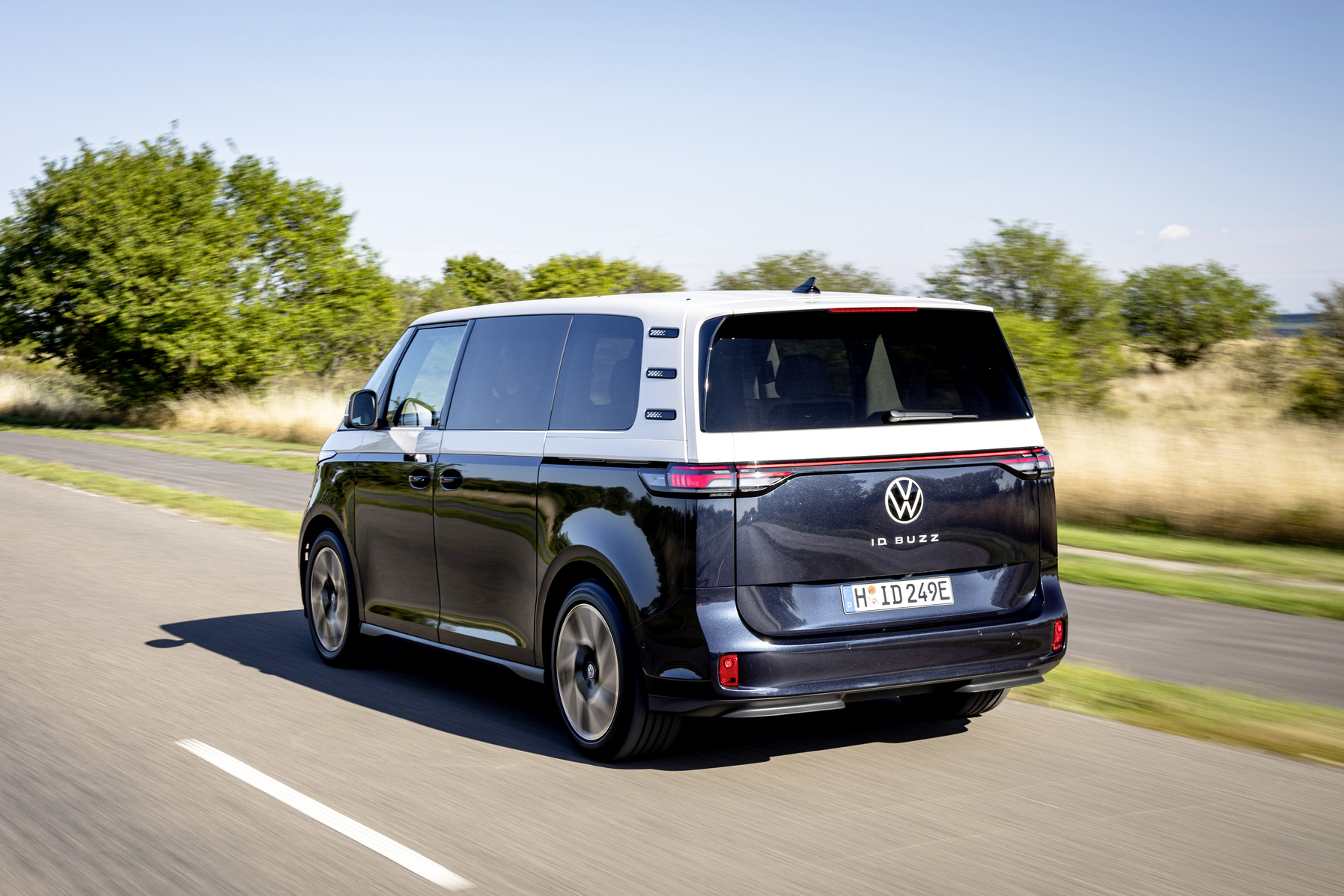
Which chargers are compatible with the ID. Buzz
The ID. Buzz is equipped with a CCS connection (Combined Charging System). That is the European standard for both AC and DC charging. All public charge points with a CCS plug are therefore suitable.
For home charging you need a type 2 cable, which is supplied as standard with the car. Check whether your charge point supports type 2. Most modern charge points in the Netherlands do. For fast charging you use the CCS cable that is permanently attached to the charging station.
Factors that influence charging time
The actual charging time often differs significantly from the theoretical values. Several factors determine the real charging speed:
- Ambient temperature: in frost or heat the battery charges more slowly
- Battery temperature: a cold or hot battery accepts less power
- Type of charging equipment: not all fast chargers actually deliver 200 kW
- Battery condition: older batteries often charge more slowly
- Condition of the vehicle: some systems remain active while charging and consume energy
Note: in winter you will need more time. The battery first has to reach the right temperature. Only then will it accept the full charging power. In those conditions, allow for 30 to 40 minutes instead of 26 minutes for a charging stop from 10% to 80%.
‘ The first series from 2023 also regularly struggle with heat pump faults, which further limits winter range. ’
Where can you find more information about the ID. Buzz
Besides charging time, the ID. Buzz has other practical points of attention. Some owners report software issues with the infotainment system, especially on models from before 2024. The first series from 2023 also regularly struggle with heat pump faults, which further limits winter range. When buying second-hand, always check whether recent software updates have been carried out and whether the factory warranty is still valid. For specific user experiences and known issues by model year you can consult our page on Volkswagen ID. Buzz car problems.
Frequently asked questions
The ID. Buzz can DC fast charge at up to 200 kW, allowing you to charge the battery from 10% to 80% in roughly 26 minutes. At home or at a regular AC charge point, power goes up to 11 kW, good for a full charge from 0% to 100% in around 9 hours. At a standard socket (approx. 1.2 kW) a full charge takes about 94 hours, while AC chargers of 7.2 kW and 9.6 kW need around 15 and 11 hours respectively. In practice, you mainly use DC to top up quickly on the road and AC to charge fully overnight at home or at work.
The type of charging station directly determines how much power can be pushed into the battery and therefore how long charging takes. At a standard household socket a full charge can take up to around 94 hours, while an 11 kW AC charge point cuts this down to about 9 hours. A DC fast charger, however, can charge the ID. Buzz from 10% to 80% in around 26 minutes. Ultra-fast charging is therefore mainly suitable for quick stops on the road, while regular AC charge points and home charging are intended for longer, planned charging sessions.
The ID. Buzz charges at up to 200 kW DC in around 26 minutes from 10% to 80%, which in practice makes it one of the quicker vans at fast chargers in its segment. Thanks to this relatively high charging power and modern battery technology, charging speed is competitive with or better than many other electric vans. The AC charging capability up to 11 kW is standard for the segment and fits well with overnight charging at home or at the depot. As a result, its overall charging efficiency and usability for longer trips and daily use is strong compared to competitors.
The ID. Buzz offers advanced features such as battery preconditioning, which brings the battery to the optimal temperature in advance for more efficient and faster charging, especially in cold weather. Bidirectional charging is (depending on market and specification) supported or prepared, allowing the car not only to draw power but also to feed it back to the home or grid. For the user this means lower energy costs, more flexibility in using self-generated power (for example via solar panels) and a more comfortable, predictable charging session. This makes the ID. Buzz easier to integrate into a smart home energy infrastructure.
Higher charging speeds (especially frequent DC fast charging) generate more heat and stress for the battery cells, which in the long term can accelerate degradation compared with regular AC charging at lower power levels. Therefore, use DC fast charging mainly for long trips or occasional top-ups, and for everyday use choose AC charging at home or at work as much as possible. Try to keep the battery roughly between 10% and 80% instead of always charging to 100%, especially at high power. Also take ambient temperature into account and, in extreme heat or cold, charge a little more slowly to protect the battery.