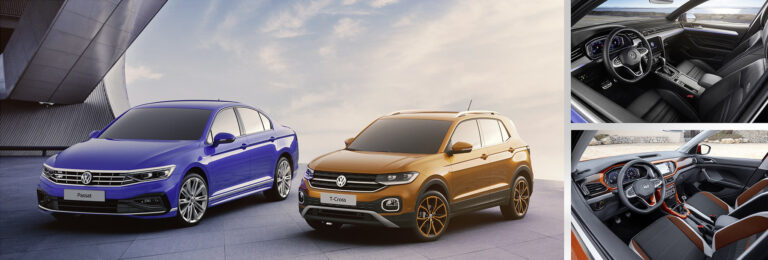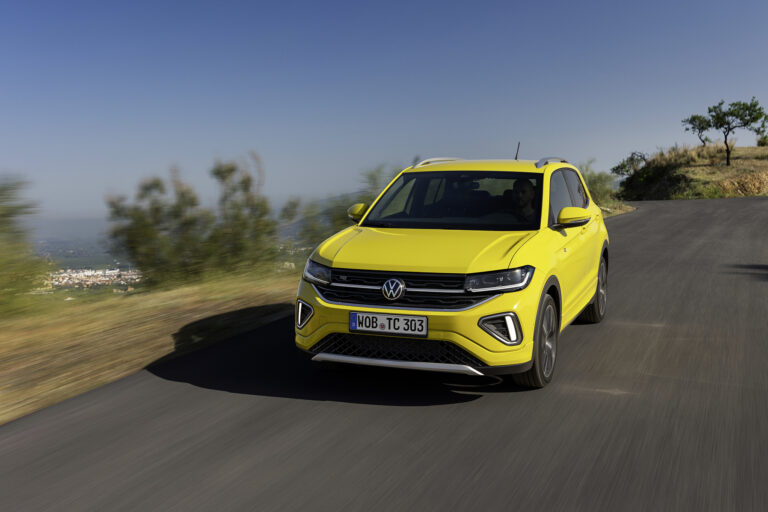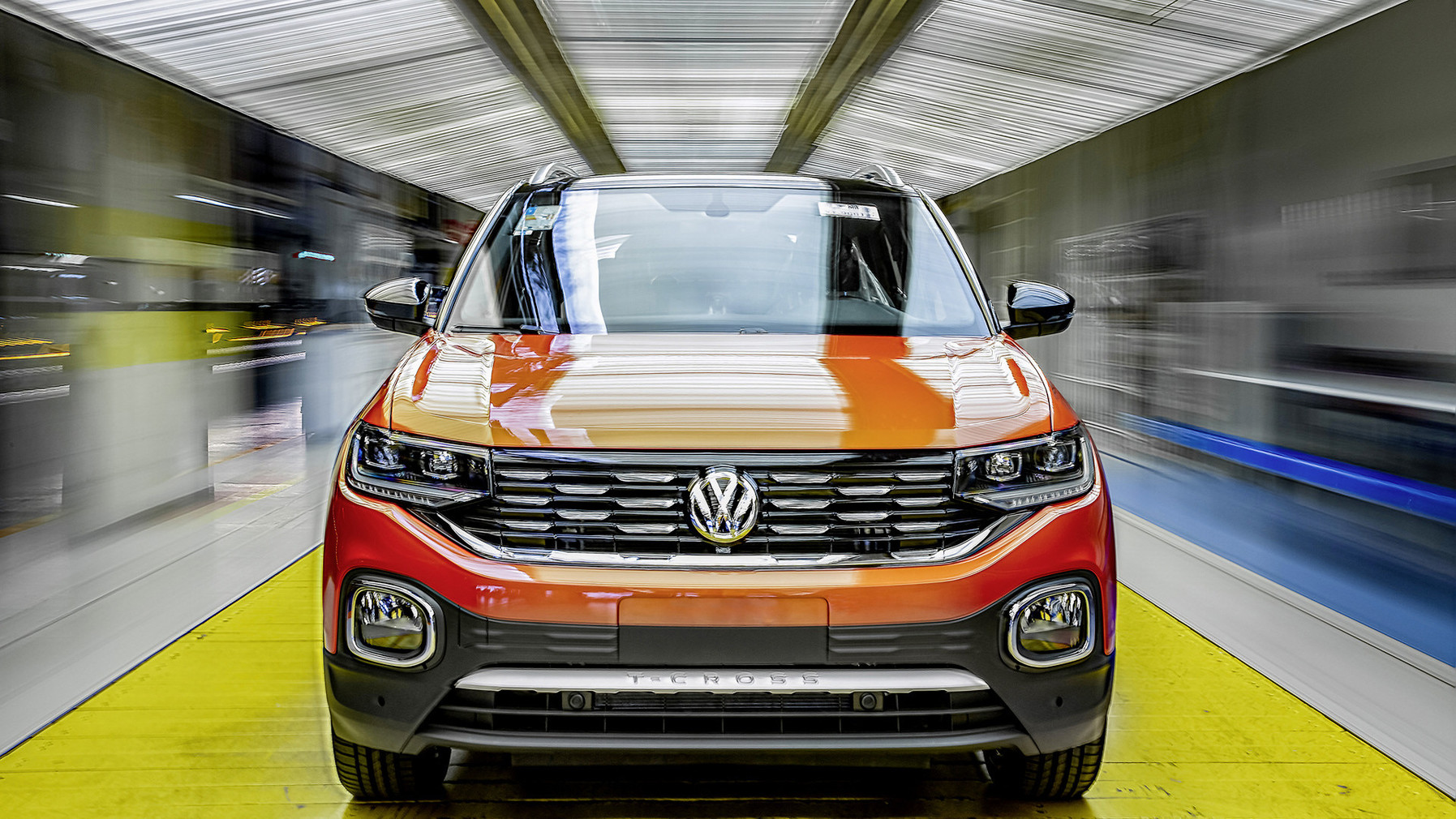
The Volkswagen T-Cross 2026 lets you choose from various packages, but those choices come with hefty price tags. A 7-speed DSG automatic (Direktschaltgetriebe) adds around €2,000 to the purchase price. The plus package with Discover navigation is convenient. However, the top-spec Discover Pro misses the practical rotary controls. Many driver assistance systems are available, but not everything is standard on the base model. Want to know where your money goes with the T-Cross 2026?
Packages from Match to Sport explained
The T-Cross 2026 starts with the Match package as the entry level. This package offers 17-inch alloys, a reversing camera, tinted windows and keyless entry. Metallic paint is already included with Match. Premium red is an exception to this. Higher trims such as Style and Sport are available. These add roughly €2,000 to €4,000 to the base price. The difference lies mainly in looks and comfort.
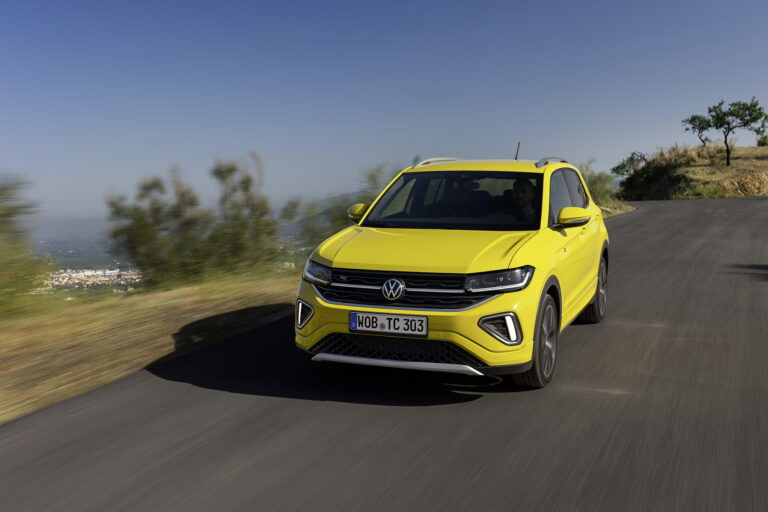
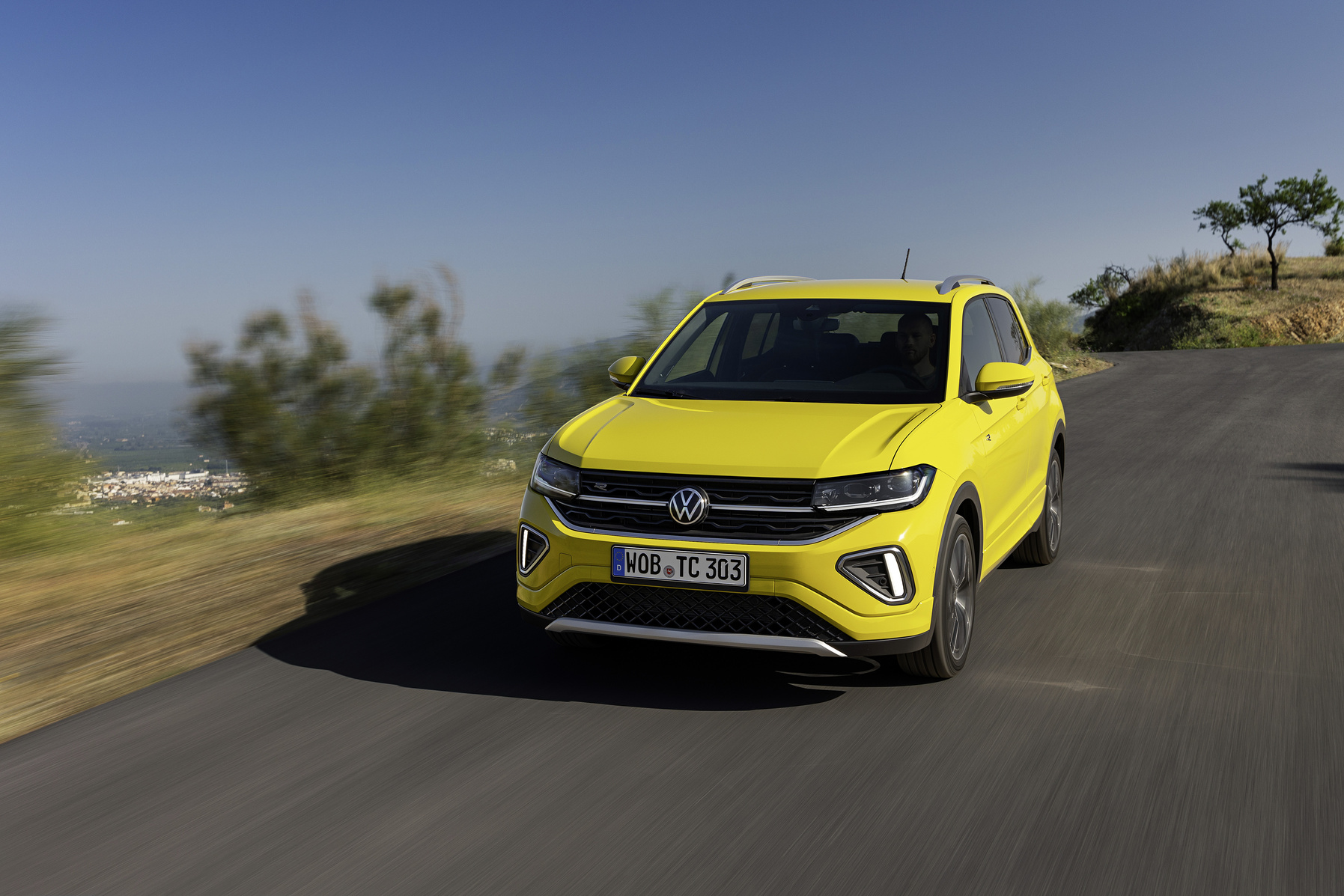
The Sport package brings 18-inch Misano alloys in black, black roof rails and mirror caps, privacy glass and IQ.LIGHT LED matrix headlights. You also get Air Care Climatronic for a fresher interior climate. The higher seating position gives a good view of the traffic. Owners appreciate this when parking in narrow streets. For those who like to stand out and drive in comfort, the Sport package is a logical step. Also have a look at Volkswagen T-Cross car problems to know what you should watch out for.
‘ For some drivers, operating via the touchscreen while driving feels less safe. ’
The plus package with Discover navigation
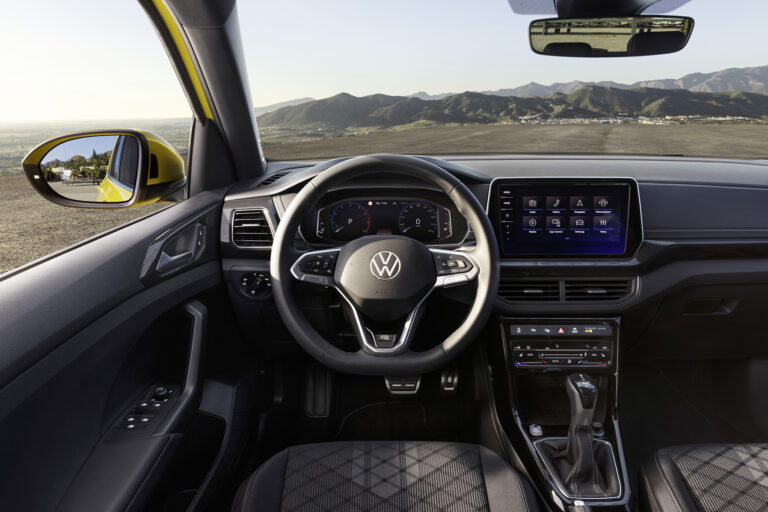
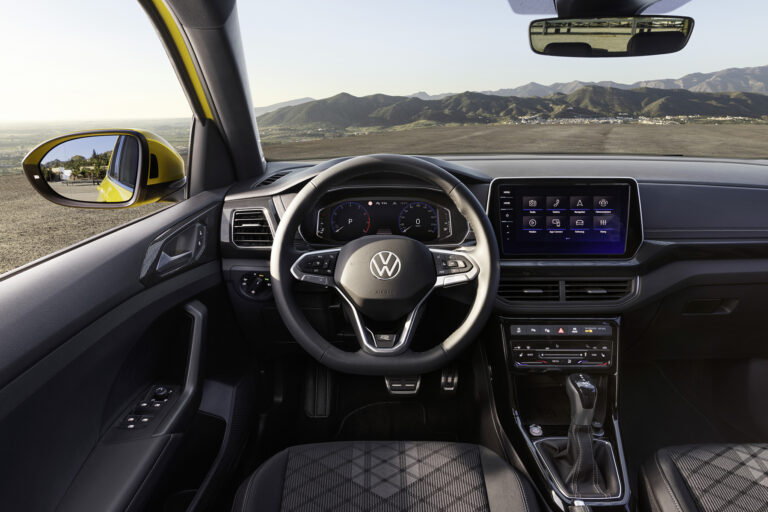
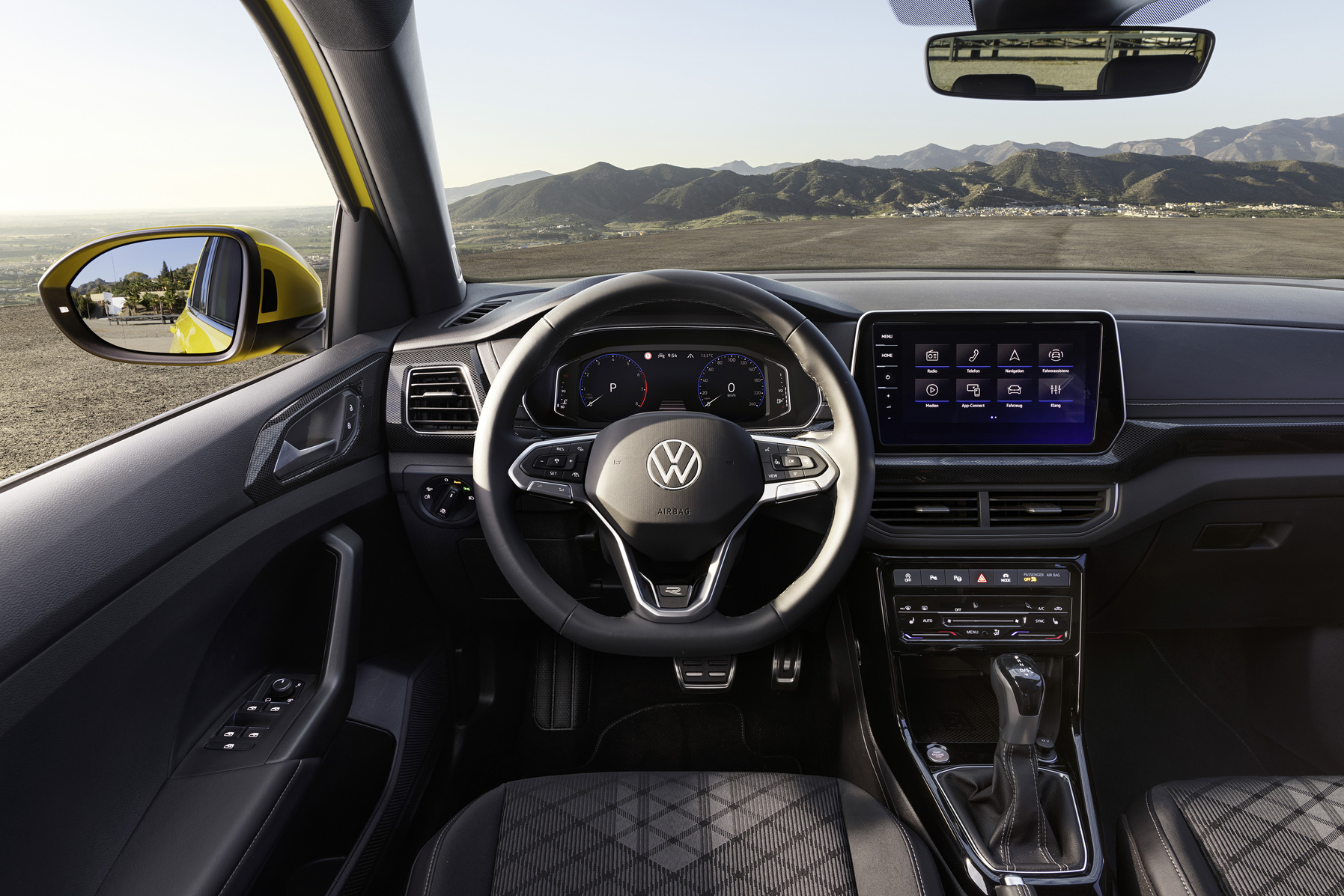
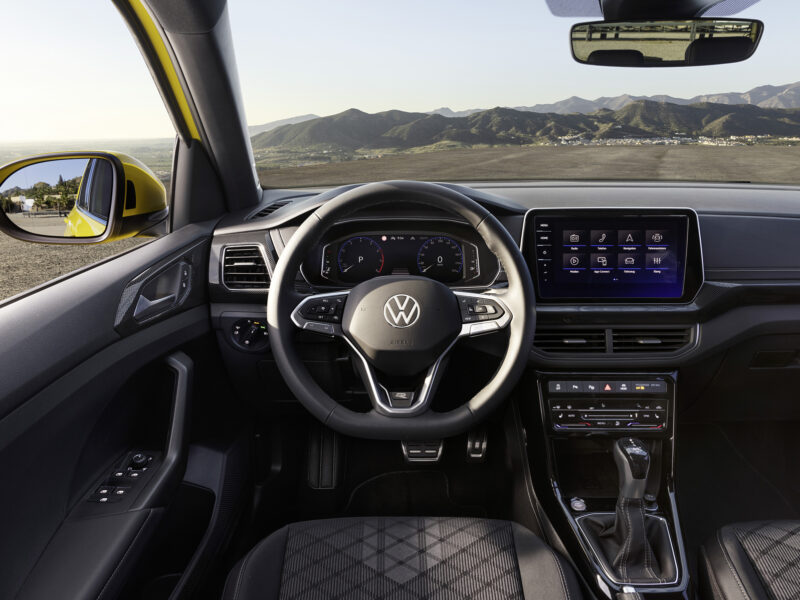
The plus package adds the Discover navigation system to your T-Cross. This is a mid-range system with an 8 to 10 inch touchscreen. Screen size depends on the chosen trim. The touchscreen is intuitive and responds quickly. USB-C ports come as standard, including in the rear of the car. Wireless charging for your smartphone can be added as an option. Users report that the 15W version charges significantly faster than the standard 5W variant.
The top navigation is called Discover Pro and comes with extra functions, but lacks the practical rotary controls that many drivers find convenient while driving. For some drivers, operating via the touchscreen while driving feels less safe. The touchscreen also feels less natural. Think carefully whether you really need this feature, or whether the standard Discover system is sufficient. It saves you between €500 and €1,000, depending on the configuration.
DSG automatic costs around €2,000 extra
The 7-speed DSG automatic is available for the 95 hp version of the 1.0 TSI engine. The 115 hp version of this engine can also be fitted with it. This automatic adds around €2,000 to the purchase price. The DSG system changes gear smoothly and seamlessly, which is especially pleasant in town. Traffic jams are considerably more comfortable with an automatic. Stop-and-go traffic (driving with constant stopping and pulling away) also becomes more pleasant. The gearbox responds quickly and predictably.
Some drivers prefer the manual gearbox. This is available as a 5-speed or 6-speed version. The manual offers more control and driving pleasure on twisty roads. In addition, the manual is cheaper to buy and maintain. For those who mainly drive in town or cover long distances, the DSG is a worthwhile investment. If you mostly drive on country roads and enjoy changing gear yourself, the manual can be the better choice.
Adaptive driving modes as an optional extra
Adaptive cruise control is optionally available on the higher trims. Travel Assist (a system that supports you with steering and braking) is also optionally available. These systems cost around €3,000 extra, but do bring a great deal of convenience. Travel Assist combines adaptive cruise control with lane keeping. The automatic emergency braking function is also part of this system. It helps you maintain distance to the vehicle in front and keeps the car between the lines on the motorway.
Users report that Travel Assist significantly improves the driving experience, especially on long journeys and in traffic jams. The system works in a stable and predictable way. The adaptive cruise control (a system that automatically adjusts your speed to the traffic ahead) automatically adapts the speed to the vehicles in front. This reduces fatigue on long distances. Do make sure you stay alert, as the system regularly asks you to confirm that you are holding the steering wheel.
‘ Still, there are extra safety options that are worth considering. ’
Safety options you should consider
The T-Cross 2026 comes as standard with Front Assist (automatic braking when danger is imminent), Lane Assist (support to keep you between the lane markings), Hill Start Assist (help when pulling away on a hill) and blind spot monitoring (warning for traffic in your blind spot). This basic level is sufficient for many drivers. Still, there are extra safety options that are worth considering. The 360-degree camera and parking sensors with manoeuvre braking make parking in tight spaces considerably easier. Rear cross-traffic alert (warning for crossing traffic behind the car when reversing) also helps. These options are not standard on all trims.
The 360-degree camera gives a bird’s-eye view of the car and its immediate surroundings. This is particularly useful in city car parks and busy car parks. The investment of around €800 to €1,200 can prevent damage from minor collisions. Traffic sign recognition detects road signs and shows them in the digital cockpit. This system helps you keep an eye on speed limits and overtaking bans.
Standard versus optional safety systems
- Standard: Front Assist, Lane Assist, Hill Start Assist, blind spot monitoring
- Optional: 360° camera, parking sensors with braking function, rear cross-traffic alert, Travel Assist
- Top trims: traffic sign recognition, adaptive cruise control, automatic emergency braking function
Costs of mild hybrid and more powerful engines
The 1.5-litre TSI (Turbocharged Stratified Injection, direct injection with turbo) four-cylinder with up to 150 hp offers more power for motorway driving. This engine comes with 48V mild hybrid technology, indicated as eTSI. Mild hybrid means that a small electric motor supports the combustion engine. eTSI is Volkswagen’s term for its electrically assisted TSI engine. The mild hybrid system supports the start-stop function and enables coasting. When coasting, the engine switches off while you are rolling. This reduces fuel consumption by roughly 0.5 to 1 litre per 100 kilometres.
The more powerful engine and mild hybrid technology do increase registration tax and road tax. Road tax (MRB) is an annual tax you pay for driving on public roads in the Netherlands. Expect an extra €200 to €400 per year. The amount depends on CO₂ emissions of around 120 to 140 grams per kilometre. The purchase price is also higher. For those who regularly drive long distances or many motorway kilometres, the lower fuel consumption partly offsets the higher costs. Those who mainly drive in town are better off choosing the more economical 1.0 TSI.
Which configuration offers the best value
The Match with DSG automatic (Direktschaltgetriebe, an automated dual-clutch gearbox) is a solid choice at a price of around €28,000 to €32,000. Add metallic paint and the reversing camera for an extra investment of about €1,500. This package offers enough comfort and technology for everyday use. You are not overpaying for options you rarely use. The 115 hp engine provides enough power for both city and motorway.
Those who want more luxury should choose the Sport package with mild hybrid technology (a system in which a small electric motor supports the combustion engine to reduce fuel consumption). This configuration is considerably more expensive. However, it offers the best balance between comfort, technology and appearance. It combines a sporty look with lower fuel consumption and advanced assistance systems. Add the 360-degree camera for extra convenience when parking. Test for yourself which features you actually use before spending large amounts on optional packages.
Buying advice by driving profile
- City drivers: Match with 95 hp, manual, reversing camera
- High-mileage drivers: Sport with 115 hp DSG, mild hybrid, Travel Assist
- Families: Match with 115 hp DSG, 360° camera, parking sensors
‘ However, they add little functional value. ’
Practical considerations when choosing option packages
The luggage space of the T-Cross is flexible thanks to the sliding rear bench. This is convenient for transporting larger items or a pushchair. Fold the rear bench flat for extra volume. This is standard on all trims and costs nothing extra. Sports seats and stainless steel accents give a premium look. However, they add little functional value. Think carefully whether you want to pay for them.
The digital cockpit with customisable display is standard. The ambient lighting can be adjusted to suit your mood, although this is mainly fun at first. What remains practical is the rear USB-C connection, useful for passengers who want to charge their phone. The wireless charging system works well, but check whether your phone supports it. Some older models require a special case.
On the Carnews website you can find more information about the Volkswagen T-Cross and other compact SUVs. Discover comparisons with rivals such as the Renault Captur, maintenance costs and owners’ experiences. Make a well-informed choice before you invest in option packages.
Frequently asked questions
The extra surcharges for the VW T-Cross 2026 are specified per option or package as an additional cost on top of the base version, usually in ranges. For example, higher trims/packages with 18-inch alloys, IQ.LIGHT and extra comfort features cost around €2,000–€4,000 more. Full assistance packages with a 360° camera and Travel Assist are around €3,000 or more on top of the chosen trim. In addition, more powerful engines (such as the 1.5 TSI) incur extra tax charges (BPM/MRB in the Netherlands), estimated at about €200–€400 per year, depending on CO₂ emissions.
Yes, the higher trims with, among other things, IQ.LIGHT LED matrix headlights, 18-inch alloys and extensive assistance systems generally offer a better residual value thanks to their stronger appeal on the used-car market. Packages with Travel Assist, adaptive cruise control and a 360° camera also increase the overall value proposition, because they noticeably improve both comfort and safety.
The extra costs for options and packages on the updated VW T-Cross are clearly higher than on earlier models, especially for the higher trims and assistance packages. Whereas in the past individual options could more often be configured separately and more cheaply, they are now bundled more into packages that quickly cost €2,000–€4,000 extra. Advanced systems such as a 360° camera and Travel Assist are now mainly included in more expensive packages instead of as relatively affordable standalone options. As a result, you now pay more in one go for a complete equipment level, rather than smaller additional prices per separate option as with earlier T-Cross models.
New standard equipment that was often optional before includes the digital cockpit with large touchscreen, USB-C connections (including in the rear) and wireless charging. In addition, extensive safety systems such as Front Assist, Lane Assist, Hill Start Assist and blind spot monitoring are now standard. The basic trim has also become better equipped with features such as larger alloy wheels and a reversing camera. Taken together, these standard features indirectly increase the base price of the T-Cross 2026.
Yes, in addition to the standard options and packages, many dealers charge extra costs for things such as on-the-road charges, number plates and delivery fees. Dealers also often offer their own “recommended packages”, such as paint and glass coatings, extended warranty or service contracts. Recommended upgrades that are frequently mentioned include the 360° camera, Travel Assist and IQ.LIGHT LED matrix headlights. It is wise to ask each dealer exactly which dealer-specific costs and packages are compulsory or optional.