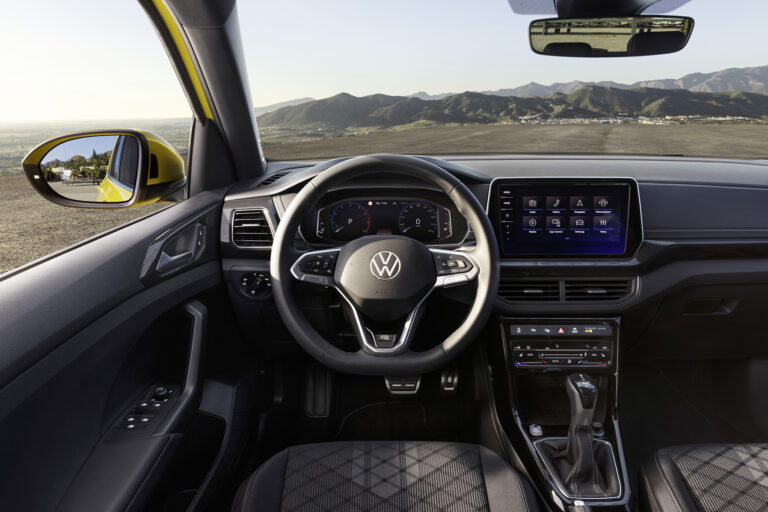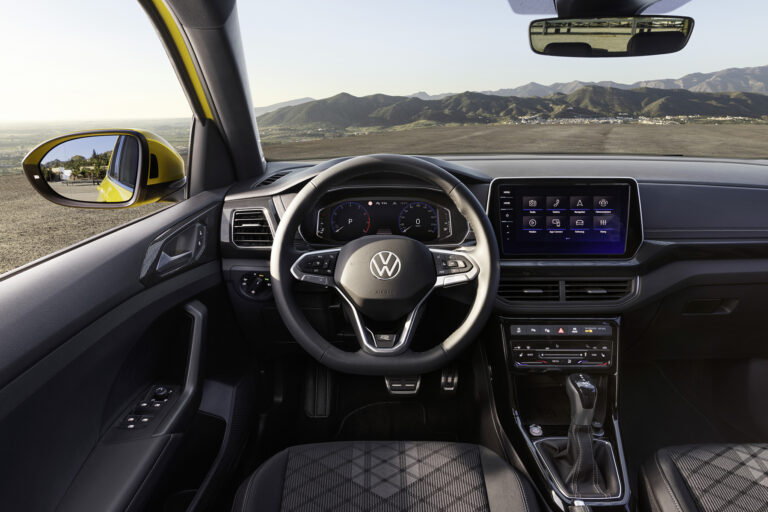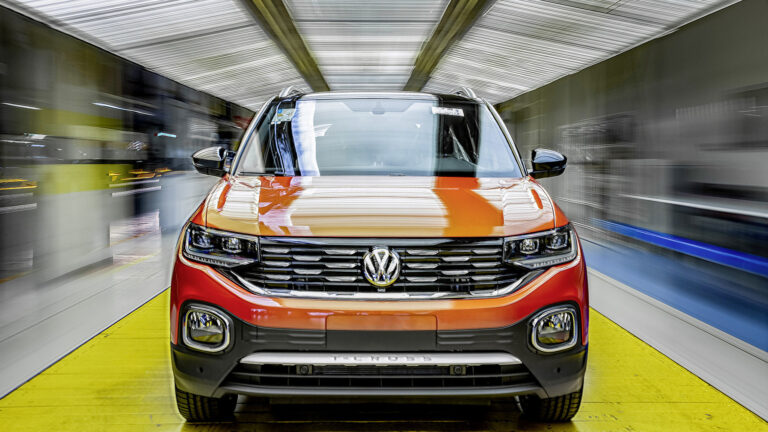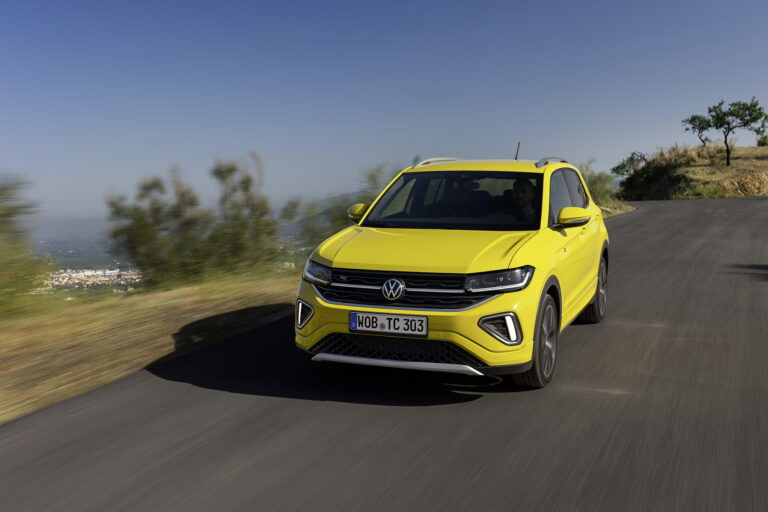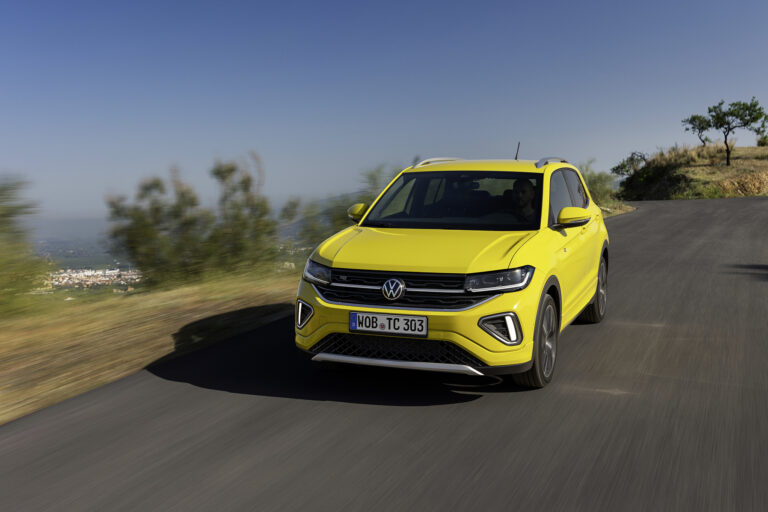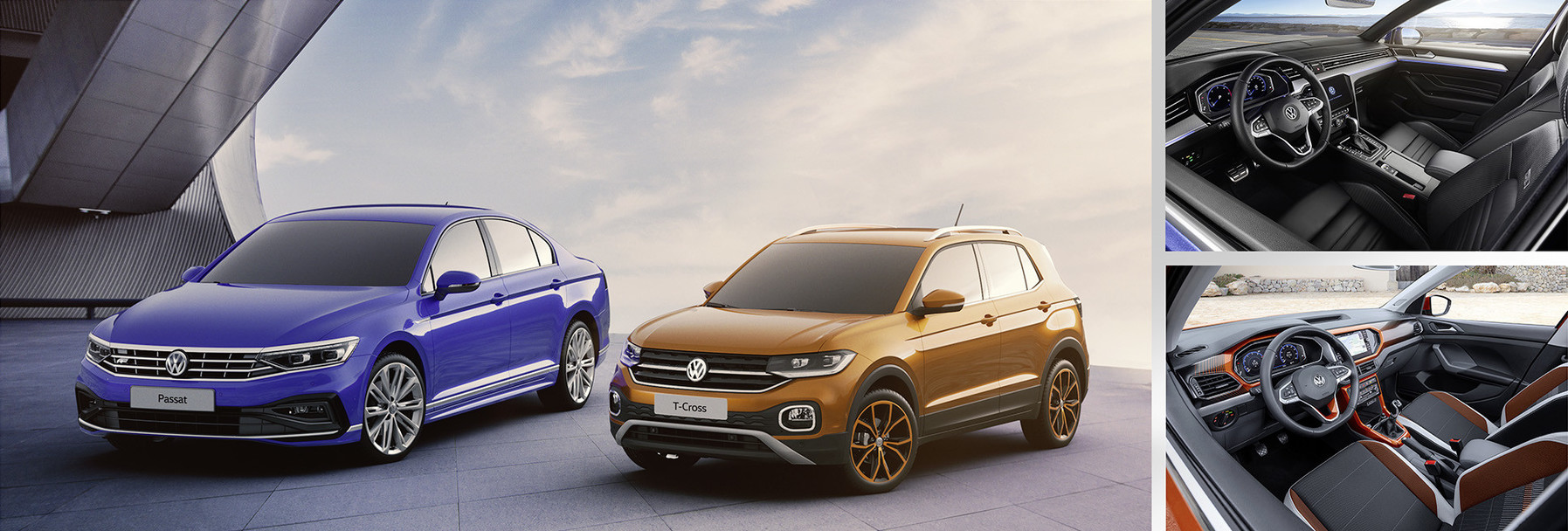
The updated Volkswagen T-Cross for 2026 focuses on better performance and lower fuel consumption, without sacrificing driving pleasure. The compact SUV is fitted with modern TSI engines (Turbo Stratified Injection: turbocharged petrol with direct injection) that run more smoothly, shift faster and use less fuel. If you are looking for a more agile alternative to the traditional Golf, the T-Cross is an interesting option. If you are wondering which Volkswagen T-Cross car problems might occur, you can factor those expectations into your decision. Read on to discover which engines sit under the bonnet and what exactly the T-Cross 2026 has to offer.
Two TSI engines with different characters
Volkswagen offers the T-Cross 2026 with two petrol engines, both featuring turbo technology. The entry-level option is the 1.0 TSI three-cylinder. This produces 116 hp. This compact engine feels at home in the city and responds instantly to the throttle. You don’t feel short of power on the motorway. Fuel consumption is around 5.0 litres per 100 kilometres in mixed use, which makes the T-Cross an economical choice for those who are often stuck in traffic or make short trips on a daily basis.
The other option is the 1.5 TSI four-cylinder engine with 150 hp. This engine offers noticeably more pulling power and a more harmonious sound. Power delivery feels linear. You don’t notice any hesitations or unexpected surges. You have more reserves for overtaking and acceleration from higher speeds is smoother. Fuel consumption rises slightly, but remains under control thanks to improved tuning and a lighter construction. Do you regularly drive longer distances or often expect a fuller car? Then the 1.5 TSI is the logical choice.
‘ This transmission shifts more smoothly and faster than its predecessor. ’
The improved automatic gearbox makes the difference
The T-Cross 2026 pairs both engines with an updated 7-speed DSG automatic gearbox (DSG: Direct-Shift Gearbox, a dual-clutch automatic). This transmission shifts more smoothly and faster than its predecessor. Earlier DSG versions could sometimes respond sluggishly at low speeds. The new generation feels more direct. The gearbox adapts to your driving style: drive gently and it shifts up earlier. Press the accelerator harder and it holds on to the gear longer for better pull.
You notice the difference especially in the city. In stop-start traffic you shift through smoothly without jolts or vibrations. It also remains comfortable on the motorway, with small rev changes when shifting gears. The DSG automatic works together with a start-stop system that cuts in imperceptibly and saves fuel while stationary.

How quick is the T-Cross 2026 in real life?
With the 1.5 TSI, the T-Cross sprints from 0 to 100 km/h in around 8.4 seconds. That’s not sports car territory, but for a compact SUV with a practical focus it is more than adequate. The top speed is above 200 km/h, which means you can easily keep up on German autobahns. The 1.0 TSI takes around 10 seconds for the same sprint and has a maximum speed of around 180 km/h. For everyday use and Dutch motorways that is more than sufficient.
You mainly notice the difference in acceleration when pulling away from traffic lights or when joining the motorway. The 1.5 TSI has more low-rev torque, which results in quicker responses without having to press the accelerator pedal too far. The 1.0 TSI feels livelier at higher revs, but demands a little more patience from the driver.
The specifications at a glance
- 1.0 TSI 116 hp: three-cylinder, turbo, 0–100 km/h in 10 seconds, top speed 180 km/h, consumption approx. 5.0 l/100 km
- 1.5 TSI 150 hp: four-cylinder, turbo, 0–100 km/h in 8.4 seconds, top speed above 200 km/h, consumption approx. 5.5 l/100 km
- Transmission: 7-speed DSG automatic for both engines, optional 6-speed manual gearbox for the 1.0 TSI
- Drive: standard front-wheel drive, 4MOTION four-wheel drive (Volkswagen’s four-wheel-drive system) optional with the 1.5 TSI
What owners appreciate about the TSI engines
Real-world experience shows that the TSI engines in the T-Cross deliver reliable performance. Owners of the 1.0 TSI are particularly satisfied with the low fuel consumption and the agile response in town. The engine feels lively without giving you the impression of driving a sluggish family car. There is occasional criticism of the three-cylinder vibration on a cold start. This is inherent to this type of engine. The vibration disappears as soon as the engine has reached operating temperature.
With the 1.5 TSI, you particularly hear positive comments about the power and smoothness. The engine runs more quietly than the three-cylinder and offers more reserves for fully loaded journeys or holiday trips with a trailer. The towing capacity of this engine is higher, up to a maximum of 1,100 kilograms for a braked trailer. For those who regularly take a bike carrier or light caravan, that is a practical advantage.
‘ Always let the engine warm up a little before flooring it, that protects the turbo ’
Practical tips for choosing the right engine
Do you mainly use the T-Cross for commuting within built-up areas? Then the 1.0 TSI is a sensible choice. Fuel consumption remains low, the purchase price is lower and you have enough power for everyday situations. Do you often drive with a full car, make longer motorway journeys or want more towing capacity? Then the 1.5 TSI offers more comfort and calmness.
Also pay attention to the transmission. The DSG automatic increases convenience, especially in heavy traffic. The manual version is cheaper to buy and maintain, but does require more involvement from the driver. For those who use the car with four-wheel drive, for example in bad weather or on unpaved roads, the 1.5 TSI with 4MOTION is the only option.
Maintenance tips for TSI engines
- Preferably use premium petrol with a higher octane rating for optimum turbo performance and longer service life
- Regularly check the intercooler for contamination, especially with intensive city use
- Always let the engine warm up a little before flooring it, that protects the turbo
- Follow Volkswagen’s maintenance schedule carefully, with special attention to timing and oil quality

How the T-Cross compares with rivals
Compared with models such as the Ford Puma or Renault Captur, the T-Cross 2026 offers a controlled balance between performance and fuel consumption. The Ford Puma has a slightly sportier character, while the Captur focuses more on space and comfort. The T-Cross sits exactly in between, with a higher seating position than the Polo and more practical space without the need for a large SUV. The sliding rear bench is a handy detail you won’t find with many competitors.
The TSI engines in the T-Cross feel more modern than older generations of Volkswagen engines. The turbo responds faster and the tuning is more refined. At the same time, the engines remain relatively simple in construction, which helps keep maintenance costs down. For those familiar with Volkswagen technology, the step to the T-Cross 2026 is logical and straightforward.
Discover more about the Volkswagen T-Cross on Carnews
The VW T-Cross 2026 combines modern TSI technology with everyday practicality. Whether you choose the economical 1.0 TSI or the more powerful 1.5 TSI, both engines deliver smooth performance and a pleasant driving experience. The improved DSG automatic completes the package, especially for those who use the car daily in varying traffic conditions.
Would you like to know more about specific models, maintenance tips or comparisons with other compact SUVs? On the Carnews website you will find extensive information on everything to do with cars and motorsport. Discover more articles, experiences and tips to help you with your next car choice.
Frequently asked questions
For the 2026 VW T-Cross, the 1.0 TSI engines are expected to deliver 95 hp (70 kW) and 115 hp respectively. The torque of these 1.0 TSIs is expected to be around 175–200 Nm, depending on the exact variant and tuning. The 1.5 TSI is expected to produce roughly 148–150 hp, with torque of around 250 Nm. For a possible 1.4 TSI PHEV variant, a system output of around 240 hp is expected, with combined torque well above 350 Nm.
The 5- and 6-speed manual gearboxes give the TSI engines a more direct and involving driving feel, allowing you to make better use of the engine’s character, but with slightly higher revs and fuel consumption in heavy traffic. The 7-speed DSG automatic lets the TSIs accelerate more briskly and consistently thanks to lightning-fast gear changes and optimal use of turbo torque, which is experienced as smoother and more refined. In city traffic and congestion, the DSG feels more comfortable and less tiring, while the manual gearbox offers more control and driving pleasure on twisty roads or when driving dynamically. With the more powerful TSI variants, the DSG also enhances the sense of power and responsiveness, as it downshifts more quickly and keeps the engine in the optimal rev range more often.
Yes, there will be an all-wheel-drive (4MOTION) option for the 2026 T-Cross. This all-wheel drive is offered in combination with the more powerful TSI engine variants. Specifically, this concerns the 1.5 TSI engine. The 1.0 TSI engine variants are only supplied with front-wheel drive.
For the most powerful TSI variant, the 1.5 TSI with around 150 hp, 0–100 km/h acceleration is around 8.4–8.5 seconds. The expected top speed is around 200 km/h, depending on equipment level and transmission.
Yes. The 1.0 TSI engines in the 2026 T-Cross have been developed to deliver sufficient performance with turbo technology and efficient fuel management while keeping fuel consumption relatively low, especially in urban and mixed use. The 1.5 TSI offers more power and smoothness, but thanks to improved aerodynamics and weight reduction it still remains efficient. In some markets, mild hybrid systems further help to reduce fuel consumption without noticeably limiting performance.