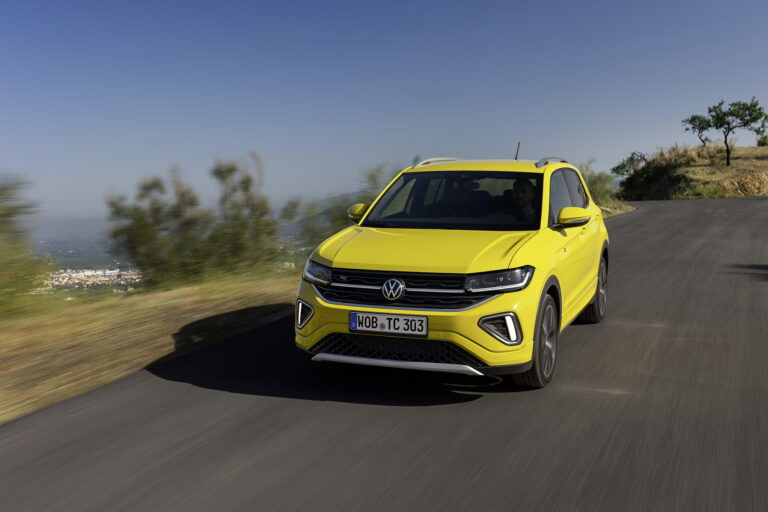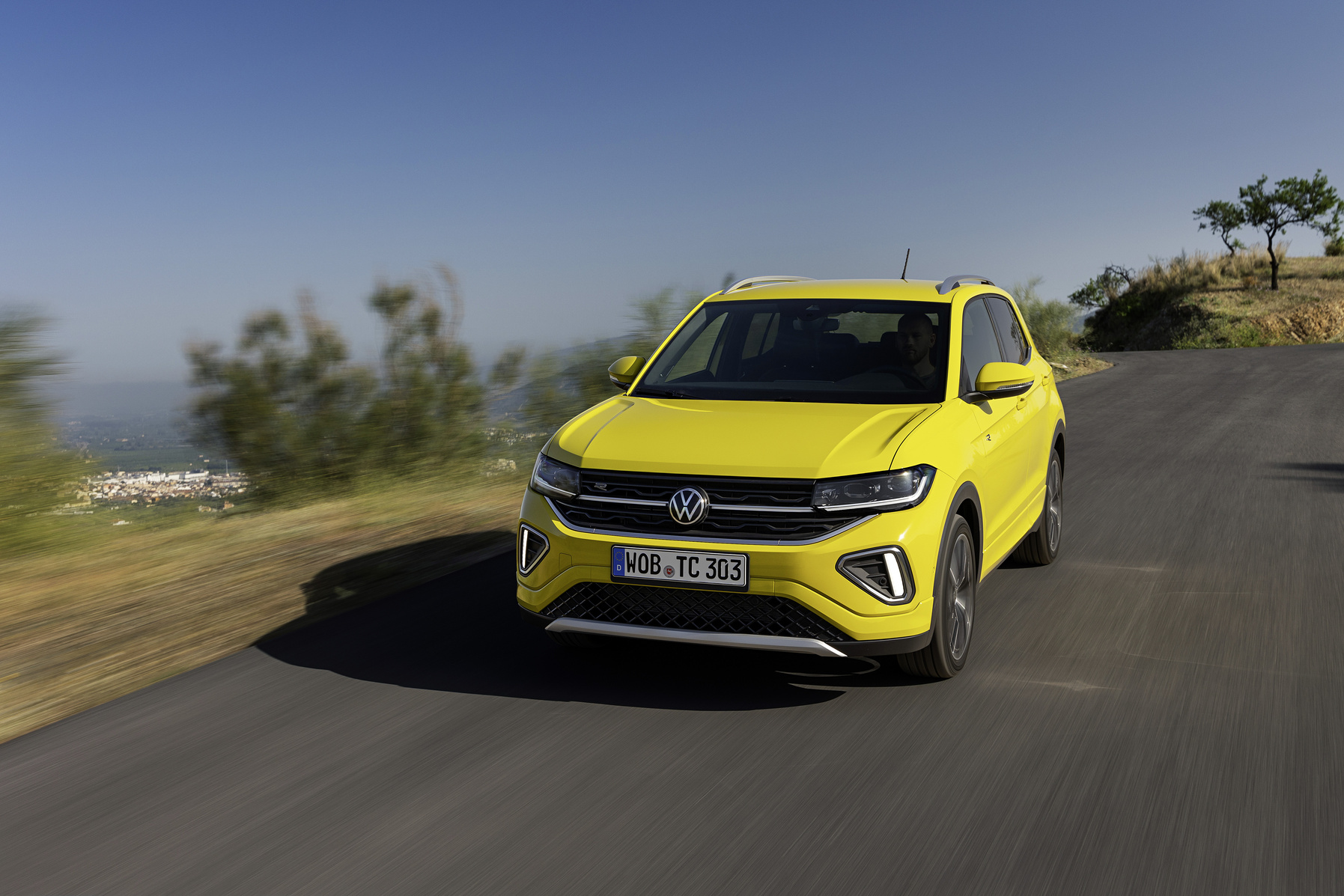
The Volkswagen T-Cross 2026 delivers impressive fuel efficiency with combined consumption figures of 5.4 to 6.1 litres per 100 kilometres, depending on the chosen engine and transmission. CO2 emissions range between 105 and 138 g/km, with all versions complying with the strict Euro 6 standards (the current European exhaust emission standard). In real-world tests, many examples even perform better than the official factory figures. Read on to discover how economical this compact crossover really is to drive.
Official consumption figures according to WLTP measurements
The T-Cross 2026 is available with various 1.0 TSI petrol engines (turbocharged petrol engines with direct injection) and a more powerful 1.5 TSI version. The entry-level version with 95 hp and manual gearbox consumes on average 5.6 litres per 100 kilometres. The popular 115–116 hp version with DSG automatic (dual-clutch automatic gearbox) records a combined consumption of 5.4 to 5.9 litres, while the 1.5 TSI with 110 kW (around 150 hp) comes in at 5.8 to 6.1 litres per 100 kilometres.
Fuel consumption in town is, logically, higher and fluctuates between 6.7 and 7.2 litres per 100 kilometres because of frequent gear changes and acceleration. On the motorway the T-Cross shows its best side with consumption of only 4.7 to 5.1 litres per 100 kilometres. The range on a full 40-litre tank varies from roughly 656 to 741 kilometres, depending on your driving style and engine version.
Want to know more about potential technical points to watch on this model? Then take a look at the overview of Volkswagen T-Cross car problems for a complete picture of the model.
‘ The combination of low CO2 emissions and modern emission control systems makes this model interesting for conscientious drivers who want to keep fuel costs under control without sacrificing space and comfort. ’
CO2 emissions and emission standards
CO2 emissions from the T-Cross 2026 range from 105 g/km for the most economical 1.0 TSI to a maximum of 138 g/km for more heavily loaded or more powerful versions. In practice this means an energy label A for most versions, which is advantageous for road tax and any benefit-in-kind for business use.
All engines in the T-Cross 2026 comply with the Euro 6 emission class. This makes the car suitable for urban low-emission zones without access restrictions. The combination of low CO2 emissions and modern emission control systems makes this model interesting for conscientious drivers who want to keep fuel costs under control without sacrificing space and comfort.
Real-world consumption varies
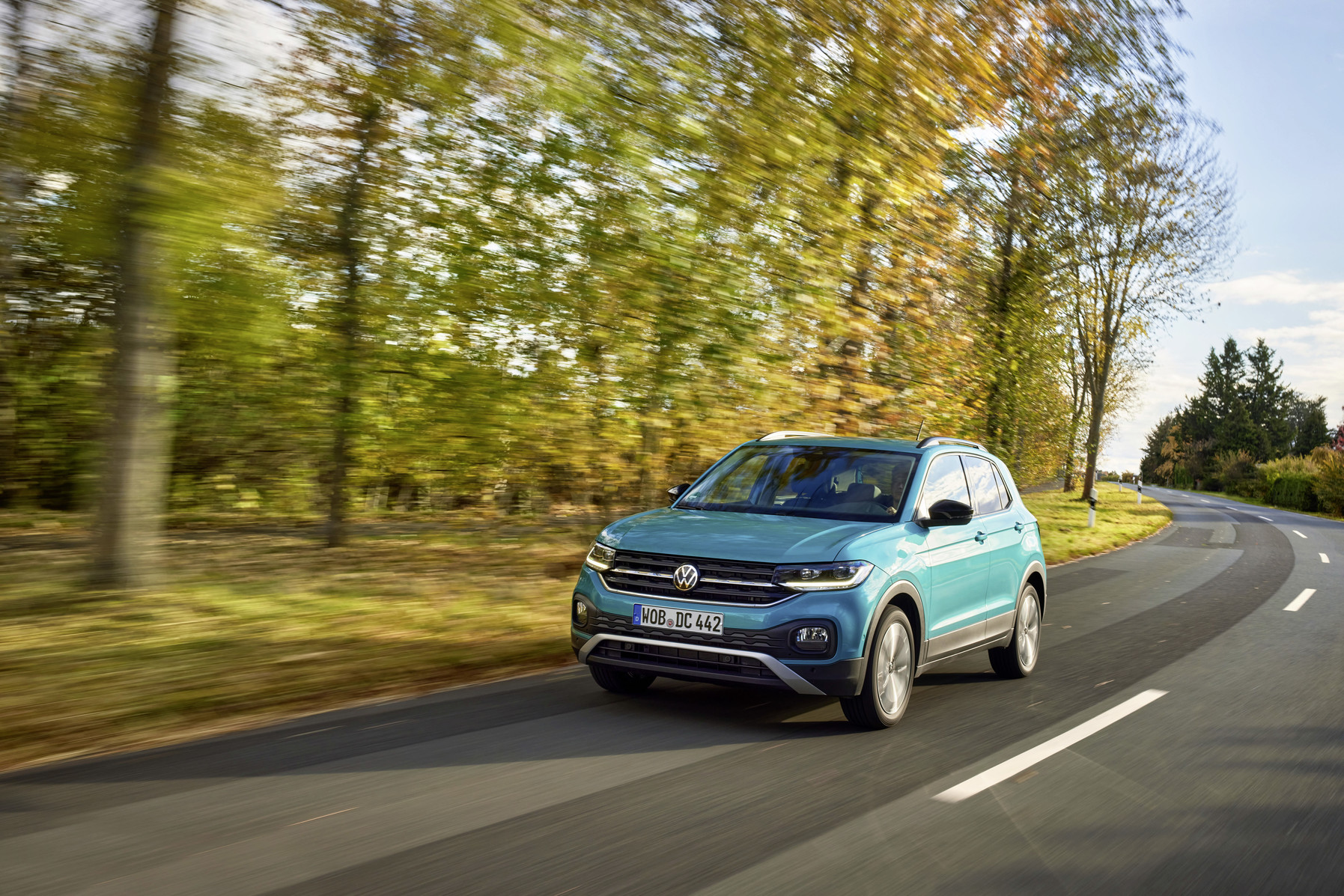
Test results and owner experiences show that the T-Cross 2026 regularly matches or even improves on its WLTP rating. An extensive test with air conditioning and radio switched on recorded 5.4 litres per 100 kilometres, which is better than the quoted 5.9 litres for that specific version. Many owners report averages around 1 in 17, which equates to roughly 5.9 litres per 100 kilometres.
Economical drivers achieve 1 in 18.8 to 18.9 over tens of thousands of kilometres. These are realistic figures for normal commuting and relaxed motorway journeys. On the other hand, some users report 1 in 15.1, especially with intensive city use involving short trips, traffic jams or a more heavily loaded car. The DSG automatic generally performs more efficiently on longer journeys than in stop-and-go traffic.
Which factors influence consumption
Several factors determine actual fuel consumption. Your driving style plays a major role: speeds of around 90–100 km/h on the motorway deliver the lowest consumption, down to 4.8 litres per 100 kilometres. Full‑throttle acceleration and high speeds push consumption up quickly. The 1.0 TSI does not invite sporty driving. Its 0–100 time is between 10.7 and 11.2 seconds.
The options you choose also make a difference. Larger wheels increase rolling resistance and thus consumption by a few tenths per 100 kilometres. The weight of luggage and passengers has an impact, as does the use of air conditioning and electrical equipment. In winter the difference can rise to 0.5 litres per 100 kilometres of additional consumption. Heating and cold‑start losses cause this higher consumption.
‘ With a loaded trailer you should allow for 20 to 30 per cent extra fuel consumption, depending on weight and speed. ’
Tips for maximum fuel efficiency
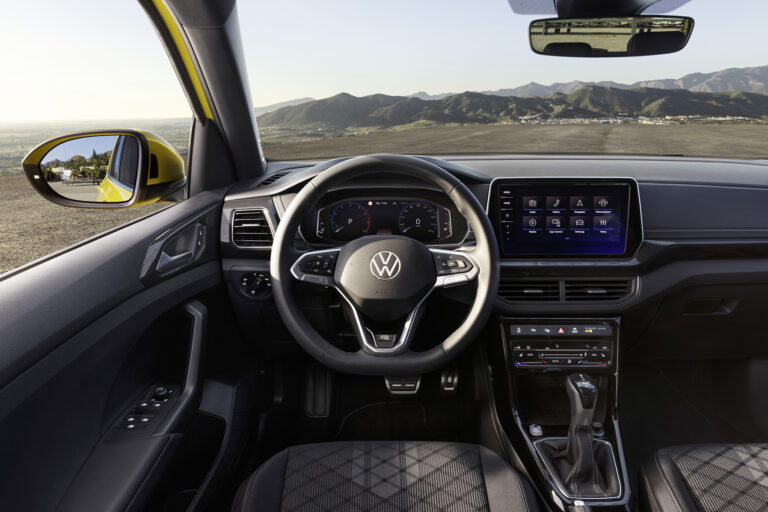
With a few simple adjustments you can use fuel as economically as possible in your T-Cross. Use ECO driving mode where available and switch on cruise control on long journeys. The Digital Cockpit shows real-time consumption information so you can immediately see how your driving behaviour affects the figures.
Pay attention to these practical points for optimal consumption:
- Check tyre pressures weekly and keep them at 2.5 to 2.8 bar
- Fill up with 95 RON petrol only for the TSI engines
- Avoid unnecessary loading in the 455‑litre luggage compartment
- Anticipate traffic situations and avoid hard acceleration
- Use air conditioning in moderation, especially on short trips
- Have the engine serviced regularly according to the schedule
When using the towbar, with a maximum towing capacity of 1,100 kg, consumption rises noticeably. With a loaded trailer you should allow for 20 to 30 per cent extra fuel consumption, depending on weight and speed.
Comparison with competitors
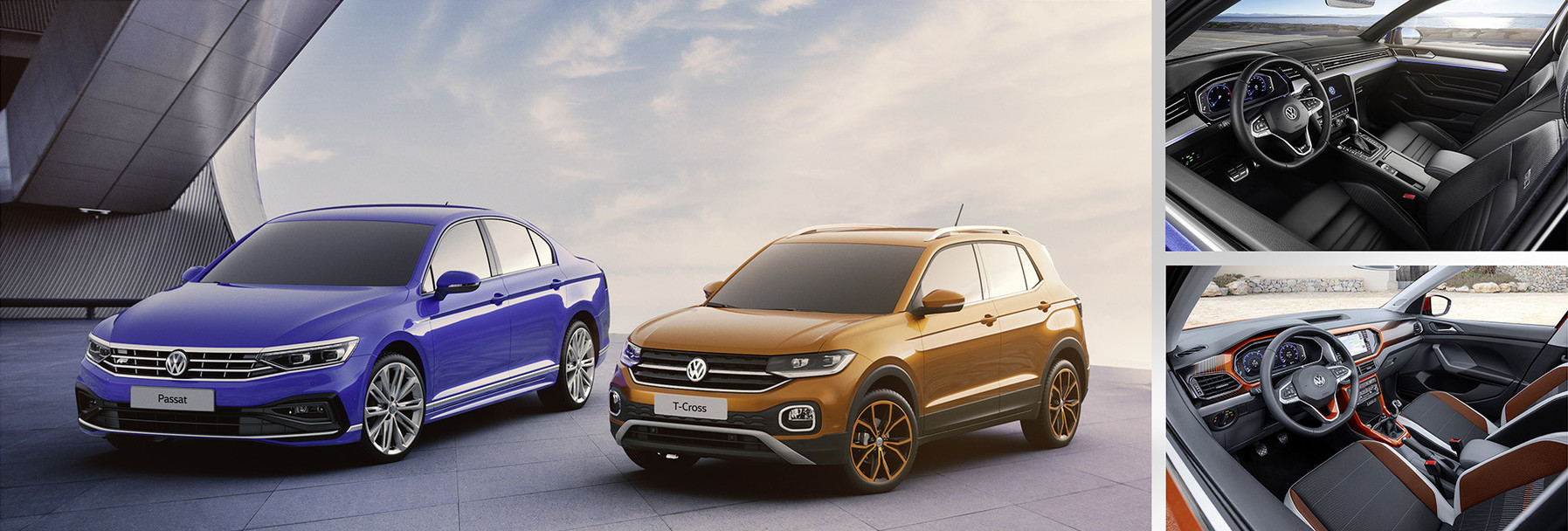
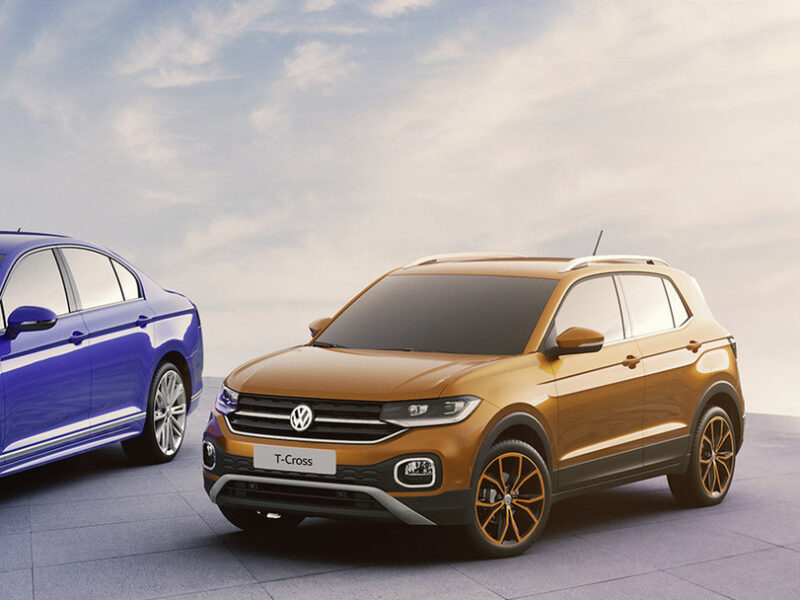
In the compact crossover segment, the T-Cross 2026 is among the more economical models. The Volkswagen Polo, on which the T-Cross is based, scores slightly better at an average of 1 in 18.2, but offers less space and a lower seating position. Comparable crossovers such as the Peugeot 2008 and Renault Captur achieve similar consumption figures, between 5.5 and 6.5 litres combined.
The advantage of the T-Cross lies in the combination of space, modern TSI technology and dependable build quality. The three-cylinder 1.0 TSI engine delivers a broad spread of torque from 1,600 rpm, enabling smooth gearchanges and efficient acceleration. The DSG automatic contributes to the low consumption by shifting smartly and quickly based on driving conditions.
Which version to choose for low consumption
For those who prioritise economy, the 1.0 TSI with 115 hp and DSG automatic is a logical choice. This version combines sufficient power for comfortable driving with a combined WLTP consumption from 5.4 litres per 100 kilometres. The 95 hp manual version is slightly less economical in practice, but in careful hands can achieve similar figures.
The more powerful 1.5 TSI with 110 kW offers more pulling power and comfort at higher speeds, but consumption is consistently higher at around 5.8 to 6.1 litres per 100 kilometres. For those who mainly drive on the motorway, the extra comfort outweighs the modest additional consumption. The R-Line version with sporty options slightly increases weight and rolling resistance, which translates into a few tenths higher consumption.
‘ For those who mainly drive long distances, the T-Cross more than lives up to the factory figures. ’
Owner experiences
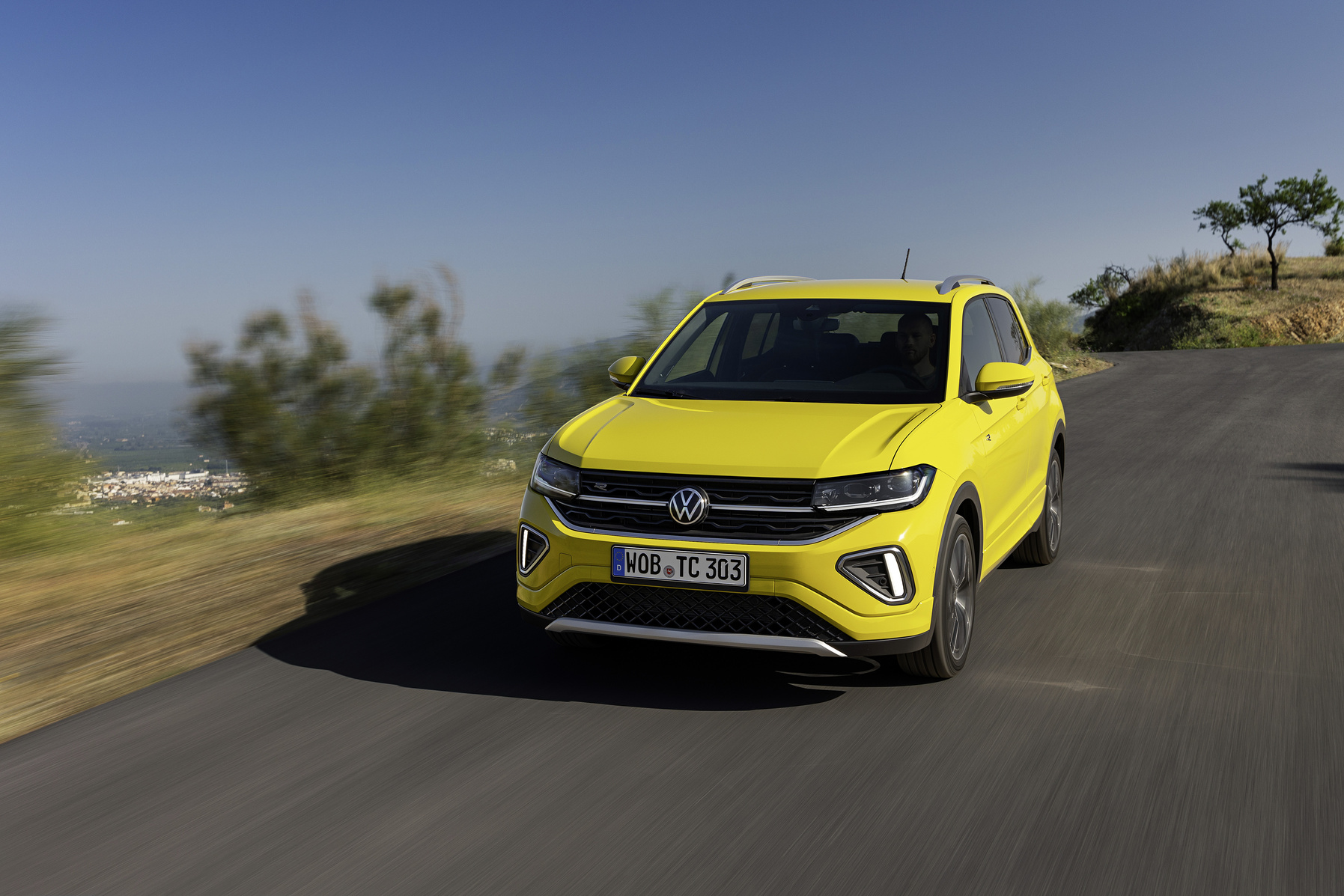
Many T-Cross drivers appreciate the predictable and low fuel costs. One owner who drove 58,000 kilometres reported an average of 1 in 18.8, which he described as perfect for daily commuting. Other users report that in town the car stays closer to 1 in 15 because of stop-and-go traffic, but on the motorway it excels with 1 in 19.
Owners of the DSG version report that the automatic becomes increasingly efficient at shifting after a running‑in period. The adaptive shift behaviour learns from your driving style and optimises shift points. Some drivers experience higher consumption on short journeys under five kilometres, where the engine does not reach operating temperature. For those who mainly drive long distances, the T-Cross more than lives up to the factory figures.
Long-term costs and maintenance
In addition to direct fuel consumption, maintenance costs also play a role in overall spending. The 1.0 TSI engine is known for its reliability with correct maintenance carried out according to the prescribed schedule. Replacing filters, spark plugs and engine oil in line with the guidelines prevents higher consumption values due to wear.
The mileage on a used 2026 example gives insight into actual use. Check whether services have been carried out at an authorised Volkswagen service centre. Cars with a complete service history maintain their efficiency better over the years. The T-Cross 2026 has a low energy label, which keeps road tax favourable. The modest fuel costs make it attractive for cost‑conscious motorists.
On the Carnews website you will find more extensive information on technical specifications, comparison tests and maintenance advice for the T-Cross and other popular models. Discover which crossover best suits your driving style and budget by browsing the various articles and overviews.
Frequently asked questions
For the 1.0 TSI 95 hp manual engine, combined WLTP consumption is around 5.6 l/100 km. The 1.0 TSI with 115–116 hp and DSG automatic is at roughly 5.4–5.9 l/100 km. The more powerful 1.5 TSI (110 kW) with DSG has an expected WLTP consumption of around 5.8–6.1 l/100 km.
Innovations such as the latest generation 1.0 and 1.5 TSI petrol engines with direct injection and turbo technology ensure more efficient combustion and lower consumption. The advanced DSG automatic shifts faster and optimises engine speed, which both saves fuel and reduces CO2 emissions. Furthermore, improved aerodynamics and an optimised drivetrain, including revised gear ratios, contribute to lower emissions. Together these drivetrain technologies result in WLTP consumption figures from around 5.4 l/100 km and CO2 emissions from roughly 105 g/km.
With 105–133 g/km CO2, the VW T-Cross 2026 sits at the lower end to the middle of the compact SUV segment. Many direct rivals with comparable petrol engines achieve similar or slightly higher WLTP emissions, often around 115–140 g/km. This positions the T-Cross as a relatively efficient choice, particularly in the lighter 1.0 TSI versions. In practice, thanks to its favourable consumption, emissions are often slightly lower than the official factory figures suggest.
For the 2026 model year VW T-Cross there are no announced plans for hybrid (mild or plug‑in) or fully electric powertrains; the range consists solely of efficient petrol TSI engines. WLTP consumption values, depending on engine and transmission, are around 5.4–6.1 l/100 km with CO₂ emissions of roughly 105–133 g/km. Any future electrified variants have not yet been specified by Volkswagen.
The claimed fuel efficiency of around 5.4–5.9 l/100 km significantly reduces total running costs, especially for high‑mileage drivers, as fuel accounts for a large share of the cost per kilometre. Thanks to the relatively low CO2 emissions (around 105–133 g/km), the 2026 VW T-Cross scores well for road tax and often also in benefit‑in‑kind/consumption categories for business leasing. This makes the car more tax‑efficient than less economical crossovers in the same segment. In urban low‑emission zones and under future environmental measures, the favourable emission profile can also help maintain access and residual values.