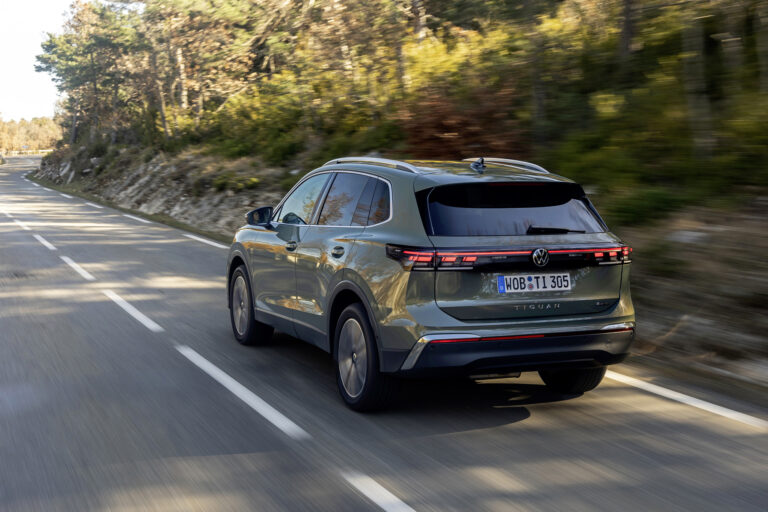
The panoramic roof of the Volkswagen Tiguan regularly leaks due to blocked drains, loose adhesive or worn rubber seals. This occurs mainly on models from 2016 onwards with more than 50,000 kilometres on the clock. It leads to water in the footwells, moisture in the headlining and, in serious cases, mould in the interior. Read on to discover how to recognise, fix and prevent this problem.
Where does the leak come from
The drainage systems of the panoramic roof come with their own set of challenges. The front drains are located under the windscreen. They are hidden behind ribbed rubber seals with a hose. You will find the rear drains at the far left and right of the boot. On the Volkswagen Tiguan, these drains often become blocked by leaves, dirt and algae growth. As a result, water seeps in at the C-pillar or into the footwells.
Another well-known issue lies in the production of the drain hoses themselves. The two parts of the hose sometimes do not fit together properly. This is due to missing vulcanisation during manufacturing. Over time, leaks form at these joints. The adhesive layer between the plastic and the glass also regularly comes loose. You can see this as moisture creeping between them. If you press on the roof, the moisture becomes visible. This occurs on various VAG models, including the Tiguan and Passat.
How to recognise a leaking panoramic roof
Fortunately, the symptoms of a leak are quite clear. Owners often report water in the front footwells. Other common areas are the C-pillar and the boot. A damp headlining is also a regular occurrence. Do you notice a musty, mouldy smell in the car? Then moisture has probably been present for some time.
Leaks mainly occur after rain or a car wash. They are more common when the roof has been left open for longer periods. Watch out for these signs:
- Water marks on the headlining or roof lining
- Moisture on the floor mats without an obvious cause
- Condensation on the inside of the windows
- Sound of water in the doors or roof structure

Check and clean the drains yourself
Cleaning the drains is an effective first step for many owners. Start by removing the plastic covers on the sides of the dashboard. Pay attention to the airbag markings. Pull gently so as not to damage the clips. Using a torch, look for the small openings or hoses under the windscreen. Carefully pierce these through with a thin piece of wire.
Then flush the drains with water from a watering can. You can also use compressed air. Check the rear drains in the boot as well. If all is well, the water will now flow into the wheel arches. That way it does not end up in the interior. Then apply lubricant to the hinges and runners of the panoramic roof. Do not use silicone spray, but VAG-approved oil. VAG stands for Volkswagen Audi Group and refers to oil approved by this group. This prevents the rubber seals from deteriorating.
More extensive repairs for persistent leaks
Cleaning the drains does not always solve the problem completely. In that case a more thorough approach is often needed. You will then need to remove the headlining. First remove the grab handles and interior lights. Be very careful with the fragile wiring. Then clean the hose connections. Repair them with sealant or kneadable sealant. Afterwards, wrap the joints with self-vulcanising tape for a watertight seal.
Replacing the inner rubber seal costs around 95 euros in material. For re-bonding, use Sikaflex 221. This provides a stronger seal than the original factory adhesive. In practice, once loose adhesive has been repaired with extra Sikaflex and a new rubber seal, the car stays dry again.
‘ Because the drains are naturally prone to contamination, vigilant maintenance remains the best protection against water ingress. ’
Prevent problems with regular maintenance
Prevention saves you a lot of hassle and cost. Open the panoramic roof regularly, even in winter. Movement in the mechanisms prevents the rubber seals from sticking.
Clean the drains at least once a year. The best times are in spring, after the leaves have fallen, and in autumn, before winter starts. Lubricate the moving parts according to the manufacturer’s recommendations. After disconnecting the battery, you must recalibrate the panoramic roof. This is done via a specific reset procedure. Check your Tiguan’s manual for the instructions. Because the drains are naturally prone to contamination, vigilant maintenance remains the best protection against water ingress.

When you need a specialist
A sticking or jammed panoramic roof sometimes requires professional help. If the repair becomes too extensive, it is also best to call in a specialist. Look for a specialist with experience of VAG panoramic roofs and a sufficient stock of spare parts, such as frames, motors and glass.
Owners of Tiguan models from 2016 to 2019 regularly report leaks. This often happens from around 50,000 kilometres. Besides the panoramic roof, these models also suffer from brake and air conditioning issues, but the roof remains a well-known weak spot. Moisture around the C-pillar often points to a blocked drain. In that case, a thorough cleaning and lubrication often does the trick. This pattern occurs regularly across various Volkswagen Audi Group models. A specialist can quickly assess whether it is simply blocked drains or whether there are also manufacturing defects in the hoses.
Limiting damage to the interior
Water inside the car quickly causes permanent damage. Damp headlining can discolour and sag. Mould growth is not only unpleasant; it is also unhealthy. Dry a wet interior as quickly as possible. Remove wet floor mats. Leave the car to dry with the doors open, preferably in a well-ventilated area.
For larger amounts of water in the carpet, use a professional wet vacuum cleaner. If moisture has been present for a long time, the insulation under the carpet may become mouldy. In that case, remove the carpet. Clean the floor thoroughly. Then dry it completely. Acting preventively is wiser than cleaning up afterwards. As soon as you notice signs of a leak, tackle it immediately.
‘ The larger roof surface sometimes makes this model more vulnerable to leaks. ’
Tiguan Allspace has similar problems
The Tiguan Allspace is the longer variant of the Tiguan. It has a similar panoramic roof system. As a result, the same problems occur, such as blocked drains, loose adhesive and manufacturing defects in the hoses. The larger roof surface sometimes makes this model more vulnerable to leaks. The approach remains the same: regular checks, cleaning the drains and having persistent issues repaired professionally.
Owners of the Allspace report moisture in similar areas to the standard Tiguan. The rear drains on this model are also located at the far left and right in the boot. Due to the extra seats, access is sometimes a little more difficult, but the working method remains the same.

Practical real-world fixes
Piercing the small front drain holes is a widely used solution. After that, you flush the drains with a watering can. The water then runs into the wheel arches, just as it should. If it turns out to be a simple blockage, this usually brings immediate relief.
Loose adhesive requires repair with Sikaflex and new rubber seals. Sealing the drain hoses with sealant also often provides a lasting solution. With the right approach and a bit of persistence, you can fix a lot yourself. This saves money and often delivers quick results.
More information and tips for your Tiguan
On the Carnews website you will find extensive information about common car problems and maintenance tips. Whether you have questions about the panoramic roof, the engine, the suspension or the electronics, there is plenty to discover. Explore the specific characteristics of your model and stay up to date with practical solutions. Discover more and keep your Tiguan in top condition.
Frequently asked questions
The most common cause is blocked drain hoses from the panoramic roof, often due to leaves, dirt and algae growth preventing water from draining away properly. In addition, manufacturing defects or poorly fitting hose joints occur, causing the connections to leak. Loose adhesive between the glass and the plastic frame, and worn or shrunken rubber seals around the roof, also regularly cause leaks. Finally, mechanical wear due to build-up of dirt can lead to parts not closing properly and therefore an increased risk of leaks.
You can first test the drains by carefully pouring water from a watering can along the edges of the open roof and checking whether it drains neatly under the car or appears somewhere inside the car (footwells, C-pillar or boot). Then check the drain openings under the windscreen (in the ribbed rubbers) and right at the back, left and right, in the boot, for blockages due to leaves or dirt, and carefully pierce them through with a thin, flexible piece of wire. Use a torch around the glass edge and rubber seals to see whether you can spot any traces of moisture, cracks or loose adhesive by gently pressing on the glass or the edge. If the source of the leak remains unclear, or you see that the glass/plastic joint is coming loose, more extensive dismantling of the headlining and hoses is probably needed and it is better to call in a specialist.
Dry the interior (upholstery, mats, foam) as quickly as possible with cloths, a hairdryer or a dehumidifier to limit mould and damage to electronics. Roughly locate the source of the leak (headlining, A-/C-pillar, footwells, boot) so that you know whether it is coming from the drains or along the glass/rubber. Immediately clean the drainage channels of the panoramic roof (front and rear) by gently piercing through the openings and flushing with water, and avoid aggressive products or hard rods that could damage the hoses. If the leak persists or the adhesive/rubber seals have come loose, have a specialist dismantle, seal or replace the roof and drain hoses as soon as possible.
Yes, you can carry out preventive checks and cleaning of the panoramic roof drains every year, both front and rear, so that dirt and leaves do not build up. Keep the rubber seals clean and supple (with a suitable care product) and regularly remove dirt from the rails and around the glass edge. Open and close the roof fully from time to time to keep the mechanism moving and prevent it from seizing up. At the first signs of problems (damp patches, strange smells), have the drains and seals checked immediately to prevent more serious leaks and interior damage.
The costs of repairing a leaking panoramic roof on a Volkswagen Tiguan vary greatly, depending on the cause. For cleaning and flushing the drains at a general garage or roof/glass specialist, you typically pay around €100 to €250. If hoses need to be repaired or resealed and rubber seals replaced, costs are often around €250 to €600. In cases of severe damage where parts of the frame or the entire roof module have to be replaced, costs can easily exceed €1,000.