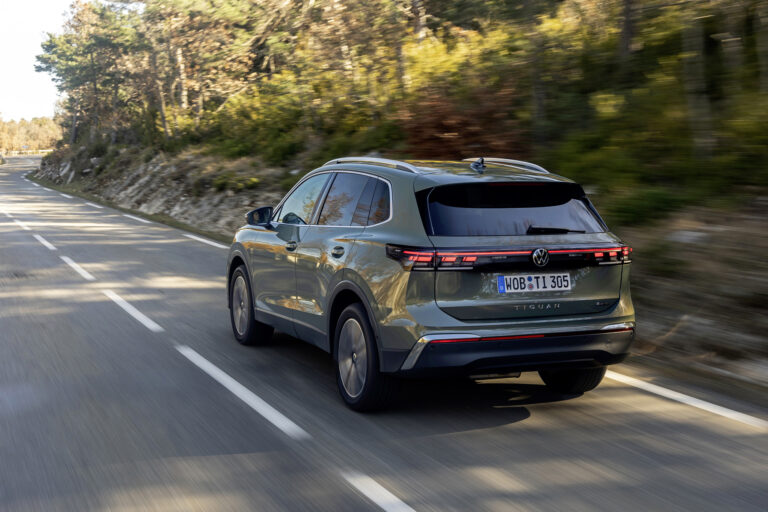
The Volkswagen Tiguan 1.4 TSI suffers from timing chain problems that can lead to costly engine damage. In particular, models from 2012 onwards with engine codes CAXA, CAXC, CAVD, CTHD and CAVA experience premature chain stretch. This often happens as early as around 40,000 to 85,000 kilometres. Do you recognise the symptoms in time? Then you can avoid thousands of euros in costs for a chain that should have been maintenance-free.
A known issue with early 1.4 TSI engines
The timing chain in the 1.4 TSI engine was designed as a maintenance-free component. Early versions of this engine regularly suffer from stretching chains and worn tensioners. This causes timing deviations between crankshaft and camshaft, which can lead to poor engine running and, in the worst case, complete engine failure.
Volkswagen equipped later models with a timing belt. That choice was not without reason. The belt must be replaced every 60,000 to 100,000 kilometres, but it causes problems far less often. Owners of early Tiguan 1.4 TSI models must remain alert to warning signs. The chain may no longer be doing its job properly.
‘ Continuing to drive with a stretched chain increases the risk of serious engine damage. ’
Recognisable signs of a faulty timing chain
Rattling or ticking noises when starting a cold engine are the most common warning sign. This noise often disappears after 30 to 50 seconds, but it is a clear alert. In addition, the engine warning light may come on. This often goes hand in hand with fault codes such as P0016, P1340, P000A or P3008. These codes point to problems with the position of the crankshaft and camshaft.
Other symptoms are:
- Rough or uneven idling
- Jerking or hesitation while driving
- Loss of power
- Increased fuel consumption
It is important to be extra alert when starting from cold. Listen carefully for any unusual noises and regularly scan the car with an OBD scanner (a diagnostic tool for fault codes in the engine electronics). Continuing to drive with a stretched chain increases the risk of serious engine damage. This risk is considerable.


Why this problem occurs
The timing chain stretches due to design or material faults. Volkswagen pointed to the chain suppliers. However, forums show that the issue can return even after repairs with new parts. That suggests a more fundamental design flaw in this engine type.
Owners on car forums report different experiences. Some had problems after only 40,000 kilometres, despite regular servicing at the dealer. Others experienced issues again after the chain had been replaced, this time after a further 17,000 kilometres. ANWB experts confirm that models from 2012 in particular are prone to this problem.
What is replaced during repair
A thorough repair is required. The complete timing system is renewed with improved parts. This includes:
- Timing chain
- Chain tensioner and guides
- Timing cover gasket
- Crankshaft oil seal
- Engine oil and oil filter
Sometimes the camshaft adjuster also has to be replaced if it is worn. Independent specialist garages use oscilloscope measurements to detect timing deviations. After the repair they can show that the timing is correct again.
‘ Do make sure you choose a specialist with experience of TSI engines. ’
Timing chain repair costs Tiguan 1.4 TSI
The repair costs are between 2,000 and 2,500 euros at an official Volkswagen dealer. The difference depends on the engine variant: the version up to 125 bhp requires different parts to the version above 125 bhp. At independent specialist garages the costs are sometimes a bit lower. Do make sure you choose a specialist with experience of TSI engines.
Have the camshaft adjuster checked during the repair. It may turn out to be worn halfway through the job. Have it replaced at the same time to avoid additional costs later.


How to prevent timing chain problems
Good maintenance can extend the service life of the timing chain. Always use quality oil and follow the prescribed replacement intervals. The hydraulics of the chain tensioner depend on good lubrication. Neglecting the oil accelerates wear.
Scan the car at the first sign of rattling noises. An oscilloscope measurement shows whether there are timing deviations. Do not wait too long before taking action. The more the chain stretches, the greater the risk of engine damage.
Be extra careful when buying a used Tiguan 1.4 TSI from the 2012–2015 period. Ask for the service history. Check whether the chain has already been replaced. Some dealers offer goodwill, but that differs per case. Newer models with the 1.5 TSI engine have a shorter and stronger chain. Even with those, regular checks remain sensible.
Check your Tiguan regularly
Scan your car at the first signs of rattling noises during start-up. If in doubt, have a specialist garage carry out an oscilloscope measurement. That way you can prevent a stretched chain from causing expensive engine damage.
Frequently asked questions
Typical symptoms are a rattling, ticking or dragging noise on cold start (which can disappear after half a minute), an illuminated engine warning light with timing-related fault codes, rough or uneven idling, juddering/loss of power and increased fuel consumption. Over time, camshaft adjusters can also start to fail. The problem is serious: chain stretch can cause the valve timing to slip, which, if you continue driving, can lead to severe or even total engine damage. At the first symptoms, the car should therefore be checked quickly, and in many cases the complete timing chain set is replaced as a preventive measure.
The main causes are a design/material fault with the timing chain and tensioner in the 1.4 TSI, which means the chain stretches prematurely and the timing between crankshaft and camshaft shifts. Poor-quality or overdue engine oil changes make this worse because the hydraulic chain tensioner then does not work properly. Prevention or life extension is mainly achieved by changing the oil very regularly, using the correct specification, and by being alert to rattling noises at cold start and immediately having a diagnosis carried out. In addition, it helps, when buying, to check whether the chain set has already been replaced by an improved version, and to have this done preventively if necessary.
Replacing a defective timing chain on a Volkswagen Tiguan 1.4 TSI generally costs around €2,000–€2,500, especially if the tensioner, guides, gaskets and oil are renewed as well. Many garages replace the complete set with improved parts and also check the camshaft adjusters, which can add extra costs. For early model years around 2012–2015 with the vulnerable chain, the focus is on full chain set replacement due to an underlying design flaw. For newer engine variants where VW switched to a timing belt or an improved chain, the approach is more preventive (periodic belt replacement) instead of reactive to chain problems.
When buying, look for documented timing chain replacement (invoices, parts list), preferably with a complete, improved set. Start the engine completely cold and listen for rattling or ticking noises in the first half minute, and check that no warning light is illuminated and there are no fault codes relating to the camshaft/crankshaft position. Check the service history: regular oil changes with the correct specification reduce chain wear. If in doubt, avoid early 1.4 TSI models without a clear repair or maintenance history relating to the timing chain.
The timing chain in the 1.4 TSI is officially considered “maintenance-free”, but in practice premature wear often occurs as early as roughly 40,000 to 85,000 km. There is therefore no fixed prescribed replacement interval as there is with a timing belt, but preventive checks are strongly recommended. Pay particular attention to rattling noise on cold start and, if in doubt, have the chain, tensioner and timing (via oscilloscope/diagnostics) checked. Regular oil changes with the correct specification are crucial to extend the service life of the chain tensioner and therefore the chain itself.