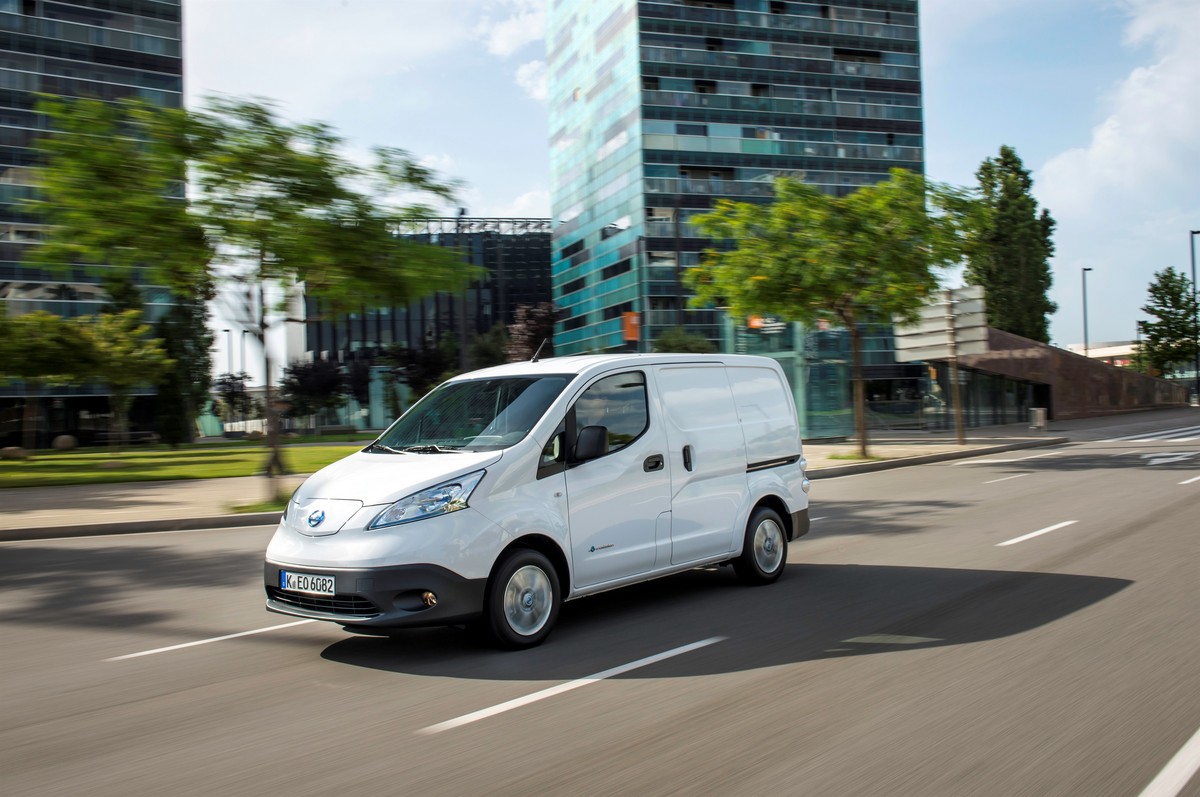
The Nissan NV200 suffers from brake system faults that affect safe driving, even though the number of claims remains relatively low. The problems often arise due to sticking gear components, sensor errors and low fluid levels. These factors indirectly disrupt the brake pedal and braking system. Fortunately, the repair costs are not too bad, but attention is required. Find out how to recognise these faults and what to do about them.
The Nissan NV200 is a reliable van for everyday use, but owners sometimes report specific car problems with the Nissan NV200 that indirectly affect the braking system. These faults occur less often than transmission or other technical complaints. They do, however, require quick action.
Stuck gear selector blocks the braking system
A common problem is the gear lever that will not come out of the park position. You fully press the brake pedal and the engine is running, but the lever remains locked. This occurs mainly with the e-NV200. The e-NV200 is the electric version of the NV200. You are unable to drive away. The braking system does not disengage from the shift-lock function.
The cause lies in wear of the rubber sleeve in the park cable. The rubber sleeve is a small bush in the cable assembly that absorbs movement. This sleeve comes loose due to use and high mileage. Your dashboard then shows the warning T/M System Malfunction. An OBD2 scan gives fault code P0706. OBD2 is a diagnostic tool that reads fault codes in the car. Fault code P0706 points to a problem with the transmission range sensor. Users report that this often happens in the morning when the car is cold.
Solution for the stuck gear lever
Fix this problem by replacing the rubber sleeve. First remove the console trim. Then remove the lower panel with two screws and clips. Visually inspect the sleeve for tears or looseness. Replace it with a genuine Nissan part such as number 34426-4FA0A for 2015 models. Number 34426-4FA0A is the official Nissan part number for the rubber sleeve.
Test the repair after reassembly. Ask someone to change gear. Meanwhile, observe the linkage under the bonnet. No movement means that the sleeve is still defective.
‘ It also increases the risk of loss of brake assistance. ’
Transmission slip affects brake response
A low level of transmission fluid leads to transmission slip. Transmission fluid is the oil that lubricates the gearbox. This causes sluggish acceleration. It also causes irregular shift responses. While slowing down you notice that the braking system feels different. The transmission is not cooperating properly.
A faulty speed sensor makes this problem worse. The speed sensor measures the vehicle speed. The sensor sends incorrect signals to the computer. The engine warning light comes on. You hear banging noises when shifting. This often goes hand in hand with loss of brake pressure. It occurs mainly on older models from before 2012.
What to do in case of transmission slip
- Regularly check the transmission fluid level and top up if necessary
- Repair leaks immediately to prevent further damage
- Scan for fault codes using a diagnostic tool. Look for codes such as P0706 or U1561. P0706 points to a transmission sensor problem. U1561 indicates a communication fault.
- Reprogramme sensors or replace them when defective
Do not continue driving with a slipping transmission. This accelerates wear. It also increases the risk of complete transmission failure. It also increases the risk of loss of brake assistance.
Electrical faults and ECU problems
Blown fuses for the ECM, ECU or TCM block transmission control. ECM stands for Engine Control Module, the engine computer. ECU means Electronic Control Unit, the general control computer. TCM is the Transmission Control Module, the transmission computer. This directly affects the brake-assisted shift-lock. The shift-lock prevents you from changing gear without braking. The result is a vehicle that will not start or is stuck in the park position.
TCM faults cause similar symptoms. The transmission computer sends incorrect signals, which means the braking system does not communicate properly with the rest of the car. On some NV200 models this leads to a situation where the engine turns over but does not start. The starter turns the engine, but the car does not start.
Quick reset for ECU and TCM
Pull the fuses for the ECM, ECU and TCM from the fuse box. These are the fuses that supply power to these computer modules. Usually there are three of them. Wait one to two minutes. Then refit them. This reset clears temporary fault codes and often restores shift and brake functionality. It works especially well on models from before 2012.
Also visually check whether fuses are blown. Replace them if necessary with fuses of the same rating. If the problems persist, professional diagnosis is required.
Symptoms that point to brake system faults
Do you recognise the warning signs below? There may be something wrong with the brake system or related components:
- Gear lever that will not come out of park despite the brake pedal being pressed
- Warning T/M System Malfunction on the dashboard
- Engine warning light that stays on
- Banging noises when changing gear
- Transmission slip while accelerating or decelerating
- Brake pedal that does not respond when starting the car
- Car that will not start despite a good battery
Park safely. Do you notice any of these symptoms? Immediately scan with a diagnostic tool to read fault codes. A diagnostic tool is a scanner that reads electronic fault codes in the car. This points you towards the cause and prevents you from continuing to drive with an unsafe braking system.
‘ Fortunately this is rarely necessary, because a reset or sensor replacement often already helps. ’
Costs of replacing brake components
The repair costs for brake system faults on the Nissan NV200 are relatively modest. A rubber sleeve for the park cable costs between €10 and €25 at Nissan dealers. Fitting takes around an hour, which amounts to €50 to €100 in labour at a garage.
Are you replacing a speed sensor? The speed sensor measures vehicle speed. The part costs between €80 and €150. Add €75 to €125 in labour on top. Topping up transmission fluid is cheaper. Count on €30 to €60. This amount includes labour.
Fuses cost only a few euros each and you can replace them yourself. Are you replacing a complete ECU or TCM? This costs between €400 and €800. This amount includes programming. Fortunately this is rarely necessary, because a reset or sensor replacement often already helps.
Preventive maintenance prevents many faults
Regular maintenance keeps your Nissan NV200 safe. It also keeps the vehicle reliable. Check the transmission fluid level every six months. Top up if necessary. Inspect the rubber sleeve of the park cable at high mileage, especially from 100,000 kilometres.
Check the fuse box for blown fuses when you see warning lights. Keep a spare set of fuses in the car. This is useful in emergencies. Have sensors checked during routine servicing so that defects are picked up early.
Owners of the e-NV200 should be extra alert to problems with the rubber sleeve. The e-NV200 is the electric version of the NV200. On this electric version, this was a known problem. For some model years this problem led to a recall. Ask your dealer whether your model is affected.
Experiences of Nissan NV200 owners
Taxi owners drive the NV200 on a daily basis. They recommend keeping a set of replacement sleeves in stock. A set of replacement sleeves is a spare kit with rubber sleeves for the cable assembly. This saves on towing costs and downtime. On forums, users share that resetting fuses often works for faults in the transmission computer. Resetting fuses means pulling out and refitting fuses to reboot the computer. They do, however, warn against continuing to drive with transmission slip.
Some owners report that the stuck park position mainly occurs after cold nights. Replacing the sleeve solves this permanently in their experience. On the electric version it helps to carry out DTC scans. DTC scans are Diagnostic Trouble Code scans that read fault codes. Combine these with a visual inspection of the linkage. The linkage is the mechanical connection between the gear lever and the gearbox. This leads to a reliable diagnosis.
On the Carnews website you can find more information about common problems with Nissan models and practical maintenance advice for vans. Discover useful tips for diagnosis, repair and preventive maintenance that you can apply directly to your own vehicle.
Frequently asked questions
Specific symptoms include a gear lever stuck in “Park” despite pressing the brake pedal, warning messages such as “T/M System Malfunction” and fault code P0706, and a noticeable deterioration in brake response combined with shifting or slip problems. An enthusiast can recognise this early by staying alert to difficulty coming out of “Park”, unexpected engine or warning lights, irregular shifting behaviour while braking, and periodic inspection of the park cable bush and relevant fuses.
The most common causes of brake-system-related faults on the Nissan NV200 are problems with the park cable bushing (which causes the gear lever to stay stuck in “Park” despite the brake pedal being pressed) and electrical/ECU faults that disrupt brake and shift-lock control. Indirectly, a low transmission fluid level and defective speed sensors can affect brake response, especially when decelerating and shifting. A known weak point is wear of the rubber bush in the park cable, especially on the (e-)NV200, which can lead to fault codes such as P0706 and “T/M System Malfunction”. Also keep an eye on fuses and TCM/ECU faults, as these can block the brake-assisted shifting system.
Advanced maintenance of the braking system on the Nissan NV200 includes regularly cleaning and lubricating guide pins and brake pistons to prevent uneven engagement and sticking. Have the brake fluid completely replaced and bled every 2 to 3 years to avoid moisture build-up, corrosion in the ABS module and a spongy pedal feel. Check brake discs and pads not only for thickness, but also for hot spots, cracking and uneven wear, and tighten wheel and caliper bolts to the correct torque to prevent distortion. Periodically scan for fault codes (ABS/ESP/TCM) and check fuses and earth connections so that electronic faults that affect braking performance are picked up at an early stage.
Yes, there are certainly upgrades available: many owners fit **high-quality brake pads** (semi-metallic or ceramic) and **grooved or drilled brake discs** for better heat dissipation and braking power. For intensive or more spirited use you can opt for an **upgraded brake kit** with larger discs and more powerful calipers, provided wheel size and space allow. **Braided steel brake hoses** and high-grade brake fluid (with a higher boiling point) also improve pedal feel and durability. Always have such modifications specified and fitted by a specialist, both for safety and for inspection/road approval.
Brake system faults on the Nissan NV200 can reduce braking power, increase stopping distance and impair stability while braking or shifting, which directly jeopardises driving safety. Handling can become unpredictable due to transmission slip, a stuck gear selector (for example in Park) or electronic faults that disrupt braking and shifting functions. If a brake or shift warning appears, you must immediately reduce speed, pull over safely to the hard shoulder or a parking area and stop using the vehicle. Immediate actions are then required, such as reading fault codes, checking brake and transmission fluid, inspecting the park cable bush and fuses (ECM/TCM) and, if necessary, calling in professional help.