
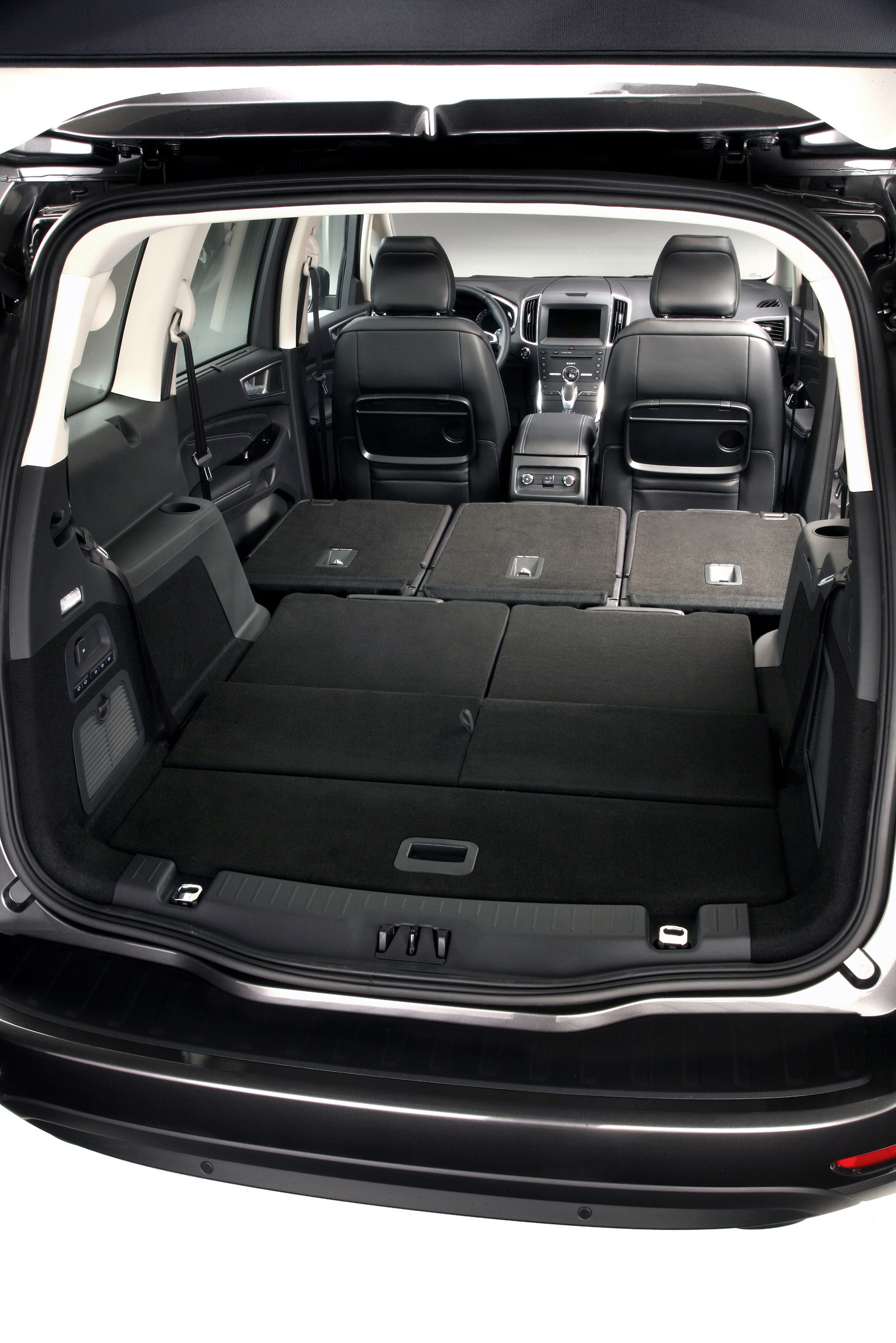
Broken wires in the rear door hinges and faulty modules are the main causes of central locking problems in the Ford Galaxy. These complaints occur mainly in models built between 2005 and 2015. The good news: most faults can be fixed with targeted repairs or by replacing parts. In this article you can read which problems you can expect and how to tackle them yourself.
The central locking system in the Ford Galaxy is an electric system that runs on 12 volts. All doors and the tailgate lock or unlock at the same time via the remote control on the car key (an electronic key with built-in remote control) or via a module in the car. The system comes as standard on many Galaxy variants, such as the 2.0 TDCi models from 1999 onwards.
Common locking problems
Owners of the Ford Galaxy regularly report that one or more doors do not respond to the central locking. This often affects the rear doors and the tailgate. The cause usually lies in the wiring or the electric actuators that operate the locks.
In older models, water ingress in the module at the tailgate can cause problems. This leads to short circuits or oxidation of the connections. The wires in the door hinges can also break over time due to the repeated opening and closing of the doors. This happens mainly on the rear doors, where the wiring passes through a tight bending point.
Symptoms of a faulty locking system
You can recognise central locking problems by the following signs:
- One or more doors do not lock when you use the remote control
- You can hear a clicking sound, but the lock does not move
- The tailgate does not respond to the lock command
- Some doors unlock but do not lock
- The LED indicator in the dashboard no longer responds
‘ A faulty module often causes the entire system to fail, with none of the doors responding. ’
Possible causes of faults
The most common cause is faulty wiring between the door and the body. The wires run through the hinges and can break after years of use. This is a regular occurrence on models built before 2012. You can check this by opening the door and removing the rubber boot around the hinges. Inspect the wires for breaks or wear.
A second common cause is a defective electric door lock motor (actuator) inside the door itself. This electric motor moves the lock. If the electric door lock motor has failed, you often hear a buzzing noise but the lock stays stuck. Electric door lock motors can wear out after around ten years of use, especially if they are used heavily.
The central module can also fail. This module translates the signal from the remote control into commands for the individual door locks. In some Galaxys this module is located at the front near the dashboard, in other variants near the tailgate. A faulty module often causes the entire system to malfunction, with none of the doors responding.
Problems with the remote control
Sometimes the problem is not with the locking system itself, but with the remote control of the car key. A flat battery causes intermittent faults. You can test this by checking the range: a healthy remote works up to around 50 metres from the car. If the system only responds at short range, replace the battery in the key.

Repair it yourself or have it done
For basic repairs you only need a limited set of tools. First check the fuses in the fuse box. The central locking has its own fuse, which you can find in the diagram in the owner’s manual. Checking this only takes a few minutes.
If the wires in the hinges are broken, you can replace the wiring yourself. You will need new wire, soldering equipment and heat-shrink tubing. Replacing the wiring takes about an hour per door. Make sure you do not tension the new wires too tightly so that they have enough slack when the door moves.
Replacing module and actuator
Replacing an electric door lock motor is relatively straightforward on the Ford Galaxy. You will need to remove the door card. The electric door lock motor is screwed to the lock mechanism. Disconnect the electrical connector, unscrew the old motor and fit the new one. A complete kit with remote controls for the car key (the electronic keys) and receiver module is also available. Fitting this takes on average about an hour, depending on your experience.
When replacing the central module, it is important to disconnect the battery first. The module is often connected to several wiring looms with plug connectors. Make notes or take photos of which connector goes where before you remove the old module. Ideally use an original or high-quality replacement module to avoid compatibility issues.
Diagnosing with a multimeter
For a thorough diagnosis, use a multimeter. Set the meter to 12-volt DC. Measure whether there is voltage on the connectors of the electric door lock motor when you give the lock command. No voltage means there is a problem in the wiring or the module. If there is voltage but no movement, this points to a defective electric door lock motor.
Also measure the continuity of the wires through the hinges. Set the multimeter to resistance mode and check that there is continuity between both ends of each wire. A broken circuit indicates a break in the wire.
‘ Replace damaged boots immediately to prevent water ingress. ’
Maintenance tips to prevent problems
Regular maintenance prevents many faults. Check the battery in the remote control once a year. A weak signal can lead to unreliable locking. Replace the battery as a precaution every year, especially before winter.
Lubricate the lock mechanisms every six months with a spray lubricant specifically for locks. This prevents electric door lock motors from being overloaded by stiff mechanisms. Make sure you do not use oil, as it attracts dust. A dry Teflon lubricant is a better option.
Inspect the rubber boots around the door hinges regularly. If they are torn, moisture can reach the wiring. Replace damaged boots immediately to prevent water ingress. This is especially important for the rear doors and tailgate.

Repair costs
The costs vary depending on the part and whether you do the work yourself or have it done. A new electric door lock motor costs between 30 and 60 euros each. The wiring for one door costs roughly 15 to 25 euros in materials. A complete kit with module and two remote controls for the car key costs between 80 and 150 euros.
At a garage, you will pay around 100 to 150 euros including labour to replace an electric door lock motor. Diagnosing and repairing wiring costs between 120 and 200 euros, depending on how serious the problem is. Fitting a new module, including programming, often costs between 200 and 350 euros.
Compatibility with platform siblings
The Ford Galaxy shares its platform with the Volkswagen Sharan and Seat Alhambra. This means that many parts are interchangeable. If original Ford parts are expensive, you can often find cheaper alternatives intended for the Sharan or Alhambra. Always check compatibility based on year of manufacture and engine code.
This interchangeability applies particularly to electric door lock motors, modules and wiring. Bear in mind that some electronic modules must be coded to your specific car. This sometimes requires OBD equipment (a diagnostic device that communicates with the car) to teach the module into the Galaxy’s system.
On the Carnews website you will find more information about problems with Ford models. For example, also read the article on replacing the turbo in the Ford Galaxy 2.0 TDCi or about common faults in other Ford models.
Frequently asked questions
The most common problems are faulty remote controls (worn buttons or a flat/weak battery), which mean the car does not lock or only locks sometimes. There are also frequent faults in the electric actuators, especially at the tailgate, causing it to no longer open or close properly. In addition, damaged or corroded wiring and connectors regularly cause (parts of) the system to fail. In older Galaxy models, water ingress at the tailgate module can also play a role, leading to short circuits and unreliable operation.
Start by checking the key/remote: replace the battery and check whether the LED still works and whether the car does respond at short range. Then check the relevant fuses and use a multimeter to measure whether 12 V is reaching the central locking module and door actuators when you press lock/unlock. Test each door separately by checking whether the mechanical lock operates smoothly and whether certain doors consistently fail to respond (which may indicate a faulty actuator or a broken wire). Finally, look for signs of moisture or corrosion at the tailgate and in the cable grommets; these are known sources of faults on the Galaxy.
First check the battery in the key/remote and replace it if necessary, and check the fuses for the central locking. If it still does not work, use a multimeter to test whether 12 V is reaching the locking module and actuators and inspect the wiring and connectors for breaks or corrosion, especially at the tailgate. If an actuator or module is faulty, replace the relevant part or fit a complete (aftermarket) central locking kit that connects to the existing locks. Pay attention to the year of manufacture and specification of your Galaxy when choosing compatible parts, possibly also from the Sharan/Alhambra.
Yes, there are a few preventive maintenance tips: replace the battery in the remote control roughly once a year to prevent a weak signal and unreliable locking. Regularly check wiring, connectors and the module (especially at the tailgate) for corrosion and water ingress and insulate them properly. Keep the lock mechanisms and actuators clean and, where possible, lightly lubricated according to the manufacturer’s recommendations to prevent them from seizing. For older Galaxys, consider upgrading in good time to a modern (possibly universal) kit to reduce faults.
Yes, there are various aftermarket solutions and upgrades for the central locking on a Ford Galaxy. You can buy complete universal kits with a new receiver, wiring, actuators and remote controls, which are often plug-and-play. There are also individual parts available, such as actuators for the tailgate or additional/slave units to expand the existing system. Many of these kits are compatible with the Ford Galaxy, VW Sharan and Seat Alhambra and can be fitted in about an hour.