
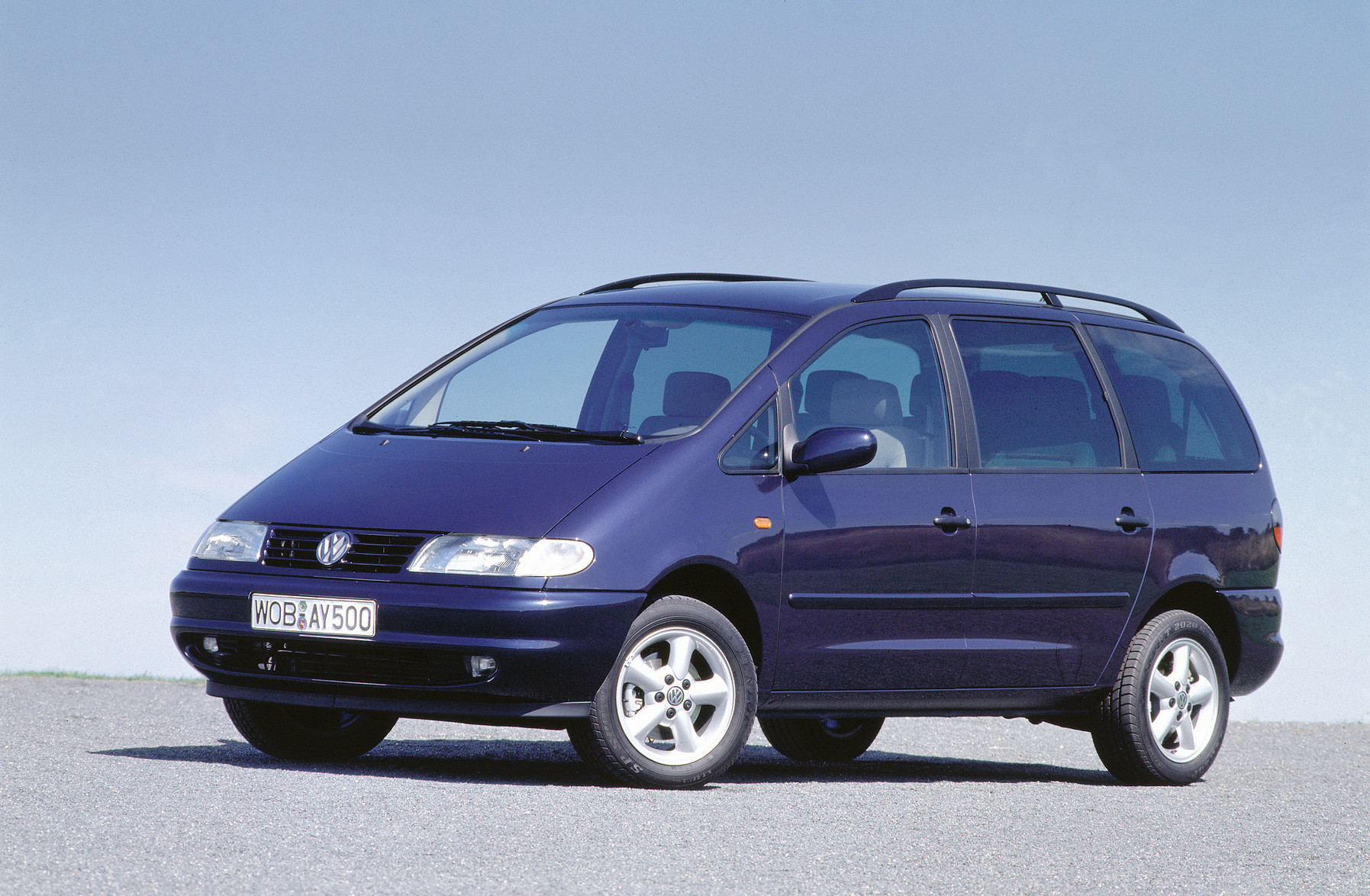
Insufficient visibility due to faulty wipers, incorrect tyre pressure and broken lights are among the most common reasons why a Volkswagen Sharan fails its MOT. These three technical faults are familiar to many Sharan owners and regularly lead to dangerous situations on the road. Here you will find practical solutions and preventive tips to help you stay ahead of these problems.
Why do the wipers fail on the Sharan?
The Sharan’s wipers often fail in the rain. The most common complaint is that one side stops wiping or that both sides do not move in sync. The right-hand wiper sometimes remains upright, causing visibility to disappear completely.
This problem has several causes. Worn relays (electrical switches) with stuck contact points are the most frequently reported culprits. Heat causes this effect. Loose nuts on the wiper spindle, a broken linkage or corrosion in the wiper switch can also be the cause. The latter occurs more often on older models.
Fortunately, there are also practical solutions:
- Check the relay (electrical switch) in the dashboard by removing the trim, dry the contact points or resolder them
- Move the wiper arms by hand to trace play in the wiper spindle, the linkage or the motor
- Replace faulty parts via the used-parts market for roughly 10 to 30 euros
- Set the wiper arms lower if the geometry is worn
- Grease all joints using a grease nipple (small grease point) for smoother movement
- Replace wiper blades if they cause scratches or chatter
- Remove the graphite layer (smooth protective coating) for better sliding
A very common experience among owners is that a loose right-hand nut after maintenance suddenly causes failure. You can easily fix this by tightening the nut properly again. Also keep an eye on the washer pump, which regularly fails even when the tank is full.
Checking tyres and tyre pressure before MOT test
The Sharan’s high weight leads to faster tyre wear. This 7-seater MPV puts a heavy load on the tyres, especially at the front. Front tyres wear about twice as fast as rear tyres due to the combination of steering load and weight.
In city driving, owners often don’t get more than 20,000 to 30,000 kilometres out of a set of front tyres. Uneven wear is caused by the heavy loading and can lead to MOT failure if the tread depth drops below the minimum permitted 1.6 millimetres.
Tyre pressure is another important point to watch. Too low a pressure speeds up wear on the rear axle and increases fuel consumption. Check the pressure weekly and keep it between 2.5 and 2.8 bar. This depends on the load.
Tips to prevent tyre problems:
- Choose run‑flat or reinforced tyres in size 205/55 R16
- Rotate the tyres every 10,000 kilometres to balance wear
- Have the wheels aligned (correct wheel alignment) after 100,000 kilometres to prevent tramlining (the car following grooves in the road surface)
- Always check tread depth with a tread depth gauge before the MOT test
The Sharan’s ESP system (stability control) often intervenes on wet roads if the tyres have a low grip index (wet‑grip rating). This can indicate tyres that are too slick or worn and need replacing.
Fixing lighting faults quickly and cheaply
Faulty lighting is a very common reason for MOT failure on the Sharan. Owners often report failure of indicators, hazard warning lights or rear lights. Strikingly, these problems often occur at the same time as wiper faults due to shared fuses in the electrical system.
Sometimes the lights do come on when unlocking the car with the central locking, but not while driving. The interior lighting still works, which points to selective problems in the wiring or switch.
The most common causes are blown fuses, corrosion in relays (electrical switches) or faulty pumps for the washer jets. The combination switch (stalk on the steering column) controls several systems. Corrosion in this switch often causes knock‑on faults in several lighting components.
Steps to solve lighting problems:
- First check all fuses in the dashboard and engine bay
- Replace faulty fuses with spares or buy new ones for a few euros
- Test the wiring in the doors and tailgate by wiggling it to look for short circuits
- Replace faulty relays (electrical switches) or the washer pump, especially after winter periods
- Clean the contacts of the earth strap (electrical connection to the bodywork) at the rear, especially on first‑generation Sharans (built from 1995 to 2010)
A faulty washer pump costs between 20 and 50 euros and is easy to replace. If problems persist, it’s wise to check the combination switch for corrosion, as this component controls several systems.
Preventive maintenance avoids MOT disappointment
Many MOT failures can be prevented with regular maintenance. Check for corrosion at least once a year, especially on the underside of the chassis. An OBD scan (reading the fault codes via the diagnostic port) reveals hidden system faults before they lead to bigger problems.
For people with basic car knowledge, wipers and fuses are easy to replace yourself. It’s better to leave tyres and wheel alignment to a garage with the right equipment. The costs of preventive maintenance are manageable: a relay (electrical switch) costs around 15 euros, a linkage 30 euros and a washer pump 40 euros. A complete set of tyres is around 400 euros.
Acting early when small faults appear prevents dangerous situations in traffic. A wiper that fails in the middle of a rain shower or dipped headlights that don’t work pose an immediate risk. With regular checks you can stay ahead of these problems.
‘ This not only prevents MOT disappointment, but more importantly unsafe situations on the road. ’
Familiar complaints call for vigilance
Owners of different Sharan generations recognise these three problem areas. Wipers, tyres and lighting regularly suffer faults. That makes them items to pay close attention to at every service visit.
Pay particular attention to combinations of faults. If wipers and lighting cause problems at the same time, this points to electrical issues in shared circuits. Uneven tyre wear together with a car that pulls to one side indicates alignment problems that require prompt action.
By knowing these familiar weak spots, you can carry out targeted checks and maintenance. This not only prevents MOT disappointment, but more importantly unsafe situations on the road.
Schedule a thorough check before going for the MOT. Test the wipers at different speeds, measure tyre pressure and tread depth and test all the lights. This way you avoid surprises during the test and keep your Sharan safe on the road.
Frequently asked questions
For a Volkswagen Sharan, flat‑blade wipers from premium brands such as Bosch Aerotwin or Valeo Silencio are generally considered the best combination of performance and durability. They provide even pressure across the entire blade, so they continue to wipe effectively in rain, snow and at high speed. When buying, check the exact model year of your Sharan and preferably use sets that are specifically put together for the Sharan. Regularly cleaning the rubber and timely replacement (about once a year) will keep performance optimal in all seasons.
First check the condition and mounting of the wiper blades: worn or hardened rubber edges and an arm that is too loose or fitted at an angle cause streaks and uneven contact, so replace them or adjust the mounting. For squeaking or scraping noises, cleaning the windscreen and blades (removing dirt/wax) and lubricating the pivot points of the wiper mechanism often helps. If one wiper sticks or runs skew, check the nuts on the wiper spindles, the wiper link (Gestänge) for play/breakage and the relevant relay for burnt or stuck contacts; tighten or replace as necessary. If problems with irregular wiping or failure persist, it is sensible to check the combination switch for corrosion and to inspect the washer pump/fuses, replacing any faulty components.
For everyday use on a Sharan, quality all‑season or summer tyres with a high wet‑grip rating (EU label: at least A or B for “Wet Grip”) and low rolling resistance (C or better for fuel efficiency) are ideal. Prefer reinforced (XL) tyres in the prescribed size so they carry the high weight comfortably and stably. Keep tyre pressures in the middle to upper part of the VW‑recommended range for a good balance between comfort, grip and fuel consumption. Rotate the tyres regularly (around every 10,000 miles) to ensure even wear and maintain ride comfort and grip.
Correct tyre pressure ensures even tyre wear, shorter braking distances and better grip, which increases safety and extends tyre life. On the heavy Sharan, front tyres in particular wear much faster if the pressure is too low. Proper wheel alignment prevents the tyres from wearing unevenly or in a scalloped pattern and reduces vibrations and pulling at the steering wheel. Together, correct pressure and alignment ensure that your tyres last longer and the car drives more stably and safely, especially at high speed and in emergency stops.
Safe and legal lighting upgrades for a Sharan include fitting high‑quality halogen bulbs (for example +30%/+50% light output) with the same type approval (H7/H4 etc.) as the originals. It is permitted to fit additional fog lights or daytime running lights provided they are E‑marked and installed at the prescribed height and spacing. LED or xenon kits in halogen headlamps are in most cases not legal unless there is a specific E‑approved kit for that particular headlamp unit. In addition, correctly adjusted headlights, clean lenses and working tail lights/indicators significantly improve visibility and therefore safety.
First check all relevant fuses and replace any suspect ones; refer to the diagram in the owner’s manual. Then inspect the earth and plug connections (especially in the doors and at the tailgate) for corrosion or loose pins and clean or clamp them firmly. Test separately whether the lights, indicators and, if applicable, washer jets respond by gently moving the wiring looms and the multifunction steering column switch to trace a poor connection or faulty relay. Finally, replace any blown bulbs, faulty relays or a corroded steering column switch; if this does not solve it, or several systems fail at once, have the wiring professionally checked.