
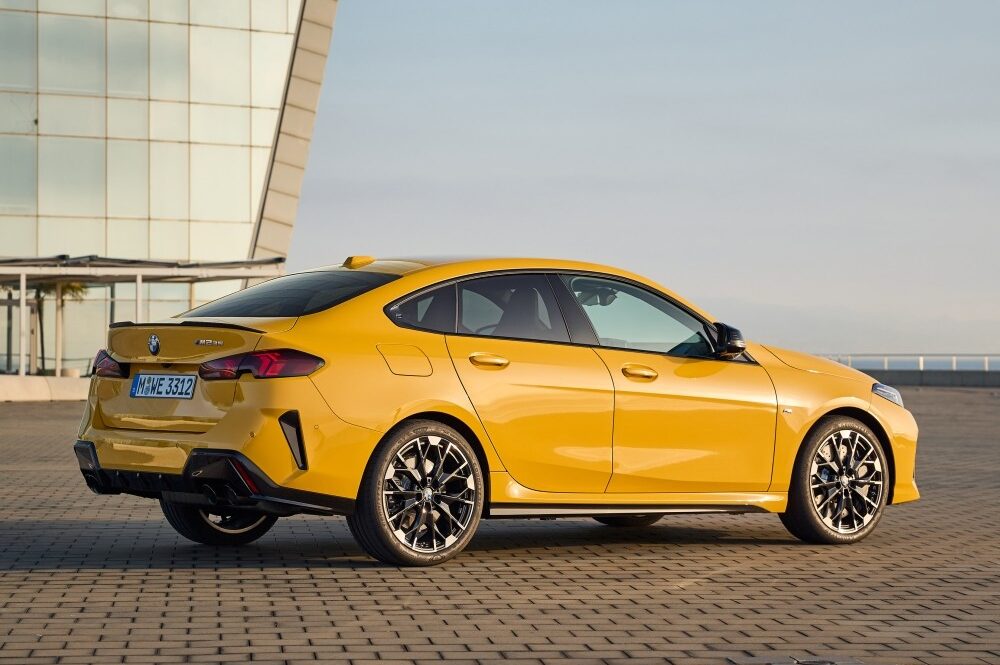
The BMW 2 Series Active Tourer suffers from a structural quality issue in the crankshaft bearing. In many cases this problem leads to a complete engine replacement. BMW officially acknowledged this defect in 2015 after several cases of premature engine failure, even at relatively low mileage. Owners and potential buyers need to be aware of the risks and symptoms. That helps prevent major repair costs.
A recognised design defect with major consequences
In 2015 BMW acknowledged a problem with the original crankshaft bearings in the BMW 2 Series Active Tourer. The bearings did not have sufficient wear resistance. The problem came to light after an endurance test by the German trade magazine Autobild. The engine failed due to crankshaft bearing failure after just 36,311 kilometres. The mechanic had to replace the entire engine. This is far earlier than you would normally expect from a modern engine.
The problem occurs mainly in three-cylinder petrol models, in particular the 218i Active Tourer with the 1.5-litre turbocharged petrol engine. The engine has a powerful turbocharger that provides extra power. This intensive boosting places a disproportionately heavy load on the crankshaft bearings. The engine has three cylinders instead of the usual four or six. The higher pressure and combustion in such an engine place a heavy load on the bearing shells. After acknowledging the issue, BMW made design changes, but even revised engines did not prove completely reliable.
Can you recognise a crankshaft bearing defect from these symptoms?
The warning signs of crankshaft bearing wear are often subtle. They can remain unnoticed for a long time. Owners need to be alert to specific signals that point to emerging problems. Early detection prevents more serious damage.
The most common symptoms are:
- Rattling or tapping noises when starting, especially with a cold engine
- Warnings in the diagnostic menu with messages such as “Bitte Werkstatt aufsuchen”
- Sudden engine faults that disappear after restarting. They return later.
- Loss of power and abnormal engine behaviour
- Complete engine seizure without any clear prior warning in severe cases
The problem is that these symptoms often appear gradually. The first signals are intermittent. They seem to disappear after restarting the engine. Many owners therefore ignore these signals. This makes early diagnosis difficult but all the more important.
Why is an engine replacement often the only solution?
When the crankshaft bearing fails, replacing the engine is often preferable to replacing only the bearings. This is due to the secondary damage that occurs as soon as the bearing gives way. Metal shavings spread through the entire engine system. They damage components such as the turbocharger, oil pump, injectors and timing chain.
This chain reaction of wear means that a simple bearing replacement is not a durable solution. Some owners reported repeated failures after just 70 kilometres when only the bearings had been replaced. The cost of a full engine replacement is high, but it offers more assurance of long-term reliability than a partial repair.
With an engine replacement you will often receive a reconditioned engine which in principle has improved bearing shells. Even so, vigilance remains necessary, as revised engines are not completely immune to the problem.
Which production years are most at risk?
The BMW 2 Series Active Tourer models are not all subject to the same level of risk. Some vehicles were produced before 2015. These have the highest chance of crankshaft bearing failure. This concerns the first-generation engines with the original bearing shells that caused the issue.
Models produced from 2015 onwards have improved bearing shells. The manufacturer used a stronger material composition and adjusted tolerances. These changes reduce the risk but do not completely rule out problems. The endurance test showed that even replacement engines with the improved components could still suffer failures.
Models from 2017 onwards are considered safer. By then the production changes had been implemented more extensively and quality controls had been tightened. Even so, when buying a used Active Tourer it is still advisable to request the full service history and to ask specifically about any engine problems.
‘ Premium synthetic engine oil with the correct viscosity significantly reduces wear. ’
Prevention starts with proper oil maintenance
Although the crankshaft bearing problem is a design defect, owners can limit the risks through careful maintenance. Regular engine oil changes play a central role here. Premium synthetic engine oil with the correct viscosity significantly reduces wear.
Change the oil every 15,000 to 20,000 kilometres. The standard recommendation is between 20,000 and 30,000 kilometres. So increase the frequency. Regular oil changes keep the lubrication system cleaner. In addition, this reduces the load on the crankshaft bearings. This is especially important for models with higher mileage.
Adjust your driving style to reduce wear
Your driving style affects the service life of the crankshaft bearings. Avoid prolonged or intensive loads in the first 50,000 kilometres. Allow the engine to reach operating temperature before you use full throttle. A cold engine under high load accelerates bearing wear.
Short journeys are also harmful. On short trips the engine never reaches its optimal operating temperature. At low temperatures, lubrication is less effective. In addition, more condensation forms in the engine oil. This accelerates the degradation of both the oil and the bearings.
Regular inspection prevents nasty surprises
Have the engine periodically checked for faults using diagnostics. Do this even if there are no visible symptoms. Modern BMW systems store fault codes. These codes point to emerging problems with the engine management or lubrication system. These codes are often already present before you notice any symptoms.
Regularly check for unusual noises or vibrations, especially during start-up. An abnormal noise can be the first sign of bearing wear. Also keep an eye on warnings from the engine control unit and take them seriously, even if they seem temporary.
‘ A pre-purchase inspection by a specialist is strongly recommended. ’
What should you know when buying a used Active Tourer?
Are you considering buying a used BMW 2 Series Active Tourer? Then there are a few important points to bear in mind. Preferably avoid petrol models from 2015 or earlier. However, do check whether the engine has already been replaced; in that case an older model can be worth considering. Diesel models such as the 218d have been more stable. They do, however, have their own issues with the timing chain system and the turbocharger.
Always ask for the full service history. Specifically ask about engine problems or warning messages. A pre-purchase inspection by a specialist is strongly recommended. Have the mechanic check for engine noises and diagnostic fault codes. It is also important to check for signs of previous engine work.
Allow for a financial buffer to cover a possible engine replacement. This applies especially to models with higher mileage. These costs can run to several thousand euros, depending on the age of the vehicle and the availability of reconditioned engines.
Additional parts that deserve attention
In addition to the crankshaft bearing, there are other components in the BMW 2 Series Active Tourer that you can replace preventively. German owners regularly carry out preventive replacements. They replace, for example, the chain that drives the engine (timing chain), the water pump, injectors, intake manifold and crankcase ventilation. These parts can indirectly contribute to the load on the crankshaft bearings.
A failed water pump can lead to overheating. This affects the viscosity of the engine oil. A worn timing chain (the chain that drives the engine) causes additional vibrations in the engine block. These secondary factors increase wear. The crankshaft bearings are already vulnerable and therefore wear out faster.
Discover more about car problems on Carnews
The BMW 2 Series Active Tourer remains a practical family car. However, the car does require proactive maintenance and vigilance. The crankshaft bearing problem is serious but manageable with the right knowledge and preventive measures. Regular checks and careful maintenance can help you avoid expensive repairs.
On the Carnews website you will find a great deal more information. There you can discover the most common problems with various car makes and models. Find practical tips, maintenance advice and experiences from other owners. Stay informed and avoid unpleasant surprises with your car.
Frequently asked questions
Possible symptoms of crankshaft bearing wear on a BMW 2 Series Active Tourer include rattling or tapping noises when starting, especially with a cold engine, and noticeable loss of power or irregular engine behaviour. In addition, error messages may appear such as “Bitte Werkstatt aufsuchen” or other engine fault warnings that sometimes disappear temporarily after a restart. In severe cases the engine can suddenly seize or lock up without any clear prior warning.
The specific causes of crankshaft bearing wear on the BMW 2 Series Active Tourer (particularly the 218i three-cylinder) lie mainly in an inherently undersized bearing design in combination with high load and thermal stress on the small turbocharged engine. Accelerated wear arises in particular with long oil change intervals, full throttle on a cold engine, many short trips and insufficient warm-up time. You can mainly prevent this by changing the oil more frequently than the factory schedule (approx. every 10,000–15,000 km), using only high-quality fully synthetic oil of the correct specification and always allowing the engine to warm up gently before higher loads. In addition, it helps to have the engine regularly checked for unusual noises and to have fault codes read as a preventive measure, so that early damage is detected at an early stage.
Yes, crankshaft bearing wear is regarded as a common and structural problem particularly on the three-cylinder petrol versions (218i) of the BMW 2 Series Active Tourer. BMW itself acknowledged this in 2015 and subsequently implemented design changes, which indicates that it is not a matter of isolated cases. The main cause lies in the heavily loaded, high-output 1.5-litre three-cylinder, for which the bearings proved insufficiently durable. Tests (such as the Autobild endurance test) and real-world experience show that this can lead to serious engine damage and sometimes a complete engine replacement at relatively low mileage.
If crankshaft bearing wear is not dealt with in time, severe engine wear can occur, which may eventually result in complete engine seizure. This often leads to secondary damage because metal particles spread through the lubrication system and damage components such as the turbocharger, oil pump and injectors. In many cases a complete engine replacement is then the only economically viable repair option. As a result, repair costs can rise very sharply and the car may be temporarily or even permanently unusable.
In practice, possible repair options for crankshaft bearing wear in a BMW 2 Series Active Tourer usually do not consist of a simple bearing overhaul, but of a complete engine replacement (exchange engine), because metal particles often end up in the turbo, oil pump and injection system. A full overhaul of the existing engine with cleaning of all oil channels and replacement of bearings, crankshaft and possibly turbo is less common, but is technically possible. For a used or exchange engine including removal and refitting, fluids and software adjustment, you should roughly allow for €4,000–€8,000 at independent specialists, and often €7,000–€10,000 or more at a BMW dealer. A complete engine overhaul with all necessary parts and labour generally falls within a similar range of around €4,000–€8,000, depending on the extent of the damage and the workshop hourly rate.