
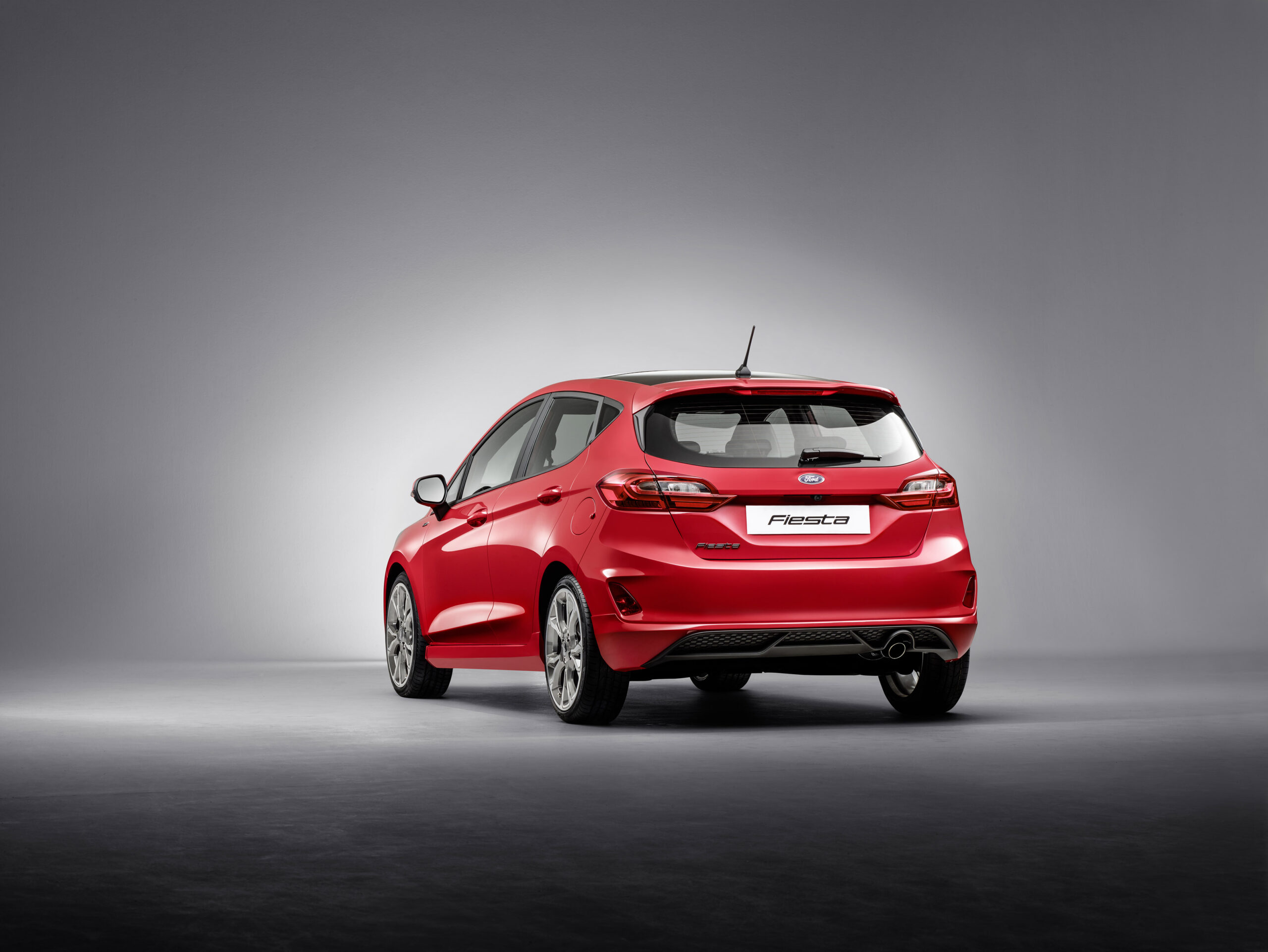
Warning lights on the dashboard and sensor faults often go hand in hand in modern cars. The engine management light is on for many Ford Fiesta owners because of problems with the second lambda sensor. Faulty camshaft sensors cause the engine to run unevenly. They also lead to loss of performance. These sensor faults are often quite easy to fix, provided you know what to look out for.
Dashboard warning lights give you immediate insight into the condition of your car. When you start the engine, they light up briefly as a check. If they stay on or start flashing while driving, this points to a potential problem with sensors or systems. Certain sensor faults occur regularly, especially in the Ford Fiesta.
The colour of the light determines the urgency. Red lights require immediate action, amber lights call for a prompt check, and green or blue lights only indicate that a system is active. Sensor faults usually show up as amber warnings, with the engine management light being the best known.
What the engine management light on your dashboard means
The engine management light is an amber warning that indicates the engine or emissions control system has detected an irregularity. This light comes on when there are sensor faults in the fuel system or the emissions control system. The cause can range from a loose fuel cap to a faulty lambda sensor.
In the Ford Fiesta, the second lambda sensor regularly causes problems. This sensor measures the remaining oxygen in the exhaust gases after the catalytic converter. The first lambda sensor is located before the catalytic converter and controls the fuel mixture, while the second sensor checks whether the catalytic converter is working properly. A faulty second lambda sensor leads to increased fuel consumption and the engine management light illuminating.
Do not ignore this light. Continuing to drive with the engine management light on can damage the catalytic converter, which leads to significantly more expensive repairs. Have the fault code read at a garage or with an OBD scanner within 100 kilometres.
Common sensor faults and their consequences
In addition to lambda sensors, there are several other sensors that can cause faults. Camshaft sensors register the position of the camshaft so the engine knows when valves open and close. A faulty camshaft sensor causes the engine to run unevenly, starting problems and loss of performance.
The main sensor faults you may encounter are:
- Lambda sensor fault: increased fuel consumption, engine management light on, uneven engine running
- Camshaft sensor fault: starting problems, irregular idling speed, vibration when accelerating
- Tyre pressure sensor: amber light on, warning remains after inflating, usually due to a frozen or damaged sensor
- Faulty mass airflow sensor: poor throttle response, black soot from the exhaust, increased fuel consumption
- Crankshaft sensor fault: engine will not start or cuts out while driving
Sensor faults often occur during cold starts and can disappear once the engine has warmed up. This indicates a sensor that no longer functions optimally across the full temperature range. Acting early prevents temporary faults from causing permanent damage.

The difference between the first and second lambda sensor
Modern cars have two lambda sensors in the exhaust system. The first lambda sensor is located before the catalytic converter and sends continuous signals to the engine control unit about the amount of oxygen in the exhaust gases. On this basis the computer adjusts the fuel/air ratio for optimum combustion.
The second lambda sensor is located after the catalytic converter. This sensor checks whether the catalytic converter is working properly by measuring the remaining oxygen. When the catalytic converter is effective, the oxygen value after the catalytic converter clearly differs from the value before it. A faulty second lambda sensor does not immediately lead to poor driveability. However, the engine management light will come on and emissions may increase.
The first lambda sensor has a direct impact on engine performance. A fault in this sensor results in an incorrect fuel mixture. This causes poor idling, jerky acceleration and increased fuel consumption. The second lambda sensor mainly affects emissions control and fuel consumption in the longer term.
How to repair a faulty lambda sensor
You repair a faulty lambda sensor by replacing it with a new one. Cleaning or repairing it is not possible. The sensor becomes internally damaged due to wear and contamination. Most lambda sensors are screwed into the exhaust system with a thread and are relatively easy to replace.
To replace it, you need:
- A new lambda sensor suitable for your car
- A special lambda sensor socket or an open-ended spanner of the correct size
- Penetrating oil if the sensor is stuck
- An OBD scanner to clear fault codes after replacement
First let the engine warm up. Then replace the sensor. This loosens the thread and reduces the risk of damaging the exhaust system. Disconnect the electrical connector and unscrew the old sensor. Lightly grease the thread of the new sensor with copper grease and tighten it by hand. Connect the connector and clear the fault code with a scanner.
Many car owners have this job done by a garage. Labour costs are usually between 50 and 100 euros, depending on how easy the sensor is to reach. In the Ford Fiesta the second lambda sensor is easy to access, which makes the repair relatively straightforward.
‘ Incorrect sensors generate error messages or do not function properly. ’
How much does a lambda sensor cost
The price of a lambda sensor varies greatly by car make and type of sensor. For a Ford Fiesta you pay between 40 and 120 euros for a new second lambda sensor. Original sensors from the car manufacturer are more expensive than aftermarket brands, but often come with a longer warranty.
The first lambda sensor is usually more expensive than the second. This sensor performs more complex measurements and needs replacing more often. For a first lambda sensor, expect prices between 80 and 200 euros. Universal lambda sensors are cheaper. They sometimes require modifications to the wiring.
When buying, you should check compatibility with your engine type and year of manufacture. Incorrect sensors generate error messages or do not function properly. Always check the part number in the owner’s manual or have a garage order the correct part. Cheap sensors from unknown brands have a shorter lifespan. They sometimes lead to new fault codes.
Practical tips to prevent sensor faults
Regular servicing significantly reduces the likelihood of sensor faults. Use quality oil and replace filters according to the manufacturer’s service schedule. Contaminated oil and air filters put extra strain on sensors, leading to earlier wear.
Check the oil level, coolant level and tyre pressure every week. Low fluid levels or incorrect tyre pressure trigger warning lights and can put sensors under strain. Take photos of any warning lights that come on so you can show them to the garage for a quicker diagnosis.
Invest in a cheap OBD scanner for home use. These devices cost between 20 and 50 euros and let you read fault codes without having to go straight to the garage. This helps you assess whether a problem is urgent or can wait until the next service. Only reset fault codes after fixing the problem. If you do this earlier, you are masking a real fault.
Avoid short journeys. During short trips the engine does not reach operating temperature. Sensors work best at normal operating temperature. Frequent cold starts increase wear on lambda sensors and other temperature-sensitive sensors. Where possible, plan longer journeys so that systems can function properly.
When you should go to the garage for dashboard warning lights
Red lights require immediate action. Stop safely and switch off the engine if there are red warnings for oil pressure, brakes, power steering or temperature. Continuing to drive with red lights on often leads to serious engine damage or unsafe situations.
For amber lights, drive to a garage within 100 kilometres. An illuminated engine management light or ABS warning does not mean you have to stop immediately, but delaying increases the risk of consequential damage. Make an appointment at the garage for diagnosis and repair.
Flashing lights take priority over steady lights. A flashing engine management light indicates a serious ignition fault that can damage the catalytic converter. Reduce your speed immediately and drive gently to the nearest garage. A flashing ABS light means the system is not functioning, which affects braking performance during emergency stops.
Temporary warnings sometimes disappear after a restart. This can point to loose cables or a sensor that has briefly dropped out. If the light keeps coming back after several starts, still have the fault code read. Intermittent faults are often a sign that a sensor is about to fail.
On the Carnews website you will find extensive information about specific car problems, maintenance tips and experiences with different models. Discover more about dashboard warning lights, sensor faults and practical solutions for common car problems.
Frequently asked questions
Red dashboard lights indicate immediate or serious faults (such as oil pressure, battery, airbag, overheating); in these cases you should pull over safely as soon as possible and switch off the engine. Amber/yellow lights indicate faults or irregularities where you can usually keep driving for a short while, but the system must be checked or read out soon (such as tyre pressure, engine fault, ABS, emissions). Green and blue lights are usually just indicator lights for activated functions, such as lights or cruise control, and do not require any action. The immediate urgency therefore ranges from stopping immediately for red, through having the car checked promptly for amber, to no immediate action for green/blue.
You can only safely continue driving (for a short distance) if an amber/yellow warning is on and the car drives normally; in that case have it read out as soon as possible. With a red light you must stop as quickly and safely as possible, because this often points to serious problems such as oil pressure, cooling or battery faults. If you keep driving with a warning light or sensor fault illuminated, you risk additional engine damage, overheating, accelerated wear or failure of safety systems such as ABS or power steering. Always have the system read out using OBD diagnostics or at a garage to determine the exact cause and risks.
You can first read many common sensor faults using a simple OBD2 Bluetooth or Wi‑Fi reader in combination with an app on your phone, so that you can see fault codes and live data. Also check basic things yourself that often trigger a light: tyre pressure, oil level, coolant level and battery terminals (corrosion or loose clamps). Take a photo of the illuminated dashboard light and note when it appears (cold/warm, rain, speed); this helps when interpreting the fault and at the garage. The minimum tools you need are a tyre pressure gauge, an OBD2 reader, basic hand tools (spanners, screwdrivers) and possibly a multimeter to measure battery voltage.
Typical repair costs for sensor faults (such as tyre pressure sensors, lambda sensors or other engine management sensors) are often between roughly €100 and €400, depending on diagnosis, labour time and the price of the sensor. Solutions range from a simple reset (setting tyre pressures and resetting the system, clearing fault codes) to replacing the relevant sensor, cables or, for example, the alternator or ignition coil. Preventively, it helps to stick to service intervals, use quality oil and filters, check fluids and tyre pressure weekly, and have an OBD scan carried out periodically. Making regular longer trips (for the particulate filter), keeping battery cables and connectors clean and tight, and not driving too long with amber engine lights all help to limit consequential damage and costs.