
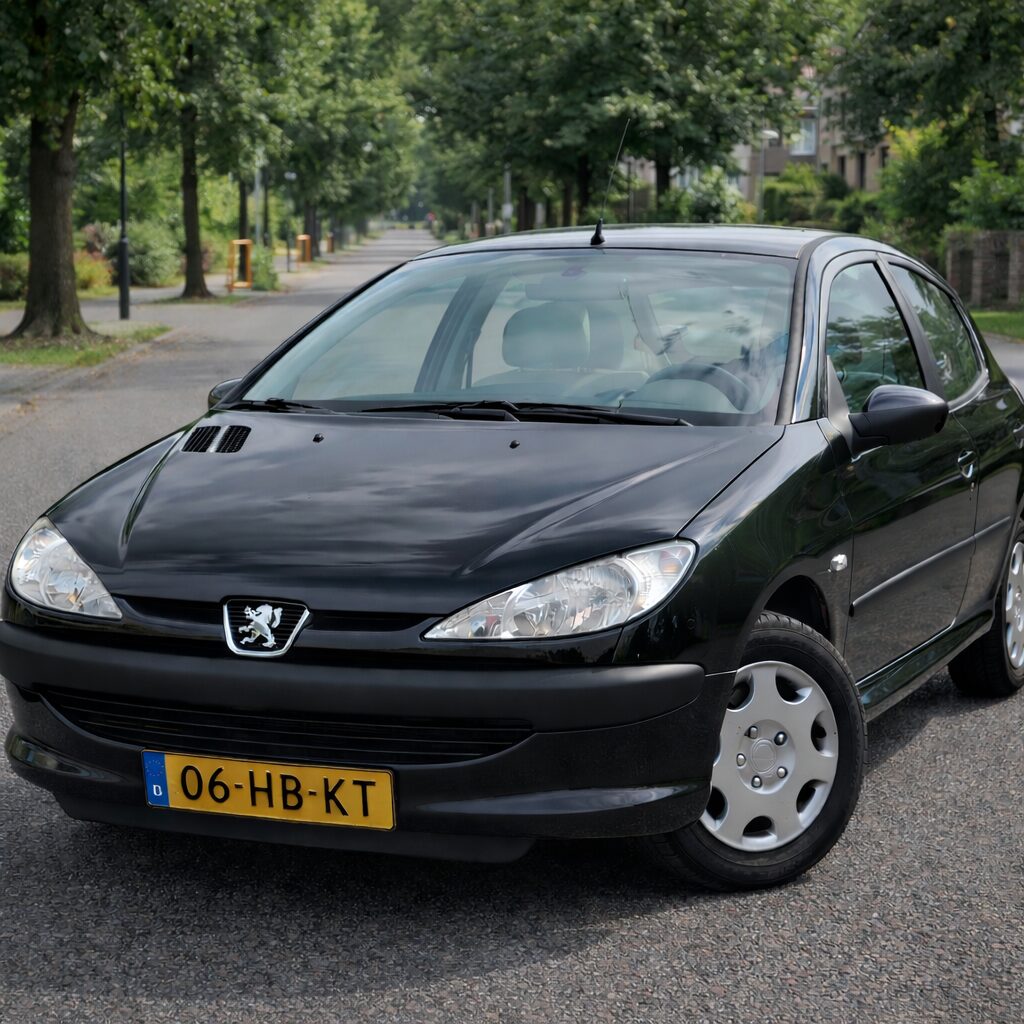
The Peugeot 206 regularly suffers from electrical faults and persistent dashboard errors caused by defective sensors, a failing central relay box or a glitching engine control unit. These problems lead to warning lights staying on, loss of power and starting issues that you should not ignore. In this article you’ll find the most common causes and practical solutions.
Electrical problems in the Peugeot 206 are a well-known phenomenon among owners. Older models in particular from the period 1998–2010 are confronted with faults ranging from annoying warning lights to complete engine shutdown. The Peugeot 206 has sensitive electronics which, due to wear, temperature fluctuations and loose connections, often show intermittent symptoms.
Why is the engine management light on in the Peugeot 206?
The engine management light often comes on due to a defective accelerator pedal sensor or a problem with the throttle body. The P0120 fault code indicates a malfunction in the throttle position sensor. This leads to rough idling, suddenly high revs or even the engine cutting out completely while driving.
These symptoms often get worse in warm weather. The temperature in the engine bay affects the electronics and can cause temporary faults that disappear again once things cool down. This makes diagnosis difficult, because the fault is not always visible during a workshop inspection.
The causes are varied:
- Dirty or defective accelerator pedal sensor sending incorrect signals to the engine control unit
- Worn throttle body with a broken stepper motor
- Loose or corroding plugs in the wiring
- Faults in the engine control unit (ECU) itself
Replace the accelerator pedal sensor with an original part including matching connector. This prevents connection problems that frequently occur with cheap alternatives. Also clean the throttle body thoroughly and check whether the stepper motor is still working properly.
‘ Red warning lights mean you must stop immediately. ’
Dashboard errors in the Peugeot 206: common causes
Dashboard errors in the Peugeot 206 are caused by defective sensors, wiring problems or faults in the central computer. Yellow or orange warning lights point to non-urgent issues that you can still drive with, such as sensor faults or EPC errors in the electronic throttle control. Red warning lights mean you must stop immediately.
A common problem is that after work on the car, such as a clutch replacement, several warning lights suddenly come on at the same time. This is often due to damaged wiring during the repair. Always check the wires around the work area, especially connections 1379 and 1380, which are prone to damage.
Incorrect tachometer readings also occur. The speedometer or rev counter then displays incorrect values. This points to a fault in the sensor connection or in the instrument cluster itself. After repair, the tachometer must be recalibrated for accurate readings.
Temperature gauge problems are another symptom. The temperature gauge jumps straight to the maximum value as soon as you turn the ignition key. This indicates a fault in the coolant temperature sensor or in the wiring between the sensor and the dashboard.

Central relay box Peugeot 206: when to replace?
The central relay box under the dashboard regularly fails and causes strange faults. Symptoms include random failure of the central locking, defective heating systems or suddenly failing electrical functions without an obvious reason. The relay box regulates the power supply to various components and fails due to wear or moisture damage.
Replacing the central relay box costs between 150 and 300 euros including labour, depending on the workshop. The part itself costs around 80 to 150 euros. The relay box is located under the dashboard on the driver’s side and is relatively accessible for a professional.
Before you replace the relay box, first check the fuses and relays individually. Sometimes the problem is solved by replacing a single defective relay instead of the whole box. Also measure the voltage to the different circuits to determine exactly where the fault lies.
Fix electrical faults yourself or go to the garage?
You can tackle simple electrical faults yourself if you have basic knowledge of automotive electrics. Start with the most common causes:
- Check all plugs in the engine bay for loose connections or corrosion
- Clean the battery terminals and make sure all earth connections are firmly secured
- Check the charging circuit by inspecting the alternator V-belt for wear
- Reset warning lights after checking tyre pressure and oil level
A weak 12V battery often causes faults in the electronics. Measure the battery voltage with a multimeter. It should be between 12.4 and 12.7 volts with the engine switched off. At lower values you need to charge or replace the battery.
For more complex faults you need specialist equipment. A Peugeot-specific scanner can read fault codes that a generic OBD scanner does not recognise. Garages with brand-specific equipment can look more deeply into the engine control unit and trace hidden faults.
If the EPC light (accelerator pedal fault) comes on, you must slow down immediately and park safely. This light indicates a problem in the electronic throttle control, which can cause you to lose control over the power output. Do not continue driving and call for assistance.
‘ A bad earth point can cause faults in several systems at the same time. ’
Earth connections and wiring problems
Earth connections are a very common cause of electrical faults in the Peugeot 206. The earth points are spread throughout the car and can make poor contact due to corrosion or loosening. This leads to intermittent faults that are difficult to trace.
Check the main earth points on the engine block side and near the battery. Clean these contact points with sandpaper and make sure the bolts are tightened properly. A bad earth point can cause faults in several systems at once.
Wiring looms in the engine bay are sensitive to heat. Cables can become brittle and the insulation can crack. Visually inspect the wiring for damage, especially around hot components such as the exhaust manifold. Replace damaged sections in good time to prevent short circuits.

Preventive maintenance for electrical systems
Regular inspection of the electronics prevents many problems. Each year, check all plugs and cables in the engine bay for corrosion and damage. Pay extra attention to older models from before 2005, which are more prone to electrical faults.
When replacing parts, always use original Peugeot components or quality brands. Cheap sensors and relays from unknown brands often cause new faults due to incorrect specifications or poor connector fit.
With starting problems or frequently recurring faults, it may be necessary to replace the engine control unit. This is an expensive job costing 400 to 800 euros including programming. First have a specialist determine whether the ECU is really defective before you replace it.
On the Carnews website you’ll find extensive information about other common problems with the Peugeot 206, from mechanical faults to maintenance tips. Discover more articles about car problems and practical solutions that help you keep your car in top condition.
Frequently asked questions
Common electrical faults in a Peugeot 206 include warning lights coming on spontaneously (especially yellow/orange ones) due to sensor or wiring problems, which manifest as fault codes, rough running or loss of power. Dashboard errors show up, among other things, as a temperature needle that jumps up immediately when starting, incorrect rev or speed readings, and an EPC or engine management light illuminating. Starting problems also occur (sometimes no starting at all) after clutch or other engine bay repairs, caused by damaged or loose wiring. In addition, faults in the central locking, heating and other comfort electronics are typical symptoms, often appearing intermittently depending on temperature and vibration.
Start with a visual check: battery and terminals clean and tight, fuses checked, and all visible plugs/earth connections in the engine bay and at the ECU inspected for corrosion or loose connections. Then read the fault codes with a simple OBD2 dongle and app or (preferably) a Peugeot-compatible diagnostic tester, and note down the codes and conditions (cold/warm, in rain, under acceleration). Only clear the fault codes after you have tackled the cause (for example, by further inspecting a suspect sensor or wiring loom, cleaning connectors and clicking them firmly into place). Tools needed: basic set of spanners/sockets, screwdrivers, multimeter, brake cleaner or contact spray, OBD2 scanner and optionally a torch/mirror to properly view the wiring.
Typical causes include defective or contaminated sensors (such as the throttle body/accelerator pedal sensor), poor earth connections and damaged or poorly connected wiring, especially after previous repairs. A weak battery or charging problem can also cause intermittent faults. Effective solutions are: cleaning and securing all relevant plugs and earth points, repairing damaged cables, replacing the defective sensor or throttle body (preferably with an original part) and checking the charging system/battery. After repair, fault codes must be read and cleared and a test drive made with the engine fully warmed up.
Yes, by regularly checking and cleaning all earth connections and plug connections in the engine bay and near the battery, you significantly reduce the risk of faults. Keep the battery in good condition (sufficient charging voltage, clean and firmly attached terminals) to prevent voltage dips and strange dashboard errors. For stubborn fault codes, have sensors and the throttle body professionally checked and replace suspect, ageing components preferably with original parts. After major repairs (such as clutch replacement) always check that wiring has not been pinched or damaged.
The BSI module (Built-in Systems Interface) is the central electronic control unit that controls, among other things, lighting, windscreen wipers, central locking and various dashboard functions, and is therefore often at the root of inexplicable electrical faults in the Peugeot 206. Many faults resemble wiring or sensor problems, but ultimately turn out to run via or within the BSI. A simple “reset” can sometimes be performed by disconnecting and reconnecting the battery according to the official BSI protocol, but this usually does not permanently fix real internal BSI defects. Repairing the BSI yourself at circuit-board level is not recommended; in practice it is professionally refurbished or replaced and reprogrammed.