
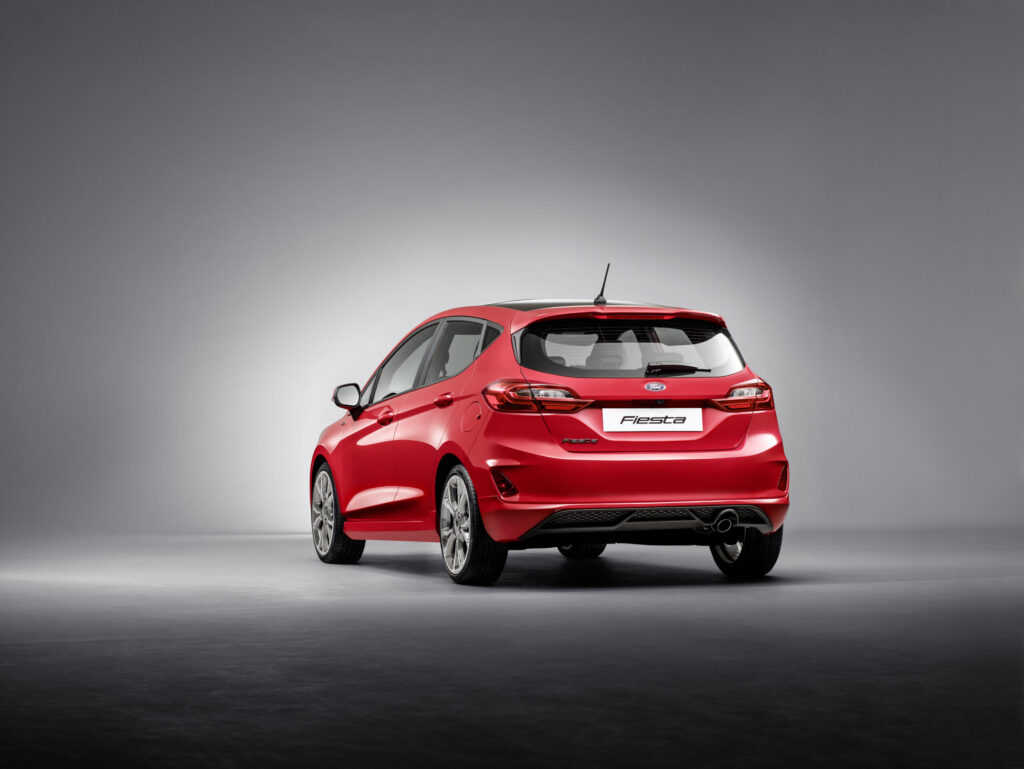
The Ford Fiesta regularly suffers from faults in the electric window and mirror controls, with door mirrors folding in by themselves, windows hesitating or failing completely, and contact problems in the tailgate disabling functions such as unlocking and the rear wiper. These complaints mainly stem from faulty switches, broken wires in the door and earth or power supply issues. Do you recognise these faults? Read on for concrete causes and practical solutions.
Owners of the Ford Fiesta regularly report electrical faults that affect the user experience. The window and mirror controls in particular turn out to be a weak spot. These problems often develop gradually, starting with intermittent complaints that can grow into complete failure of the function.
The cause usually lies in the electrical connections between door switches and motors. In the Fiesta these wiring looms run through the door hinges, where they are mechanically stressed by repeated opening and closing. Over time wires can break or make poor contact, which explains why some functions sometimes work and sometimes do not.
Why do door mirrors fold in by themselves?
On many Fiesta versions, folding door mirrors are electrically adjustable and can automatically fold in and out. Some owners experience mirrors folding in for no apparent reason or refusing to fold out again after a stop. This behaviour is often caused by one of the following:
- Poor contact points in the mirror control switch
- Broken wire in the door gaiter, causing the signal to the mirror motor to fail
- Faulty mirror motor or gear mechanism in the mirror itself
- Earth or power supply fault affecting several functions in the door
On modern Fiestas, software can also play a role. Some versions fold mirrors automatically when locking or at low speed. This behaviour is linked to the selected driving mode. In that case, check the vehicle settings via the display or the owner’s manual.
How do you repair electric windows that do not work?
Sticking or failed electric windows are a common complaint with the Ford Fiesta. The problem presents itself in different ways. Some windows only work from the driver’s switch, others no longer respond at all or stop halfway.
Diagnosis starts with testing from both switches. If the window works from the driver’s switch but not from the switch in the passenger door, this usually points to a faulty switch in the passenger door itself. If the window does not respond to any switch, the cause is more likely to be the window mechanism, the motor or the power supply.
Common causes of window faults
- Check the door gaiter: move the wiring loom gently while someone operates the switch. If the window suddenly works briefly, there is a broken wire.
- Measure voltage and earth: when operating the switch, the polarity in the window circuit should reverse. Use a test lamp or multimeter to check this.
- Listen to the motor: if you hear a click or motor noise but the window does not move, the problem lies in the mechanism or the window guides.
- Clean or replace the switch: oxidation and dirt can cause intermittent operation. With recurring complaints, replacement is often quicker than cleaning.
Users report that on the Ford Fiesta the driver’s door and the door gaiter are critical points. Intermittent faults are usually a warning sign of a bigger contact problem. Targeted diagnosis by a specialist prevents unnecessary replacement of the complete window mechanism.
What can you do about contact problems in the tailgate?
In addition to problems with windows and mirrors, Fiesta owners also experience faults in the tailgate. Contacts in the tailgate can corrode, causing functions such as electric unlocking, the rear wiper and the heated rear window to stop working. This problem often arises due to moisture entering via the rubber gaiter between the body and the tailgate.
The symptoms are recognisable. The tailgate no longer responds to the remote control or the button in the interior. The rear wiper does not work or reacts slowly. The heated rear window no longer fully defrosts the glass. These complaints can occur separately or at the same time, depending on which contacts are affected.
The solution starts with checking the wiring in the tailgate. Open the tailgate and locate the rubber gaiter through which the wiring loom runs. Gently pull the rubber free and inspect the wires for corrosion, green deposits or broken cores. Corroded contacts can often be cleaned with contact spray and a small brush.
Preventive maintenance helps. Check the tailgate annually for moisture ingress and spray the contact points with contact spray or petroleum jelly. Make sure the rubber gaiter fits properly and shows no cracks. In cases of structural corrosion, replacing the wiring loom is often the most reliable solution.
Are door mirror faults a safety issue?
Folding mirrors that fold in by themselves while driving pose a direct safety risk. You suddenly lose visibility of traffic next to and behind you, which is dangerous for example when changing lane or joining the motorway. Mirrors that refuse to fold out before you set off force you to drive with limited visibility or to fold the mirrors out by hand.
Besides the direct danger to road safety, defective mirrors can also lead to an MOT failure. The inspector checks whether both door mirrors are present and adjustable. A mirror that does not fold out or does not lock properly in place can be a reason for rejection.
So do not try to solve mirror problems by forcing them in and out by hand. This can damage the gear mechanism in the mirror and make the problem worse. Have the cause diagnosed and repair the electrical connection, the switch or the mirror motor itself.
‘ This puts extra strain on the motor and guides and can lead to permanent damage. ’
Practical tips for maintenance and preventing faults
Regular use of windows and mirrors helps to keep the mechanism running smoothly. Even in periods when you rarely open the windows, it is wise to open and close them fully a few times each month. This prevents the mechanism from seizing up due to inactivity and dirt.
Avoid pressing hard on a window that is sticking. This puts extra strain on the motor and guides and can lead to permanent damage. If a window stops halfway, first investigate the cause before continuing to press the switch.
If there is repeated hesitation, have the wiring in the door checked early. Broken wires often start with intermittent faults that gradually get worse. Acting in time prevents several functions from failing and limits consequential damage to motors and switches.
If mirror control and window control fail at the same time, there is a good chance that the problem lies in the wiring or power supply rather than in individual motors. In that case, have the earth and power supply in the door switch circuit measured, as Ford switches the earth in the electrical circuit on some Fiesta versions.
Where can you find more information about Ford Fiesta faults?
Problems with window and mirror controls are not the only complaints that occur with the Ford Fiesta. On the Carnews website you will find extensive information about other common technical faults, maintenance tips and user experiences with different generations of this popular model. Discover more about car problems, preventive maintenance and practical solutions that save you time and money.
Frequently asked questions
What are the most common causes of “unreliable” window and mirror controls on the Ford Fiesta?
The most common causes are faulty window switches and broken wires in the wiring loom between door and body, causing windows and mirrors to respond intermittently or not at all. In addition, earth and power supply issues occur regularly, especially because the earth is switched in some window circuits. Sticking or heavy-running window mechanisms can also lead to unreliable operation. On newer versions, differences or faults in the one-touch function and calibration sometimes play a role.
Are there any well-known DIY solutions for problems with the “electric” window and mirror controls on a Ford Fiesta?
Yes, there are several DIY solutions that Ford Fiesta owners often try themselves. Common actions include cleaning or replacing the window switch and visually checking and (having a specialist) repair broken wires in the rubber gaiter between door and body. Owners also often check earth and power points, and gently move the wiring loom while someone operates the switch to trace a bad connection. For sticking windows the mechanism is sometimes lubricated or freed up.
What are the average costs for repairing “defective” window or mirror mechanisms on a Ford Fiesta, and what should I look out for in “quotes”?
The average costs for repairing defective window or mirror mechanisms on a Ford Fiesta are roughly between €150 and €400, depending on whether only a switch has to be replaced or also the motor/mechanism and wiring loom. Always ask for a breakdown of parts, labour hours and diagnostic costs in quotes so you can compare. Check whether the garage carries out targeted diagnosis (for example checking switches, earth and the wiring loom in the door) instead of immediately wanting to replace the complete mechanism. Finally, check whether used or aftermarket parts are offered as an option, which can significantly reduce the total cost.
Which specific “generations” or “model years” of the Ford Fiesta are most prone to problems with window and mirror controls?
Available sources do not clearly link these faults to specific generations or model years of the Ford Fiesta. It is mainly reported in general terms that various Fiestas – particularly the more modern ones with extensive electric controls – suffer from faults in window and mirror controls. The problems are more related to weak points such as switches, wiring looms in the door gaiter and earth/power points than to any one particular year of manufacture.
Are there any aftermarket parts or upgrades available that can improve the “reliability” of the window and mirror controls?
There are few aftermarket solutions that demonstrably improve reliability; most are replacement switches or wiring looms of similar quality to the original. However, a better-quality repair using high-grade cables and solid soldered or crimped joints in the door gaiter can reduce susceptibility to faults. It also helps, when replacing switches and mechanisms, to choose parts from reputable brands rather than the cheapest copies. Upgrades such as relay kits or completely redesigned window modules are hardly ever offered specifically for the Fiesta.
How can I prevent “future” problems with the “electric” window and mirror controls on my Ford Fiesta?
Use the electric windows and mirrors regularly and never force a sticking window, so that the motor and mechanism are not overloaded. At the first signs of hesitation or failure, have the switches and the wiring loom in the door gaiter checked for broken wires and poor earth or power connections. Make sure that guides and window rubbers are clean and lightly lubricated so that the window can move smoothly. If window and mirror controls both start playing up at the same time, immediately have the shared power supply and earth checked to prevent more serious consequential damage.