
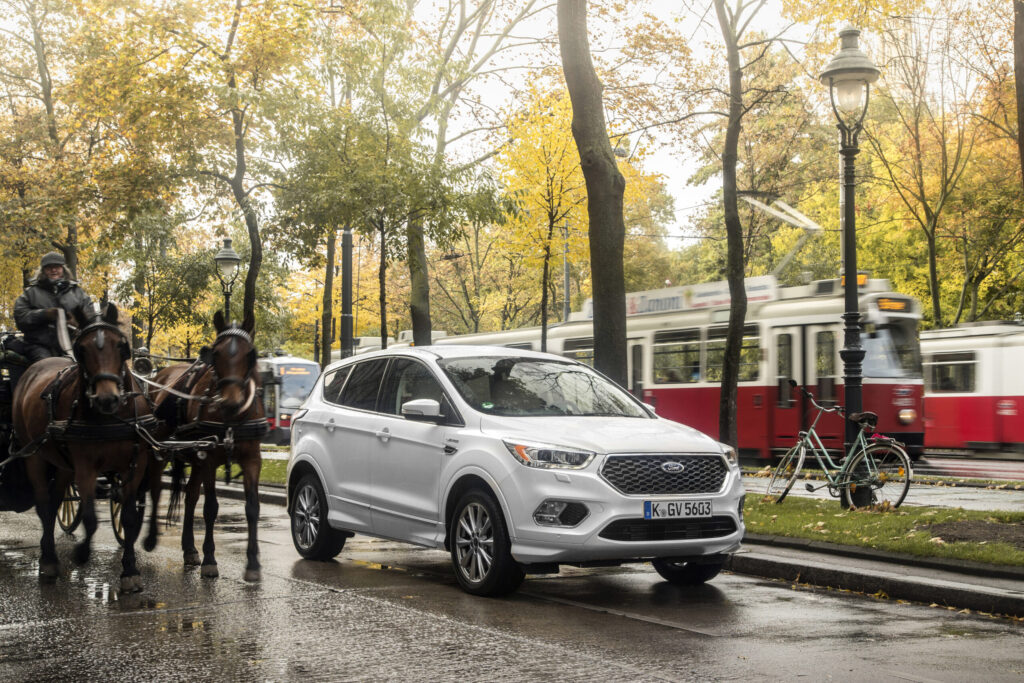
The Ford Kuga PHEV (plug-in hybrid electric vehicle) is struggling with serious problems in the high-voltage battery pack – the large traction battery for electric drive – which can lead to short circuits and a risk of fire. Ford therefore launched a major recall campaign with software updates, temporary driving restrictions and, in many cases, complete replacement of the battery pack. Are you the owner of a Kuga PHEV or are you considering buying one? Then it is useful to know exactly what was going on and which steps you need to take.
What went wrong with the Kuga PHEV battery?
With the Ford Kuga PHEV, Ford discovered a problem in the high-voltage battery that brought with it a risk of short circuit. This defect results in overheating and, in the worst case, causes a fire. Ford later identified contamination in the battery production process as the main cause. The battery packs were produced by Samsung, and that is where the production process went wrong.
The first recall applied to Kuga PHEVs built before 26 June 2020. Later, additional actions followed for vehicles that rolled off the production line between August 2019 and November 2023. This means that a large part of the first generation of plug-in hybrid Kugas was affected by the recall.
The problem lay in the battery cells themselves. Due to the contamination, there was an increased risk of internal short circuit, causing the battery to overheat. This type of defect is particularly troublesome in plug-in hybrids, because the high-voltage battery both enables electric driving and supplies a large part of the car’s power.
‘ That led to extra fuel costs and frustration for many drivers. ’
What measures did owners have to take?
Ford immediately gave affected owners a number of clear instructions. The most important advice was to temporarily use only the combustion engine and not to charge the car electrically until a solution had been installed. This meant you could keep driving as normal, but you temporarily lost all the advantages of the plug-in hybrid system.
At a later stage, a software update became available that was intended to detect irregularities in the battery more quickly. This update automatically stops the charging process or switches the car to the combustion engine as soon as the software detects a risk. For a number of vehicles, there was also a restriction whereby the high-voltage battery could not be charged beyond 80%.
These temporary measures were intended to reduce the risk while Ford worked on a permanent solution. For owners, however, this meant in practice that the electric driving range was reduced and that you had to refuel more often. That led to extra fuel costs and frustration for many drivers.

What solutions did Ford offer?
Ford ultimately chose a phased approach. Initially, the focus was on software updates and usage restrictions. For many early examples of the Kuga PHEV, however, this proved insufficient. Ford therefore decided to replace the entire battery pack in a large number of vehicles.
In addition to the technical solutions, Ford also offered financial compensation. Owners received an extended warranty on the drivetrain and compensation for the additional fuel costs they incurred due to not being able to use the electric drive. In the Netherlands, a compensation of 120 euros was mentioned. In addition, some owners received a fuel card or fuel reimbursement for the period during which they were unable to drive electrically.
The solution differed according to year of manufacture and production date. Some cars only received a software update, while others had a completely new battery pack installed. It is therefore important to check which measures have been carried out on your specific vehicle.
How can you tell if your Kuga PHEV is affected?
If you have a Ford Kuga PHEV or are considering buying one, the first thing you should do is check the recall status. You can do this via the dealer or by looking up your VIN in Ford’s system. Also check whether any software updates have actually been carried out and whether measures have been recorded in the system.
Also watch out for signs that may point to battery problems. Warning lights related to the high-voltage battery, problems with the charging process or unexpected switches between electric driving and the petrol engine can all be relevant. In practice, these symptoms were often a reason for further diagnosis at the dealer.
User experiences also show that some Kuga PHEV drivers reported problems with the starter battery. This may be related to the interaction between the large traction battery – the drive battery for the electric motor – and the car’s charging system. If you recognise this sign, it is sensible to have this checked as well during a service.
Tips for anyone buying a used Kuga PHEV
Are you thinking of buying a used Ford Kuga PHEV? Then do your homework thoroughly. First check the year of manufacture and production date of the car. Explicitly ask the seller whether the car is subject to a recall and which measures have been carried out.
The history of this PHEV consists of several steps: an initial warning, software updates, restrictions on the charging function and, in some cases, complete battery replacement. It makes quite a difference whether a car has only had a software update or a completely new battery pack. So ask specifically about this and have it confirmed in writing if possible.
During a test drive, also do your best to check whether the transition between electric driving and petrol use is smooth. Watch out for any warning lights on the dashboard and ask whether the battery charges and discharges normally. All of these are signals that may point to residual problems or measures that have not been fully implemented.
Practical action points for buyers
- Check the VIN with Ford to establish the recall status
- Ask the seller for documentation of repairs or updates carried out
- Check whether the battery has been replaced or only updated via software
- Test during the test drive whether the charging system and electric drive are working properly
- If in doubt, have a pre-purchase inspection carried out by a specialist garage

What can owners still expect now?
For owners of a Ford Kuga PHEV who have already been covered by the recall, it is important to keep track of Ford’s communications. Keep all correspondence, invoices and service reports. These documents may be needed for warranty claims, compensation requests or any follow-up actions.
If your car is still subject to an active recall, contact your dealer as soon as possible. Make an appointment to have the necessary measures carried out. In the meantime, continue to follow Ford’s instructions for use, even if they are restrictive for everyday use.
Some owners reported that communication about the successive recall rounds was not always clear. If you find things unclear, proactively contact Ford Netherlands customer service. Ask for clarification about which measures apply to your specific car and what the schedule is for any repairs or replacements.
What does this problem tell us about plug-in hybrids?
The Kuga PHEV issue shows how a production fault in battery cells can have major consequences for the safety and daily usability of a plug-in hybrid. It also demonstrates how important the supply chain is in modern electric and hybrid vehicles. A problem at a single supplier can affect large numbers of cars and lead to complex recalls.
What stands out is that Ford initially invested heavily in software-based risk management before full battery replacement followed for part of the vehicles. This is an approach that is increasingly common in modern cars with complex electronics and battery technology. Software can help to detect and limit risks, but in the case of fundamental hardware problems, physical replacement often remains the only real solution.
For car enthusiasts interested in plug-in hybrids, it is worth realising that this technology is still relatively young and that teething problems can occur. That makes it all the more important, when buying, to pay close attention to warranties, recalls and the reliability history of a specific model.
On the Carnews website you will find more information about common problems with various car makes and models. Discover useful tips about maintenance, buying used cars and the latest developments in car technology. Stay informed and make well-considered choices when buying your next car.
Frequently asked questions
The most common hybrid battery problems with the Ford Kuga PHEV are linked to a manufacturing fault in the high-voltage battery, which could lead to a risk of short circuit and even fire. This resulted in recalls, in which Ford rolled out software updates, temporarily limited the maximum charging level and, in many cases, replaced the entire battery pack. In practice, users also reported problems with charging, warnings from the battery management system and, in some cases, a flat 12V starter battery due to its interaction with the hybrid battery. Owners often had to avoid (fully) charging or drive on the petrol engine only until the final solution had been implemented.
Early signs include warnings or error messages about the hybrid or high-voltage battery system on the dashboard, a Kuga that will not charge or only charges to a limited level (for example to ~80%), or stops charging part-way through. Also noticeable are a heavily reduced electric range, the petrol engine cutting in more frequently and earlier, and unexpected switches between electric and petrol driving. In some cases, the car switches completely to the petrol engine and refuses to go into EV mode. If you notice these kinds of signs, it is important to have the dealer immediately check whether there are any outstanding recalls or software updates for the battery pack.
Important factors include a manufacturing defect in the battery cells (contamination during the production process) that can lead to internal short circuit and therefore degradation or failure. In addition, software and battery management play a role: incorrect or older software may detect irregularities less effectively and put more strain on the battery. High charge and discharge currents, repeatedly charging (rapidly) to a high state of charge and high operating temperatures also accelerate wear of the hybrid battery. Finally, external factors such as consistently incorrect usage (for example always running the battery empty and then immediately charging it to 100%) and failing to carry out recalls/updates can contribute to faults.
The costs for repair or replacement of the hybrid battery in a Ford Kuga PHEV vary widely and depend on year of manufacture, warranty and any recalls. For cars that fall under the official recall or extended battery warranty, diagnosis and battery replacement are usually fully covered by Ford/the dealer. Outside warranty, a completely new high-voltage battery pack can roughly amount to many thousands of euros, but exact amounts differ per dealer and country. Always have an official diagnosis carried out first and ask for a detailed quotation.
The hybrid high-voltage battery of the Ford Kuga PHEV is covered by an extended warranty that Ford increased in response to the battery problems and recalls affecting early model years. This warranty is linked to the official recall and remedial actions (such as software updates and, where applicable, battery replacement) that must have been carried out via a Ford dealer. The exact duration and coverage can vary according to year of manufacture, country and work carried out, and are confirmed by the dealer on the basis of the VIN. In practice, this often means the hybrid battery is covered by manufacturer’s warranty or goodwill for longer than the standard vehicle warranty.