
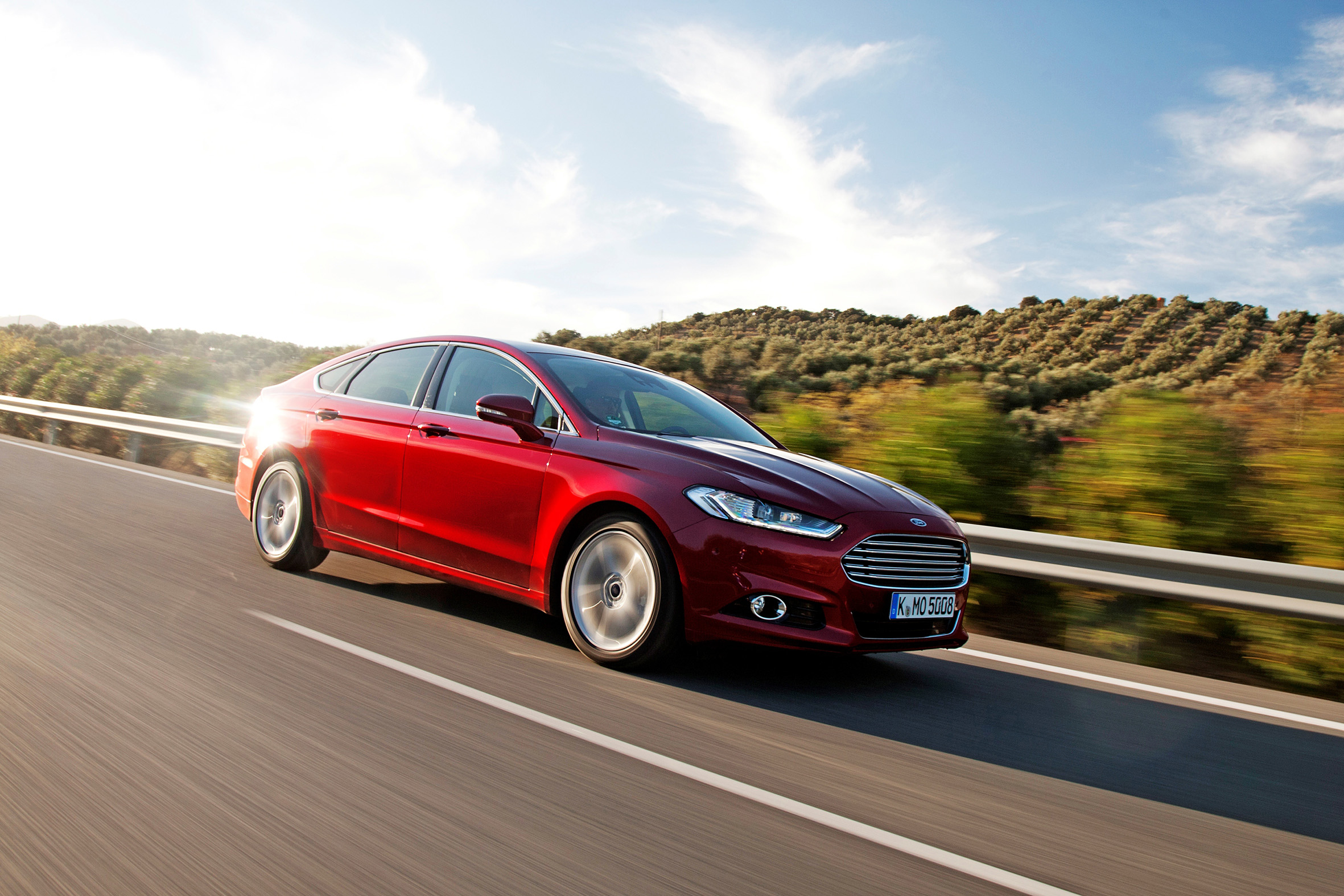
Ford Mondeo: common problems and what to look out for
The Ford Mondeo is known as a reliable and comfortable family car with generous luggage space and lively handling. However, this model does have weak spots that you should be aware of as an owner or potential buyer. Certain generations suffer from engine issues, electrical faults and fast-wearing components. Without proper maintenance, these can lead to high repair costs. Want to know what the Mondeo is particularly sensitive to? Read on and discover how to avoid expensive surprises.
The Mondeo’s legacy: five generations with their own quirks
Ford launched the Mondeo in 1993 as a “world car”. It was intended to replace the Sierra and Tempo. The first generation (Mk I, 1992–2000) was available as a saloon, hatchback and estate, with engines from 1.6 up to 2.5-litre V6. A facelift in 1996 refreshed the front, rear and interior, but kept the doors and roof.
The second generation (Mk II, 2000–2007) grew in size with a longer wheelbase, which created more boot space. With this model Ford responded to rivals such as the Volkswagen Passat by offering more equipment at sharp prices. The third generation (Mk III, 2007–2014) shared its EUCD platform (a shared chassis and technical platform) with Volvo. It came with petrol engines up to 220 bhp and diesels up to 200 bhp, the latter output becoming available after the facelift. The fourth and fifth generations introduced more efficient engines with stop-start technology and outputs up to 240 bhp.
For a complete overview of all known faults across different Ford models, see the page Ford car problems.
‘ “Diesel engines are economical but have their weak spots.” ’
Engine complaints that occur regularly
The Mondeo’s petrol engines are generally reliable. However, older 1.8- and 2.0-litre units regularly suffer from ignition coil failures. You recognise this from vibrations while driving and an irregular engine speed. Replace faulty coils in good time to prevent further damage to the catalytic converter.
On the 2.5-litre V6 from the first generation, oil leaks are common. These occur around the rocker cover gaskets. You will notice oil spots under the car or a burning smell from the engine bay. The ST220 with 3.0-litre V6 needs frequent oil changes; experts advise an interval of 10,000 kilometres instead of the prescribed 15,000 kilometres.
Diesel engines are economical but have their weak spots, particularly the 2.0 TDCi (turbo diesel common-rail injection). This engine is prone to turbo failures, especially at high mileages. Symptoms include loss of power, blue smoke from the exhaust and a whistling noise. Check whether the turbo has been replaced in the service history. The EGR valve (exhaust gas recirculation valve) sometimes becomes clogged with soot deposits, which leads to engine management faults. Flush the EGR valve regularly or replace it to prevent these blockages.
Transmission issues that need attention
The Mondeo’s manual gearbox is generally robust. However, on cars with more than 200,000 kilometres the clutch often shows signs of wear. You notice this from the engine revs flaring without a corresponding increase in speed, or a burning smell when pulling away. If in doubt, also replace the release bearing and dual-mass flywheel ring to prevent further faults.
The automatic gearbox sometimes suffers from problems, especially in the Mk III and Mk IV. The gearbox then shifts harshly or gets stuck in one gear. This often points to a faulty transmission fluid cooler or a worn transmission pump. Have the transmission fluid changed every 60,000 kilometres, even if this is not listed in the official maintenance schedule.
Symptoms of a failing clutch
- Clutch slip at high revs
- Heavy biting point on the clutch pedal
- Notchy or grinding gear changes
- Vibrations when pulling away
Electrical faults and sensor issues
The Mondeo Mk III and Mk IV are prone to electrical problems. The cause usually lies in ageing wiring and oxidation in connectors. Many owners report faults with the ABS sensors (wheel sensors that control the anti-lock braking system), especially at the front. This results in warning lights on the dashboard and deactivated driver assistance systems.
The air conditioning sometimes fails. A faulty air-con compressor is often the cause, and leaks in the coolant circuit are also common. Check the coolant level every year and have the system flushed to prevent bacterial growth. On the Mk IV there are frequent complaints about the infotainment system freezing or not responding; a software update at the dealer usually solves this.
The starter motor fails over time, especially on cars that make lots of short journeys. You recognise this from clicking sounds when starting or the engine turning over very slowly. Replace the starter motor at the first signs to avoid being stranded with a non-starting car.
‘ This happens more often than with many rivals. ’
Chassis and suspension: components prone to wear
The front suspension arms and bushes on the Mondeo wear more quickly than on many rivals. This shows up as knocking noises over bumps and vague steering. Replace worn suspension arms including their bushes to maintain steering precision.
Shock absorbers typically last between 80,000 and 100,000 kilometres. Your driving style and road conditions largely determine their lifespan. Test the dampers by pressing down firmly on the car; if it bounces more than twice, the dampers need replacing. On the Mk V there are frequent complaints about rattling noises from the rear axle, usually caused by loose anti-roll bar links.
Recognisable symptoms of suspension and steering problems
- Rattling or knocking noises over bumps
- Vague steering response or steering that does not self-centre
- Uneven tyre wear, especially on the inner edge
- Vibrations in the steering wheel at higher speeds
Brake problems you must not ignore
The brake discs and pads typically last 40,000 to 60,000 kilometres, depending on your driving style. On the Mondeo there are regular complaints about rust forming on the brake discs due to light use or many short trips. You notice this as grinding noises and reduced braking performance at the first press of the brake pedal.
The brake caliper pistons sometimes seize because of moisture and dirt, leading to uneven braking. During a service, check whether the pistons can move freely. Replace the brake fluid every 24 months. This is important: old brake fluid absorbs moisture, which reduces braking efficiency.
Rust sensitivity and weak spots in the bodywork
The Mk I and Mk II in particular are prone to rust around the wheel arches and the bottom edges of the doors. Check these areas regularly and treat small rust spots straight away to prevent further corrosion. The tailgate struts also rust over time, which stops the tailgate from staying open properly.
The rubber seals around the windows and doors become brittle after around ten years, allowing water to enter the interior. You notice this from damp floor mats. Condensation on the inside of the windows is also a clear sign. Replace worn seals in time to prevent moisture damage.
‘ This is mainly an aesthetic issue, but it can negatively affect the driving experience. ’
Interior problems and comfort issues
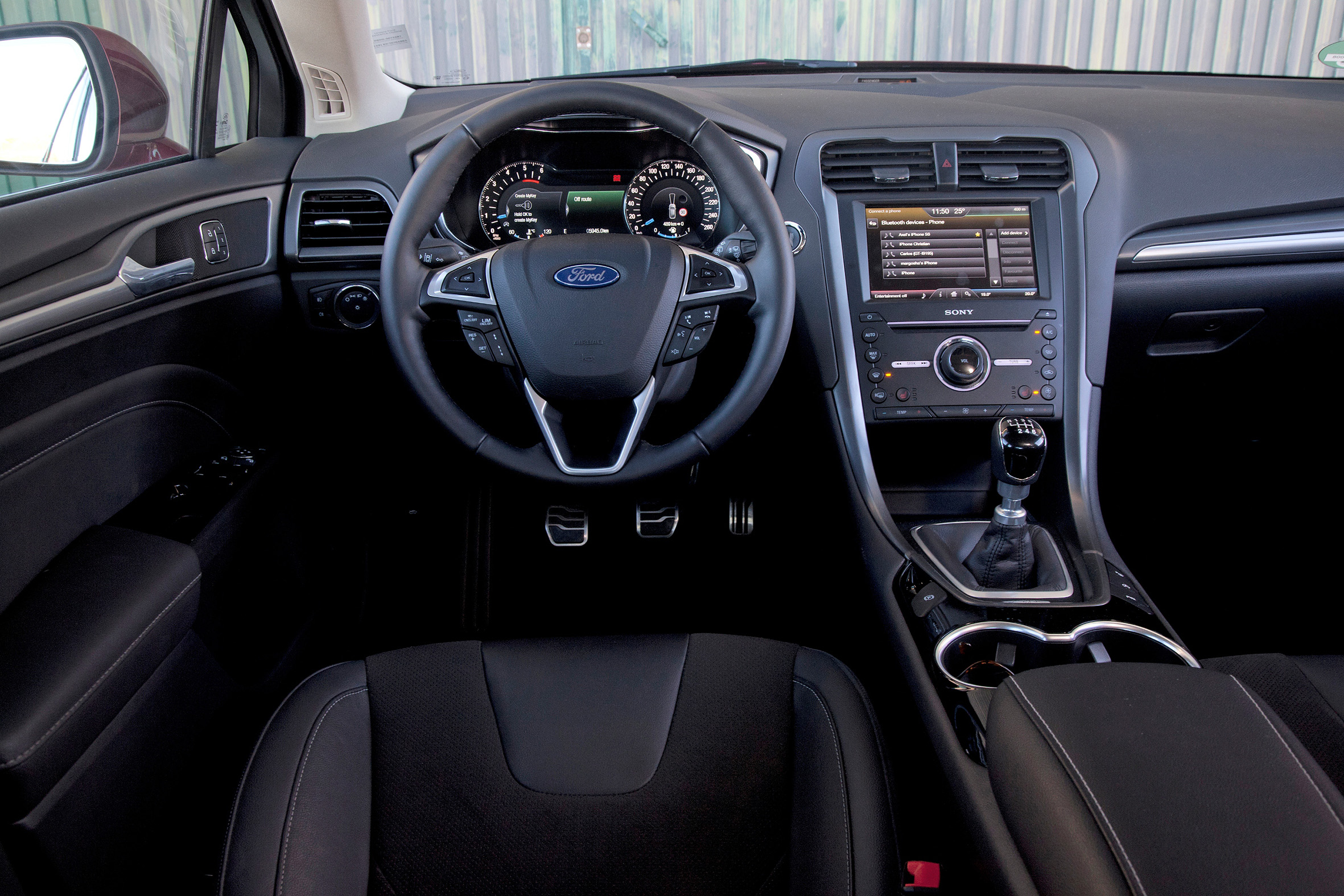
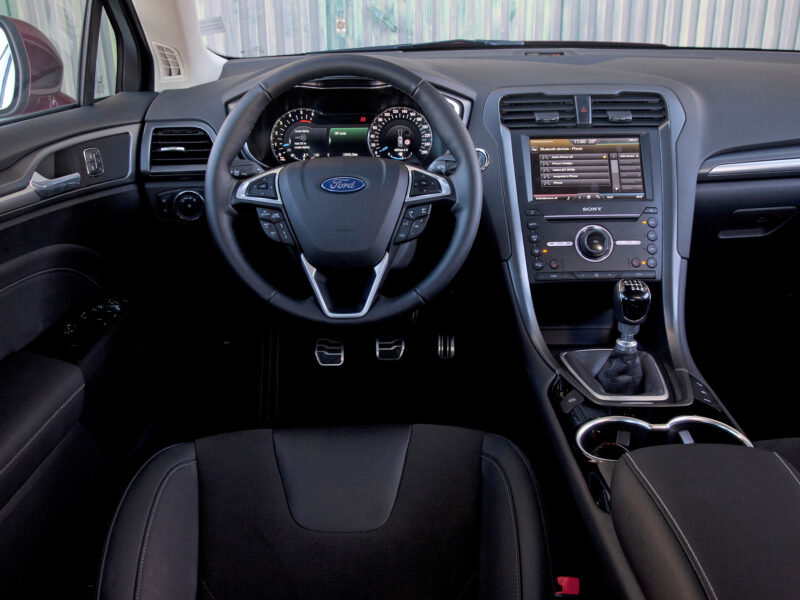
The Mondeo’s interior is spacious and comfortable, but the seat upholstery wears faster than in some rivals. The driver’s seat in particular tends to show wear on the side bolsters over time. Leather upholstery can develop cracks, especially if it is not cared for properly.
The buttons on the centre console panel wear, especially the climate control buttons. On the Mk III there are frequent complaints about interior trim coming loose, and the same problem occurs on the Mk IV. Rattling dashboard panels are also reported. This is mainly an aesthetic issue, but it can negatively affect the driving experience.
Generation-specific weaknesses you should know about
The Mk I (1992–2000) is prone to rust and electrical faults due to its ageing technology. Check the wheel arches and underside thoroughly before buying. The V6 engines are reliable but require frequent oil changes.
On the Mk II (2000–2007) problems with the EGR valve (exhaust gas recirculation valve) are common, as are turbo issues on diesel engines. The automatic gearbox can shift harshly at higher mileages. Watch out for signs of transmission wear during a test drive.
The Mk III (2007–2014) struggles with electrical faults affecting sensors and infotainment systems. The suspension arms and shock absorbers wear faster than on earlier generations. Inspect the chassis carefully before buying a used Mk III.
Spotting early warning signs prevents expensive repairs
Pay attention to changes in driving behaviour. Vibrations are a warning sign, as is an irregular engine speed. Unusual noises always deserve attention. Regularly check fluid levels and look under the car for oil leaks. If you ignore warning lights on the dashboard, more serious damage can occur and repair costs will rise sharply.
At the annual service, test all electrical systems, including windows, mirrors and lighting. Check the condition of the brakes and chassis, especially if you drive high mileages or regularly use poor-quality roads.
Checklist for owners
- Check oil, coolant and brake fluid levels every month
- Inspect tyres for uneven wear and correct pressure
- Test all lights and windscreen wipers
- Listen out for new noises or vibrations while driving
- Check the exhaust for changes in smoke colour
‘ Have the transmission fluid changed every 60,000 kilometres, even if this is not in the official schedule. ’
Maintenance and prevention that pays off
Follow Ford’s maintenance schedule closely. Consider shorter oil change intervals on V6 engines. Always use the correct oil specification as stated in the owner’s manual. Have the transmission fluid changed every 60,000 kilometres, even if this is not in the official schedule.
On diesel engines, clean the EGR valve (exhaust gas recirculation valve) and intake system every 80,000 kilometres to prevent blockages. Flush the cooling system when replacing the coolant to remove sludge deposits. Check the condition of the timing belt on engines that have one, and replace it according to the schedule to avoid costly engine damage.
Protect the bodywork by washing and waxing regularly, especially in winter. Rinse out the wheel arches to remove salt and dirt that can accelerate rust. Treat small paint chips immediately to prevent corrosion.
How much do Mondeo repairs cost?
Replacing a clutch costs between 500 and 800 euros, including labour. Replacing suspension arms and shock absorbers is between 400 and 700 euros per axle. Repairing or replacing a turbo can run from 1,200 to 1,800 euros, depending on the engine type.
Electrical faults are often cheaper to fix if the cause is quickly identified; expect 150 to 400 euros for sensor replacement. A full overhaul of the automatic gearbox is expensive, costing 2,000 to 3,000 euros. Weigh the repair costs against the car’s residual value; sometimes a major repair is no longer worthwhile.
Many parts are widely available on the aftermarket at lower prices than genuine Ford parts. Choose quality brands to avoid having to replace components again shortly afterwards. A good independent garage can often deliver the same quality at lower labour rates than an official dealer.
What to look out for when buying a used Mondeo
Check the service history carefully; a complete service book with stamps is a good sign. Look for evidence that the timing belt, clutch and turbo have been replaced on high-mileage cars. Test all electrical systems during a test drive, including air conditioning, windows and infotainment.
Inspect the bodywork for rust around the wheel arches, doors and underside. Under the bonnet, look for oil leaks and check the condition of belts and hoses. Test the suspension by driving over bumps and listen for abnormal noises or vague steering.
Check the exhaust for changes in smoke colour when starting: blue smoke indicates oil burning, while white smoke may point to a leaking head gasket. If in doubt, have a pre-purchase inspection carried out by an independent garage familiar with Ford models.
Essential checks for buyers
- Complete service book with regular servicing
- Condition of the bodywork, especially wheel arches and underside
- Operation of all electrical systems and sensors
- Condition of engine, transmission and chassis during the test drive
- Condition of tyres, brakes and suspension
- Any software updates for the infotainment system
‘ The reliability strongly depends on the maintenance history and how the previous owner has treated the car. ’
Buying a Mondeo: a realistic view of reliability
The Ford Mondeo offers plenty of space, comfort and driving dynamics for an attractive price on the used market. Its reliability strongly depends on the maintenance history and how the previous owner has treated the car. Models with a full service book and lower mileages are often a sound investment.
Be aware of typical weak points such as electrical faults, turbo failures on diesels and wear-prone suspension. With preventive maintenance and timely repairs you can avoid many problems. Unsure about your choice? Then look for a facelift model from the second or third generation, as these offer the best balance between price and quality.