

Ford Puma: these are the problems you will encounter most often
The Ford Puma is a compact SUV that has been popular since 2019 among drivers who want to combine sporty design with practical city use. However, this modern crossover also has its technical weak points. Owners regularly report complaints. From electronic failures to engine problems with the EcoBoost powertrain: the Ford Puma has specific defects that you should know about as an owner or buyer. Want to know what you need to look out for?
The Ford Puma in the wider reliability picture
The modern Ford Puma shares technology and parts with other Ford models such as the Fiesta and Focus. As a result, you run into similar vulnerabilities. The EcoBoost engines (economical three-cylinder turbo engines) and the SYNC infotainment system (the multimedia and control system in the dashboard) are widely used in the Ford range, with matching faults. Owners of various Ford models report similar problems with electronics, transmission and cooling systems. View the full overview of car problems with Ford to see how the Puma scores compared to other makes.
In recent years Ford has carried out several recalls for software faults and safety-related defects. The Puma is no exception. This does not mean that every Puma is problematic, but it does mean that as an owner you need to be alert to known defects.
‘ These problems do not occur with every Puma, but they crop up often enough to be recognisable as patterns. ’
Most common problems: what do Puma drivers complain about?
Owners of the Ford Puma mainly report complaints about electronics, the mild-hybrid technology and specific engine problems. The 48V battery and the integrated starter-generator system require advanced diagnostics in the event of faults. In addition, transmission problems occur regularly, especially with the seven-speed automatic gearbox.
Frequently heard complaints are:
- Faults in the mild-hybrid system with warning lights on the dashboard
- Loss of engine power or hesitant acceleration with the 1.0 EcoBoost
- Gearshift problems with the automatic transmission, especially at low speeds
- Software errors in the SYNC 3 infotainment system
- Defective sensors for parking assistance and lane keeping assistance
- Unexplained battery charge issues
These problems do not occur with every Puma, but they crop up often enough to be recognisable as patterns.


Engine problems and weak spots of the EcoBoost
The Ford Puma is powered by 1.0-litre three-cylinder EcoBoost engines with various power outputs. This compact turbo engine is known for its efficiency, but also for specific teething troubles. The belt drive of the oil pump can cause problems, especially when maintenance is postponed.
The three-cylinder configuration can cause vibrations that make mounted components wear out faster. Owners report that the engine sometimes runs roughly during cold starts. Under intensive use, the turbocharger can show signs of wear, resulting in whistling noises or loss of power.
In models with mild-hybrid technology, the 48V starter-generator (a component that starts the engine and recovers energy when braking) adds extra complexity. This belt-driven integrated starter-generator (BISG, a combination of starter motor and alternator driven by a belt) can fail, meaning the car will no longer start or regenerative braking will not work. Diagnosis requires specialist knowledge of the Ford system.
Symptoms of engine problems are:
- Engine warning light stays on
- Loss of power during acceleration, especially uphill
- Unstable idling speed
- Whistling noise when accelerating (turbo-related)
- Increased oil consumption between services
Have these warning signs checked immediately by a Ford dealer or specialist garage. Delaying can lead to costly consequential damage.
Transmission and drivetrain (engine and gearbox): automatic gearbox gives complaints
The Ford Puma is available with a six-speed manual gearbox or a seven-speed dual-clutch automatic gearbox (Powershift, an automatic with two clutches for faster gear changes). The automatic transmission causes most of the faults. This gearbox with two dry clutches is known for jerky gear changes and hesitant behaviour at low speeds and in cold weather. This type of gearbox uses two dry clutches (not running in oil) that can heat up quickly.
Owners report that the automatic sometimes refuses to change gear, goes into limp-home mode or that they smell a burning clutch when pulling away. This is often due to overheating of the clutch during intensive city driving. The software updates that Ford releases are intended to alleviate the problem, but they do not always solve it completely.
The manual versions have fewer problems, but even here clutch wear occurs more quickly with aggressive driving. The gearbox oil must be replaced according to the prescribed schedule, even if Ford sometimes calls it ‘filled for life’ (a claim that the oil never needs to be changed).
Recognisable symptoms:
- Hard jolts when shifting up or down
- Hesitant pull-away from a standstill
- Transmission warning light on the dashboard
- Burning smell after intensive city driving
- Gearbox switches to limp-home mode with a limited number of gears
A software flash at the dealer can help, but when there is physical wear the clutch has to be replaced. Expect to pay £1,000 to £2,100 depending on the type of fault.
‘ A reset helps temporarily, but the problem often returns. ’
Electronics and infotainment: software keeps freezing
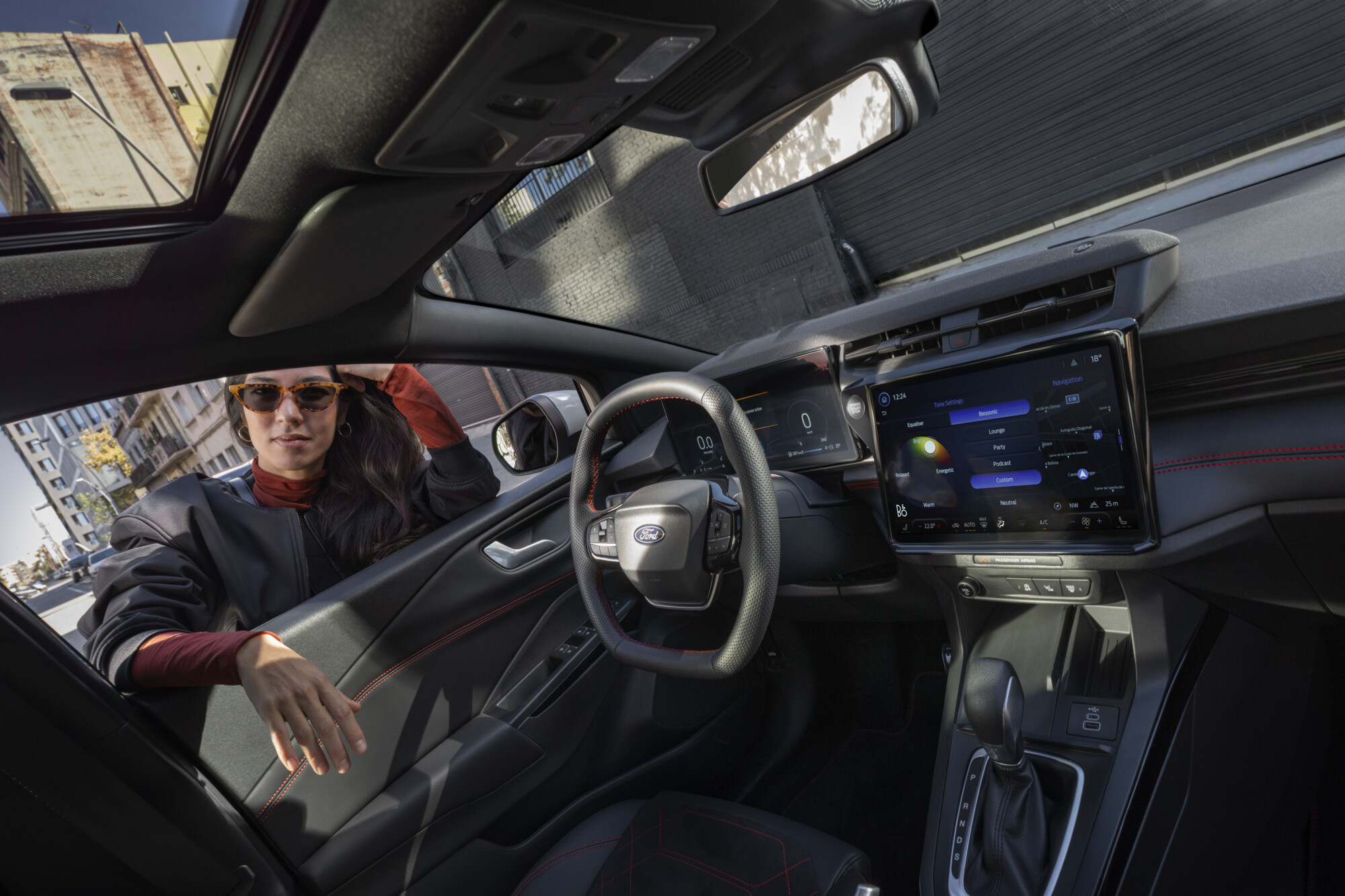
The SYNC 3 infotainment system in the Ford Puma offers modern connectivity. The screen freezes, the system does not start up or the touch function no longer works. A reset helps temporarily, but the problem often returns. The system supports Apple CarPlay (for connection with iPhones) and Android Auto (for connection with Android phones).
The many assistance systems such as adaptive cruise control, lane keeping assist and parking assistance also cause faults. Sensors become dirty or defective, which leads to warnings or functions dropping out. The radar sensor behind the Ford badge at the front is sensitive to dirt and damage.
The 48V battery of the mild-hybrid system sometimes does not charge properly. This leads to warnings on the dashboard. The system functionality is reduced. This is sometimes caused by a defective DC-DC converter (a component that converts high voltage into low voltage for the 12V battery) or problems with the main battery.
Common electronic complaints:
- Touchscreen does not respond or stays black
- Bluetooth connection keeps dropping out
- Parking assistance gives error messages without any obstacle
- Cruise control switches off unexpectedly
- Battery charge warning without a clear cause
Software updates at the dealer can solve many of these problems. Check whether your Puma has the latest firmware. When there are hardware defects in sensors or the 48V battery, replacement is needed and costs between £250 and £1,250 are realistic.
Suspension, steering and brakes: wear and noises
The suspension of the Ford Puma is firmly tuned for sporty handling. This set-up causes faster wear of bushes and suspension components, especially on poor road surfaces. Owners regularly report creaking or knocking noises from the front, often caused by worn top mounts or anti-roll bar links.
The steering can develop play, which shows up as vague steering response. The end dampers and the ball joints in the track rods (the joints that allow the wheels to turn) are prone to wear under intensive use. Check these components annually, especially after 50,000 kilometres.
The brakes are generally reliable, but the mild-hybrid technology with regenerative braking can lead to uneven wear of the brake discs. The front brakes wear faster because the regenerative system mainly works at the rear. Rust formation on discs occurs sooner because they are used less.
Signs of suspension problems:
- Thumping or creaking noise when steering or over speed bumps
- Play in the steering system
- Uneven tyre wear
- Vibrations in the steering wheel when braking
- Squealing or scraping brake noises
Replace worn bushes and bearings in good time. Costs range from £125 for anti-roll bar links to £500 for a complete axle suspension per axle.
Interior and finish: creaks and material defects
The interior of the Ford Puma is modern and functional, but the finish sometimes shows weak spots. Owners report creaking noises from the dashboard, especially when temperatures change. This is caused by expanding plastic parts rubbing against each other.
The seat upholstery wears faster than expected under heavy use. The floating centre console can become loose, causing rattles. On some cars, the door seals let water through, causing damp problems in the footwells.
The quality of buttons and switches is generally good, but some owners report that the climate control shows intermittent faults. Interior lighting can fail due to loose connectors.
Frequently reported interior complaints:
- Creaking noises from dashboard or centre console
- Rattling from loose panels
- Seat upholstery wear after a short period of use
- Damp in footwells due to leaking door seals
- Intermittent climate control
You can sometimes solve creaks yourself by locating the relevant panels and securing them with felt or foam strips. Leaks require professional resealing. Costs for material and finish problems are between £80 and £420.
‘ Deferred maintenance is a major cause. ’
Causes of problems and early detection
Many problems with the Ford Puma arise from the combination of modern technology and intensive use. The mild-hybrid system is prone to software faults and electrical failures. The compact EcoBoost engine requires meticulous maintenance to remain reliable.
Cold starts in winter can worsen electronic issues. The 48V battery struggles with extremely low temperatures. Short journeys without the engine fully warming up speed up carbon build-up in the engine and turbo.
Deferred maintenance is a major cause. The intervals between oil changes are calculated for ideal conditions. With intensive city use or sporty driving you should change the oil earlier. The gearbox oil and coolant need attention too, even though Ford claims these are lifetime fluids (fluids that according to the manufacturer never need to be replaced).
You can recognise early warning signs by:
- Warning lights that come on briefly and then go out again
- Unusual noise at cold start that disappears once warmed up
- Reduced performance during acceleration
- Rough or irregular idling
- Infotainment that responds slowly or resets itself
Do not ignore these signs. Have your Puma inspected before small faults become big and expensive.


Solutions, repairs and costs
Most electronic issues can be resolved with software updates at a Ford dealer. These are often free within the warranty period. Outside warranty, dealers charge £70 to £130 for diagnostics and updates.
Engine problems such as a defective turbo or oil pump require professional repair. Replacing a turbo costs £700 to £1,250 including labour. With belt drive problems the total amount can rise to around £1,000.
Transmission repairs are expensive. Replacing a clutch set in the automatic costs £1,250 to £2,100. For the manual version this is between £500 and £850. Software updates for the automatic are often free if there is a known recall.
Suspension work varies greatly in price. Replacing anti-roll bar links costs £125 to £250, while a complete axle suspension per axle costs £500 to £750. Renewing brake discs and pads all round costs about £330 to £500.
It is often best to have many electronic repairs carried out by a specialist garage. Replacing sensors costs £170 to £420 each, depending on the type. Replacing the 48V battery is an expensive job at £850 to £1,500.
Preventive maintenance avoids many of these costs. Stick to the service schedules and use high-quality oil and fluids.
Preventive maintenance: how to avoid expensive problems
Regular servicing is the best protection against technical problems. Replace engine oil every 15,000 kilometres or annually, even if Ford specifies longer intervals. Use oil that meets the Ford specifications for EcoBoost engines.
Check the coolant every year. Replace the fluid every four years. The mild-hybrid system and the turbo are sensitive to overheating. Keep an eye on the level and condition of the coolant.
Have the gearbox oil level checked at every service, especially on the automatic. Replace the oil every 60,000 kilometres, regardless of what the manufacturer says about lifetime-filled gearboxes (gearboxes whose oil supposedly never needs to be changed).
Keep the electronics up to date. At every service, ask whether new software is available for the infotainment system and driver assistance systems. These updates often fix known bugs.
Clean the sensors and cameras monthly, especially in winter. Dirt and salt impair their function and cause false warnings. Pay attention to the radar sensor behind the Ford badge at the front.
Preventive maintenance actions:
- Change engine oil every 15,000 km or annually
- Check coolant and replace every four years
- Replace transmission oil at 60,000 km
- Check and install software updates annually
- Clean sensors and cameras monthly
- Replace air filter according to schedule (usually 30,000 km)
- Replace spark plugs at 90,000 km on petrol engines
Good maintenance significantly extends the life of your Puma and prevents many of the problems mentioned.
‘ This costs £125 to £210 but can uncover thousands of pounds’ worth of hidden defects. ’
Buying used: give these points extra attention
When buying a used Ford Puma you need to check some specific points. Ask for the full service history and check whether all services have been carried out at an approved garage. Pay particular attention to oil changes and transmission maintenance.
Test the mild-hybrid system during a test drive. The warning light must not be on and the engine should start smoothly without hesitation. Watch out for strange vibrations or noises on a cold start.
Check the operation of the automatic gearbox thoroughly. Drive in city traffic and test gear changes at low speeds. Do you feel jolts or hesitation? Do you smell a burning clutch? These are red flags.
Test all infotainment functions and driver assistance systems. Try Apple CarPlay or Android Auto. Check that parking assistance, cruise control and lane keeping assistance work without error messages.
Inspect the suspension for play and wear. Turn the steering fully while stationary and listen for creaking noises. Check the tyres for uneven wear, which points to suspension problems.
Checklist for buying used:
- Full service history with proof of oil and fluid changes
- No warning lights on during the test drive
- Smoothly shifting transmission without jolts or hesitation
- Working infotainment system without freezes or resets
- Functioning driver assistance systems without error messages
- No creaking or knocking noises from the suspension
- Even tyre wear
- No signs of damp or leaks in the interior
- Check whether recent recalls have been carried out
Are you unsure about the condition? Have the car inspected by an independent specialist before you buy. This costs £125 to £210 but can uncover thousands of pounds’ worth of hidden defects.


Reliability of the Ford Puma: realistic expectations
The Ford Puma is a modern compact SUV with sporty performance and smart technology, but this also brings technical complexity. The mild-hybrid powertrain and advanced electronics require more maintenance and attention than a conventional car.
The EcoBoost engine is efficient but sensitive to neglected maintenance. The automatic transmission has teething troubles that cannot always be fully resolved. The electronics regularly show software faults that require updates.
Do not expect the Puma to be completely trouble-free. With meticulous maintenance and timely repairs it is reliable enough for everyday use. If you buy used, you need to be extra alert to the known weak spots and make sure the service history is complete.
Ensure regular servicing according to the schedule and act quickly at the first signs of faults. Before buying, check the service history and have the car inspected if necessary.