
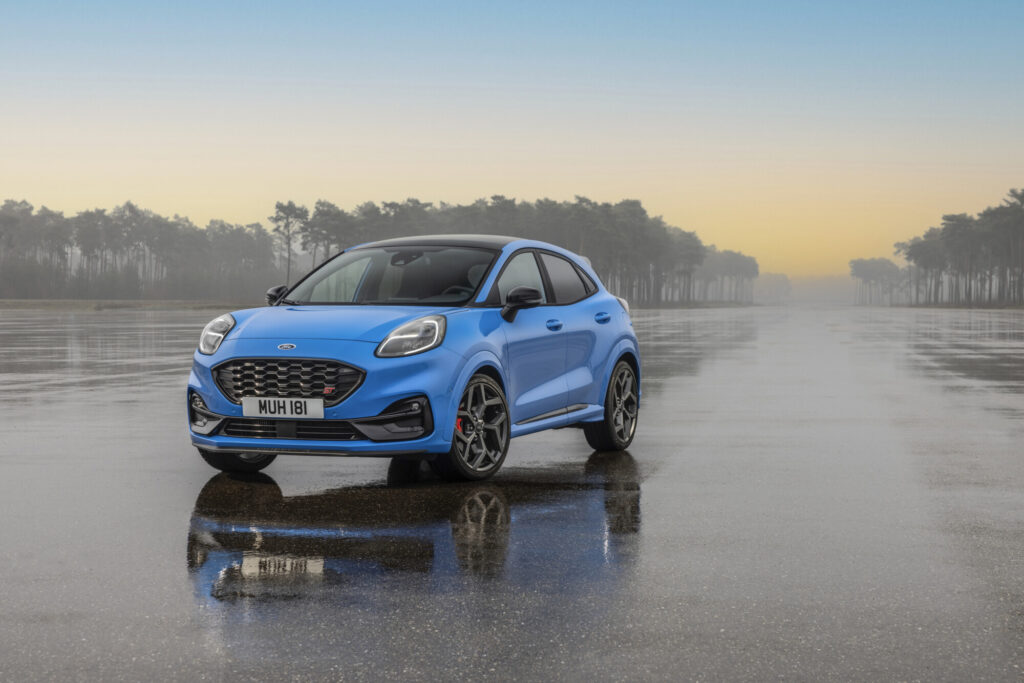
Problems with the Ford Puma’s tailgate and lighting call for a targeted inspection. A tailgate that hangs crooked may have a mechanical cause. Is the rear fog light or towbar lighting not working? Then wiring, moisture or a fuse could also be the cause. The right approach depends on exactly what is not working. Where do you start without replacing parts unnecessarily?
Ford Puma 2023 tailgate hanging crooked: what should you check?
If the tailgate on your 2023 Ford Puma is hanging crooked, first look at the gaps between the tailgate, roof and rear lights. Compare the left and right sides with the tailgate closed. More information on other complaints with this model can be found on the page about Ford Puma problems.
An uneven gap does not point straight to one component. Also check whether the tailgate opens to the same height on both sides and whether the lock clicks shut without extra pressure. Then look at the hinges at the top, the mounting of the gas struts and the rubber stops on which the tailgate rests when it closes. Watch out for visible damage, loose fixings and signs of contact between the tailgate and the bodywork. Have the tailgate position assessed if you see such signs.
A gas strut supports the weight of the open tailgate, but does not automatically correct the position of a closed tailgate. Does the open tailgate slowly sink back down? Or does one side feel different when opening? Have both gas struts and their mounting points checked. Do not adjust hinges or the striker plate by guesswork: a small adjustment can change the sealing, closing and alignment with the rear lights.
Suspension or lock: how to tell the difference
Does the tailgate only shut with extra pressure on one side? Then have the striker plate, the lock and the stops checked. A warning for an open tailgate may indicate a fault in the lock detection or wiring. According to the official Ford manual, operating functions differ by version. So consult the manual for your Puma and model year before trying to reset an electric tailgate again.
If a tailgate does not lock reliably, driving is not a suitable test. First have it checked whether the lock is actually engaging and the tailgate is not under tension. Note down for the workshop when the fault first appeared. Also mention any previous damage or repairs to the rear of the vehicle.
Fog light faulty on the Puma: bulb, plug or wiring?
A faulty rear fog light on the Puma does not automatically mean the bulb is broken. First switch on the rear fog light according to the instructions in the Ford manual. Check the position of the switch and the warning light on the dashboard. Have someone look at the rear of the car; do not rely only on a message in the instrument cluster.
If the rear fog light does not come on, work from simple to specific. The most useful checks are:
- Check which other rear lights do work, including tail lights, brake lights and number plate lights.
- Inspect the relevant light unit and plug for condensation, moisture and deposits on the contacts.
- Check the relevant fuse using the diagram for your version.
- Have the power supply and the electrical connection to the body measured with the rear fog light switched on.
A light needs a good connection to the bodywork to work. If that connection is poor, the light may burn dimly, flicker or show a fault message. A voltage test with the light off does not always rule out such a problem. A garage can measure with the light switched on whether voltage is being lost at the plug or the connection to the bodywork.
Replacing a faulty Puma fog light: check the bulb type first
If you want to replace a faulty fog light on the Puma, do not order a loose bulb straight away. The design of the light unit can vary by version. Check in the manual or via the vehicle identification number whether your rear fog light has a replaceable light source or whether the unit needs repairing. That way you avoid buying a part that looks right but is the wrong one.
Before dismantling, switch off the lighting and inspect the seal on the unit. Do you see signs of moisture in the lamp or green corrosion on the plug pins? Then deal with the cause of the leak as well. Simply fitting a new bulb will not help for long if water gets back in through the same opening. If the contacts are badly affected, have the plug repaired or replaced.
Why do tailgate functions and lighting fail together?
When several rear functions fail at the same time, one defective bulb is less likely. Think of a tailgate that does not respond, failed number plate lighting and a rear wiper that sometimes stops. The cable loom between the body and the tailgate is then a logical point to check: it moves every time the tailgate opens.
Look at the rubber cable gaiter at the top of the tailgate for damage and moisture. A wire may be broken inside even though the outside still looks intact. Does the fault change when you move the tailgate slowly? Report that during diagnosis. Do not pull on the cable loom and do not test wiring by cutting open the insulation.
A weak 12V battery can also cause several electronic complaints at once. If the messages come and go, have the battery condition checked before replacing a light unit or switch. If the complaints keep returning, have fault codes read out from all affected control modules. Keep that data before it is erased.
Towbar fuse on the Puma: where do you look?
The location of a towbar fuse for a Ford Puma cannot be stated outright. It depends on the version and on how the towbar wiring is connected. An aftermarket wiring kit may also have its own fuse. So use the fuse chart for your car and, if present, check the towbar fitting documentation.
Start the search with the fault itself. Is only the trailer fog light not working, or are all functions missing on the socket? Test the car’s lights separately and, if possible, use another trailer or a suitable socket tester. That way you avoid mistaking a fault in the trailer for a Puma problem.
The next steps are:
- Look in the Ford fuse chart for the functions for trailer lighting and towbar wiring.
- With an aftermarket kit, check where the installer placed the module and any additional fuse.
- Inspect the socket for moisture, loose pins and damaged wiring.
- Replace a blown fuse only with the same specified rating.
Do not simply replace the fuse again if the new one also blows. Have the wiring between the socket, module and power supply checked for a short circuit. That is especially worthwhile if the fault appears as soon as you connect a trailer.
‘ Compare the symptoms before ordering parts. ’
Targeted searching prevents unnecessary repairs
With a crooked Puma tailgate, first check whether the tailgate sits evenly against the bodywork everywhere. Then look at the hinges, gas struts and lock. For a failed rear fog light, the controls, light unit and electrical connections are the first checks. With towbar problems, the fitted wiring kit determines where you should look for a fuse. On Carnews you can find more about related Ford Puma problems and car technology. Compare the symptoms before ordering parts.
Frequently asked questions
Known fault sources include broken wires in the loom to the tailgate, poor earth connections and moisture or corrosion in plugs, which can disrupt CAN communication and lighting. A weak 12V battery, a faulty lock microswitch or actuator, and software or communication faults in the body or light control module can also cause complaints. Specific Ford Puma CAN bus fault codes or official recalls for these are not reliably established.
The wiring harness runs from the body through a flexible rubber gaiter to the tailgate and bends with every opening and closing. Wire breaks occur mainly in the repeatedly moving section at the rubber gaiter at the top or side of the tailgate. The conductor can break internally while the outer sheath remains intact.
Disconnect the microswitch plug and measure across the switch contacts with a multimeter in continuity or resistance mode. Operate the lock manually: the reading should clearly switch between around 0 Ω and infinite resistance, without glitches. Then, when connected, check that the open/closed signal changes correctly and that the interior/load-area light goes out after locking. Finally, after sleep mode, measure the quiescent current; if it remains too high, the wiring, plugs and control modules are also suspect.