
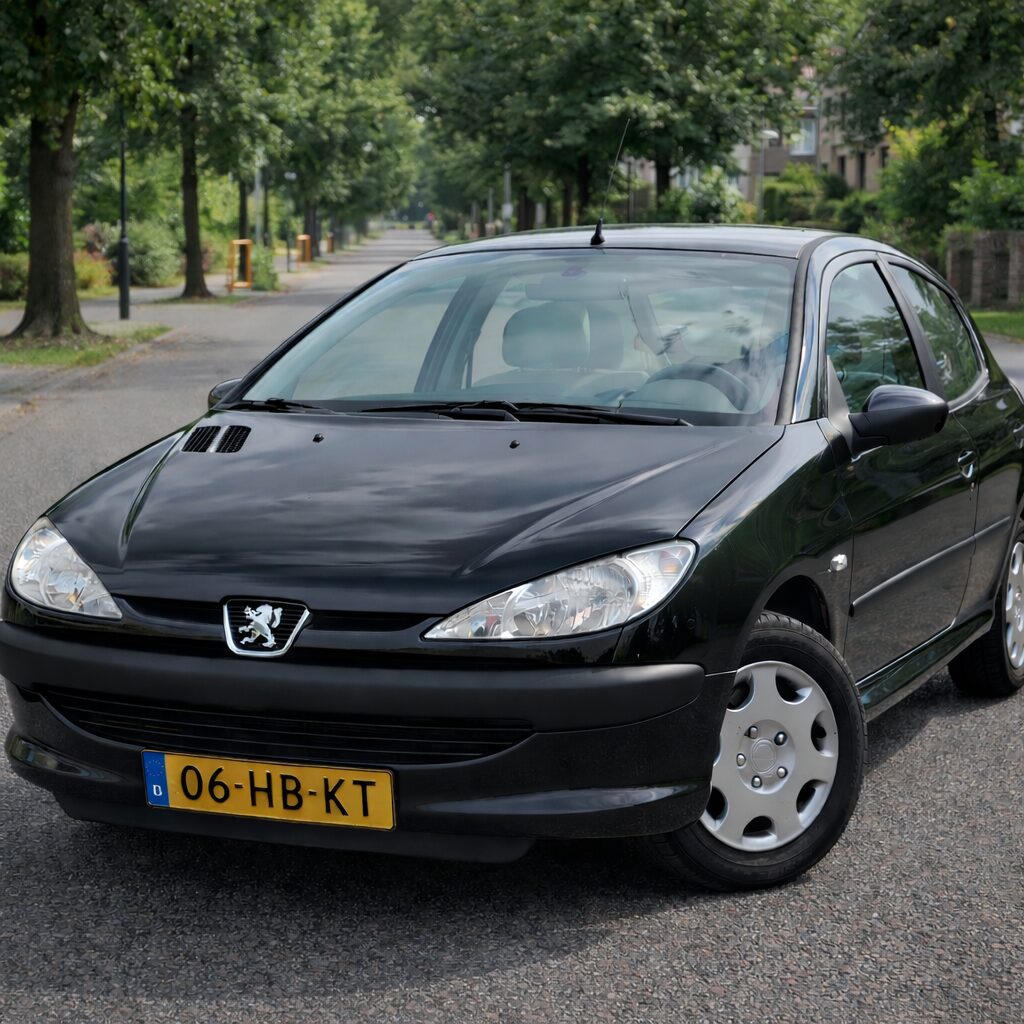
The Peugeot 206 is prone to fuel supply problems. A defective fuel pump can be the cause. More often, the problems are related to electrical faults in relays, connectors and earth (ground) connections. This leads to an engine that hesitates, starting problems and irregular power delivery. What exactly causes this, and what can you do about it?
Symptoms of a faulty petrol pump Peugeot 206
If the fuel pump in your Peugeot 206 is not working properly, you will often recognise this from a combination of complaints. The engine turns over but does not fire. In some cases the car sometimes starts and then again it doesn’t. There is no clear cause to be found. Hesitation or jerking while accelerating is also a classic sign of fuel supply problems.
With a normally functioning fuel pump you hear a short buzzing sound from the direction of the fuel tank when you switch on the ignition. If this sound is absent, it points to a problem in the power supply or in the pump itself. When the ignition is left on a little longer, the pump should briefly “,”prime”. This is how the pump builds up pressure.
Many owners of the Peugeot 206 report reduced power or irregular engine operation. This mainly happens under acceleration. In that case the fuel pump is still working, but it does not deliver enough pressure to push fuel to the injectors (fuel injectors). In more serious cases the car cuts out completely and will no longer start.
‘ Although the fuel pump itself can fail, an electrical fault is more often the culprit. ’
Common causes of fuel supply faults
A fuel problem in the Peugeot 206 often has several causes. It can be an electrical problem, a broken relay or a poor connection. Although the fuel pump itself can fail, an electrical fault is more often the culprit.
Electrical faults in the power supply
The electrical connection to the fuel pump can quickly overheat. Burnt connectors and discoloured or melted pins occur regularly. When checking the pump connector, it is important to look for signs of heat or corrosion.
A poor earth (ground) connection can shut the pump down completely. The pump can also cut out intermittently. A small break in the negative wire (the negative supply wire) is not always visible. However, this break causes the power supply to drop out completely. Some owners report that the problem ultimately turned out to be caused by an almost invisible internal break in the negative lead.
Relays and switching circuit
With the Peugeot 206, people often refer to the double relay (a relay that switches two circuits) under the engine control unit plate (ECU plate). This relay switches the fuel pump on and off. If the double relay does not switch correctly, the pump does not receive the correct power supply with the ignition in position 2 (ignition on, engine not yet started). A faulty relay sometimes does provide voltage while cranking, but no correct pulse with the ignition just switched on.
The connections on the relay plug are also prone to wear. Inspect these connections for loose contacts and corrosion.
Impact or inertia switch
The Peugeot 206 has a safety switch. This switch cuts off the fuel supply after an impact or heavy collision. This inertia switch (a safety switch that trips in a heavy impact) is usually located under the bonnet near the battery. After an accident or even a heavy jolt this switch may have been triggered. The pump then no longer delivers fuel. Resetting the inertia switch often solves this problem immediately.
Why does the Peugeot 206 stutter under acceleration
While accelerating, the engine may stutter or hesitate. This often indicates an irregular fuel supply. This can be caused by a weakened fuel pump that does not provide enough pressure at higher engine speeds. A partially clogged fuel filter can also cause stuttering during acceleration.
A problem in the injection system (fuel injection) is another possible cause. The engine management electronics can also play a role. If the injectors are not controlled correctly, this looks like a pump failure but the cause lies elsewhere. Without diagnostic equipment it is often difficult, and you cannot make an accurate diagnosis.
When symptoms occur intermittently, the likelihood is high that there is an electrical contact problem. Move the wiring loom while testing the wiring. This way you can check whether there is an internal break.
How to solve fuel supply problems on the Peugeot 206
First check the power supply and wiring. Do this before replacing the fuel pump itself. Many problems are caused by poor electrical connections rather than a mechanical defect in the pump.
Step 1: check the power supply
Measure the voltage at the pump with a multimeter (a measuring device for electrical voltage). If voltage is present but the pump does not run, this strongly points to a defective pump. If there is no voltage, the problem lies with the relays, fuses or wiring.
Step 2: inspect the connector and wiring
Carefully check the pump connector at the fuel tank. Look for discolouration, melting or loose pins. Discoloured or melted connectors are common on older Peugeot systems. The earth wire of the pump also deserves attention, especially if the problem disappears and then returns intermittently.
Step 3: test the double relay
Check the double relay under the ECU compartment and the connections on the plug. You can temporarily swap the relay with another relay of the same type. This allows you to test whether this solves the problem.
Step 4: check the inertia switch
Does the car no longer start after a collision or heavy jolt? Then first check the inertia switch before replacing expensive parts. Reset the switch according to the instructions for use and then try starting again.
Replacing the petrol pump: costs and practical tips
Does your diagnosis show that the fuel pump is really defective? Then it must be replaced. The cost of a new fuel pump for the Peugeot 206 is between €100 and €250. The exact amount depends on the brand and whether you choose an original part or an aftermarket alternative.
The labour time for replacement is approximately 1 to 2 hours. The fuel pump is located in the fuel tank. On most versions, the pump can be accessed via a hatch under the rear seat. On other versions you access the pump via the boot. On some variants the tank has to be completely removed; on others it can be partially lowered.
Tips for replacement
- Do not replace the pump blindly without first checking the power supply, connector and relays.
- When replacing the pump, also replace the fuel filter if it has not been changed recently.
- Inspect the pump connector for heat or melting damage and replace it if necessary.
- Test the new pump after installation with the ignition on, and also under starting load (the load on the pump while cranking the engine).
- Take into account residual fuel in the tank and work safely, with no sources of sparks nearby.
After an electrical repair it is wise to test the pump again. Also check whether the power supply remains stable while driving. This prevents a poorly carried out repair from causing problems again later.
Maintenance tips to prevent fuel problems
Regularly check the fuel system. This helps to prevent problems. For example, replace the fuel filter or check the connections at the pump connector. Peugeot’s maintenance schedule recommends replacing the fuel filter, usually every 60,000 to 80,000 kilometres. A clogged filter puts extra strain on the pump.
Preferably fill up at reliable petrol stations to avoid contaminated fuel. Dirt in the tank can damage the pump and the fuel system. Do not habitually drive with the fuel tank almost empty, as this puts unnecessary strain on the pump and can also cause air pockets.
If you perform regular maintenance, also check the electrical connections of the fuel pump and the double relay. This takes little time but can prevent a lot of trouble. Pay particular attention to signs of overheating, corrosion or loose contacts.
Frequently asked questions
The most common symptoms are that the engine turns over but will not start, or only comes to life after prolonged cranking. The car may also hesitate or jerk while driving and have noticeably less power. Often, when switching on the ignition, you no longer hear the buzzing sound of the pump in the tank. Sometimes the car starts or drives fine one time and not at all the next, which points to an intermittently working pump or power supply.
Turn the ignition to position 2 and listen to see whether you hear the petrol pump buzzing briefly; if you hear nothing, the pump or its power supply is suspect. Then measure whether 12V reaches the pump connector while cranking, and at the same time check the earth connection and wiring around the tank for signs of melting or breaks. Check the double relay under the ECU and the inertia/impact switch under the bonnet (reset by pressing it firmly) if there is no voltage at the pump. Only try to start the car again once you have established a stable voltage and sound connections.
Common causes of fuel pump problems in the Peugeot 206 include a worn pump, poor electrical power supply (defective double relay, broken negative wire), burnt or corroded connectors and a triggered impact/inertia switch. You can help prevent problems by regularly checking the connectors and wiring around the pump for damage, hot spots or corrosion and by repairing poor earth connections in good time. Do not run the fuel pump constantly “on the last few litres”, as cooling and lubrication are then reduced and the pump wears out more quickly. If you have starting problems, it is sensible to check the relays, earth connections and impact switch first before replacing the pump.
To replace the fuel pump in a Peugeot 206, you must disconnect the battery, remove the rear seat or boot trim to reach the pump cover, remove the cover and disconnect the connector/fuel lines, then remove the complete pump module from the tank and replace it, after which everything is refitted in reverse order. Also check the connector, wiring and earth for signs of burning or corrosion, as these are often part of the cause on the 206. If you have this done by a garage, the total costs (parts plus labour) are usually roughly between €300 and €600, depending on the pump brand and hourly rate. Doing it yourself with an aftermarket pump usually costs between about €80 and €200 in parts.
Yes, there are specific points of attention for the fuel supply on the Peugeot 206, especially around the electrical power supply and control of the pump. Known weak points are the pump connector (overheating, discolouration, melting), poor earth connections and issues with the (double) fuel relay. The impact/inertia switch can also unexpectedly interrupt the fuel supply. Because of this, it is important during diagnosis to first check the connector, earth, relay and inertia switch before assuming that the pump itself is defective.