
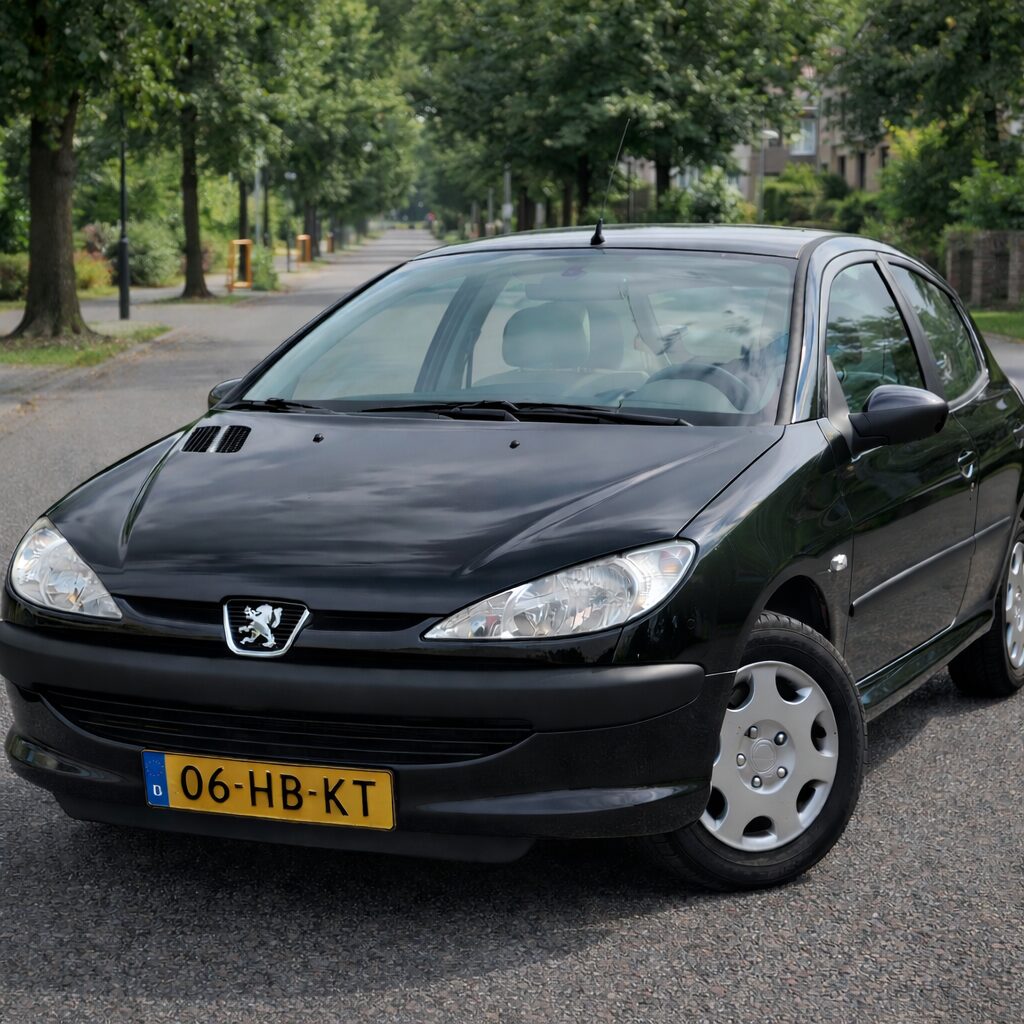
The Peugeot 206 regularly suffers from faults in the heating and air conditioning system, where the blower stops working, the air conditioning no longer blows cold air or the climate control no longer responds. These problems are often caused by a faulty resistor, wiring with voltage drop, or a compressor with too little refrigerant. Fortunately, many of these faults are fairly easy to diagnose and fix. Read on to discover which causes are common and what you can do yourself.
The fan does not work or cuts out
One of the most common complaints with the Peugeot 206 is a fan that no longer works or only runs at the highest speed. This is often due to a faulty resistor at the air intake on the passenger side. The resistor controls the speed of the blower at the lower settings. When it burns out due to moisture, dirt or overheating, the fan stops working.
At maximum speed the fan gets 12 volts directly, bypassing the resistor. If the blower works then, this almost certainly points to a faulty resistor. You can check this yourself by measuring the voltage at the blower. If it is below 10.5 volts, there is probably a problem with the wiring or the resistor.
In addition, the blower itself can fail. This happens mainly on older models where moisture or dirt in the duct blocks the motor. Test the blower directly from the battery with 12 volts. If it does not respond, the motor is broken and needs to be replaced.
‘ Replacement can cost up to 1,000 euros, including flushing the system. ’
Air conditioning no longer blows cold air
When the air conditioning no longer provides cold air, there can be several causes. A common one is pressure in the system being too low due to a leak or too little refrigerant. Have this checked annually, preferably during a service. A simple top-up can solve the problem.
Another frequent cause is voltage loss in the wiring to the air conditioning compressor (the pump that circulates the refrigerant). Owners regularly report that only 1.5 volts is coming through. The required voltage is between 10.5 and 12 volts. Causes include poor plug connections, corrosion or broken cables. Check the connectors and measure the voltage to find out whether the compressor can start at all.
If the compressor itself is faulty, the repair becomes considerably more expensive. Replacement can cost up to 1,000 euros, including flushing the system. This is usually necessary in the case of mechanical damage or if metal particles are present in the circuit.
Checking refrigerant and pressure
If there is no cold air, always check the pressure and refrigerant level. This is a quick check that costs little. If the level is low, topping up may be enough. If the problem keeps coming back, there is probably a leak in the system that needs to be repaired.
Climate control does not respond or shows a fault
Models with climate control sometimes suffer from a non-responsive display or a frozen system. This is often caused by dirt and dust in the interior temperature sensor. The sensor becomes blocked, so the control unit receives incorrect information or does not respond at all.
Cleaning the sensor can help. Also read out the module for fault codes. Many owners report that after cleaning, the problems disappear temporarily. They return when moisture builds up. On GT models with extended climate control you should also check the control module itself for poor contacts.
A black display sometimes indicates an electrical problem in the module itself. This can be a loose connector or a faulty circuit board. In that case, replacing the module is necessary.
Heating does not provide warm air
If the heating does not blow warm enough air or does not produce warm air at all, the cause is often the thermostat. This regulates the temperature of the coolant system and ensures that the engine stays at the correct temperature. If the thermostat sticks in the open position, the engine does not get warm enough. As a result, the air remains lukewarm.
Replacing the thermostat is a relatively simple job that you can do yourself if you are handy. Also check whether the coolant level is correct, as a level that is too low can mean there is not enough heat being transferred to the heater.
Another possible cause is a clogged heater radiator (small radiator for interior heating). This small radiator behind the dashboard can become blocked due to contamination in the cooling system. If the airflow cannot pass through the radiator, the air will remain cold despite the engine warming up.
‘ Professional cleaning of the evaporator costs a few tens of euros at a specialist and can get rid of the smell. ’
Smelly air conditioning due to mould
An unpleasant side effect of air conditioning systems is a musty or mouldy smell. This is caused by the build-up of mould and bacteria in the evaporator. This stays damp after use and does not dry properly, allowing micro-organisms to multiply.
Professional cleaning of the evaporator costs a few tens of euros at a specialist and can eliminate the smell. Have this done regularly, especially if the car is often parked in a damp environment. Switch the air conditioning off now and then for a few minutes while leaving the fan on without climate control. This allows the evaporator to dry out.
Central relay box can block air conditioning
On some Peugeot 206 models, a faulty relay in the central relay box prevents the air conditioning compressor from switching on. This relay activates the compressor as soon as you switch on the air conditioning. If the relay no longer responds, the compressor receives no power and the air conditioning remains off.
Check the relay box, often located in the engine bay or under the dashboard. Swap the relay with another identical relay from the box. This way you can test whether this solves the problem. It is a quick and cheap check you can carry out yourself.
Practical tips for diagnosis and maintenance
Follow a few steps to prevent problems with the heating and air conditioning or to track them down quickly:
- Switch on the air conditioning every week, even in winter, to maintain pressure in the system and keep seals supple.
- Measure the voltage at the blower if it does not work. This will immediately show whether there is a problem with the wiring or the resistor.
- Check fuses and connectors before replacing larger components. Many problems are caused by poor contacts.
- Clean the interior temperature sensor regularly to prevent faults in the climate control.
- Have the refrigerant checked annually and topped up if necessary.
These simple measures prevent bigger and more expensive problems. If you are unsure about the cause, it is wise to have the car read out for fault codes. That way you can carry out more targeted repairs.
‘ Acting in good time prevents expensive surprises. ’
When to visit the garage and what it costs
Small repairs such as replacing a fuse or resistor can often be done yourself. This costs little and saves a visit to the garage. For more complex jobs such as replacing the compressor, professional help is needed.
Repair costs vary greatly. Topping up refrigerant costs a few tens of euros. A new compressor including fitting and flushing can cost up to 1,000 euros. A new blower or resistor is between 50 and 150 euros, depending on the part and the garage.
Bear in mind that ignoring small problems can lead to more serious damage. A faulty thermostat can cause the engine to overheat, while a leaking air conditioning system will eventually damage the compressor. Acting in good time prevents expensive surprises.
On the Carnews website you will find many more useful tips and background information on common car problems and maintenance. Discover more articles and become a true car expert.
Frequently asked questions
The most common cause of heating/fan failure on the Peugeot 206 is a faulty blower resistor or a melted/damaged plug at the blower due to moisture and dirt. For air conditioning faults, common causes are poor connectors or wiring (so that too low a voltage reaches the compressor), a leak or too little refrigerant so the pressure is too low. In addition, contaminated temperature sensors cause faults in the (climate) controls, such as strange or absent responses from the climate control. A smelly air conditioning system is usually due to mould and bacteria in the evaporator because it does not dry properly and is not maintained enough.
A car enthusiast can first test all fan speeds and check whether the blower still works on the highest setting, and if necessary go through the fuses and visible plug connections at the blower. Next they can use a multimeter to measure the voltage at the blower (it should be around 12V) and inspect the resistor and wiring for signs of burning or corrosion. For air conditioning problems they can check whether the compressor switches on (click and change in engine speed), have the pressure measured or the refrigerant level checked, and check the connectors to the compressor. They can also visually inspect and clean the interior and temperature sensors, and pay attention to smells or moisture as an indication of a contaminated evaporator.
On average, the costs for fixing simple heating and air conditioning faults (such as fuse, wiring or resistor problems with the blower) are often between about €50 and €250, depending on labour costs and whether the blower itself also needs replacing. For larger air conditioning repairs, such as a faulty compressor or fixing pressure loss in the cooling system, costs can rise to around €400–€1,000. Parts often involved are the interior fan (blower), the resistor unit, fuses and wiring, air conditioning compressor, evaporator, pressure sensors and plug connections/connectors. The pollen filter and the interior/temperature sensors of the climate control also regularly play a role.
Yes, use the air conditioning at least once a week (even in winter) so that the compressor, valves and seals remain lubricated and the system stays pressurised. Have the refrigerant, pressure and operation of the air conditioning checked annually or every two years during a service. Replace the interior/pollen filter in good time and keep the air intake under the windscreen free of leaves and dirt to prevent moisture and dirt from getting into the blower and resistor. Have the evaporator and air ducts professionally cleaned periodically to reduce mould, caked-on dust and extra load on the fan.
Repairing the heating or air conditioning system is economically sensible as long as the costs remain relatively limited (for example a blower, resistor, sensors, wiring or refrigerant refill) and the total repair stays roughly below a few hundred euros, especially if the car is otherwise in good mechanical condition. If expensive components such as the compressor, evaporator or complete climate control unit need replacing and the bill approaches €800–€1,000 or more, this is often no longer worthwhile for an older Peugeot 206. If the market value of the car is lower than or similar to the repair costs, then replacing or writing off the car is financially more logical. If there are several overdue repairs at the same time (rust, engine/gearbox problems, major service), it is usually better to replace the car than to have the climate system repaired.