
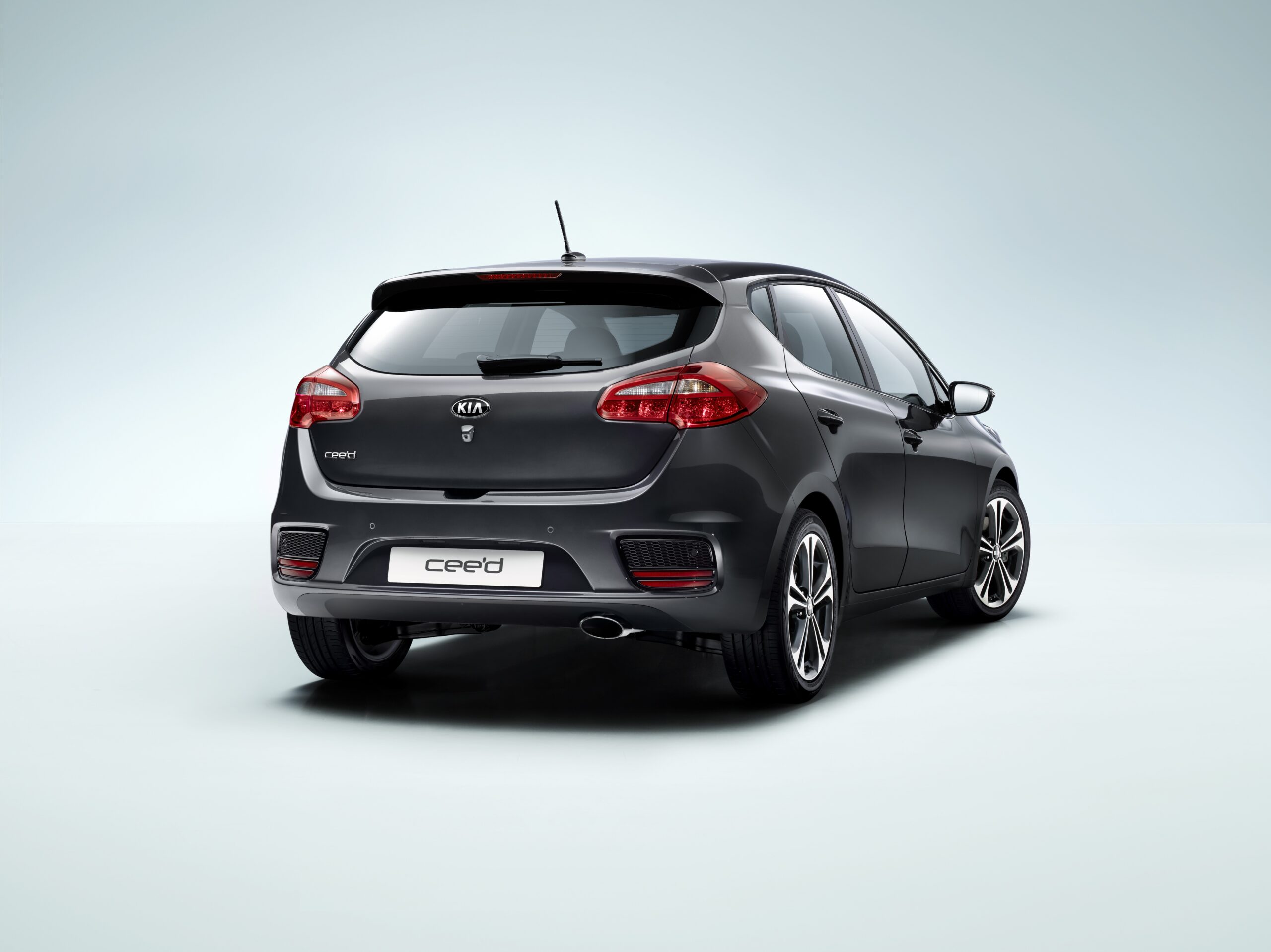
A used Kia Ceed offers excellent reliability and a seven‑year warranty. Paint thickness, turbo, clutch and battery need extra attention. That way, you avoid expensive surprises after buying. Know what to look out for to choose the right used car.
Why checking paint thickness and rust is essential
Paint thickness tells you whether a car has been resprayed. That often happens after accident damage. Measure with a paint thickness gauge (a device that measures the thickness of the paint) at several points on each panel. Original factory paint has a thickness of 90 to 150 micrometres (one‑thousandth of a millimetre). Strongly deviating values indicate the car has been resprayed. This points to possible hidden damage. Pay particular attention to doors, wings and sills.
Rust is not very common on the Kia Ceed, but still check the wheel arches, bottoms of the doors and sills. On older models from before 2015, rust sometimes appears due to poor care. Road salt in winter plays a part in this. Light surface rust is manageable. Holes from rust can easily cost hundreds of euros to repair.
‘ An engine without a complete record of all maintenance is a risk. ‘
Taking a closer look at the turbo and engine
The 1.6 CRDi diesel engine (with common‑rail direct injection) is reliable. Over time, the turbo sometimes starts to fail. Symptoms include loss of power. You may also get whistling noises or black smoke from the exhaust. During the test drive, check whether the car accelerates smoothly. Hesitation points to problems. Replacing a turbo costs between 800 and 1,500 euros.
Also pay attention to the engine’s service history (the record of all maintenance). Regular oil changes are essential to prevent wear. Ask for the service book. Check whether oil and filters have been replaced according to schedule. An engine without a complete record of all maintenance is a risk.

Testing the clutch on manual models
The clutch on manual versions can be a bit fragile on older models. During the test drive, check whether gear changes are smooth. Hesitation or strange noises point to problems. A clutch that slips or judders when pulling away indicates wear. This mainly happens when moving off. Replacement easily costs 600 to 1,000 euros.
When testing, also pay attention to how the clutch feels. A high biting point suggests the clutch is close to needing replacement. A soft pedal feel sends the same signal. Ask the seller when the clutch was last replaced or checked.
Thoroughly checking the battery and electronics
Car batteries typically last five to seven years. On older used cars, a weak battery causes starting problems. This is especially an issue in cold months. Test whether the car starts immediately without hesitation. A new battery costs between 100 and 200 euros, but does give peace of mind.
Check the infotainment system (the car’s screen and audio system), air conditioning and navigation. Some owners report faults in the touchscreen. Problems with Apple CarPlay and Android Auto (systems for connecting your phone) also occur. Test all functions thoroughly to avoid unpleasant surprises.
‘ Repairs to these areas quickly run into several hundred euros. ‘
Testing the gearbox and rear axle
The gearbox should shift smoothly. Jerking or grinding noises indicate problems. On older models in particular, the automatic gearbox can sometimes hesitate. During the test drive, drive at various speeds. Listen for unusual vibrations or delays during gear changes.
On some cars the rear axle makes noises while driving. Listen out for knocking or grinding sounds, especially in bends. This can indicate wear in the suspension. Bearing wear also occurs. Repairs to these areas quickly run into several hundred euros.
Inspecting tyres and braking system
Check the tyres for wear. Look for uneven wear patterns. That indicates incorrect wheel alignment. Faulty shock absorbers give the same pattern. Ask how old the tyres are and check tread depth. New tyres cost on average 400 to 600 euros per set.
Test the brakes during the test drive. Brake several times at different speeds. The brakes should respond promptly and smoothly. Vibrations or squealing noises indicate problems. Ask when the brake discs were replaced. Also ask when the brake pads were last changed. Replacing brakes costs between 200 and 500 euros, depending on the parts.
Assessing service history and mileage
A full record of all maintenance is worth its weight in gold. Ask for all service books and invoices. A car with 60,000 kilometres after four years is about average. A well‑maintained car with higher mileage is more reliable. A poorly maintained car with low mileage causes more problems.
Check that the mileage is genuine. Compare service stamps with MOT reports (inspection reports). Mileage fraud still occurs regularly. Look at wear on the pedals. Also check the steering wheel and gear lever. These give an honest picture of the car’s actual use.
‘ For families, the extra space is often worth the investment. ‘
What to look for in equipment and trim
Choose at least the “2” trim level (equipment level). This gives you air conditioning, cruise control and a touchscreen. A reversing camera is also included. Models from 2018 onwards have Apple CarPlay and Android Auto as standard. The GT‑Line adds sporty details and larger wheels. This trim costs around 2,000 euros more.
The estate version offers significantly more boot space than the hatchback. This version costs roughly a third more. Consider which version suits your daily use. For families, the extra space is often worth the investment. Think carefully about your practical needs. Only then decide which version suits you best.
Having warranty and an inspection arranged
The seven‑year Kia warranty is transferable on cars younger than two years. This applies to cars sold through approved dealers. Check whether the warranty is still valid. Check what conditions apply. A valid warranty can save you thousands of euros in repair costs.
Have an independent inspection (technical check of the car) carried out before you buy. A specialist checks the engine, transmission, brakes and suspension. Every component is inspected thoroughly. An inspection costs between 100 and 200 euros. This prevents expensive surprises later.
Avoiding common mistakes when buying
A low mileage does not tell the whole story. A car with a good service history and slightly higher mileage is more reliable. Avoid private sellers who cannot provide complete documentation. Proof of servicing should also be present.
Do not underestimate the advantages of the estate. Hatchbacks are cheaper to buy. The estate wins in daily use thanks to its huge boot space.
‘ A good seller will understand this. ‘
Using a test drive checklist
During the test drive, do a loop at town speeds. Also drive a stretch on the motorway. Test all gears. Listen to the engine noise, especially on diesels. Check whether the steering wheel is straight. The car should not pull to one side when driving straight.
Test all electrical functions. Check windows and mirrors. Also test the lights and the climate control (heating and cooling). Try out the infotainment system. Connect your phone. Take your time to test everything thoroughly. A good seller will understand this.
On the Carnews website you will find much more information about Kia models. It also lists common problems and maintenance tips. Use the search function to look up specific questions and issues relating to your model.
Frequently asked questions
The third generation Kia Ceed (from 2018, Mk3) is generally regarded as very reliable, partly due to the long factory warranty. For a sportier drive, the GT‑Line and GT versions are often mentioned, especially the 1.4 T‑GDi and 1.6 T‑GDi petrol engines. The 1.6 CRDi diesels are seen as durable and economical, but less overtly sporty than the turbocharged petrol engines. Overall, the larger engine variants are more reliable and more pleasant in everyday use than the smallest petrol engines.
On the Kia Ceed, mechanical wear points to look out for include wear in the gearbox (difficult or crunchy gear changes), unusual noises from the steering rack and rear axle, and uneven or rapid tyre wear. Also check the brakes for vibrations or scraping noises. Inside, high‑use areas such as the seats (outer bolster on the driver’s side), steering wheel, gear lever and controls (infotainment and air‑con buttons) are typical wear points. In addition, thoroughly test the infotainment system for faults and dead pixels in the screen.
Yes, over the years there have been various recalls and software updates for the Kia Ceed, as with almost all high‑volume models. Among other things, these have related to engine management, emission systems and sometimes safety‑related components (for example airbags or brake‑related parts), depending on year of manufacture and engine type. It is therefore important to have the VIN checked for outstanding recalls or software campaigns by a Kia dealer or via the official Kia website. When buying a used Ceed, also ask for documentation in the service history showing which recalls and updates have been carried out.
For the clutch, pay attention to the biting point (not extremely high or low), slip (engine revs rising without a corresponding increase in speed) and any vibration or burnt smell when pulling away and accelerating in a higher gear from low speed. Test the gearbox by shifting through all gears both gently and under firm acceleration: gear changes should be smooth and precise, without crunching, resistance or “snagging”, and without the car popping out of gear when you lift off the throttle. Assess the suspension by driving over speed bumps and manhole covers and through bends, listening for knocking, squeaking, ticking noises, wallowy behaviour or nervous steering. If in doubt, always have a pre‑purchase inspection carried out so that a check on a lift (play in suspension components, leaks, uneven tyre wear) can confirm the impression from the test drive.
Common problems include a freezing or slow infotainment screen, Bluetooth/Android Auto/Apple CarPlay connections dropping out and sometimes a system that restarts by itself. During a test drive, check all functions of the touchscreen (navigation, radio, display for parking sensors/camera), connect your phone and test on a longer drive to see whether the connection remains stable. Also check that the system starts up quickly, switches smoothly between menus and does not show error messages or freeze. Finally, test the sound from the speakers for crackling or intermittent sound.