
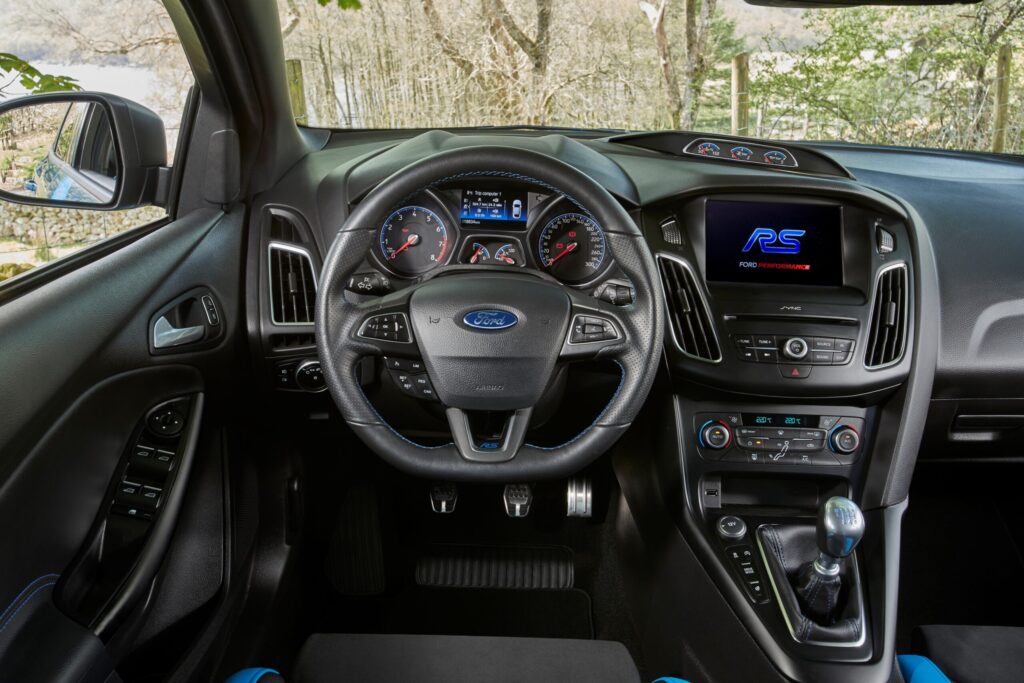
Increased oil consumption and engine leaks often point to wear, leaking seals or internal engine problems. Without intervention this can lead to expensive engine damage. This problem occurs regularly in older engines and certain models, including the Ford Focus with EcoBoost and Duratec variants. Regularly checking the oil level and taking timely action are therefore essential.
Do you recognise the symptoms of increased oil consumption?
Increased oil consumption shows several signals. The most important symptom is a rapidly dropping oil level. If you have to top up more often than every 1,000 to 2,000 kilometres, there is probably a problem. In older engines up to 1 litre per 1,000 kilometres is acceptable, but more points to an underlying defect.
Other recognisable symptoms are blue smoke from the exhaust. You see this mainly on a cold start or when accelerating. This smoke is created because oil is burning in the cylinders. Some owners also notice that their car starts poorly. This occurs especially when the engine is cold. The cause is oily spark plugs that have become fouled by oil in the combustion chamber.
In addition, you may see black emissions or soot deposits on the exhaust, even without visible leaks under the car. In other cases, you do see oil patches on the ground where the car has been parked. This indicates external leaks via gaskets or oil seals (seals around rotating shafts).
‘ However, more than 1 litre per 1,000 kilometres is still too much. ’
What causes high oil consumption and leaks?
The causes of increased oil consumption are diverse and often related to the age and maintenance of the engine. Worn piston rings and oil control rings (rings around the piston that scrape off oil) are among the most common causes. When they wear, oil leaks into the combustion chamber and burns there.
This problem becomes worse after 100,000 kilometres or more, especially in engines that do many short journeys or use low-quality oil. Owners regularly report consumption of 1 litre per 500 to 1,000 kilometres, often without visible external leaks.
Leaks from gaskets and oil seals
Leaking gaskets and oil seals are another very common cause. The head gasket, valve stem seals and sump gasket can wear, especially after overheating or at high mileage. In some engines, the rear crankshaft oil seal often leaks after intensive use.
These external leaks are usually visible as oil patches under the car or as oil traces around the engine. Timely replacement prevents small leaks from developing into major problems.
Problems with the PCV system
The PCV system (short for Positive Crankcase Ventilation, the system that regulates the pressure in the crankcase) can cause problems. A clogged or defective PCV valve builds up overpressure. As a result, oil is pushed into the inlet manifold (the part that distributes air to the engine) or leaks out through gaskets. This problem occurs regularly in older engines and is relatively easy to solve by checking the PCV valve and associated hoses and replacing them if necessary.
Other factors that increase oil consumption
Oil with the wrong specification also plays a role. Always use the specification recommended by the manufacturer, such as 5W-30. Oil that is too thin increases consumption. Overheating due to a faulty cooling system thins the oil and damages seals. This makes the problem worse.
In engines above 150,000 kilometres, slightly increased consumption is normal. However, more than 1 litre per 1,000 kilometres is still too much. Some engines also suffer from sludge build-up, a black oil deposit. This blocks the oil control rings and increases consumption.

How do you diagnose increased oil consumption?
A thorough diagnosis starts with regularly checking the oil level. Check this weekly with a cold engine on a level surface. Note how much oil you top up and after how many kilometres, so you can monitor consumption.
A compression test (measurement of the pressure in the cylinders) measures the pressure in each cylinder. Low pressure indicates worn piston rings or valve stem seals. For external leaks, clean the engine bay and go for a drive. Then check for fresh oil traces. A UV lamp with fluorescent oil makes leaks visible that are otherwise hard to find.
Blue smoke at idle points to internal oil burning. Also check the spark plugs: oily, black spark plugs confirm that oil is entering the combustion chamber.
Practical tips to reduce oil consumption
Preventive maintenance helps to limit oil consumption. Follow these practical tips:
- Always warm the engine up before using full throttle; this takes about 10 to 15 minutes
- Use the correct oil and replace the filter according to the recommended interval, usually every 10,000 kilometres or annually
- Inspect and clean the PCV system annually and replace the valve when it is worn
- Use a sludge remover to clear oil deposits that obstruct the oil control rings
- Consider seal conditioners to improve the elasticity of rubber seals; this gives a short-term effect
- Adjust your driving style: longer trips at a constant speed reduce wear compared with a lot of city driving
These measures can noticeably reduce consumption. Owners report that a combination of PCV replacement and an engine flush can reduce consumption from 1 litre per 500 kilometres to 1 litre per 2,000 kilometres.
‘ Engine damage due to lack of oil is expensive and can often be prevented with timely intervention. ’
When should you go to the garage?
Go to the garage immediately if the oil level drops below the minimum or if you see constant smoke. Also, with extremely high consumption, above 1 litre per 500 kilometres, a professional diagnosis is necessary. Engine damage due to lack of oil is expensive and can often be prevented with timely intervention.
Preferably choose an independent specialist (a garage that is not affiliated with a dealer) with experience in your car brand. Dealer overhauls are often more expensive. For engines around 100,000 kilometres, preventive inspection of the PCV system and oil seals is sensible.
How much do repairs for oil consumption cost?
The costs vary greatly depending on the cause. Replacing the PCV valve costs between 50 and 150 euros. Replacing gaskets and seals costs between 200 and 800 euros, depending on the location and accessibility.
Replacing a head gasket ranges between 800 and 1,500 euros. For internal engine problems such as worn piston rings, an engine overhaul is required, costing between 1,500 and 3,000 euros. These investments are high, but often necessary to prevent further damage.
Is increased oil consumption a manufacturing defect?
In some models and engine variants, increased oil consumption is a known problem. EcoBoost engines and older Duratec engines are known to consume more oil over time. This is related to design characteristics and operating conditions.
Whether this counts as a manufacturing defect depends on the warranty terms and the manufacturer’s assessment. In some cases the manufacturer acknowledges the problem and offers a solution. Contact your dealer if you suspect that it is a structural problem.
‘ Regularly checking the oil level, timely maintenance and using the correct oil makes all the difference. ’
Prevent engine damage with regular checks
High oil consumption and engine leaks are serious problems that, if ignored, lead to costly damage. Regularly checking the oil level, timely maintenance and using the correct oil makes all the difference. Do you recognise the symptoms and are you unsure how serious it is? Then have it checked by a specialist.
On the Carnews website you will find much more information about common car problems, maintenance tips and experiences with various models. Discover more articles and stay up to date with what is happening in the automotive world.
Frequently asked questions
First compare consumption with the manufacturer’s figures and experience reports from other owners of your exact engine variant (forums, handbook, dealer); for older engines, up to approx. 0.5–1 litre per 1,000 km is often still regarded as “within spec”. Then measure very precisely: fill up to the max, note the mileage, drive for example 1,000 km and see how much you have to top up. If you see blue smoke, oil patches under the car or you have to top up structurally more than is known as normal for your type, then the oil consumption is abnormally high. In that case, have a garage carry out a compression test, leak inspection and checks of, among other things, the PCV valve.
The most common causes are wear of piston rings and oil control rings, allowing oil to be drawn past the cylinder walls into the combustion chamber. In addition, ageing or dried-out gaskets and oil seals (such as valve stem seals and sump gaskets) that allow oil to leak externally. A clogged or poorly functioning crankcase ventilation system (PCV) can also cause overpressure, pushing oil into the intake or out of the engine. Incorrect or heavily degraded oil and prolonged heavy loading accelerate these problems in sporty or older cars.
If you ignore high oil consumption or leaks, you can suffer engine damage due to insufficient lubrication, overheating and accelerated wear of piston rings and gaskets. The engine can also become harder to start, produce more smoke and pollution and eventually require an expensive overhaul or replacement. You must act immediately if the oil level approaches the minimum or regularly drops below the minimum, if you see blue smoke from the exhaust or if there are clear oil patches under the car. In those cases, have a diagnosis carried out as soon as possible and drive as little as possible.
You can sometimes temporarily limit small weeping leaks around the sump gasket, rocker cover or caps by tightening properly, cleaning and possibly using a suitable additive for gaskets, plus strict monitoring of the oil level and timely oil changes with the correct oil. Also, (having) the PCV valve cleaned or replaced and warming the engine up gently can slightly reduce oil consumption. If consumption exceeds around 1 litre per 1,000 km, you see constant blue smoke or oily spark plugs, the cause is often internal engine wear (e.g. piston rings, valve seals). In that case, or with obvious oil patches that return after cleaning, a visit to a garage is unavoidable.
Engine leaks and excessive oil consumption result in insufficient lubrication, which increases friction and temperature in the engine and noticeably reduces power and smoothness. Due to the higher thermal and mechanical load, the risk of severe wear or engine damage (such as seizure or failed bearings) increases sharply. In competitive conditions, where the engine runs at high revs for long periods, this effect is exacerbated because the engine is constantly under maximum load. As a result, both performance and reliability decline and the risk of failure during a race or competition increases significantly.