
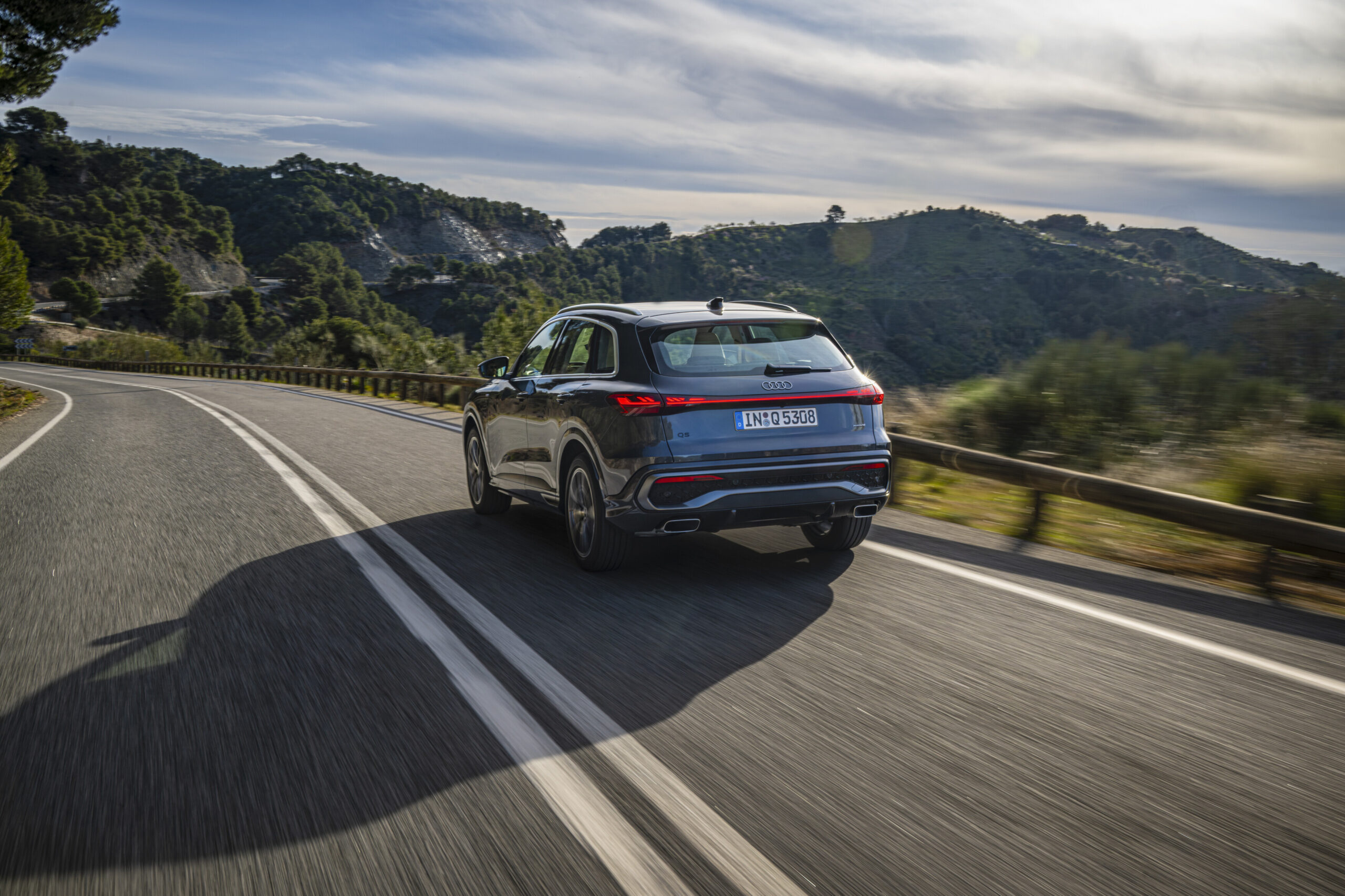
The Audi Q5 with 2.0 TFSI engine suffers from a persistent problem: high oil consumption. Many owners of early models have to top up as much as 1 litre of oil every 1,000 kilometres. This is a design issue in the engines from the 2008–2012 period, where wear of piston rings and cylinder walls causes oil to be burnt instead of recirculated. Do you recognise this problem? Then it is time to understand what is going on and what you can do about it.
Causes of high oil consumption in the Q5
The 2.0 TFSI engines (TFSI stands for a petrol engine with turbo and direct fuel injection) in the first-generation Audi Q5 were designed with direct injection and a turbo. This provides strong performance, but it also has a downside. The boost system via the intercooler – a cooler that cools the intake air before it enters the engine – pushes oil into the cylinders, where it burns during the combustion process. With intensive use this problem gets worse.
The main culprits are wear to piston rings and cylinder walls. These components normally provide a good seal, but in early TFSI engines the quality is insufficient. As a result, oil leaks past the pistons and ends up in the combustion chamber. Contamination of valve seats by burnt oil makes the effect worse. The sealing deteriorates further and oil consumption rises.
Short journeys and urban traffic make the problem worse. The engine does not reach proper operating temperature and oil evaporates less efficiently. Owners report that consumption can rise to 1 litre per 900 kilometres with daily city use.
‘ With the Q5 TFSI from the 2008–2012 period, reality is often different. ’
How much oil consumption is normal
Audi officially states that consumption of 0.5 litre per 1,000 kilometres is acceptable. For some models, a standard of 1 litre per 2,000 kilometres even applies, depending on driving style and mileage. With the Q5 TFSI from the 2008–2012 period, reality is often different.
These are experiences from owners:
- 1 litre per 900 kilometres with a 2009 model with 78,000 kilometres
- 1 litre per 1,000 to 1,500 kilometres, even after interventions by the dealer
- 1 litre per 2,000 to 3,000 kilometres in newer examples, but increasing at higher mileages
Engines from 2014 onwards perform better thanks to improved materials and software adjustments. In models with mild-hybrid technology – a drivetrain in which a small electric motor supports the combustion engine – consumption is often below 1 litre per 5,000 kilometres. Mileages above 100,000 worsen the problem considerably in older engines.


Checking oil consumption without a dipstick
Many Audi Q5 models no longer have a physical dipstick. The oil level is measured electronically via the dashboard. This makes checking more difficult, but not impossible. Park the car on a level surface and briefly start the engine. After a few minutes at a standstill you can read the oil level via the MMI system (Audi’s multimedia and control system).
Pay attention to the warning signals. If the level is too low, a warning will appear on the dashboard. Do not ignore this, because driving for a long time with too little oil damages the engine. Ideally, measure weekly, especially if you know that your car belongs to the problem group.
Another method is to manually track how much oil you top up and when. Write down the mileage every time you add oil. This gives you insight into the consumption pattern. If consumption is above 1 litre per 2,000 kilometres, action is necessary.
Consequences of high oil consumption
Burnt oil leaves the engine via the exhaust, but leaves deposits on the valves and in the catalytic converter – a component in the exhaust system that cleans exhaust gases. Over time the catalytic converter becomes clogged, leading to faults. Fault code P0420 (an OBD fault code indicating a problem with the catalytic converter) is a common sign of catalyst failure due to oil consumption.
The engine itself also suffers damage. Too little oil means less lubrication, which leads to increased friction between moving parts. Cylinder walls and pistons wear faster, causing consumption to increase further. It becomes a vicious circle that can ultimately lead to costly engine repairs.
In addition to technical damage there are financial consequences. Topping up oil costs money, especially if you have to add a litre every 1,000 kilometres. Repairs to pistons, valves or the catalytic converter quickly run into the thousands of euros. Preventive maintenance is therefore not a luxury.
‘ Consider legal advice if the dealer will not cooperate and you suspect a design defect. ’
Possible solutions for the oil consumption
The most thorough solution is to replace pistons and piston rings. This repair is expensive, but prevents further damage to engine and catalytic converter. Some dealers offer goodwill on known problems, but the warranty often expires quickly. Always check the service history and ask about previous interventions.
Less invasive measures can also help:
- Use thicker oil, such as 10W40 instead of 5W40, to reduce consumption
- Follow dealer software updates that can reduce oil consumption
- Have the intercooler and turbo checked to prevent oil being blown out
- Adjust your driving style by avoiding short journeys and allowing the engine to warm up properly
With consumption above 1 litre per 2,000 kilometres, inspection of pistons and valves is advisable. This intervention is expensive, but preserves the lifespan of engine and catalytic converter. Consider legal advice if the dealer will not cooperate and you suspect a design defect.


High oil consumption when buying second-hand
For buyers of a used Audi Q5 TFSI, oil consumption is an important point of attention. Models from the 2008–2012 period have the highest risk of problems. Always ask about the oil consumption and check whether repairs have been carried out on pistons or valves.
Test the oil consumption during a longer test drive if possible. Check the oil level before and after the drive. Ask the seller about the maintenance history and whether there have been any complaints. Missing information is a red flag.
Models from 2014 onwards are more reliable thanks to improved materials and software. The mild-hybrid versions with 204 to 265 hp show fewer problems. If you are considering an early model, take future maintenance costs into account. A lower purchase price can quickly be overtaken by repair costs.
Tips for Q5 TFSI owners
Check the oil level regularly, at least once a week. This prevents you from suddenly ending up with an oil-starved engine. Keep spare oil in the car, especially on longer journeys. Use only oil approved by Audi to avoid problems with warranty.
Avoid short trips where possible. In that case the engine does not reach operating temperature, which increases oil consumption. Plan your routes smartly and combine short trips into longer journeys. This helps not only oil consumption but also fuel consumption.
Plan maintenance checks proactively. Ask the garage specifically about oil consumption and have cylinders, pistons and valves inspected if in doubt. A good mechanic recognises the warning signs and can advise on next steps.
‘ The space and finish are typically Audi: high quality and solid. ’
Why the Q5 TFSI remains attractive
Despite its oil consumption, the Audi Q5 TFSI remains popular. The ride comfort, quiet cabin and strong performance make it a pleasant car for everyday use. Fuel consumption is between 8 and 11 litres per 100 kilometres, which is reasonable for an SUV with this level of performance.
The space and finish are typically Audi: high quality and solid. For many owners these advantages outweigh the oil consumption, especially if they carry out proactive maintenance. With the right attention and measures you can keep the Q5 TFSI reliably on the road for a long time.
The market offers plenty of choice. Those who want to avoid the oil consumption choose a model from 2014 onwards or a mild-hybrid version. These newer generations combine the qualities of the Q5 with improved technology. For fans of the model this is a reassuring option.
On the Carnews website you will find more information about known problems with various car brands, maintenance advice and tips for buying a used car. Discover what you need to know before you make a choice.
Frequently asked questions
The Audi Q5 TFSI (in particular the early 2.0 TFSI engines from 2008–2012) is known for high oil consumption due to design flaws in the engine, such as pistons and piston rings that do not seal sufficiently. Because of the direct injection and turbo pressure, relatively large amounts of oil enter the combustion chamber, where it burns along with the fuel. This leads to fouling of valves and cylinders, which further worsens the sealing and increases oil consumption even more. In addition, short journeys and a lot of city driving exacerbate this problem.
The increased oil consumption in the Audi Q5 TFSI engines is mainly due to design weaknesses in the early 2.0 TFSIs (2008–2012), in which oil enters the combustion chambers via overpressure in the intake and turbo system. Due to burnt oil, piston rings, pistons and valves become coked up, which worsens the sealing and further increases oil consumption. In addition, direct injection in combination with a turbo, valve coking and sometimes timing chain and turbocharger problems also play a role. Short journeys, a lot of city driving and higher mileages reinforce these underlying technical weaknesses.
Possible solutions include switching to a slightly thicker oil approved by Audi (e.g. 10W40 instead of 5W40) and having software updates carried out, which usually fall within regular servicing (several hundred euros per service). Furthermore, you can have the intercooler, turbo and crankcase ventilation system checked and cleaned; depending on the work, this roughly ranges between €200 and €600. With structural consumption above about 1 litre per 2,000 km, overhaul work often comes into play, such as replacing or overhauling pistons, piston rings and valves, with costs that quickly end up between €1,500 and €4,000. In severe cases, a (partial) engine overhaul or replacement engine may be required, with costs that can rise to well above €4,000.
You can limit oil consumption by checking the oil level weekly and always using the prescribed, possibly slightly thicker, oil (e.g. 10W40 instead of 5W40 if permitted). In particular, avoid lots of short journeys; longer journeys where the engine reaches full operating temperature reduce consumption. During servicing, have the intercooler, turbo and any software updates checked, as these affect oil pressure and consumption. If consumption is higher than roughly 1 litre per 2,000 km, it is wise to consult a specialist in good time to have pistons and valves assessed.
Yes, persistently high oil consumption can in the long run have adverse effects on both engine performance and the lifespan of your Audi Q5 TFSI. Burnt oil causes fouling of pistons and valves, which reduces compression and power and can make the engine run more unevenly. In addition, exceeding acceptable oil consumption levels can ultimately lead to engine damage or damage to the catalytic converter. It is therefore important to have consumption checked and to consider timely maintenance or repairs (such as inspection of pistons/valves).