
The Volkswagen ID.4 stands out with smooth and responsive steering feel and powerful acceleration that owners appreciate as refreshing highlights in the electric driving experience. While other aspects of the model are a matter of debate, the handling and steering characteristics remain strong points that set this electric SUV apart from competitors. Discover what makes the ID.4 so pleasant to drive.
How does the steering feel of the ID.4 compare?
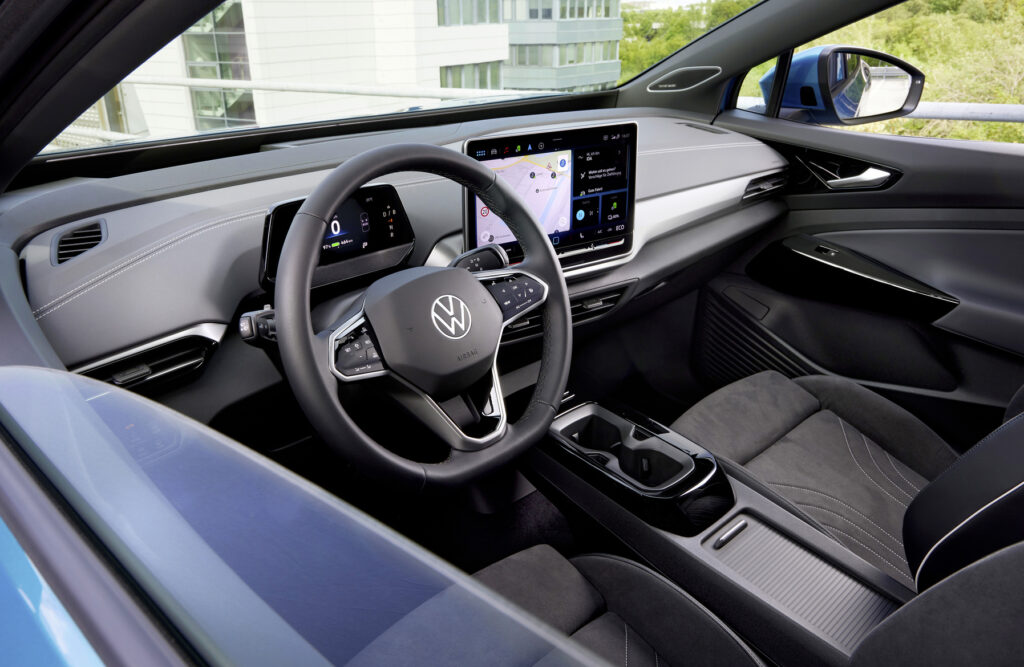
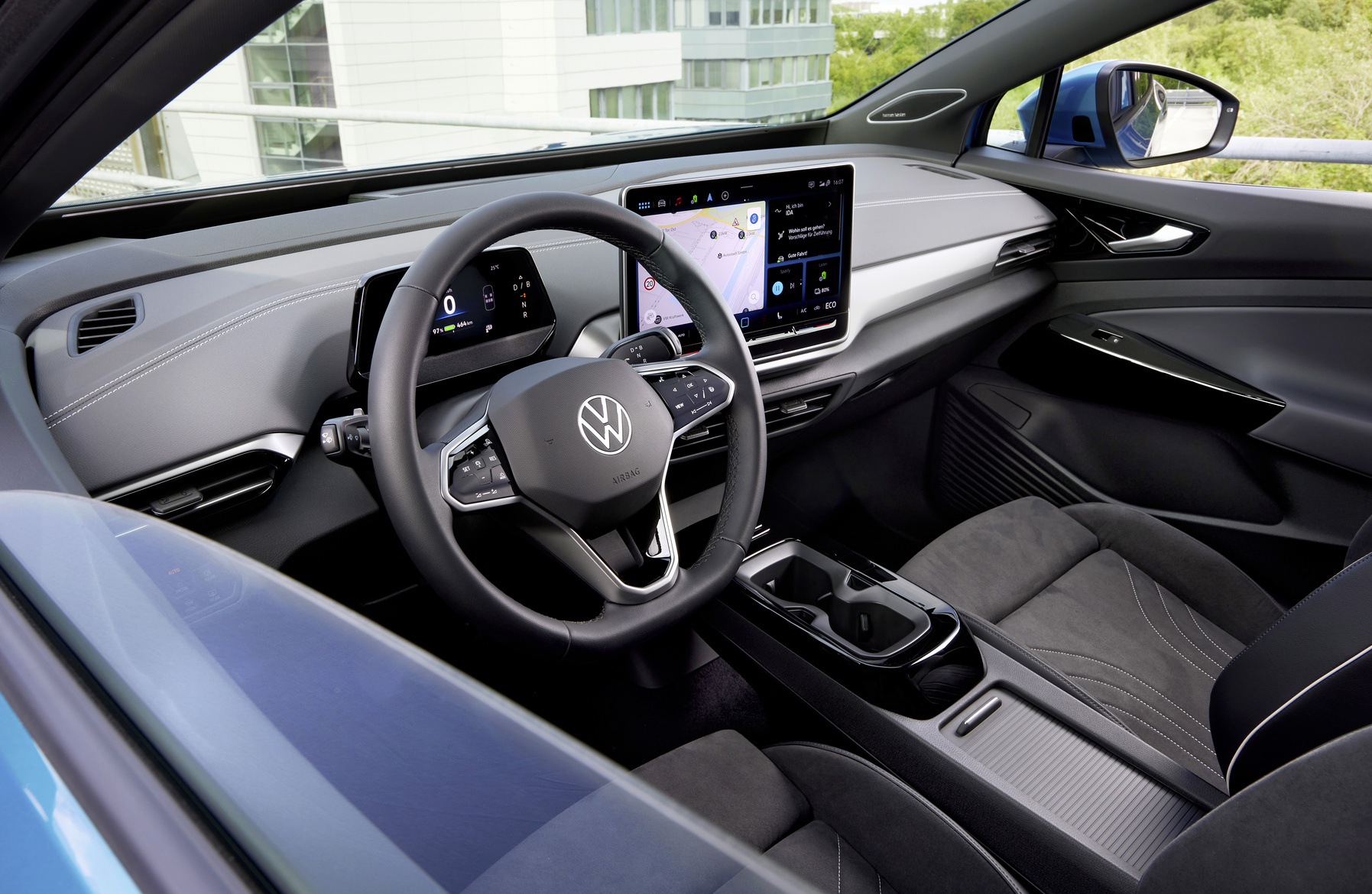
The steering feel of the ID.4 combines precision with accessibility. The electric steering system has been developed with a focus on comfort and control, with the leather‑wrapped multifunction steering wheel offering intuitive controls. Key functions such as adaptive cruise control can be activated directly from the steering wheel, contributing to a clear and relaxed driving experience.
The responsiveness of the steering makes precise control possible without sacrificing comfort. This applies both when manoeuvring in town and when holding your line on the motorway. Owners regularly describe the steering as smooth and direct, with the car doing exactly what you ask without unexpected deviations or delays in response.
The electric steering system is supported by electronic driver aids (systems that assist the driver while driving). Lane Assist monitors the lane and gently steers the Volkswagen ID.4 back when the vehicle threatens to drift off without using the indicator. This system works subtly and unobtrusively, so the driver always remains in control while still getting help to stay between the lines.
‘ These performance figures put the ID.4 in a competitive position within the electric SUV segment. ’
Power and acceleration of the ID.4
The performance of the ID.4 varies by model, but comfortably meets what you may expect from an electric SUV. The base version, the ID.4 1ST, delivers 204 PS with 310 Nm of torque, good for 0–62 mph in 8.5 seconds. This is more than adequate for everyday use and motorway journeys.
If you choose the ID.4 Pro, power increases to 286 PS and the sprint to 62 mph drops to 6.7 seconds. The top version, the ID.4 GTX, is the fastest, covering the 0–62 mph sprint in just 5.4 seconds. These performance figures put the ID.4 in a competitive position within the electric SUV segment.
The instant torque of the electric motor ensures a swift response when pulling away and overtaking. This torque is available immediately, unlike combustion engines which first need to build up revs. The top speed of the ID.4 1ST is limited to 99 mph, which contributes to efficient energy consumption and thus a greater driving range.
Electronic driver aids enhance the handling
The ID.4 features a range of assistance systems that directly contribute to the driving experience and handling. These systems support the driver without reducing driving enjoyment:
- Adaptive Cruise Control – Automatically adjusts the speed to the traffic ahead. If the traffic in front comes to a complete standstill, the system also brings the car to a stop and pulls away again when the traffic moves on.
- Travel Assist – Combines Adaptive Cruise Control, Lane Assist and Side Assist in one integrated system. Can be activated via a button on the left of the steering wheel for a semi‑automated driving experience on long journeys.
- Front Assist – Detects obstacles such as pedestrians, animals or other objects in the road and warns the driver in good time.
- Side Assist – A blind‑spot monitor that becomes active during overtaking manoeuvres and warns when a vehicle is in the blind spot.
- Traffic sign recognition – Recognises traffic signs and informs the driver, for example when overtaking is prohibited or when the speed limit changes.
These systems make the ID.4 not only safer, but also more comfortable over long distances. Travel Assist takes a lot of the strain out of monotonous driving situations, while steering responsiveness is preserved for when you want to steer actively yourself.
Handling comparison with competitors
Compared with competitors such as the Tesla Model Y, Hyundai Ioniq 5 and Ford Mustang Mach‑E, the ID.4 scores well in terms of steering precision and balance. Where the Model Y is known for its sporty handling but can sometimes feel harsh, the ID.4 offers a more balanced compromise between comfort and responsiveness.
The ID.4 feels stable thanks to the low centre of gravity created by the battery. The 77 kWh battery pack is located under the floor. This results in a WLTP range of 501 kilometres and provides excellent weight distribution. The result is predictable behaviour in bends and minimal body movements during changes of direction.
The towing capacity of 1,000 kilograms makes the ID.4 suitable for practical use, such as towing a trailer. Even when loaded, the car remains stable and predictable in its steering, which is less the case with some lighter electric competitors.
Advantages of driving the ID.4
Owners value several aspects of the driving experience that together create a positive overall impression. The smooth steering feel and responsive acceleration are the most frequently mentioned positive characteristics, but there are more elements that contribute to driving pleasure:
- Instant torque – The electric motor delivers maximum torque immediately, resulting in brisk and smooth acceleration with no gear changes.
- Stable road holding – The low centre of gravity and good weight distribution make the ID.4 stable in bends and during changes in speed.
- Quiet driving experience – Electric driving means no engine noise. Wind and tyre noise therefore become the main sound sources, helping to create a calm atmosphere in the cabin.
- Intuitive controls – The 12.9‑inch touchscreen with improved touch sliders for temperature and volume control integrates seamlessly with the driving functions and is always backlit for easy operation.
- Comfortable seating position – Electrically adjustable seats and a heated multifunction steering wheel increase comfort, especially on longer journeys.
Practical driving qualities for everyday use
The ID.4 proves its worth above all in everyday driving situations. The car combines sufficient power, responsive steering and supportive assistance systems. This makes it suitable for both short commutes and longer holiday trips. When rapid charging at a 125 kW charge point, half an hour of charging is enough for an additional 320 kilometres of range, which makes the vehicle practical for longer distances.
The electrically adjustable seats and heated front seats add to driving comfort, while the ergonomically designed interior ensures a natural seating position. This reduces fatigue on long journeys and increases the driver’s concentration.
The multifunction steering wheel gives access to all major functions while you keep your hands on the wheel at all times. This increases safety and makes the car intuitive to use, even for drivers who are new to electric vehicles.
Where the ID.4 sets itself apart
What distinguishes the ID.4 from its competitors is its focus on balance. Instead of extreme sportiness or maximum comfort, Volkswagen opts for a middle ground that works well in many situations. The steering feel is precise enough for twisty roads, but not so sharp that it becomes uncomfortable during long stretches of motorway driving.
Acceleration is lively enough to feel enjoyable without compromising range. This balanced approach appeals to owners who are looking for a reliable and pleasant electric car without extreme characteristics in one direction.
On the Carnews website you will find much more information about the Volkswagen ID.4, electric cars and comparisons with other models. Discover practical tips, technical details and experiences that help you make the right choice for your situation.
Frequently asked questions
The ID.4’s control‑system steering is primarily tuned for comfort and safety, with strong support from assistance systems such as Travel Assist and Lane Assist. The steering is precise enough for everyday journeys and inspires sufficient confidence, but is more filtered than truly communicative. For drivers seeking a very sharp, sporty and engaging driving experience, the feedback can feel somewhat muted and detached.
The handling characteristics of the ID.4 are strongly influenced by its electric architecture, with a low‑mounted, centrally positioned high‑voltage battery that provides a favourable centre of gravity and good weight distribution. This promotes stability in corners and gives the car predictable, safe cornering behaviour rather than extremely sporty sharpness. The immediate torque delivery of the electric motor supports brisk acceleration out of bends, while the electronic assistance systems (such as Lane Assist and Travel Assist) further enhance steering precision and directional stability. As a result, the ID.4 feels agile enough for everyday traffic, but is clearly tuned for comfort and stability rather than purely dynamic agility.
The different driving modes affect the extent to which the control‑system steering (including Lane Assist, Adaptive Cruise Control and Travel Assist) operates actively and intervenes: in more comfort‑oriented modes the system works more gently and with a focus on comfort, while in more dynamic modes the response feels more direct and taut. This also changes the overall handling experience: in Comfort mode the car steers more calmly and forgivingly, whereas in a sportier mode it responds more sharply to steering and throttle inputs.
In terms of driving dynamics, the ID.4 is primarily focused on comfort, stability and safety, rather than the playful, sharp character that many car enthusiasts are looking for. The “control‑system steering” and extensive assistance systems make the car very user‑friendly, but filter out some of the direct feedback and involvement. Compared with more sportily tuned electric SUVs, the ID.4 therefore feels more like a comfortable cruiser than a truly dynamic driver’s car. For pure driving enjoyment it generally cannot fully compete with the most dynamic electric SUVs.