
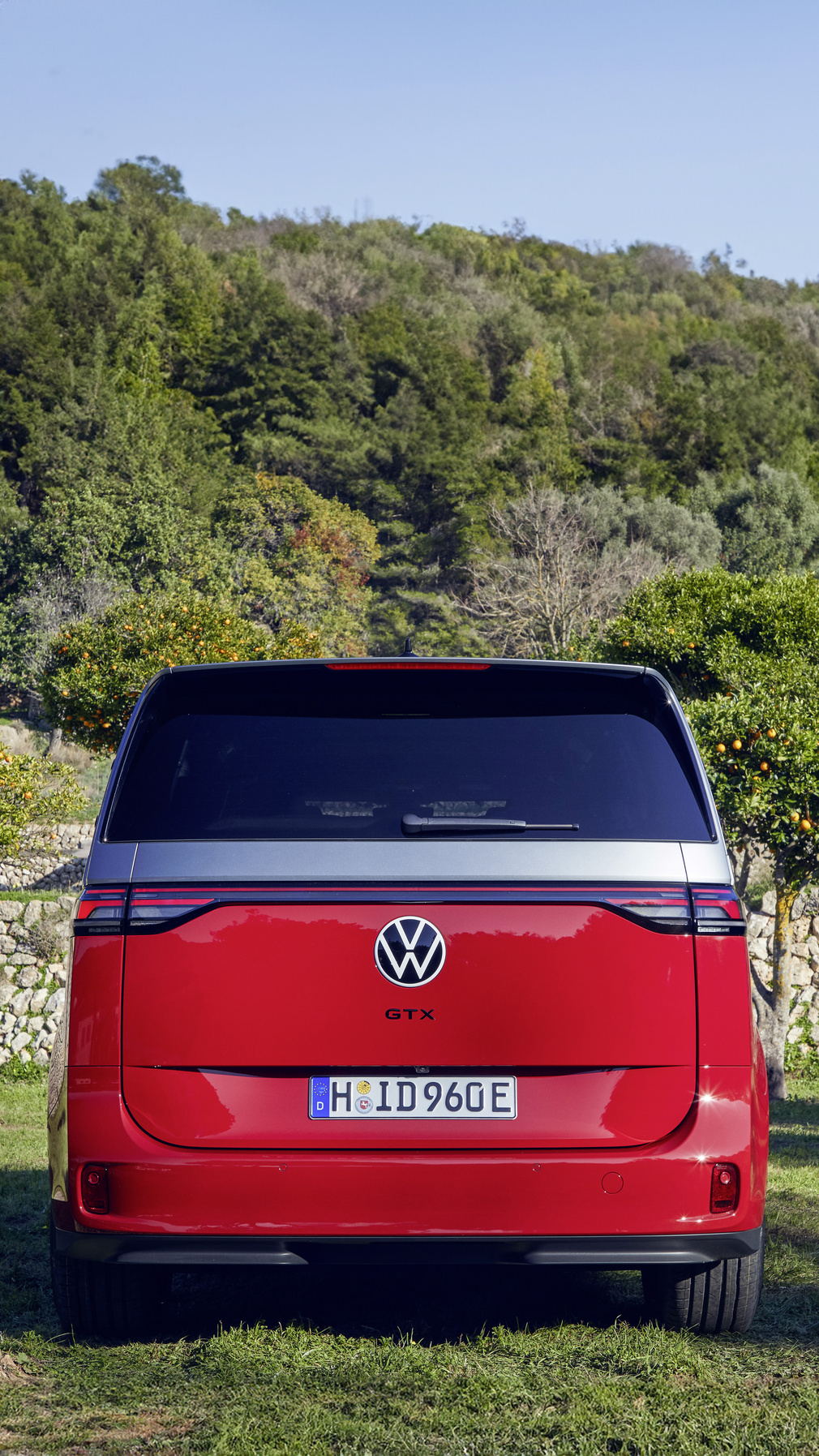
The Volkswagen ID. Buzz GTX delivers a brutal burst of acceleration with 340 hp and four-wheel drive. Real-world consumption of 28-30 kWh per 100 kilometres eats into your range. On the motorway your available distance shrinks quickly. Long journeys require careful planning. Discover what this sporty electric van really consumes and whether it suits your driving profile.
Performance you feel in the back of your seat
The Volkswagen ID. Buzz GTX has two electric motors that together deliver 250 kW, good for 335-340 hp. The 560 Nm of torque is available instantly. This four-wheel drive setup enables a 0-100 km/h sprint in 6.1 to 6.5 seconds. For a van of almost 3 tonnes that is remarkably quick.
The top speed is 160 km/h, electronically limited. Activate sport mode and you experience maximum pulling power when overtaking. The four-wheel drive offers extra traction on wet roads. Even when heavily loaded, the four-wheel drive provides grip. With seven seats and a drag coefficient of 0.29, the GTX combines space with relatively aerodynamic properties.
Real-world consumption of the ID. Buzz GTX
The GTX has a usable battery capacity of 79-86 kWh, depending on the configuration. The official WLTP figures are between 20.5 and 21.5 kWh per 100 kilometres, which translates into a range of 423-473 kilometres. Those are test conditions.
In daily use, consumption is higher. For mixed driving you should reckon on around 200 Wh per kilometre. Your range therefore comes out at roughly 380 kilometres. If you mainly drive on the motorway, consumption rises noticeably:
- Mild weather, mixed driving: 200 Wh/km, range 380 km
- Cold weather, motorway: up to 313 Wh/km, range 275 km
- City, mild weather: 155 Wh/km, range up to 478 km
In practice, consumption hovers around 28-30 kWh per 100 kilometres with normal use. In winter this rises by 20-30 percent. The cabin heating is the main cause. The WLTP range of 450 kilometres therefore shrinks to 300-350 kilometres in cold weather and on motorway trips.

Suitable for long journeys or not
Long journeys in the GTX require preparation. If you drive at 120-130 km/h in cold weather, you will manage around 300 kilometres without a stop. After that you have to charge. Planning charging stops is essential, especially with all seats occupied or a full load of luggage.
The ID. Buzz GTX supports DC fast charging up to 185-200 kW. In real life you charge from 10 to 80 percent in 26-33 minutes. Average charging power is around 115-145 kW. On a 150 kW charger, you are therefore ready for the next leg after about half an hour. AC charging is possible up to 11 kW, allowing you to fully charge at home in roughly 9 hours.
For daily trips under 200 kilometres the GTX is perfectly suitable. For frequent long-distance journeys you must take charging stops and winter conditions into account. These significantly reduce your range. Precondition your battery before fast charging in order to achieve optimal charging speeds.
Differences between the GTX and the standard model
The standard ID. Buzz model has rear-wheel drive with a single electric motor. This delivers 150 kW. Acceleration is therefore around 10 seconds from 0-100 km/h. The standard model has no second motor. Power output is lower as well. As a result consumption is lower. In real-world driving you get closer to 18-22 kWh per 100 kilometres with the standard model, which translates into a longer range.
The GTX adds:
- Second electric motor at the front for four-wheel drive
- 90 kW extra power (total 250 kW versus 150 kW)
- Torque of 560 Nm versus 310 Nm
- Acceleration in 6.1 seconds versus 10 seconds
- Better traction in bad weather and with heavy loads
The GTX has an additional motor and four-wheel drive. The weight is therefore higher. This explains the higher consumption. If you choose the GTX, you pay for the extra performance and traction with kilometres of range.
‘ That gains you 15-20 percent in range. ’
Tips for lower consumption
You can reduce the GTX’s consumption with a few measures. Drive in Eco mode. That gains you 15-20 percent in range. Keep your speed on the motorway between 100 and 110 km/h. Avoid speeds of 130 km/h. This immediately delivers a benefit.
Check your tyre pressures weekly. Correct pressure saves 5-10 percent in consumption. Limit the use of heating and air conditioning. Heat the cabin while charging. Regenerative braking recharges the battery in urban traffic, which increases your range.
Plan your route with apps such as A Better Routeplanner. That way you know exactly where you will need charging stops. This helps you avoid unpleasant surprises. Volkswagen regularly issues software updates. These sometimes improve the efficiency of the energy management.

Real-world experiences with the GTX
Owners appreciate the smooth power delivery and the spacious interior with seven seats. For family holidays the GTX offers enough room and pulling power. Do test the third row of seats for comfort on longer journeys. Space is more limited there.
The sporty performance makes the difference when overtaking. You also notice the difference when the vehicle is loaded. The four-wheel drive inspires confidence in rainy conditions. For everyday use, owners praise the electric driving characteristics. Petrol alternatives compare less favourably.
Winter tyres are recommended to help preserve range. This applies especially in the colder months. Consumption rises sharply in winter. This is something to bear in mind. Estimate this carefully in advance. Avoid peak times at fast chargers. This results in shorter waiting times. Availability is also better then.
Find out more about electric driving
The ID. Buzz GTX combines retro design with sporty performance and practical space. Consumption is higher than in the standard model, but the four-wheel drive and strong acceleration make up for that for anyone who values these qualities. For shorter daily journeys and the odd long trip with planned charging stops, the GTX is a solid choice. Do bear in mind that charging costs at public fast chargers range between €0.50 and €0.80 per kWh, depending on the provider and the type of charging point.
On the Carnews website, you will find much more information about electric cars, charging infrastructure and real-world experiences with different models. Discover which electric van or car best suits your driving style and which experiences other car enthusiasts share.
Frequently asked questions
The Volkswagen ID. Buzz GTX accelerates from 0-100 km/h in around 6.1 seconds. The top speed is electronically limited to 160 km/h.
The real-world electric range of the ID. Buzz GTX in mixed daily use is around 350–400 km in mild weather. In the city, with a relaxed driving style, you can get towards 450–480 km. On the motorway, especially at higher speeds or in cold weather, the realistic range drops to about 250–300 km. Load, weather conditions and driving style can influence this range by roughly 20–30% in either direction.
The driving modes determine how much power the two electric motors deliver and how sharply the accelerator responds: in sporty mode maximum power is released more quickly and the ID. Buzz GTX accelerates most aggressively. In Comfort or Normal there is still plenty of power, but the response is more gradual for a calmer drive. In Eco, available power is limited and the climate control is toned down to clearly reduce energy consumption. In general, the sportier the mode, the higher the consumption and the shorter the range.
For its size, the ID. Buzz GTX steers surprisingly tightly and predictably, but it clearly remains a heavy, tall van and feels less sharp and precise than low-slung EVs such as a Kia EV6 GT or Tesla Model Y Performance. In corners there is more body movement and less direct feedback, so it is tuned more for stability and comfort than for outright sportiness. The four-wheel drive and high torque do provide strong, lively-feeling acceleration, but the character is more that of a “powerful cruiser” than a “hot hatch on electricity”. That makes it the most dynamic and enjoyable version within the Buzz line, but not the sharpest-handling car in the performance EV segment.
The ID. Buzz GTX has two electric motors with a combined output of around 250 kW (about 340 hp) and 560 Nm of torque, paired with four-wheel drive. This translates into brisk and smooth everyday usability, even when fully loaded, with plenty of pulling power and good traction in bad weather. In sporting terms this results in a 0‑100 km/h time of about 6.1 seconds and a limited top speed of 160 km/h, which is very quick for a van. Thanks to the relatively large battery (around 79–86 kWh usable), the range also remains practical even if you make regular use of the available power.