
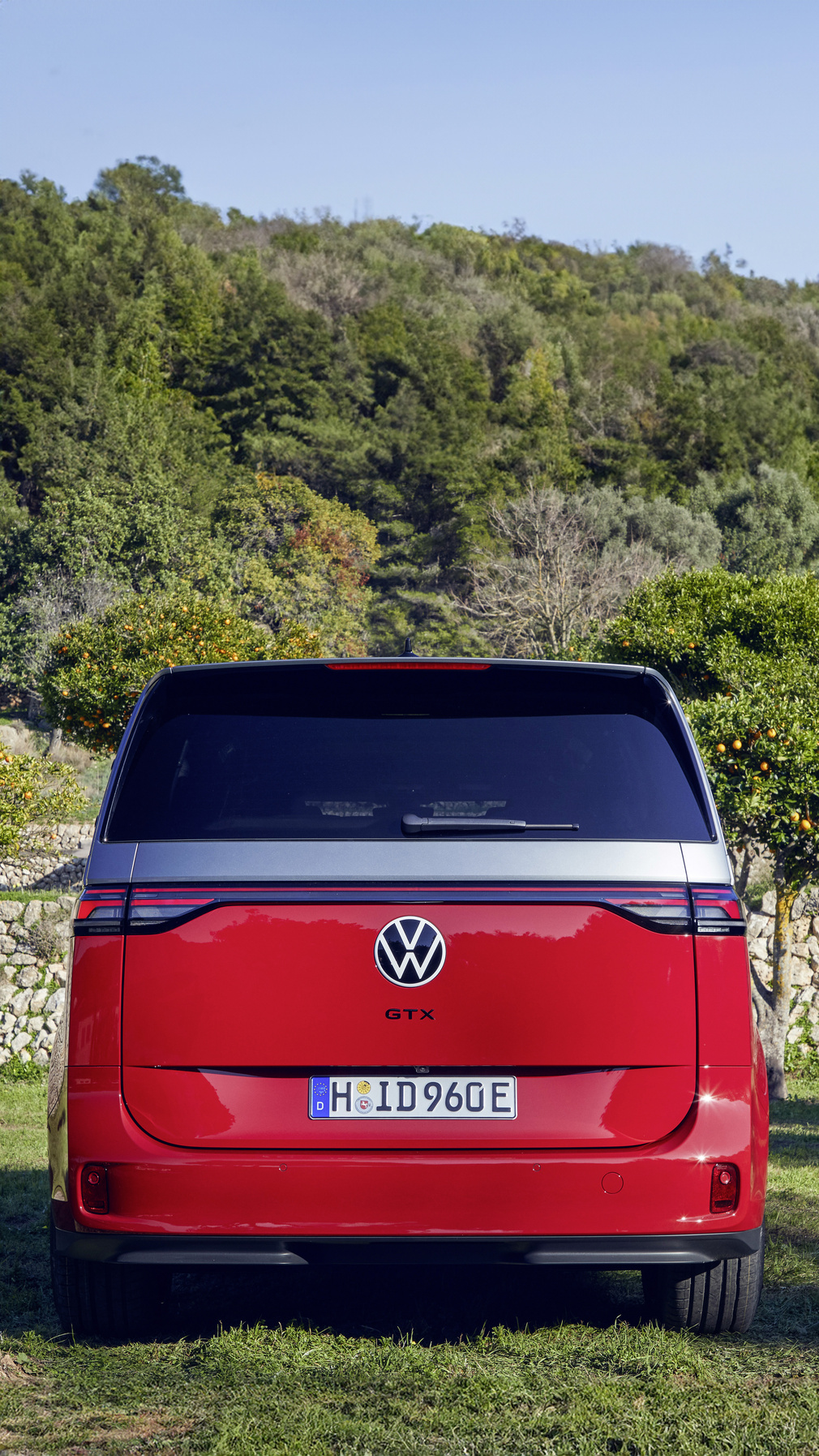
The Volkswagen ID. Buzz with long wheelbase and seven seats solves space complaints, but suffers from safety problems around the third row and weight issues that limit the range. In addition, this electric bus lacks the sliding seats that the Multivan does have, which affects everyday usability. Are you curious whether these problems are really a dealbreaker?
Why does the standard ID. Buzz have space problems?
The short wheelbase of the standard Volkswagen ID. Buzz results in limited luggage space and rear legroom. Families in particular notice this on longer journeys with lots of luggage. While the electric bus does offer generous luggage space with the seats folded down, there is little room left for cargo when all seats are in use. For daily use with five people and suitcases, the standard version does not always live up to expectations.
This lack of space was a reason for many buyers to wait for the LWB version. That promised a solution with an extra 25 centimetres in length and a third row of seats for up to seven occupants. The introduction of this longer version did not come without problems.
‘ The third row technically has space for three people, but only has two seatbelts. ’
The third row of seats does not meet safety standards
The LWB version with seven seats has a curious safety issue. The third row technically has space for three people, but only has two seatbelts. This does not comply with American safety standards and increases the risk of injury in an accident. Volkswagen is modifying thousands of vehicles in the US and Canada by adding unpadded sections to the seat base.
This makes the official seating surface smaller and allows the bus to meet the requirements for occupant crash protection. Dealers are carrying out this modification free of charge, but no extra belt is added. This means that in practical terms the third row remains suitable for two people with a seatbelt, despite the available width.
When importing or buying second-hand, check whether the third row has already been modified. Always test the legroom before you buy. The extra centimetres provide more comfort than the short version, but make sure children always have a belt on for optimum safety.

Weight significantly reduces the range
The long wheelbase also brings weight problems. The LWB already weighs more than 2,600 kilograms empty. This high weight significantly limits the range and puts heavy strain on the drivetrain. On fully loaded trips with seven people and luggage you clearly notice this in the energy consumption and acceleration.
Volkswagen has postponed plans for a camper version because of these weight issues. A fully equipped camper variant would weigh more than 3,000 kilograms, further undermining everyday usability. The manufacturer is looking at ways to reduce weight, possibly by using lighter battery technology.
Users report that the space is impressive. With the seats folded down, the bus can accommodate up to 2,500 litres of luggage. You do, however, notice the weight when loading and accelerating. The ID. Buzz LWB is ideal for long trips with lots of stuff, but less suited to city traffic. Despite having a tight turning circle, parking in narrow multi-storey car parks remains a challenge.
Missing sliding seats set ID. Buzz apart from Multivan
A striking difference from the Volkswagen Multivan is the lack of sliding seats in the ID. Buzz. The Multivan does offer this system, allowing you to flexibly adjust the seating space to changing needs. In the electric bus, the seats are fixed in place, which limits the configuration options.
This makes the ID. Buzz less versatile for users who regularly switch between carrying people and cargo. You can fold the seats down for extra loading space, but the fixed positions leave less room for custom layouts. For families who switch daily between school runs and weekend trips with luggage, this is a drawback.
The flat floor and sliding doors make getting in and out easy. The luggage compartment offers more than 1,100 litres as standard, which is sufficient for most situations. Even so, you miss the flexibility that sliding seats would have provided.
‘ The choice often comes down to personal preference for design and brand loyalty. ’
How does the ID. Buzz LWB compare with the Kia EV9?
The Kia EV9 is a direct rival to the ID. Buzz LWB in the segment of large electric family cars. Both offer seven seats, but the approach differs. The EV9 has a different body style and combines space with SUV looks, while the ID. Buzz goes for a retro bus design.
In terms of practical space, the Kia EV9 also offers generous seating and luggage room. The weight is in a similar range, which means both models struggle with range when fully loaded. The EV9 does have three belts on the third row as standard, which gives it a safety advantage over the ID. Buzz.
In terms of technology and standard equipment, both cars score well. The ID. Buzz Pure Limited starts at €44,490 and offers adaptive cruise control, LED lighting, dual-zone climate control and parking sensors. The Kia EV9 sits in a similar price bracket and offers comparable features. The choice often comes down to personal preference for design and brand loyalty.
Practical tips for ID. Buzz LWB buyers
Planning to buy the long-wheelbase ID. Buzz? Then go for the Pro version with the seven-seat package for the best layout. Use apps for route planning and range monitoring to avoid unpleasant surprises on the road. Charge regularly at rapid chargers to minimise the impact of the weight on the range.
Test the LWB extension during a test drive with your family. Check whether the extra 25 centimetres of length provides enough space for your situation. Pay particular attention to legroom on the third row if you often travel with seven people. Fold away the third row whenever you do not need it to maximise luggage space. This is ideal for transporting bikes or camping gear.
Keep track of recalls via your dealer. Volkswagen resolves known problems free of charge, but only if your car is registered for updates. Take the weight into account when loading heavy items. The bus can carry a lot, but every extra kilogram comes at the expense of range.
- Check whether the third row of seats has been modified in line with safety standards
- Plan routes with sufficient charging stops for fully loaded trips
- Test legroom on all rows during a test drive
- Make use of the flat floor and sliding doors for easy loading
- Consider whether the lack of sliding seats is an issue for your situation
Is the ID. Buzz LWB worth it despite the problems?
The long wheelbase solves space issues and offers impressive luggage capacity. For families who regularly travel with seven people and want to drive electric, the ID. Buzz is a serious option. The safety issues are known and are being addressed by Volkswagen, although the limitation of two belts on the third row remains.
The high weight does call for changes in driving style and route planning. Be prepared to charge more often than with lighter electric cars. The lack of sliding seats makes the bus less flexible than some competitors, but for fixed family setups this does not have to be a problem.
Always compare the ID. Buzz LWB with alternatives such as the Kia EV9. Both have strengths and weaknesses. The choice depends on your priorities in terms of design, safety and practical configuration options. A thorough test drive with a full complement of passengers gives the best insight into what the bus can offer.
On the Carnews website you will find a lot more information about electric family cars, comparisons between models and practical maintenance tips. Discover which electric bus or SUV best suits your situation and stay up to date with the latest developments in the automotive world.
Frequently asked questions
Car enthusiasts have to accept that the longer wheelbase and higher weight result in less agility and a less playful driving character, especially in city traffic and on twisty roads. The higher weight translates into slower acceleration and a less nimble feel. In addition, the extra mass can have a negative impact on braking performance and overall dynamics when changing lanes quickly.
Yes, the increase in weight and size of the 7-seat ID. Buzz has a noticeably negative effect on range in real-world use, especially when fully loaded. The unladen weight of more than 2,600 kg limits the effective range, particularly at motorway speeds or with many passengers and lots of luggage. The charging speed itself does not change significantly due to the extra weight, but you do have to charge more often because consumption is higher. In practice, this means more and slightly longer charging stops on long journeys.
Yes, there are ergonomic and accessibility issues with the third row of seats that limit ease of use for adults. Access to the third row is mainly via the sliding doors and between the seats, which is quite tight, so getting in and out can be awkward for adults. The modification to the third row to comply with safety standards (with a reduced official seating surface) further limits the effective seating space. As a result, the third row is in practice mainly comfortable for children or smaller adults.
The 7-seat configuration increases the flexibility of the interior because you have three full rows of seats and the seats (especially the third row) can be folded down to rearrange the space. When all seven seats are in use, there is less usable luggage space than in a 5-seat layout, but still enough for a few suitcases or weekend bags. The long wheelbase helps to retain a reasonable boot space despite the third row of seats. This makes the car particularly flexible because you can choose between maximum passenger capacity or extra luggage space by folding seats down.
There are no widely reported software bugs or teething troubles that can clearly and specifically be linked only to the extra functions or sensors of the long-wheelbase or 7-seat variant. The main known issues with the LWB/7-seat version mainly involve the safety and construction of the third row (number of belts and modification of the seating surface) and the higher weight with its impact on range, not separate LWB-specific software.