
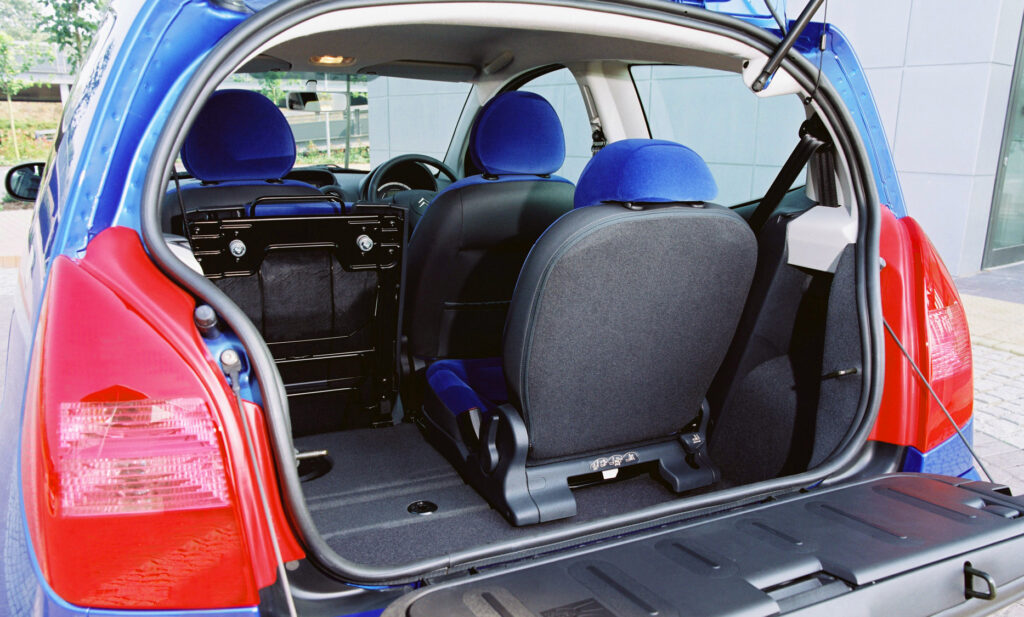
Many owners of a Citroën C2 with a 1.1 or 1.4 petrol engine regularly experience rough idling, causing the car to stall unexpectedly when stationary or to hesitate when you press the accelerator. The cause is often a dirty throttle body, a faulty idle control valve or incorrect sensor values, which leads to the wrong mixture and therefore an unstable engine speed. Fortunately, with the right approach these faults can usually be resolved properly.
Why does the C2 idle so roughly?
The petrol engines in the Citroën C2 are technically simple, but that simplicity actually makes them sensitive to contamination and wear. On older examples, problems often arise because the air and fuel supply are no longer controlled accurately. The idle speed then fluctuates between 500 and 1200 rpm, or in warm weather the engine simply cuts out while you are waiting at the traffic lights.
The symptoms are familiar. The engine starts normally, but as soon as you stop or coast in gear, the revs go up and down. Sometimes the car even stalls and you have to restart it. This happens mainly when the engine is warm, after short trips or in combination with electrical consumers such as the air conditioning.
‘ After cleaning, the engine control unit has to relearn how to control the idle speed. ’
Contamination of the throttle body is the most common cause
On the 1.1 and 1.4 petrol engines, contamination of the throttle body is a frequent issue. Carbon deposits and oil vapours form a film on the throttle parts, so the air supply at idle is not regulated properly. The engine control unit tries to correct the revs, but can no longer do so sufficiently. The result is fluctuating idle and frequent stalling.
Having the throttle body cleaned at a garage costs between 60 and 90 euros. You can also do this yourself with throttle body cleaner, so that you can reach the valve properly and dismantle it correctly. Always clean the valve with a soft cloth and special cleaner, not with abrasive products or strong chemicals that could damage the coating.
What happens after cleaning?
After cleaning, the engine control unit has to relearn how to control the idle speed. This is called an adaptation process or learning procedure. Some owners notice that the engine still runs a bit roughly immediately after cleaning, but after driving a few kilometres the revs often stabilise on their own. In other cases it is necessary to clear the fault codes and perform a full reset of the adaptation values using a diagnostic computer.
Unmetered air causes a mixture that is too lean
Another very common cause is unmetered air. This means that somewhere in the intake tract air is being drawn in that is not measured by the mass air flow sensor. The engine management assumes a certain amount of air and adjusts the fuel supply accordingly. If more air enters than expected, the mixture becomes too lean and the engine runs roughly or even stalls.
Places where unmetered air can occur include:
- Cracked or loose hoses between the air filter and the throttle body
- Leaking gasket at the intake manifold
- Damaged vacuum hoses for brake servo assistance or tank ventilation
- Old or porous rubber connections
Unmetered air is often difficult to find, but a smoke test offers a solution. In this test, smoke is blown into the intake system while the engine is off. If smoke escapes somewhere, you have found a leak. The cost of replacing hoses or gaskets is between 50 and 150 euros, depending on the location and the part.
Ignition coil and spark plugs affect idle speed
On petrol engines such as the 1.1 and 1.4, a weakened ignition coil or worn spark plugs cause irregular running. If the spark is not strong enough or sometimes fails completely, the engine will not run on all cylinders. This is especially noticeable at low revs, when idling.
Typical symptoms are:
- Ragged or jerky engine sound
- Hesitation when you press the accelerator
- Idle that improves at higher revs
- Sometimes an engine warning light with misfire codes
Replacing spark plugs costs between 40 and 80 euros; a new ignition coil is between 80 and 150 euros. It is sensible to replace the spark plugs if in doubt, especially if they have already covered more than 60,000 kilometres. A weak ignition coil is harder to test yourself; a garage will check this with a multimeter or oscilloscope.
Sensors control the engine management
The engine management of the C2 uses various sensors that provide information on temperature, air mass and throttle position. If one of these sensors sends an incorrect value, the engine receives the wrong mixture. This leads to rough running, stalling or, conversely, an idle speed that is too high.
The most common sensor faults that cause idle problems are:
- Coolant temperature sensor that sends a temperature that is too low or too high
- Mass air flow sensor that is contaminated or gives incorrect values
- Throttle position sensor that is not properly adjusted or is defective
- Lambda sensor that reacts too slowly or gives incorrect values
Replacing a sensor costs between 70 and 150 euros, depending on the type and location. A diagnostic check (reading out and analysing the engine management) with live data (real-time measurement data) is important to determine which sensor is responsible. Never just clear the fault codes without resolving the cause, because then the problem will return.
Battery voltage and earth connections are often underestimated
A weak battery or poor earth connection also leads to idle problems. Modern engine control units are sensitive to voltage drop, which means the control of the idle regulator does not work properly. This mainly affects older city cars where the battery has been in use for years and the battery terminals are corroded.
Therefore check:
- Whether the battery voltage is at least 12.4 volts with the engine switched off
- Whether the battery terminals are clean and properly tightened
- Whether the earth connection between engine and bodywork is good
- Whether the battery cables are undamaged
Cleaning the battery terminals and earth connections costs nothing and can already make a big difference. A new battery costs between 60 and 120 euros, depending on the type and capacity.
When should you go to a garage?
You can carry out some checks and repairs yourself, but for recurring issues or if the engine warning light stays on, a professional diagnosis is needed. A good garage does not only look at fault codes but also checks live data (real-time measurement data) such as fuel trim, air mass values, ignition timing and idle control.
Have the car checked if:
- The engine stalls regularly in traffic
- The idle speed fluctuates between extremely low and high
- The car accelerates poorly or hesitates when you press the accelerator
- The problem does not disappear after cleaning and basic maintenance
- There are several fault codes present at the same time
A diagnostic check (reading out and analysing the engine management) usually costs between 50 and 90 euros and provides clarity about the exact cause. This prevents you from replacing unnecessary parts without any result.
Tips to prevent idle problems
Prevent problems with regular maintenance and by paying attention to early signs. Replace spark plugs on time, keep the throttle body clean and every now and then take a longer drive to counteract contamination. Also pay attention to the condition of the battery and regularly check whether hoses and connections are properly secured.
In concrete terms you can:
- Replace spark plugs every 60,000 kilometres
- Have the throttle body cleaned, or clean it yourself, every 80,000 kilometres
- Check battery terminals and earth connections annually
- If you mainly drive short journeys, regularly take a long trip so the engine reaches full operating temperature
- React to early signs such as fluctuating idle or hesitation on throttle
Minor problems rarely resolve themselves. By intervening in good time you prevent more serious faults and expensive repairs.
Summary and next steps
Idle problems with the Citroën C2 1.1 and 1.4 petrol engines are common and are usually due to contamination of the throttle body, unmetered air, a weak ignition coil or spark plugs, or incorrect sensor values. Cleaning the throttle body costs between 60 and 90 euros; replacing sensors is between 70 and 150 euros. With the right approach these issues can be resolved effectively, but recurring faults require targeted diagnosis with live data (reading and assessing real-time measurement data).
On the Carnews website you will find much more information about common car problems, maintenance tips and practical advice for different makes and models. Discover which other issues are known for your car and what you can do about them.
Frequently asked questions
The most common causes are a contaminated throttle body, unmetered air in the intake tract (cracked/slack hoses or gaskets), worn spark plugs/weak ignition coil (petrol) and incorrect sensor data such as from the coolant temperature or throttle position sensor. Start with a visual inspection for cracks/loose hoses, clean the battery terminals and earth connections, check spark plugs and ignition coil, and clean the inside of the throttle body with a suitable cleaner. Then use a basic OBD scanner to read both fault codes and live data (including coolant temperature, engine speed, throttle position) and check whether the values make sense with a cold and a warm engine. After cleaning you can briefly disconnect the battery or use OBD to clear the adaptation values, then let the engine warm up at idle and take a test drive to see whether the idle behaviour has become more stable.
First check the basics: battery condition and terminals, fuses, air hoses and intake for small cracks or loose clamps, and whether the air filter is not excessively dirty. Then carefully clean the throttle body with a suitable throttle body cleaner (disconnect the battery, remove the intake hose, clean the valve and edge), and at the same time check the surrounding hoses for unmetered air. Replace worn spark plugs and check the ignition coil for visible cracks or oxidised connectors. If possible, clear any fault codes with a simple OBD scanner and then let the engine idle for a few minutes so the ECU can relearn the idle speed.
To resolve idle problems, garages roughly charge between €150 and €400, depending on the diagnosis time and the parts required. Common jobs include cleaning or replacing the throttle body and tracing/eliminating unmetered air (hoses/gaskets). On petrol engines, spark plugs and ignition coil are often checked and replaced if necessary. On diesels, cleaning or replacing the EGR valve, mass air flow sensor and sometimes the fuel filter is also common.
Ignoring idle problems can lead to extra wear, a rough-running engine, higher fuel consumption and, in the end, faults such as stalling or damage to components like ignition coil, spark plugs or EGR valve/throttle body. A persistently incorrect mixture setting can also cause catalyst damage and more soot and carbon build-up. You can prevent this by having the throttle body/intake cleaned periodically, replacing spark plugs and filters on time and having fault codes read and rectified quickly as soon as the engine idles roughly. In addition, regularly take a longer trip so that the engine reaches full operating temperature and contamination is kept to a minimum.
On the Citroën C2 1.1 and 1.4, idle problems occur relatively often, mainly due to dirty throttle bodies, unmetered air and ignition or sensor issues. However, this is not a structural manufacturing defect, so they have not been designated as an official, specific “inherent fault” with a fixed factory solution. There are no widely known, specific service bulletins or major recalls aimed solely at idling on these engines. Problems are usually resolved on a case-by-case basis by cleaning, replacing components and re-learning the engine management.