
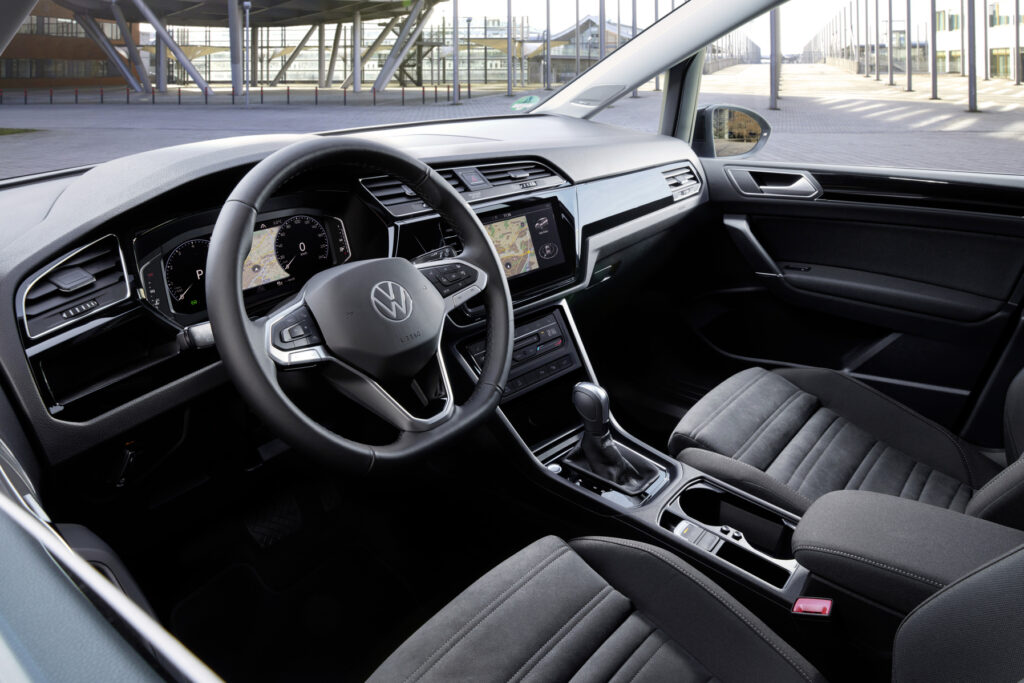
Melting holders of the front indicators and failing interior lighting are a common problem on the Volkswagen Touran. The complete unit often has to be replaced. This provides a lasting solution. These faults are caused by corrosion, contact problems and wear to the lamp housings. This leads to irregular flashing, dashboard errors and annoying relay noises. Read on to find out how to recognise these problems, what causes them and which concrete steps you can take.
Why indicators fail on a VW Touran
The front indicator units of the Volkswagen Touran regularly suffer from corrosion in the lamp holders. Weather exposure causes the units to rust. This results in intermittent contact. Fault codes appear on the dashboard. This shows up as indicators that work irregularly or fail completely.
A failed bulb with low wattage (often a 5W bulb) causes the system to activate other lights. This leads to strange situations. Fog lights are switched on via PWM (pulse-width modulation). You then hear a ticking relay noise from the dashboard. Sometimes you see lights that stay on briefly after overtaking or after switching off the indicators. Metal filings from contacts cause leakage current. Indicators stay on.
With the rear units the problem is often defective bulbs in the tail lights or brake lights. The system quickly detects these failed bulbs. Dashboard warnings are triggered. These problems occur on Touran models from 2003 onwards and are the result of an ageing lighting system.
‘ Replacing the complete unit is therefore the most durable approach. ’
Solving melting headlamp holders on a Volkswagen
Melting holders are mainly caused by heat build-up. Corrosion and moisture also play a role. The housings of the front indicators are not always sealed optimally. Moisture can get inside. This speeds up the rusting process. The contact points in the holder become weaker.
The solution starts with a visual inspection. Remove the plastic covers from the lamp units using the click mechanism. Unscrew the units. Check the wiring for wear. Check the wiring for damaged connectors. Look out for signs of overheating, such as discoloured or melted plastic around the holder.
In cases of light corrosion you can try cleaning the contacts. Tighten the contacts again. In practice this often turns out to be only a temporary solution. Users report: corrosion in old units returns. Replacing the complete unit is therefore the most durable approach. Improved lamp units are available for around 140 euros. These units offer extra protection against moisture. Buying improved lamp units prevents the problem from returning.
Interior lighting not working on Touran – repair
The interior lighting cuts out. The cause usually lies in faulty bulbs in the dashboard or interior. Warning lights stay on. Warning lights flash. Amber lights often indicate active systems. Lights that stay on constantly require diagnosis.
Fault codes caused by lamp failures spread to the dashboard and the climate control panel. This is accompanied by prolonged ticking of the relay. Start by checking all bulbs in the interior lighting. Remove failed bulbs. Test the connections with a multimeter. Check whether the contacts still function correctly. Check whether the wiring still functions correctly.
The repair follows clear steps:
- Remove the cover of the interior light by carefully unclipping it or undoing the screws
- Remove the failed bulb and check that the contact points are clean and intact
- Replace the bulb with a new one of the correct wattage. Consult the manufacturer’s specifications.
- Test the lighting before refitting the unit
- Scan the system with an OBD tool (On-Board Diagnostics tool for reading fault codes) for codes such as B1230. Reset these fault codes after the repair.
Electric variants of the Touran have lights for range indication. Lamp faults cause these lights to come on. Always check all lights at the same time. A failed rear light often triggers warnings at the front.
LED indicator upgrade for Touran
An LED upgrade reduces problems with indicators. LED bulbs generate less heat than traditional filament bulbs. The risk of melting holders is reduced. LED bulbs last longer. The number of replacements goes down.
Not all LED bulbs are suitable for the Touran without modifications. LED bulbs use less power than filament bulbs. The system can misinterpret LED bulbs. This leads to faster flashing. This leads to warning messages. Therefore choose LED bulbs with built-in CANbus compatibility (suitable for the car’s electronic network). You can also install a load resistor (a resistor that simulates power consumption). This maintains the correct resistance level.
Avoid solutions with pulse-width modulation (PWM) where higher-wattage bulbs are used. Higher-wattage bulbs with PWM tricks overload the system. This leads to more problems with the holders and relays. Always choose bulbs that fall within the manufacturer’s specifications.
‘ In the case of complete failure or recurring problems, immediate replacement of the entire unit is often more effective. ’
Diagnosis and prevention for long-term reliability
Regular checks prevent small problems from escalating. Check all lights at least twice a year. Check the front and rear units. Also check the dashboard and interior lighting. Irregularly flashing lights are often the first sign of a problem with the lamp housing. Tackle this. Do not immediately look for expensive electronics repairs.
Clean the contacts regularly. This prevents corrosion. Use contact spray. You can also use a fine scouring pad. This removes rust and dirt. Make sure the housings are properly sealed. Check the rubber seals for cracks or hardening.
If you hear ticking from the dashboard after overtaking or when using the indicators, park safely. Diagnose immediately. This points to relay contact sticking due to metal filings. This points to a broader electrical fault. An OBD scan quickly provides insight into the active fault codes. The scan helps you find the correct cause.
In the case of complete failure or recurring problems, immediate replacement of the entire unit is often more effective. Do not keep repairing. Replacing the entire unit prevents frustration. You gain certainty that the lighting will continue to function reliably.
On the Carnews website you will find much more information about specific problems with Volkswagen models. You will also find maintenance tips. Practical repair guides are available. Discover more knowledge and experiences from owners and stay up to date with the best solutions for your car.
Frequently asked questions
Common causes are corrosion in the lamp holders (especially front and rear), which makes contact intermittent or causes it to fail. In addition, failed bulbs and worn or contaminated contacts often occur, leading to fault codes, fast flashing or total failure of the indicators. With the interior lighting, blown bulbs and poor or oxidised connectors also play a major role. In some cases, metal filings or contamination around relays and switches cause continuous ticking or ‘stuck’ lighting.
On the VW Touran there are no specific, separate indicator or interior light relays known that typically fail together; faults more often arise due to shared power or earth points and corrosion in holders or connectors. Corrosion or poor contacts in the lamp units (especially the front and rear light units) can affect both indicators and interior lighting through fault codes and unstable power supply. Wiring problems, such as damaged cable insulation or oxidised connectors in the wiring looms, can also lead to simultaneous failure. Diagnosis therefore usually starts with a visual inspection of lamp units, connectors and earth connections, supplemented by an OBD scan.
First carry out a visual check of all relevant lamps (front, rear and interior), holders and connectors for corrosion, loose contact or damage. Then use a multimeter to check whether power and earth are present at the indicators and interior lighting and trace the wiring back to the fuses and relays. Next, use an OBD diagnostic tool to read fault codes from the comfort/body control module and note any relevant lamp or communication codes. Finally, repair or replace failed bulbs, holders, wiring or damp/corroding units, clear the fault codes and test the system again.
There are no large-scale, model-wide recall campaigns known that specifically identify the electrical systems of the VW Touran (such as indicators and interior lighting) as a factory defect responsible for these complaints. The problems described are mainly linked to wear, corrosion in lamp holders and contact problems in (often older) light units. These causes are regarded as usage and age-related defects, not as recognised manufacturing faults for which a recall has been carried out. Inspection and, where necessary, replacement of the relevant units is therefore usually the recommended solution.