

Water leaks via the windscreen and roof seal are among the most common complaints with the Volvo V50. Owners regularly report a wet footwell, damp headlining and a musty smell, caused by water entering the interior via the windscreen seal or roof area. In addition, a leaking heater matrix loses coolant, which creates extra moisture problems. In this article you will discover where the water in your V50 may be coming from and how to trace and tackle the leak.
Where does water enter the interior?
The Volvo V50 has three known weak spots for water ingress. The windscreen surround is a frequent recurring problem. The windscreen can be loose in the aperture or the bead of adhesive may no longer seal properly in places. Aged windscreen adhesive or a previous poor installation then causes water to infiltrate along the edge.
The roof area and the upper edge of the doors form a second risk point. Water can run down via the headlining or along the A-pillar. This often points to blocked drain hoses or damaged seals around the roof. The drainage of the roof area is sensitive to the build-up of leaves and dirt.
A third cause lies in the scuttle panel and the drainage channels. If the scuttle drain becomes blocked, rainwater builds up and finds an unwanted route into the interior. Door seals that are aged or damaged also contribute to moisture problems around the footwells.
‘ This leads to mould growth and corrosion of metal components. ’
Recognisable symptoms of water ingress
The signs of a leak are often clear but only appear after some time. You will find a wet footwell on the driver or passenger side. Moisture collects under the mats or in the insulation material. In some cases you can see water droplets or damp patches around the A-pillar or headlining.
Water leaks on the V50 are often slow. The water only becomes visible after rain or a wash. This makes the source difficult to trace. A musty smell in the interior indicates prolonged moisture in the carpet and upholstery. This leads to mould growth and corrosion of metal components.
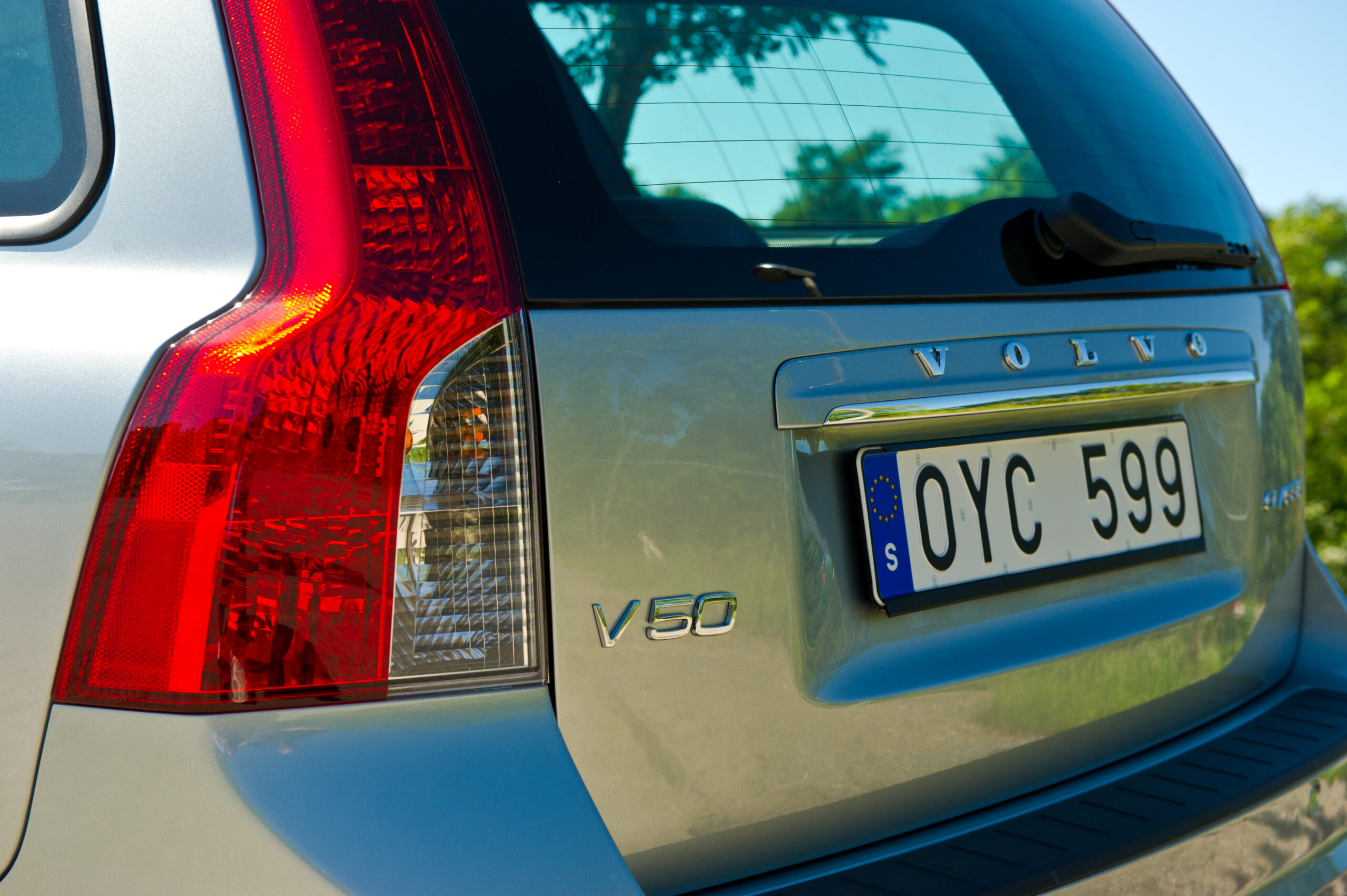
Tracing windscreen leaks on the Volvo V50
The windscreen seal is a vulnerable point on this model. Specialist glass companies report that the windscreen on the V50 regularly does not seal optimally in the aperture. The adhesive layer can come loose in places or the screen is not fixed tightly enough.
To check for a windscreen leak, use the hose test. Carefully pour water over the windscreen edge and, from inside, watch where moisture appears. Start at the top of the screen and work gradually downwards. Also check the trim strips and bead of sealant for cracks or openings.
If a leak is confirmed, the solution is usually radical. The windscreen must be removed, the bonding surfaces must be cleaned and the screen is refitted with a new adhesive layer. This is specialist work and requires the right materials and curing time. A temporary seal with sealant rarely offers a lasting solution.
Checking roof seals and drainage problems
Leaks via the roof area are often related to blocked drains or damaged seals. Start your check at the scuttle panel. Remove leaves, dirt and other blockages from the drain holes. You can pierce through the drain or blow it clear with compressed air to remove the blockage.
Roof seals and door seals are available as replacement parts for the V50. This confirms that rubber ageing is a real maintenance point. Carefully inspect the seals for small cracks, distortion or loose sections. A poorly sealing rubber is sometimes difficult to see but lets water in unnoticed.
Also check the hoses and connections in the roof area. Owners report that water can enter via seams or drains if these hoses split or come loose. If the headlining is damp, the cause probably lies in this area. Check the seals around the top of the doors and where they meet the bodywork.
‘ Replacing the heater matrix is often the only long-term solution. ’
Heater matrix and coolant
In addition to water leaks, a leaking heater matrix can cause moisture in the interior. The heater matrix carries coolant and is located behind the dashboard. In the event of a leak, fluid seeps into the passenger-side footwell.
You can recognise a heater matrix leak by a sticky, oily substance on the mats. The fluid has a distinctive sweet smell. This is different from ordinary rainwater. You may also notice a drop in the coolant level in the expansion tank.
You have to remove the dashboard to repair a leaking heater matrix. This is labour-intensive work. Replacing the heater matrix is often the only lasting solution. Temporary sealing additives only postpone the repair for a short time.
Diagnosing water leaks yourself
Would you like to trace the leak yourself? Then follow a systematic approach. Start by drying out the interior. Place kitchen paper or absorbent cloths in suspect areas. This way you can see where the water appears first.
Then check the following points in order:
- Clean the scuttle panel and check all drain holes for blockages.
- Inspect the windscreen surround for old sealant, small openings or traces of water trails.
- Look at the door seals for flattened sections where they may no longer seal tightly.
- Then test one zone at a time with water so the source can be isolated more easily.
By testing zone by zone, you effectively isolate the problem. Start with the windscreen. Then move on to the door seals. Finally, test the roof area. Use a garden hose on low pressure to simulate rain. High pressure can give false positives because water then forces its way in where it would normally remain sealed.
When should you see a specialist?
Some leaks are easy to fix yourself. Blocked drains can usually be cleaned without tools. Loose door seals can be pressed back into place or replaced at limited cost. More complex problems require specialist help.
A windscreen leak requires removal and refitting by an approved glass specialist. They have the right adhesive, primers and sealing techniques. Incorrect installation makes the problem worse and can lead to additional water damage.
With recurring leaks despite previous repairs, you must trace the original water path. Water can reach the interior along surprising routes. A garage with experience of Volvo models knows the typical weak spots of the V50 and can carry out targeted checks.
Preventing consequential damage from water ingress
A leak that starts small can have major consequences. Prolonged moisture in the interior leads to wet upholstery, corrosion of metal components and electrical faults. Wiring and electronics under the mats or behind the trim are vulnerable to moisture damage.
Dry the interior thoroughly after every leak. Use a fan or leave the car with the doors open in a dry space. Mats and carpet should be removed and dried separately. The insulation material under the carpet retains moisture for a long time and requires extra attention.
In terms of maintenance, you can partly prevent leaks:
- Clean the scuttle panel and drains at least twice a year, preferably after autumn and after spring.
- Check door seals annually for damage and replace them if in doubt.
- When replacing the windscreen, only use qualified fitters and ask about the materials used.
- Keep an eye on the coolant level so you can spot a leaking heater matrix at an early stage.
Discover more on Carnews
Water leaks are just one of the points to watch on the Volvo V50. On the Carnews website you will find extensive information about other common problems with this model, from electrical faults to maintenance tips for the engine and transmission. Learn from the experiences of other owners and discover practical solutions you can apply straight away. Take a look and get more out of your Volvo.
Frequently asked questions
Start by drying the interior completely and placing kitchen paper or cloths in suspect areas (A-pillar, headlining, footwells) to see where moisture comes through first. Then test with a garden hose one zone at a time: first above the roof seal/door seals, then along the windscreen edge, while someone inside keeps a constant watch. Look inside and out for clear water trails along the windscreen edge, beads of sealant and door seals, and check the scuttle panel/drain holes for blockages. If water comes in directly along the windscreen adhesive or from the headlining/A-pillar, the windscreen or roof drainage is the main suspect; if it mainly comes in along the door pillars or at the bottom, the cause probably lies with the door seals or scuttle drain.
Yes, leaks around the windscreen and roof/door seals are a known issue on the Volvo V50. Common causes include aged or poorly bonding windscreen adhesive/seal, particularly after a windscreen replacement, and blocked drains by the scuttle panel or in the roof area. In addition, worn, distorted or damaged roof and door seals can cause water to enter via the upper edge of the doors and pillars. Poor fit or contamination of these seals also increases the risk of leaks into the headlining and footwells.
You can often deal with minor issues such as slightly dirty or slightly deformed roof or door seals, and blocked drains yourself by cleaning, checking and possibly replacing a seal. A real leak along the windscreen itself is usually caused by poor or aged windscreen adhesive, which requires (partially) removing and re-bonding the screen. This is specialist work where incorrect installation can lead to more leaks or even safety issues. That is why professional help is usually recommended for leaks directly at the windscreen, while with seals and drainage you can first try to solve it yourself.
The most effective repair method for a leak along the windscreen is to have the screen professionally removed, the aperture fully cleaned and the glass re-bonded with new windscreen adhesive. In addition, it is essential to thoroughly clean the scuttle and roof drains and clear them of dirt so that water cannot overflow towards the interior. Damaged or dried-out roof and door seals should preferably be replaced rather than merely treated with lubricants or care products. A targeted water test (wetting zones one by one) helps to check after the repair whether the leak has really been resolved.
An untreated leak can lead to persistent moisture in the carpet and insulation material, resulting in mould growth and unpleasant odours. In the long term this can cause rust on the floor, sills and other metal parts that remain wet for extended periods. In addition, incoming water can cause faults in electronic components and wiring. The condition of the interior and the trade-in value of the car can also noticeably drop due to visible water damage.