
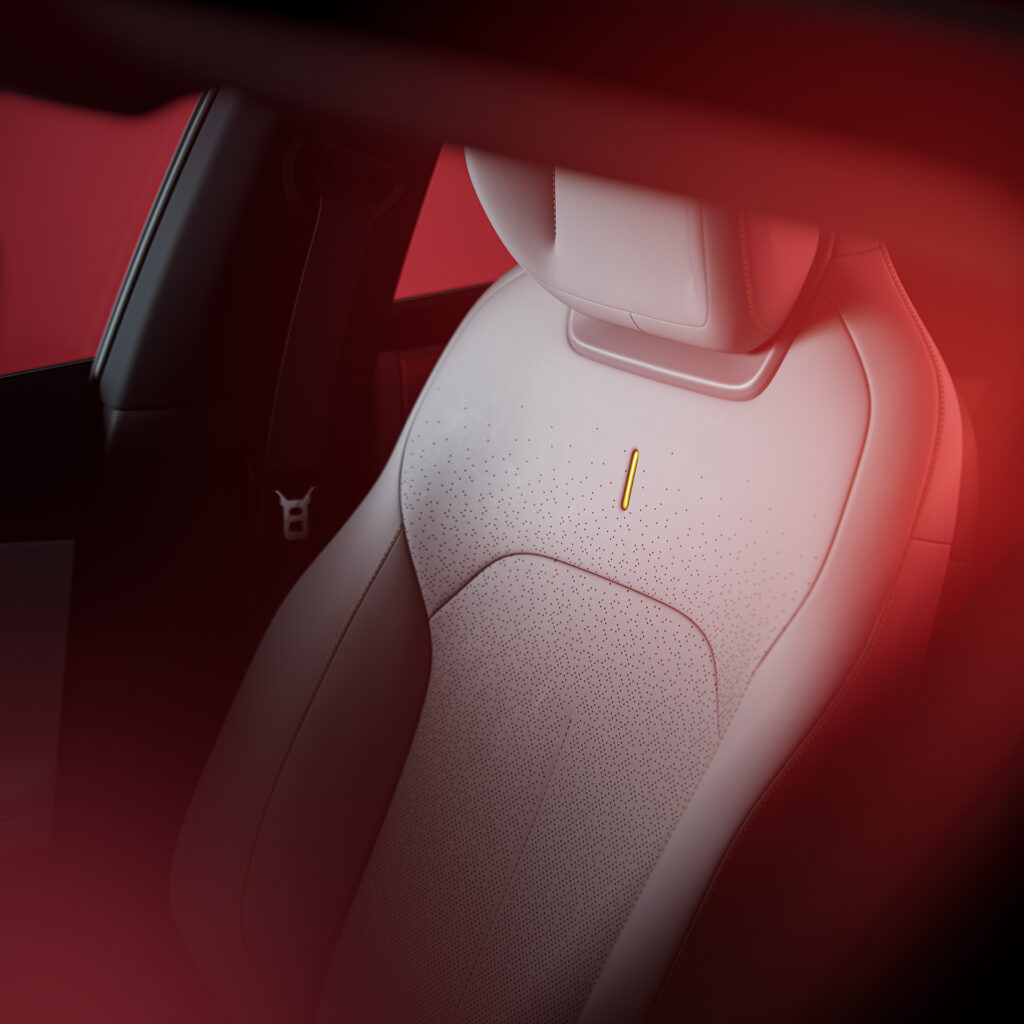
The Lynk & Co 02 scores lower for reliability than the Volvo EX30 due to software issues, but does offer similar looks to the Porsche Macan at a lower price. Owners report frequently failing Apple CarPlay, oversensitive safety systems and 0% inclination to buy again, while technical rivals such as the Tesla Model Y and Polestar 2 perform more consistently. The question is whether the low entry price of around €37,500 outweighs the shortcomings in reliability.
how does the Lynk & Co 02 compare with Volvo?
The Lynk & Co 02 shares its SEA2 platform with the Volvo EX30 and Zeekr X. This means that the motor, battery and large part of the drivetrain are identical. The 66 kWh battery delivers 272 bhp and a 0–62 mph sprint in 5.5 seconds. On paper the specifications look similar, but in practice the Volvo scores higher on reliability.
The EX30 offers more stable infotainment without the CarPlay error messages that regularly occur in the 02. Owners of the Lynk & Co report that Apple CarPlay fails with error messages, while Volvo drivers do not report similar complaints. The safety systems are also better tuned in the Volvo. The 02 has overly sharply calibrated assistants that frequently sound the alarm when you drive a bit carelessly, and only stay quiet in perfect conditions on empty roads.
The EX30’s premium feel translates into a more reliable chassis and higher overall owner satisfaction. The Lynk & Co 02 compensates with space and price, but lags behind in finesse and system stability. For those who value brand trust and stable software, the Volvo is the better choice.
‘ For those looking for consistent reliability and lower running costs, the Polestar 2 performs better. ’
is the 02 more reliable than the Polestar 2?
The Polestar 2 is built on a different platform to the Lynk & Co 02, but both brands share roots via Geely. The Polestar 2 is known for more stable software and better tuned driver assistance systems. Owners report fewer problems with connectivity and app integration.
The Lynk & Co 02 struggles with a frozen car‑sharing function via the app. You unlock the car via a pull loop instead of an ignition key. Misuse in the past has limited this unique concept. The Polestar 2 does not offer a car‑sharing function, but does deliver more reliable streaming and app integration without freezes.
In terms of real‑world energy consumption the 02 scores worse. The manufacturer claims 14 kWh/100 km and a range of 435 km, but in practice the car uses 21 kWh/100 km with a realistic range of 334 km. The Polestar 2 achieves more economical figures thanks to better tuning of weight and dynamics. For those who want consistent reliability and lower running costs, the Polestar 2 performs better.
Lynk & Co 02 versus Tesla Model Y
The Tesla Model Y is known for its range and charging network, but also for software bugs in early models. The Lynk & Co 02 offers a charging speed of up to 150 kW, but owners report a practical charging speed of 76 km per hour with around 3 hours AC charging for a full battery.
Tesla’s superior charging network and higher real‑world charging speed make longer journeys more dependable. The Model Y does have known issues with build quality and finishing details, whereas the Lynk & Co 02 does not show major defects but does have less stable software.
Main reliability differences:
- Tesla Model Y: more stable infotainment, but build quality varies by model year
- Lynk & Co 02: fewer Apple CarPlay problems in the Tesla, but the 02 struggles with frequently failing connectivity
- Charging speed: Tesla charges faster and more reliably via the Supercharger network
- Real‑world range: Tesla comes closer to the factory specifications than the 02
For those who prioritise charging infrastructure and range on longer trips, the Model Y is more reliable. The Lynk & Co 02 offers better value for money with similar space, but has to give way on software stability.
what are the 02’s weak points?
The low overall satisfaction among owners stems from specific problems. The oversensitive safety systems spoil driving pleasure by constantly sounding the alarm at minor deviations. Only on empty roads with perfect conditions do the assistants stay quiet.
Software problems in the car’s operating system are not limited to CarPlay. The car‑sharing function is a unique concept in the market. It does not always work because of the limited active status. Owners have to pull the loop for app access, but the function remains unreliable. This makes the concept less attractive for anyone wanting to use the car as a shared vehicle.
Real‑world energy consumption is significantly higher than the factory claim. In cold conditions consumption rises further, which cuts the realistic range to below 300 km. This requires more frequent charging stops and better route planning than with rivals that are more efficiently tuned.
The 0% inclination to buy again among current owners illustrates the disappointment. The 02 offers value for money in terms of price and space. Even so, the software issues and driver assistance systems weigh more heavily for those who put reliability first.
‘ For those who prioritise space and towing capacity at a lower price, the 02 offers sufficient value for money. ’
where does the Lynk & Co 02 actually perform well?
The price of around €37,500 makes the 02 attractive compared with more expensive rivals. The car offers more space than the Volvo EX30 and comes fully equipped with features such as high‑end audio and blind‑spot correction. The 1,600 kg towing capacity makes the car suitable for trailers.
The drivetrain, based on Volvo technology, delivers a mature performance package. The 272 bhp provides ample power and a top speed of 180 km/h. Owners praise the dynamics for Dutch drivers: compact on the outside, spacious inside. For those who prioritise space and towing capacity at a lower price, the 02 offers sufficient value for money.
Build quality does not show major defects. The Geely components are robust, although early models may have bugs that can be resolved via software updates. The battery and motor are well balanced, which contributes to stable road behaviour despite the oversensitive assistants.
practical tips for potential buyers
Thoroughly test the safety systems before buying. Drive slowly on empty roads and check whether the alerts are too aggressive for your driving style. Consider adjustments via the dealer or opt for rivals with a gentler setup if the assistants are too intrusive.
Plan routes based on a realistic range of 334 km instead of the 435 km factory claim. Allow for 3 hours of AC charging for daily use and check whether your home charger has enough capacity. For long journeys the limited charging speed of 76 km per hour requires extra stops.
The following points of attention will help with your decision:
- Ask the dealer whether software updates include CarPlay fixes
- Test the app functionality and car‑sharing feature if you want to use it
- Compare with the Volvo EX30 if you want a premium balance and more stable systems
- Choose the 02 for space and price, but accept weaker finesse
- Keep an eye on company‑car tax benefits for model years from 2026 onwards
The Lynk & Co 02 acts as Volvo’s budget sister: strong on value for money, weak on finesse and software stability. For those who put reliability above price, the Volvo EX30, Polestar 2 and Tesla Model Y perform better. The 02 compensates with space and lower entry costs, but requires acceptance of software issues and oversensitive driver‑assistance systems.
On the Carnews website you can find extensive information about electric crossovers, comparisons between Chinese car brands and real‑world experiences with Geely platforms. Discover more reviews, consumption figures and buying advice for your next car.
Frequently asked questions
The Lynk & Co 02 seems technically sound thanks to the shared Geely/Volvo platform, but in practice it scores less well on reliability of software and electronic assistance systems than many direct rivals. Compared with, for example, the Volvo EX30 and other compact electric SUV models there are more reports of annoying driver‑assistance behaviour and failing connectivity functions (such as Apple CarPlay). Build quality and the drivetrain are generally experienced as solid, but the overall package feels less refined than with established brands in this segment. This results in lower user satisfaction and less willingness to buy the car again than with the better‑known competitors.
With the Lynk & Co 02, the main weak point mentioned is the driver‑assistance systems, which are tuned too sharply and sometimes intervene in an irritating way, because they often warn and step in during normal driving. In addition there are reports of unstable software, including error messages and drop‑outs of Apple CarPlay. Real‑world consumption is noticeably higher than the official figure, so the actual driving range is lower than expected. Major structural mechanical defects have so far not been widely reported, but overall user satisfaction remains relatively low.
The proven reliability of the Lynk & Co 02 helps to reduce unexpected repairs and downtime, which lowers total cost of ownership. Because it is based on tried‑and‑tested Volvo/Geely technology and does not show major technical weak points, this increases confidence in a long service life. That can be positive for residual value, as buyers are more willing to pay a good price for a reliable used car. However, software and user‑experience issues can partly offset that positive effect.
The Lynk & Co 02 uses tried‑and‑tested Geely/Volvo technology and appears mechanically sound, but in practice it scores clearly lower on overall satisfaction and perceived reliability than established brands such as Volvo and other European rivals, mainly because of annoying software and driver‑assistance issues. Build quality is reasonable, but lacks the refinement and consistency that many traditional brands do offer. Parts supply runs via the Geely/Volvo network, so crucial components are well available, although lead times can vary for less common parts. Servicing in the Netherlands is centrally organised via selected partners, which provides sufficient coverage but (still) does not match the dense dealer and service network of the larger, established brands.
The most relevant reliability tests are those from independent organisations such as the ANWB, ADAC, Euro NCAP (safety and reports on safety‑system behaviour) and the extensive long‑term and 100,000‑km tests from car magazines (e.g. AutoWeek, AutoBild). In addition, large‑scale reliability surveys by consumer organisations (such as Consumentenbond/JD Power‑style surveys) are important, as they reveal faults and software problems over the longer term. Online owner reviews on platforms such as AutoWeek experiences, Google Reviews at dealers and specific Lynk & Co community forums provide insight into real‑world problems with software, charging behaviour and intrusive driver‑assistance systems. When looking at rivals (including Volvo EX30 and Zeekr X/Smart #1), explicitly compare the scores for fault‑free driving, software stability, charging reliability and customer satisfaction with servicing.