
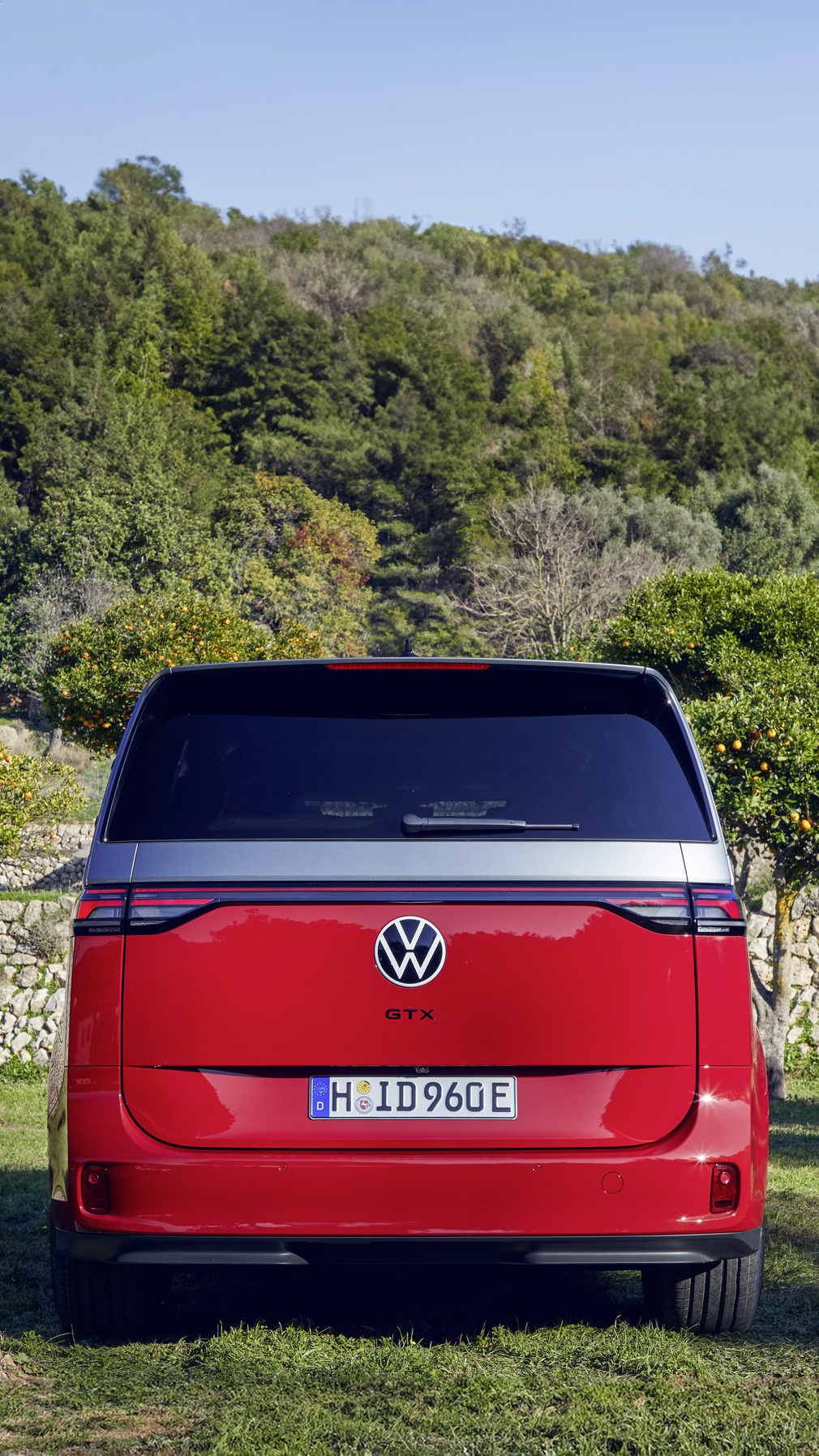
The electric Volkswagen ID. Buzz will switch to the improved MEB+ platform between 2026 and 2027, providing greater range, faster charging and better efficiency. At the same time, rumours are circulating about a major update or even a new generation of this iconic model. Should you buy now or is it better to wait for these improvements?
The MEB+ platform brings concrete improvements
The MEB+ platform (Volkswagen’s technical base platform for electric cars) forms the foundation for the next phase of the Volkswagen ID. Buzz. This platform is an evolution of the current MEB platform, with specific adjustments for better performance and higher efficiency. The transition means more than just technical details on paper.
With MEB+ the ID. Buzz gets a larger 91 kWh battery instead of 84 kWh. This delivers a range (the maximum distance on a full battery) of up to 452 kilometres according to WLTP measurements. This applies mainly to the long wheelbase version. Current models achieve between 370 and 431 kilometres. Fast charging goes up to 200 kW DC power, allowing the battery to charge from 10 to 80 per cent in about 26 to 30 minutes.
The platform upgrade also provides more rigidity in the bodywork (extra strength of the structure) and a lower centre of gravity. This benefits the driving behaviour, despite the weight of 2,595 to 2,700 kilograms. For car enthusiasts who value dynamics in a large MPV (Multi Purpose Vehicle, a large family people carrier) this is a relevant improvement.
‘ Owners of the current model regularly report that the maximum distance on a full battery in winter drops by around 20 per cent. ’
More power and four-wheel drive
The new generation on MEB+ gets more powerful motors. The base version with rear-wheel drive delivers 210 kW, which corresponds to 286 hp and 560 Nm of torque. The sprint from 0 to 100 kilometres per hour takes 7.6 to 7.9 seconds. The top speed remains limited to 160 kilometres per hour.
More interesting for those looking for more driving pleasure are the GTX versions (sportier, more powerful version) with four-wheel drive. These get two motors with a combined 250 kW, or 330 hp and 590 Nm. This reduces the sprint time to about 6.4 to 6.6 seconds. More important for daily use is the better grip in wet conditions, especially when pulling away with a full load space or trailer.
Efficiency improves to 179 to 193 Wh per kilometre. In concrete terms this means you can go further with the same battery capacity, especially on the motorway and at outside temperatures below 10 degrees. Owners of the current model regularly report that the maximum distance on a full battery in winter drops by around 20 per cent.

Interior gets newer software and more options
The interior of the MEB+ versions is equipped with Software 4.0 on a 12.9-inch touchscreen. The current models sometimes suffer from slow responses and restarts of the infotainment system. The new versions solve this. The new software integrates ChatGPT (an advanced language assistant) into the IDA voice assistant, enabling more natural commands while driving.
Wireless Apple CarPlay and Android Auto (systems that allow you to connect your smartphone to the car’s screen) come as standard, as do eight USB-C ports distributed throughout the interior. For camping or working on the road there is a 110V socket in the cabin. The three-zone air conditioning gets physical controls alongside the touch controls. This is a response to complaints from current users about the purely digital operation.
Space remains a strong point. The long wheelbase measures 4,962 mm with a wheelbase of 3,239 mm. This translates into boot space between 1,340 and 2,469 litres, depending on the seat configuration. Sliding doors on both sides make getting in easy, especially with children or bulky items. The flat floor thanks to the MEB+ platform is ideal for anyone wanting to convert the bus into a camper.
Safety and driver assistance systems on a higher level
The MEB+ platform (Volkswagen’s technical base platform for electric cars) offers improved protection by placing the battery in the floor. This construction performs well in crash tests and protects the battery in the event of a collision. The standard safety equipment includes adaptive cruise control (speed controller that automatically maintains distance to the vehicle in front) with Travel Assist (steering assistance that keeps the car in the centre of the lane), automatic emergency braking with cyclist detection and a 360-degree camera.
Matrix LED headlights with cornering lights are standard. This significantly improves visibility in bends and in poor weather. The blind spot warning is especially useful with the wide body and sliding doors. Activate the door opening warning in urban environments to prevent damage.
New is the V2G support (vehicle-to-grid, feeding power back to the grid) up to 10 kW. This allows the ID. Buzz to feed electricity back to your home during peak hours, reducing energy costs. The Plug & Charge function makes charging even easier through automatic identification and payment at suitable charging stations.
‘ Volkswagen is opting for a thorough update on the MEB+ platform rather than a completely new model. ’
Will there be a new generation in 2027
The question that concerns many potential buyers is whether a completely new generation will appear in 2027 or just a facelift. Volkswagen is opting for a thorough update on the MEB+ platform rather than a completely new model.
From 2026 extended long wheelbase GTX versions with more power will arrive, possibly up to 369 hp in some configurations. Work is also underway on a 111 kWh battery option for those who regularly drive long distances without charging stops. This variant targets the premium MPV market and competes with large SUVs with electric drive.
The retro style will be retained, but expect subtle adjustments to the front bumper and rear lights. Red accents and a sportier steering wheel will become available on GTX versions. The basic shape of the bodywork will not change, because it fits perfectly with the nostalgia for the classic Volkswagen Transporter while still looking modern.
Wait or buy now
Whether you are better off waiting for the MEB+ version or buying an ID. Buzz now depends on your specific situation. If you need a large family car in the short term and mainly drive within a radius of 200 kilometres, the current model is more than sufficient. The range of 370 to 431 kilometres comfortably covers this need.
If you regularly plan long holiday trips or need the best possible charging speed, it pays to wait for the MEB+ versions. The difference of 200 kW compared with the current 170 kW rapid charging saves 10 to 15 minutes per charging session. Over a day with multiple charging stops this adds up.
Also consider delivery time. If you reserve a future GTX with red accents now, the waiting time can rise to well over a year. Take into account possible price increases due to the improved specifications. The current model often offers shorter delivery times at the moment and sometimes interesting promotions from dealers.
Practical tips for your choice
- Choose rear-wheel drive for maximum efficiency on long journeys
- Choose four-wheel drive if you often drive in wet conditions or with a trailer
- When rapid charging, check that the charging station delivers at least 150 kW, otherwise charging will take unnecessarily long
- Test the throttle response during a test drive; the feel is sportier than you would expect at this weight
- Ask dealers about expected delivery times for MEB+ versions before you make a final decision
Technical details that make the difference
The MEB+ platform also brings less visible improvements. Ground clearance remains 184 mm, which is sufficient for unpaved roads to campsites or nature areas. The towing weight (the maximum mass you are allowed to tow with a trailer) increases to 1,000 kilograms, suitable for medium-sized caravans or trailers with boats.
The audio system gets 9 speakers as standard, with an upgrade to a 14-speaker Harman Kardon system available. For those who spend a lot of time on the road with children or for music lovers this is a relevant option. The panoramic roof and captain’s chairs in the middle row increase comfort on long journeys.
Important for everyday use is that the MEB+ versions support OTA updates. This means that software improvements are installed automatically, without having to go to the dealer. Current models have this too, but the new Software 4.0 is more stable and faster according to test users.
On the Carnews website you will find much more information about electric cars, charging infrastructure and real-world experiences with different EV models. Discover which electric car best suits your driving style and read reviews from other car enthusiasts.
Frequently asked questions
The MEB+ platform introduces larger and more efficient batteries, increasing the range of the ID. Buzz to around 450 km WLTP and later even higher with the announced 111 kWh options. In addition, MEB+ supports higher DC charging capacities of around 200 kW, making 10–80% charging possible in roughly half an hour. The platform itself is designed to be lighter and stiffer, which further improves efficiency and therefore real-world range. Together, these improvements provide better long-distance and rapid-charging performance in the 2026/2027 models.
Important innovations are the larger and more efficient battery packs (including 91 kWh, later up to around 111 kWh) combined with up to 200 kW DC rapid charging for shorter charging times and a more relaxed travel rhythm. The stiffer, optimised MEB+ chassis with low centre of gravity improves stability and handling, which contributes to greater driving comfort, especially when fully loaded. A new software generation (Software 4.0) with a larger infotainment screen, advanced driver assistance systems and OTA updates provides a more modern, more intuitive driving and user experience. In addition, improved insulation, three-zone air conditioning and a more refined powertrain setup make the ID. Buzz quieter and more comfortable on long distances.
In 2026/2027 Volkswagen is positioning the ID. Buzz on the MEB+ platform as a relatively premium, lifestyle-oriented electric MPV/van, with an emphasis on space, design and technology rather than being a purely utilitarian budget option. In terms of price it generally sits above more functional competitors such as the Stellantis vans (ë-Spacetourer/Zafira-e) and Chinese volume brands, and closer to (or just below) premium players such as the Mercedes EQV. Functionally, Volkswagen offers a high-quality interior, many safety and driver assistance systems, strong connectivity (OTA, advanced voice assistant/AI) and comfortable long-distance capability (large battery, rapid charging, LWB/GTX variants). This means VW is positioning the ID. Buzz mainly as an emotional, family and leisure van with camper potential, rather than as a cheap people carrier purely for business use.
No fundamental changes to the basic design or modular layout of the ID. Buzz are expected due to the switch to MEB+; it will remain a spacious, flat-floor people mover with SWB and LWB variants. The changes are mainly technical: larger batteries, higher charging speeds, more powerful motors (including AWD/GTX) and improved software/infotainment. The interior layout will remain modular with 5–7 seats and camper-like flexibility, but will become more luxurious and more technologically advanced. Any design changes are expected to be in the details (light signature, trim), not a completely new body.
Around 2026/2027 on the MEB+ platform you can expect Software 4.0 (or higher) for the ID. Buzz, with more extensive OTA updates, a further developed IDA voice assistant and deeper ChatGPT integration. In terms of connectivity, Plug & Charge, improved V2G functionality and smarter charging and route planning (including more efficient charging stops) are foreseen. Multimedia and HUD functions will also be richer, with more personalisation, better integration of smartphone ecosystems and possibly additional online services/subscriptions. Finally, the vehicle will gain more data-driven assistance systems and connected safety features that are continuously updated via the cloud.