
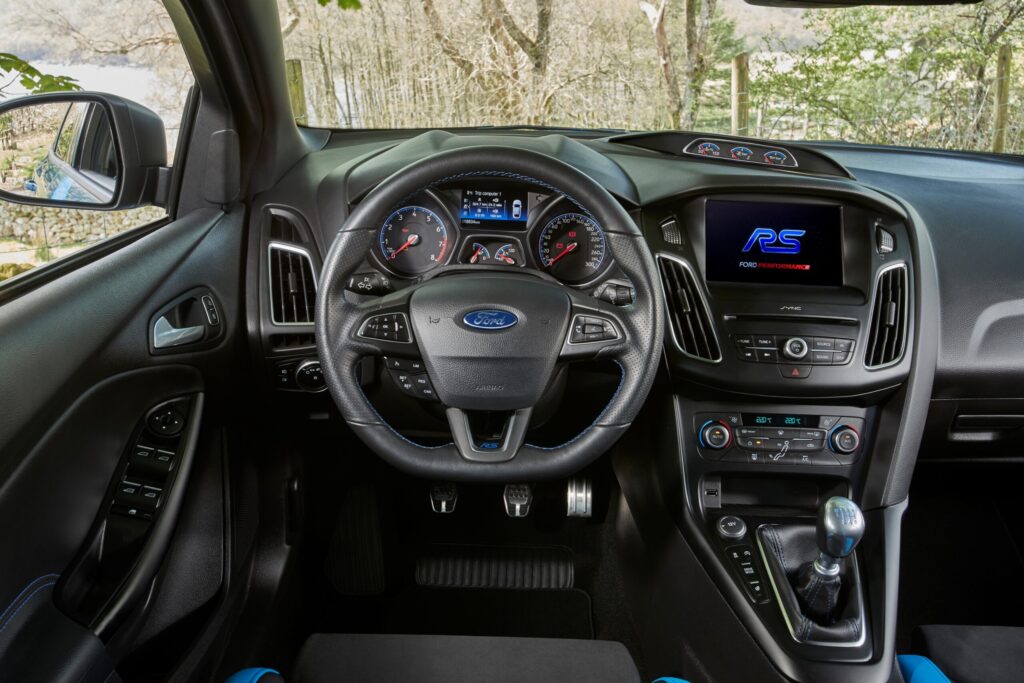
The Ford Focus RS suffers from a recurring problem where the reversing camera lets in moisture and water, resulting in a cloudy or completely blocked image. This is a known issue with high‑performance Focus variants, especially models with the Tech Pack, and can make parking manoeuvres much more difficult. Find out what causes this problem and how you can solve it.
Why has the reversing camera stopped working?
Owners of the Focus RS regularly report that their reversing camera shows a blurry or completely white image. This mainly happens in cold and damp weather. Condensation then builds up inside the camera housing. The problem often appears after only a few thousand kilometres, which points to a design or production weakness.
The reversing camera is located behind the bumper and is vulnerable to water that can enter via various routes. Moisture gets in through weak points in the sealing. Because there is limited ventilation, it often no longer fully evaporates. The result is a camera that becomes unusable during rain or after a wash. For some owners the problem temporarily disappears after drying, but it then inevitably returns.
The Ford Focus RS is not the only model with this problem, but the higher‑performance versions seem to suffer from it more often. This probably has to do with the specific camera systems and mounting methods used on these variants.
Common causes of moisture ingress
Moisture enters the camera housing through weak points in the sealing. The most common causes are:
- Cable entry: The sealant around the cable that powers the camera can come loose due to vibrations, temperature changes or insufficient sealing during production
- Worn gaskets: Rubber seals around the camera housing wear out due to exposure to the weather and road conditions, allowing moisture to enter
- Ventilation grilles: Water can enter through the ventilation grilles behind the bumper and then reach the camera housing
- Temperature fluctuations: Cold lenses combined with warm, humid air create condensation on the inside of the lens
- Manufacturing defects: On relatively new cars, moisture ingress often points to insufficient sealing from the factory
The cable entry is by far the most common weak spot. Mechanical stress on the cable and movement of the bumper can damage the sealant layer, creating a permanent entry route for water.
Recognisable symptoms of moisture damage
You can recognise moisture problems by the following signs. The image becomes blurry or milky, especially immediately after rain or a car wash. Water droplets are visible on the inside of the lens. The camera works again temporarily after a dry spell, but the problem keeps coming back. In severe cases the screen shows a completely white or black image.
Some owners also see error messages appear on the dashboard when the moisture problem becomes severe. The system then detects that the camera is not functioning correctly and switches off the parking assistance.
How do you repair moisture problems in the camera?
The approach depends on how serious the problem is and how old your car is. For cars that are still under warranty, you can go to the dealer for a free repair or replacement. Ford acknowledges this problem for multiple owners and should replace the camera if it has failed due to moisture ingress.
If your car is out of warranty, there are several possible solutions:
- Removing and drying the camera: Remove the camera, carefully open the housing and allow all parts to dry completely, preferably with silica gel or in a dry, warm room
- Renewing the sealing: Apply new sealant around the cable entry and check whether all gaskets are still intact; replace worn rubbers
- Professional repair: Have a specialist overhaul the camera, renewing all seals and checking the housing for cracks
- Replacing the camera: In the event of persistent problems, replacing it with a new or refurbished camera is often the most durable solution
It is important not only to treat the symptom but also to tackle the cause. Simply drying the camera without improving the sealing will lead to the same problem again in a short time.
Do I need to replace the camera or is repair possible?
Whether replacement is necessary depends on the extent of the damage. If moisture has only caused condensation without corrosion or damage to the electronics, drying and resealing may be sufficient. Check whether the camera still gives a clear image after all moisture has been removed.
Replacement is necessary if you can see signs of corrosion on the circuit board or contacts. Water damage to the image sensor can also cause permanent problems, such as white spots or dead pixels. In that case, repair will no longer deliver a reliable result.
Replacement costs
A new reversing camera for the Focus RS costs between €150 and €300, depending on whether you choose a genuine Ford part or an alternative brand. On top of that you will have labour costs of around €100 to €150 for removing the bumper and installing the new camera.
Refurbished cameras are often cheaper and can be a good alternative, provided they are supplied with a warranty. Some owners opt for a universal reversing camera, but this often requires modifications to the wiring and does not always fit perfectly in the original opening in the bumper.
‘ Avoid pointing pressure washers directly at the camera when washing the car, as the water jet can make existing weak spots worse. ’
Preventive measures against moisture problems
Prevention is better than cure. Regularly check the condition of the camera and the sealing around it, especially after visiting a car wash or heavy rainfall. Watch for early signs of moisture ingress, such as a slight haze on the lens.
If in doubt, apply extra sealant around the cable entry and make sure all rubbers remain supple by lubricating them now and then with silicone spray. Avoid pointing pressure washers directly at the camera when washing the car, as the water jet can make existing weak spots worse.
Where possible, park your car somewhere dry and ventilated so that any moisture that has entered can evaporate before it causes problems. This is especially important in winter, when temperature differences promote condensation.

Experiences of Focus RS owners
This problem is widely discussed on forums and in owners’ communities. Many owners report that the dealer initially claims it is normal, but after insisting will still go ahead with replacement under warranty. Some owners have had to have several cameras replaced because the new units developed the same problem.
Experience shows that careful sealing during replacement is crucial. Careful sealing means that all seams and entry points are completely sealed with high‑quality sealant and that all rubbers are correctly fitted. Owners who have applied extra sealant around the new camera themselves report fewer recurring problems. It appears that the standard factory sealing does not always provide sufficient protection against Dutch weather conditions.
Discover more about the Ford Focus
Moisture problems in the reversing camera are annoying, but with the right approach they are easy to resolve. Whether you opt for repair or replacement, make sure the sealing is optimal to prevent the issue from returning. On the Carnews website you will find much more information about common problems with different Ford models, maintenance tips and experiences from other car enthusiasts. Discover what other Focus owners share about their car and get the most out of it.
Frequently asked questions
You can recognise moisture entrapment in the reversing camera of a Focus RS by a blurry, milky or cloudy image, often worse in cold or wet weather. Sometimes you see clear condensation droplets or a “mist layer” behind the small camera lens. The consequences are reduced or even completely lost visibility when reversing, making parking sensors and mirrors even more important. Prolonged moisture can also lead to corrosion or complete failure of the camera, meaning replacement is required.
Common causes include a poorly sealed cable entry at the camera, worn or poorly fitting rubber gaskets and condensation caused by strong temperature differences between lens and housing. Water can also reach the camera via grilles or openings behind the bumper, or there may be a factory defect in the camera unit itself. You can prevent this by carefully (re)sealing the cable entry and camera unit with suitable sealant, checking and replacing or lubricating the rubbers, and ensuring there are no openings or cracks around the bumper and camera housing. In the case of persistent or recurring problems, it is advisable to have the camera replaced under warranty or by a specialist and sealed professionally.
The moisture problem with the reversing camera on the Focus RS can often be temporarily reduced by checking and better sealing the rubbers, seals and cable entry yourself. However, these kinds of DIY solutions are rarely permanent, because the problem often lies in the camera unit itself or in the factory sealing. In many cases, professional repair or replacement of the camera is necessary for a long‑term solution. If moisture persists or keeps returning, have a specialist assess and repair the camera and seals.
Based on the available information, no specific brands or types of aftermarket reversing cameras are mentioned that are demonstrably better protected against moisture and explicitly indicated as suitable for the Focus RS.
In the long term, moisture in the reversing camera can lead to permanent image distortion or complete failure of the camera. The internal electronics and connectors can corrode, causing faults that can no longer be remedied by drying. Ultimately, the entire camera unit may need to be replaced. In addition, a poorly functioning camera can reduce safety when reversing and parking.