
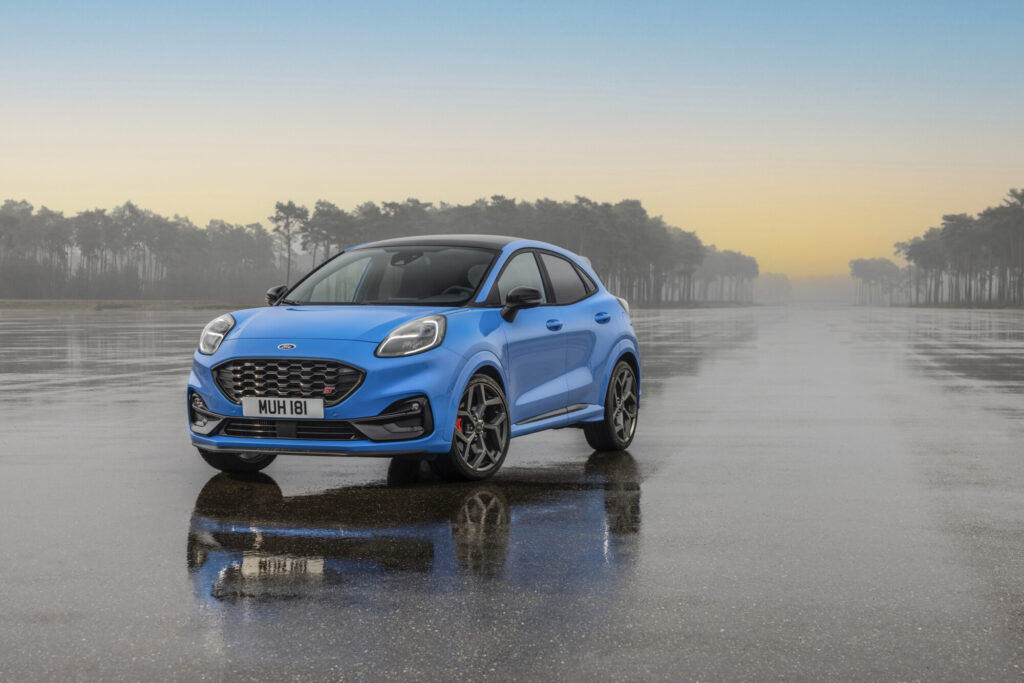
The panoramic roof of the Ford Puma is a much-requested option, but it also comes with recurring issues: leaks caused by worn rubbers, malfunctioning motors that stop the roof from opening, and creaking noises when the temperature changes. What are the causes, how do you recognise the symptoms and what costs should you expect? In this article you will read exactly what you need to look out for.
Is the panoramic roof of the Ford Puma leaking?
Leaks around the panoramic roof of the Ford Puma occur regularly. Wear of the rubbers and blocked drainage channels are the main causes. An incorrectly adjusted roof mechanism also plays a role. Owners report damp patches on the headlining, wet floor mats after heavy rain, or condensation marks around the roof frame. This points to a fault in the sealing or drainage.
The Puma’s roof panel is fitted with rubber strips that seal the edge. These strips are exposed to sun, cold and moisture, which causes them to harden or crack. Water can then seep between the glass panel and the bodywork. In addition, the roof has drainage channels. These channels guide rainwater through small pipes to the wheel arches. Leaves, dust and dirt can block these channels. The water then builds up and finds other routes into the interior.
Problems with the panoramic roof can lead to other Ford Puma car problems, such as damage to the electronics or corrosion in the bodywork. That is why you should regularly check the condition of the rubbers and keep the drainage channels clean, especially after autumn.
Main symptoms of leakage
- Damp patches or discolouration of the headlining around the roof area
- Droplets forming after parking in the rain or after washing the car
- Damp mats or puddles of water under the front seats
- Musty smell in the cabin due to moisture that does not dry out
Possible causes
- Worn or torn rubber sealing strips around the glass panel
- Blocked drainage channels due to leaves or dirt
- Incorrect adjustment of the roof mechanism, preventing it from closing fully
- Damaged or distorted rails due to body flex or previous impact
Panoramic roof Ford Puma no longer opens
A panoramic roof that no longer opens or closes is a common issue and a frequent complaint among Puma owners. The cause usually lies in a faulty motor or worn guide rails. Electronic faults in the control switch also play a role. The roof then does not respond to commands, stops halfway, or makes squeaking noises without moving.
The sliding roof mechanism of the Ford Puma is driven by an electric motor. This motor moves the glass panel backwards using cables and gears. Intensive use or years of exposure to moisture and temperature changes take their toll. The motor or the guides can wear out. Corrosion can develop on the contact points or in the switch. The system then no longer receives power.
Sometimes the roof gets stuck halfway because a rail has seized. An incorrectly adjusted mechanism can also be the cause, especially after longer periods of non-use. Rails and rubbers can then stick together. In cold temperatures the material becomes stiffer. The roof then encounters more resistance and the motor becomes overloaded.
Common symptoms of a faulty roof mechanism
- The roof does not respond to the control button
- Squeaking or creaking noises when opening, without the glass panel moving
- The roof stops halfway and will not open or close further
- Blown fuses or a warning message on the dashboard
Possible causes
- Faulty electric motor due to wear or overloading
- Worn or seized guide rails
- Electronic fault in the switch or wiring
- Rubbers stuck together after a long period of non-use
- Corrosion on contact points or in the motor mechanism
Repair costs sunroof Ford Puma
The cost of repairing the panoramic roof varies greatly, depending on the nature and extent of the problem. A simple cleaning of blocked drainage channels costs between 50 and 100 euros at a garage. Replacing worn rubber strips is between 150 and 300 euros, including labour.
With a faulty motor or a seized mechanism, the costs become considerably higher. A new sliding roof motor usually costs between 300 and 600 euros, excluding installation. Labour time for removal and refitting can add up to three to five hours. At an hourly rate of 80 to 120 euros, this means another 240 to 600 euros on top. In the worst-case scenario you will therefore pay around 1,200 euros for a complete motor replacement.
Damage to the glass panel itself, for example due to breakage or cracks, is the most expensive scenario. A new panoramic roof panel quickly costs 800 to 1,500 euros. Including installation and calibration of the mechanism, you end up with a total of 1,500 to 2,500 euros. Always check whether the damage is covered under warranty or whether it is related to a previous Ford service campaign.
Overview of repair costs
- Cleaning drainage channels: 50 to 100 euros
- Replacing rubber strips: 150 to 300 euros
- Replacing sliding roof motor: 500 to 1,200 euros
- Replacing glass panel: 1,500 to 2,500 euros
Creaking noises and sunblind that sticks
Besides leaks and technical faults, owners also report creaking or ticking noises. This happens when driving over speed bumps or in cold temperatures, and often indicates stress in the roof structure. Less-than-ideal installation or adjustment can also be the cause. The noise can be annoying and indicates that parts are rubbing against each other, or that the glass panel is moving within the rail construction.
The electric sunblind under the panoramic roof can also cause complaints. It does not move smoothly in sync, gets stuck halfway or does not close fully. This is usually caused by worn guide rails, loose cables or a stuttering motor. It is a separate mechanism that works independently of the glass panel, but is subject to the same type of wear.
Wind noise at higher speeds is another warning sign. In that case the adjustment or sealing is not optimal. Often it helps to readjust or replace the rubbers. In some cases a dealer adjustment is necessary to make the roof close perfectly flush with the roof frame.
‘ This provides insight into the condition of the roof mechanism and prevents unexpected costs shortly after purchase. ’
Prevention and maintenance tips
Regular maintenance can prevent many problems. For example, clean the drainage channels at least twice a year. This is especially important after autumn, when leaves and dirt accumulate. Visually check the rubbers for cracks or hardening and lubricate the rails and guides with silicone spray to prevent them from sticking.
Use the panoramic roof regularly, including in winter, so the mechanism stays smooth. You will also prevent the rubbers and rails from sticking together. During a test drive, check the roof for unusual noises, hesitation and wind noise so you can spot any issues at an early stage.
Are you buying a used Ford Puma with a panoramic roof? Then ask about its maintenance history. Check whether the roof has previously been adjusted or repaired. Also ask whether any warranty work has been carried out. This provides insight into the condition of the roof mechanism and prevents unexpected costs shortly after purchase.
Discover more about the Ford Puma
On the Carnews website you will find detailed articles about other known issues with the Ford Puma, ranging from engine problems to electronics and suspension. Discover which experiences other owners share, what to look out for when buying a used one and how to keep your Puma in top condition. Check out our tips and insights for an even better understanding of this popular crossover.
Frequently asked questions
Certain issues with the panoramic roof of the Ford Puma – such as creaking noises, wind noise, stuttering sunblinds and the risk of water ingress when rubbers are dirty or worn – are encountered quite often in practice, but are not necessarily structurally present on every car. They seem to arise mainly from adjustment, wear and maintenance (rubbers, rails, drainage) rather than from a fundamental design fault. Before buying, a thorough check for leaks, noises and smooth operation of the roof is strongly recommended, including a test drive at higher speeds. For owners, regular cleaning, checking of the seals and having the roof adjusted or repaired in good time by the dealer are important to prevent more serious damage or expensive repairs.
For common panoramic roof problems on the Ford Puma (creaking, wind noise, poor drainage, stuttering sunblind) repair costs are roughly between about €150–€350 for cleaning/adjusting/lubricating and €400–€800 if guides, rubbers or sunblind parts need replacing; a complete mechanical or glass panel repair can approach or exceed €1,000. An official Ford dealer is usually more expensive in terms of hourly rate, but has brand expertise, access to TSBs/software updates and can sometimes offer goodwill or warranty. Independent specialists are often 20–40% cheaper in labour costs and can be a perfectly good and economical alternative for simple issues (lubricating, adjusting, cleaning drains). For structural leaks, misalignment or electronic faults, the dealer or a specialised roof company is usually the safest choice.
Keep the rubbers, drainage channels and rails of the panoramic roof clean (for example once or twice a year with water and a mild cleaning agent, and lightly grease the rubbers with a suitable care product) and use the roof regularly so the mechanism does not seize. Avoid using a pressure washer directly on the edges of the glass and, at the MOT or during servicing, explicitly ask the dealer to check the roof, the drainage and the adjustment. Early warning signs include slight creaking or ticking when driving over speed bumps or with temperature changes, increased wind noise, or a sunblind that does not run smoothly. Also pay attention to initial signs of moisture or condensation on the headlining or window pillars; this may indicate a blockage or leak.
If the warranty on the Ford Puma has expired, the main options in practice are: diagnosis and repair via the Ford dealer (new or readjusted parts), repair via a specialised roof/glass company or – for minor issues – maintenance of rubbers, rails and drainage to limit leaks and noise. In the available information there are no specific, officially recognised factory faults on the Puma’s panoramic roof recorded by Ford. Nor is there any documented, brand-wide goodwill scheme for panoramic roof issues on the Puma. Any goodwill therefore appears to be assessed on a case-by-case basis and per dealer, rather than via a fixed scheme.
A defective panoramic roof can noticeably reduce the residual value of a Ford Puma, especially if there is leakage, wind noise or visible damage to the headlining and rubbers. Buyers are often wary of possible consequential damage, which leads to lower offers or makes the car harder to sell. It is usually sensible to have clearly visible or leak-related defects professionally repaired, as these strongly affect both value and chances of sale. Minor annoyances such as light creaks or a sunblind that only occasionally sticks sometimes cause less loss of value than the cost of a major repair, meaning that repairing them is not always financially worthwhile.