
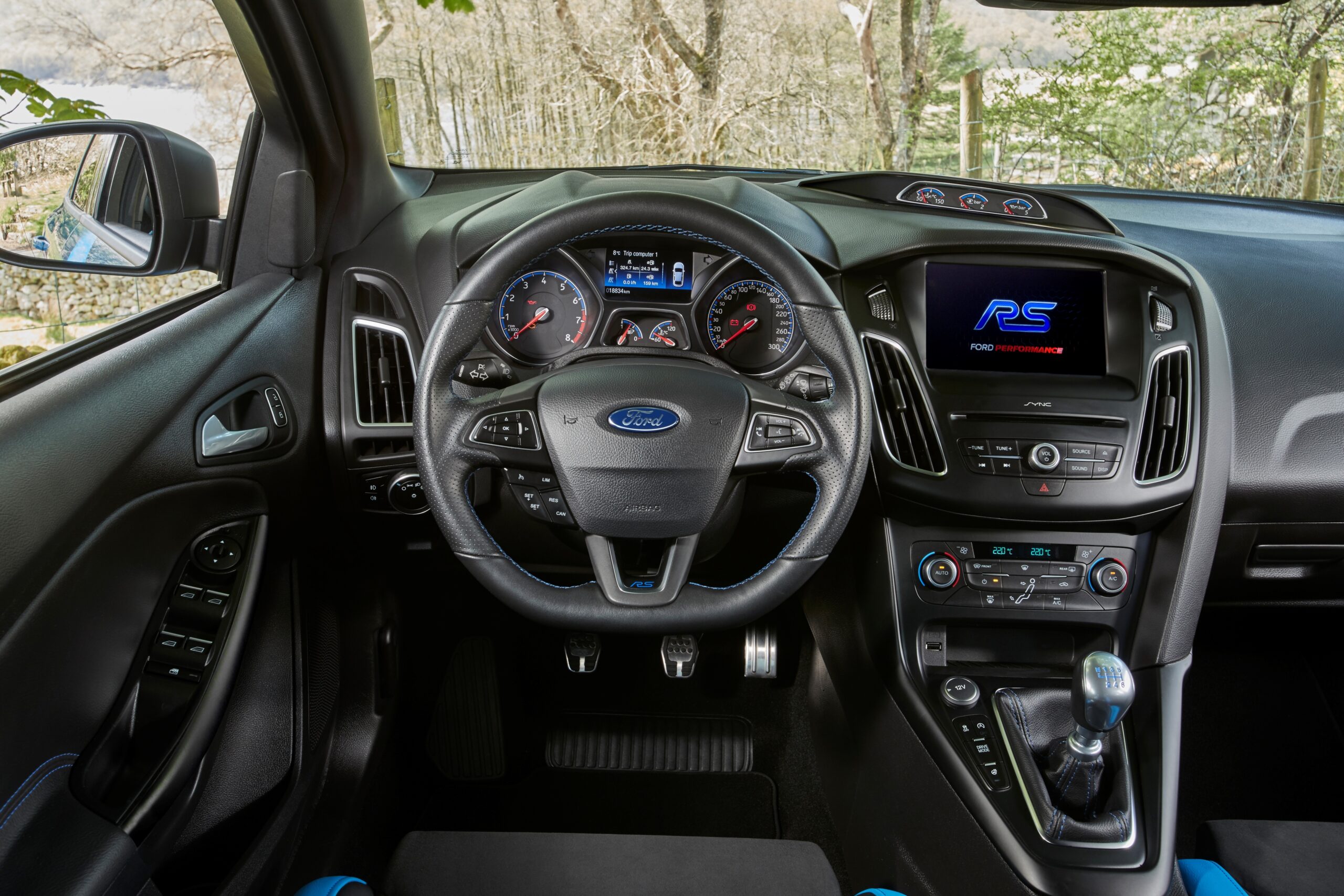
The automated PowerShift transmission in the Ford Focus is known for jerky gear changes, slipping clutches and unexpected acceleration problems. Owners of the third-generation Ford Focus (2012–2016) in particular report juddering at low speeds, delayed response when accelerating and warning lights on the dashboard. These problems are not only annoying, but can also pose safety risks in traffic jams and city driving. Why this system is so vulnerable and what you can do about it is explained below.
What exactly is the PowerShift transmission?
Ford introduced the PowerShift as a dual-clutch automatic in the Focus and Fiesta between 2012 and 2016. Unlike traditional automatics with a torque converter, this transmission uses two dry clutches. One clutch controls the odd gears, the other the even gears. On paper this design promised faster shifts and better fuel economy, but in practice it turned out to have considerable weaknesses.
The system relies entirely on electronic control via the transmission control module. This module reads signals from sensors around the engine and gearbox to determine when and how quickly to change gear. When communication fails or software faults occur, the well-known shifting problems arise.
‘ In total, this technology has been fitted to almost two million vehicles. ’
Which Ford Focus models have PowerShift problems?
The Ford Focus of the third generation, built between 2012 and 2016, suffers the most from PowerShift complaints. The Ford Fiesta from the same period uses the same transmission. In total, this technology has been fitted to almost two million vehicles. Later Focus models use different transmission systems and do not suffer from these specific issues.
If you are unsure whether your car is affected, check the year of manufacture and the transmission type in the registration certificate or service book. The PowerShift is often referred to there as DPS6 or automated manual transmission.
Recognisable symptoms of a faulty PowerShift
Owners report various complaints that point to problems with the PowerShift transmission. The most common are:
- Vibrations and jolts when accelerating from a standstill, similar to someone struggling to release the clutch in a manual car
- Delayed response when you press the accelerator pedal, followed by sudden acceleration
- Gears slipping while driving, with the revs rising without the car going any faster
- Transmission warning lights on the dashboard
- Vehicle unexpectedly going into limp mode, with power limited to prevent further damage
These symptoms occur mainly in stop–start traffic, on slight inclines and during gentle acceleration. In more serious cases the car may not start or remains stuck in a low gear.
Why does the PowerShift fail?
The core problem lies in the design of the dry clutches. These clutches lack oil for cooling and lubrication, causing them to wear out faster than traditional wet clutches. As they wear, the clutches no longer engage properly, leading to delayed shifts and vibrations.
Software also plays an important role. The transmission control module has to coordinate clutches and gears precisely. Errors in the software or faulty sensors lead to inconsistent performance. When synchronisation between components fails due to worn parts, defective solenoids or miscommunication, the system triggers a fault code and the vehicle may enter limp mode.
‘ “This briefly reduces the discomfort, but as the clutches wear further, the complaints return.” ’
How expensive is it to repair PowerShift problems?
Repair costs vary greatly depending on the severity of the problem. Software updates at the dealer are often free as part of recalls or warranty work. Replacing the clutches typically costs between 1,500 and 2,500 euros, including labour. If there is more serious damage to the output shafts or the complete transmission, costs can rise to 4,000 euros or more.
Many owners report that problems return after software updates. These updates adjust clutch timing and temporarily reduce engine torque during shifts. This briefly reduces the discomfort, but as the clutches wear further, the complaints return. Full replacement of the transmission offers a more permanent solution, but remains expensive.
Recalls for the PowerShift transmission
Ford has issued several recalls for vehicles with the PowerShift transmission. These actions are mainly aimed at software updates intended to improve transmission control. Check on the RDW website (Netherlands Vehicle Authority) or with your Ford dealer whether your vehicle is subject to an outstanding recall.
There have also been various class actions, especially in the United States. A settlement offered owners and people leasing a car at least twenty dollars in compensation if they had experienced problems, sought help from a Ford dealer and been refused. In the Netherlands there have been fewer legal proceedings, but owners can still claim warranty or goodwill depending on the dealer.
What you can do as an owner
If you own a Ford Focus with a PowerShift transmission and are experiencing problems, contact an authorised Ford dealer as soon as possible. Have the transmission checked for fault codes and ask about available software updates. Carefully document all complaints and repairs; this strengthens any warranty or goodwill claims.
If problems persist, consider getting a second opinion from a specialist transmission mechanic. Some owners opt to replace the unit with a manual gearbox from newer model years, although this requires checking compatibility for each vehicle. This option is expensive but can be more durable than repeated repairs to the PowerShift.
‘ Consider taking out additional warranty cover, given the known problems with this type of transmission. ’
Tips if you are considering buying a Ford Focus
If you are planning to buy a used Ford Focus, take the PowerShift issues into account. Check the year of manufacture and the transmission type before making a decision. Focus models from before 2012 or after 2016 do not suffer from this problem, nor do models with a manual gearbox.
For a Focus from the period 2012–2016, always ask for the full service history. Pay attention to previous transmission repairs, software updates and complaints. Take an extensive test drive and watch out for vibrations at low speeds, delayed response when accelerating and warning lights. Consider taking out additional warranty cover, given the known problems with this type of transmission.
Alternative solutions and prevention
Preventive maintenance does little to address the structural weaknesses of the PowerShift, but it can extend its lifespan. Avoid prolonged clutch slip by accelerating gently from a standstill. In city traffic, regularly shift into neutral when stationary to reduce the load on the clutches.
If the transmission is already causing problems, consider replacing it with a reconditioned or new transmission with improved clutches. Some specialist companies offer transmissions with upgrades that improve reliability. This is expensive but can prevent further issues.
Discover more about car technology on Carnews
The PowerShift transmission is one of many examples of technology that looks promising on paper but disappoints in practice. On the Carnews website you will find much more information about common car problems, maintenance tips and buying advice for various makes and models. Take a look and discover which cars are reliable and which ones are better avoided.
Frequently asked questions
What are the most common PowerShift transmission problems with the Ford Focus and how can you recognise them in time?
The most common PowerShift problems in the Ford Focus are vibrations and juddering when pulling away, slipping gears and delayed or unpredictable shift points. You can recognise these in time by jerky acceleration in low gears, especially in stop–start traffic or on hills, and by a sensation similar to someone changing gear badly with a manual clutch. Transmission warning lights, suddenly going into “limp mode” and unexplained power dips are also clear signs. During a test drive or in everyday use it is important to pay close attention to these symptoms and have them read out immediately by the dealer or a specialist.
Which technical defects cause the PowerShift problems in the Ford Focus and what are the implications?
The PowerShift problems in the Ford Focus are mainly caused by the design of the dry dual clutch, which wears quickly due to a lack of lubrication and cooling and therefore causes slipping, juddering and delayed shift points. In addition, defects and calibration errors in the transmission control module (TCM) and associated software play a role, causing the gearbox to shift unpredictably or go into “limp mode”. The implications are recurring vibrations and jerky driving behaviour, loss of power and possibly the car stalling. This leads to high repair costs, depreciation of the vehicle and in many cases legal claims and compensation schemes for owners.
What repair costs can you expect for PowerShift transmission problems and what solutions are available?
Repair costs for PowerShift transmission problems vary widely, but owners often report amounts ranging from several hundred euros for software updates and adjustments to well over €1,500–€2,500 for the replacement of clutches or major components. Possible solutions include software updates and recalibration of the TCM, replacing the dry clutches and/or output shafts, or in severe cases a (reconditioned) complete transmission replacement. In some cases, conversion to a manual gearbox has been investigated as a structural solution, provided it is technically compatible. In addition, owners can sometimes claim (partial) reimbursement through warranties or previous settlements relating to the PowerShift problems.
How can you prevent PowerShift transmission problems with your Ford Focus as much as possible through proper maintenance and driving style?
Have the transmission regularly checked for fault codes and make sure that all software updates and recalls issued by Ford have been carried out. Have oil and filter changes done on time according to the manufacturer’s specifications and do not ignore early symptoms such as juddering or slipping. Avoid extensive crawling in traffic, continuous queue driving with the car half on the clutch, and aggressive starts or hard acceleration from a standstill. Where possible, use manual mode instead of constant shifting on hills or when heavily loaded to limit unnecessary strain on the clutches.
What should you look out for when buying a second-hand Ford Focus with a PowerShift transmission in order to avoid problems?
When buying, look for a complete and verifiable service history, specifically for the PowerShift gearbox (clutches, TCM, software updates). Take a long test drive with plenty of stop–start traffic and watch out for juddering, vibrations, slipping or delayed pick-up when pulling away and changing gear. Check whether there have been any error or fault messages relating to the transmission and, if necessary, have a diagnosis carried out by a specialist. Be particularly cautious with cars that have already had repeated transmission repairs and only consider buying if there is (extended) warranty on the gearbox.