
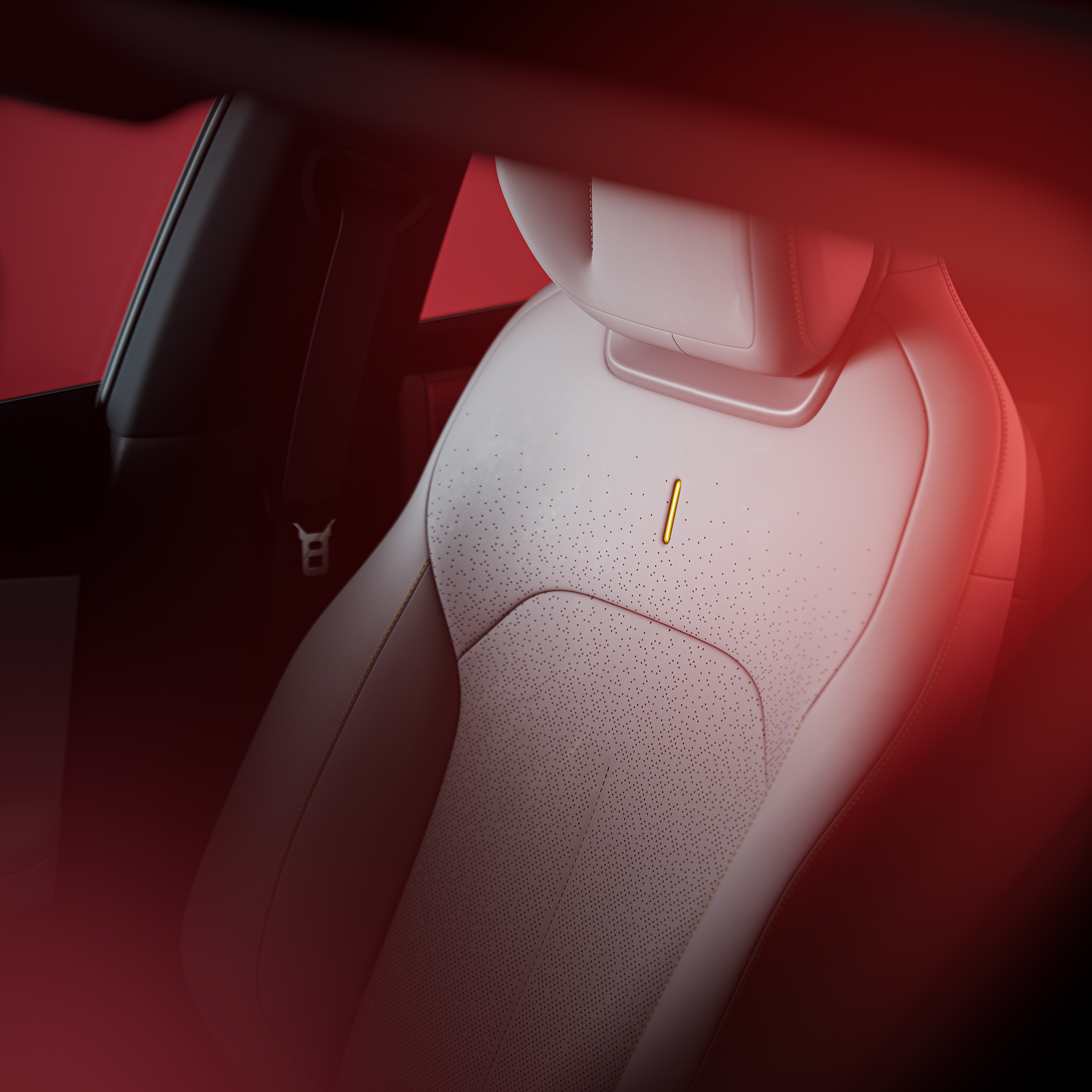
The Lynk & Co 02 struggles with various practical issues that significantly affect everyday use: a limited 440-litre boot, a frunk that is too small for spare parts, and the lack of physical buttons for key functions. These limitations make the electric SUV less suitable for anyone who needs a lot of space or values clear, straightforward controls. What challenges will you actually encounter, and how can you deal with them?
How limited is the luggage space of the Lynk & Co 02?
With 440 litres of boot space, the Lynk & Co 02 scores below par for its class. By comparison, similar compact sport utility vehicles (SUVs) often offer 450 to 550 litres. The sloping roofline gives the car a sleek look but eats significantly into the available space. Tall items are hard to fit in due to the limited opening height of the tailgate.
On the plus side, the rear bench can be folded completely flat. This increases the loading volume considerably, but day-to-day space remains tight. The hidden storage compartment under the boot floor offers some compensation for small items such as charging cables or tools. The space is adequate for weekly shopping, but for weekend trips with the family or holidays you will quickly reach its limits.
Owners report that medium-sized suitcases barely fit next to each other. At the same time, the layout remains easy to oversee thanks to straight side walls and few raised edges, allowing you to use the space efficiently. Plan longer journeys in advance and opt for soft, flexible bags instead of hard suitcases to get the most out of the available space.
‘ For anyone who depends on spare parts such as a spare wheel, this car is less suitable. ’
Why is the frunk impractical?
The Lynk & Co 02 has a frunk of just 15 litres, comparable to the capacity of a small rucksack. There is barely any room left for spare parts, a tyre repair kit or a warning triangle pole. On top of that, the opening is awkward to reach and requires several steps to open, which means you will rarely use it in practice.
The limited frunk fits an overall design philosophy that prioritises space for technical components under the bonnet. With electric cars you often expect more storage space at the front, as the drivetrain is more compact than in combustion-engined cars. The Volvo EX30 electric model, to which the Lynk & Co 02 is closely related, suffers from similar limitations.
Use the frunk only for light items you need regularly, such as cleaning cloths or a parking disc. Put heavy or large objects in the rear boot instead. For anyone who depends on spare parts such as a spare wheel, this car is less suitable. When buying, check which emergency items are included as standard and consider storing a tyre repair kit in the boot itself.
What are the consequences of the missing physical buttons?
Operating the Lynk & Co 02 revolves almost entirely around the central touchscreen. Climate control, drive modes and even the direction of the airflow are adjusted via on-screen menus. This requires multiple taps and navigating through small icons that are close together. While driving this is highly distracting and takes longer than using physical buttons.
The lack of buttons creates a clean, minimalist dashboard, but at the expense of ease of use. Changing the temperature or directing warm air towards the windows demands attention you would rather devote to the road. The driver monitor, a black cube behind the steering wheel, beeps loudly whenever you look away from the road, for instance when parking or checking the mirrors. This system adds little real value and is often irritating.
Switching off driver assistance systems also requires several screen interactions. This is slow and fiddly, especially in situations where you want to react quickly. By contrast, the steering column stalks feel high quality and work intuitively. The irregularly shaped, two-spoke steering wheel is hard to get used to; buttons for media and assistance systems sit too far from your fingers, forcing you to take your eyes off the road.
Tips for touchscreen-dependent operation
- Practise all functions while stationary before heading out on the road, so you understand the menu structure
- Set frequently used functions such as climate temperature in advance before you drive off
- Use voice control where available for basic actions such as adjusting the temperature
- During test drives, check whether infotainment software updates are available, as these can improve performance
How suitable is the Lynk & Co 02 for family use?
For families with young children, the Lynk & Co 02 poses challenges. The limited boot space makes it difficult to plan holiday trips with a pushchair, toys and luggage. The sloping roofline restricts not only load capacity but also rear headroom, which can be uncomfortable for older children or adults on longer journeys.
The interior lacks physical air vents in the rear, which makes it harder to fine-tune the climate for passengers. The digital focus and absence of buttons also make the car less accessible for people used to traditional controls. Young children are quickly distracted by the constant beeping alerts from the driver monitor.
Before buying, test the rear legroom with your own family, as the roofline affects the seating position. Check whether child seats fit properly and still leave enough space for other passengers. For city driving with limited luggage the car is sufficient, but frequent long journeys or holidays demand more room than the Lynk & Co 02 can offer.
‘ These questions help you determine whether practical considerations outweigh design or brand preference. ’
What alternatives offer more space and convenience?
Consider models with larger boots and physical controls if you value generous loading space and clear, straightforward operation. Compact SUVs in the same price range often offer 500 litres or more, with frunk options up to 30 litres. Some brands combine touchscreens with physical buttons for climate control and volume, giving you the best of both worlds.
During test drives, pay attention to how easily you can access everyday functions. Can you quickly change the temperature? Do your weekend bags fit comfortably in the boot? Does the operation feel intuitive without constantly having to look at the screen? These questions help you determine whether practical considerations outweigh design or brand preference.
The Lynk & Co 02 scores well on comfort and traction, but its practical limitations make it suitable only for specific use cases. For those who mainly drive in town with light luggage and value design, the car can be a good fit. Families or anyone who regularly transports larger loads, however, will soon run into its limits.
Discover more about Lynk & Co problems
On the Carnews website you will find extensive information on common problems with various car brands, maintenance tips and comparisons between models. Learn more about electric SUVs, practical tips for daily use and how to choose the right car for your situation. Explore the website and stay up to date with the latest developments in the automotive sector.
Frequently asked questions
Many Lynk & Co 02 owners report early “teething troubles” around the infotainment system: slow or frozen screens, cumbersome operation of climate control and driver aids via the touchscreen, and sometimes missing or unstable smartphone integration. Irritating beeps from the driver monitor and driver assistance systems that are hard to switch off are also mentioned. In addition, there are reports (often similar to related models) of sticking charging flaps in cold conditions, squeaky brakes and occasional 12V battery issues. Finally, some complain about mediocre customer service when it comes to electronic glitches and administrative problems with app and car‑sharing functions.
Users rate the usability of the infotainment system as mediocre: many basic functions are buried deep in small, densely packed touchscreen menus, which is distracting while driving. The system looks modern but feels cumbersome and less intuitive than that of some rivals. In terms of stability, there are reports of infotainment “hangs” and glitches, which does not inspire full confidence in the electronics. Connectivity is also perceived as limited because Apple CarPlay and Android Auto are missing in some markets.
At the moment there are no structural problems with the availability of parts for the Lynk & Co 02 reported in the Benelux; the model shares its technology with Volvo (EX30), which generally helps with parts supply. However, some users do experience practical difficulties around service and customer service handling, especially in the case of electronic malfunctions or software glitches. It is advisable to plan maintenance and any repairs with authorised service centres and to check in advance which Lynk & Co partners are active in your area.
In daily use, testers mention the cumbersome operation via the central touchscreen as a practical inconvenience, especially for simple functions such as climate control and driver assistance systems. The irregularly shaped, two‑spoke steering wheel does not feel comfortable in everyone’s hands and the steering wheel buttons sit just a bit too far away to be operated by touch alone. The minimalist controls mean there are few physical buttons and there are no central air vents in the rear, which limits rear passenger comfort. The small, hard‑to‑reach frunk and the sloping roofline, which reduces rear headroom and luggage space, are also seen as practical shortcomings.
There is still little real‑world data on the actual fuel consumption or electric driving range of the Lynk & Co 02 compared with the official factory figures. It is known, however, that the car is closely related technically to the Volvo EX30, for which users regularly report that the real‑world electric range is clearly lower than claimed, especially on the motorway and in cold weather. It is therefore likely that the 02 will also achieve noticeably less in practice than the official values. For the specific fuel consumption of the plug‑in hybrid version of the 02 there are, however, still too few concrete real‑world figures available.